Borescope Camera Inspections
Thermal imaging and tracer gas say where a leak is. A borescope lets us see it, through a hole a few centimetres wide or a gap that is already there, before anything larger is opened.
Borescope camera inspections, step by step
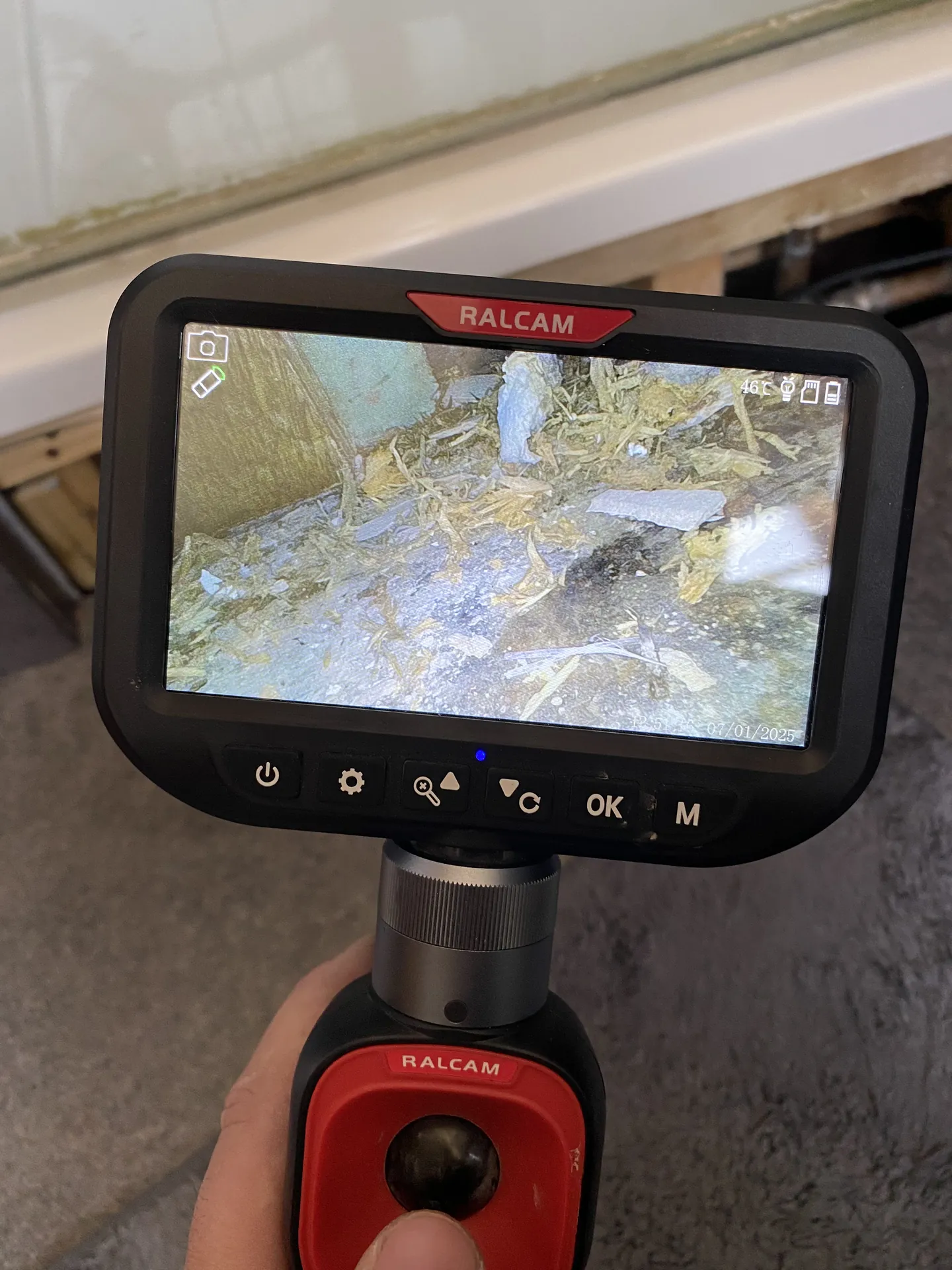
There is a stage in most surveys where the readings point to one place and the next step is to open it. Before we do, we want to see what is there. A borescope is a small camera and light on the end of a flexible cable, connected to a screen. It goes through an existing gap, such as the hole where a pipe passes through a floor, a loose board, a downlight or the space behind a bath panel. Failing that, a single drilled hole a few centimetres across is enough. Inside, it shows the pipe, the joint, the water and the staining on the joists as they actually are.
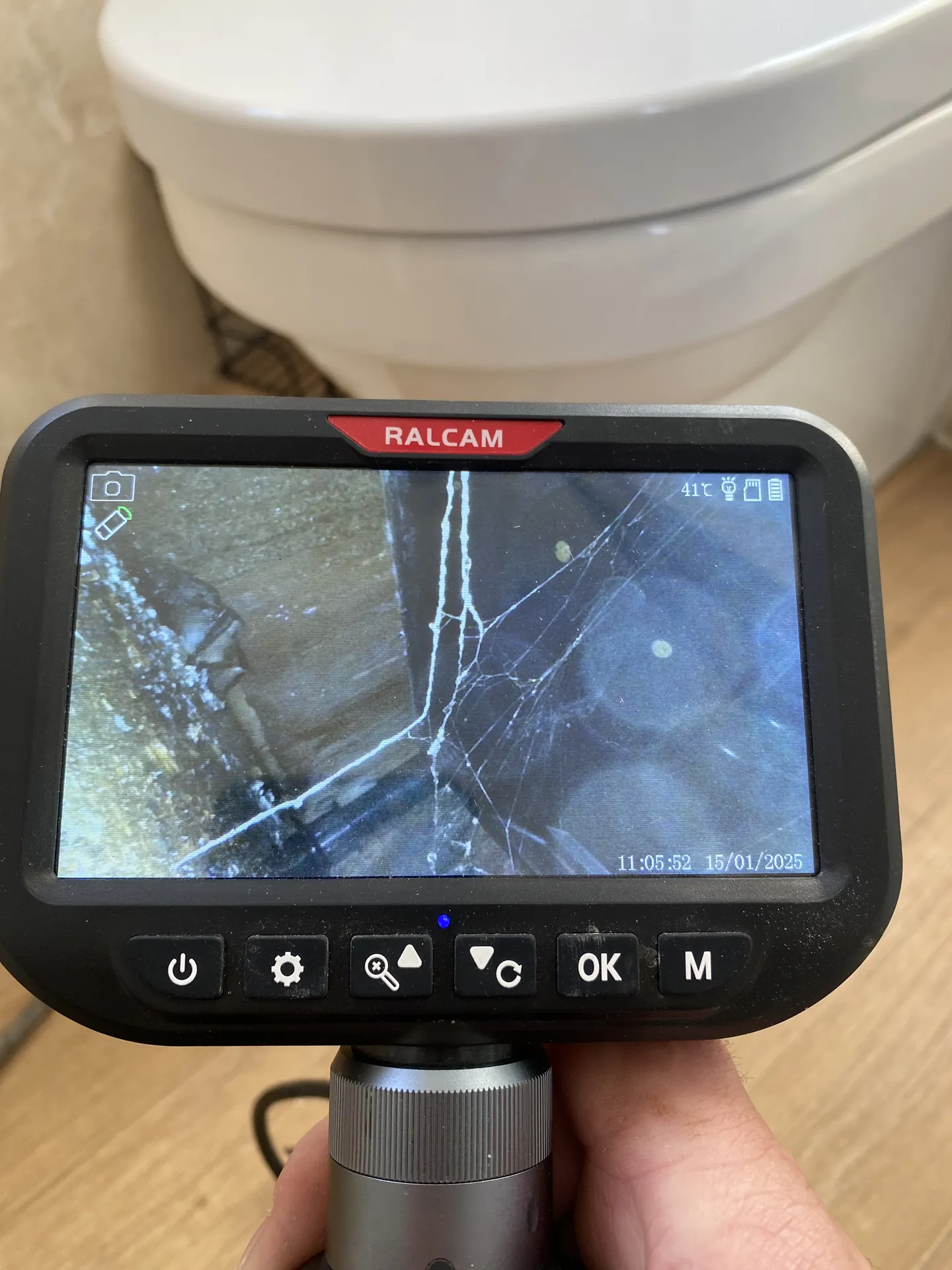
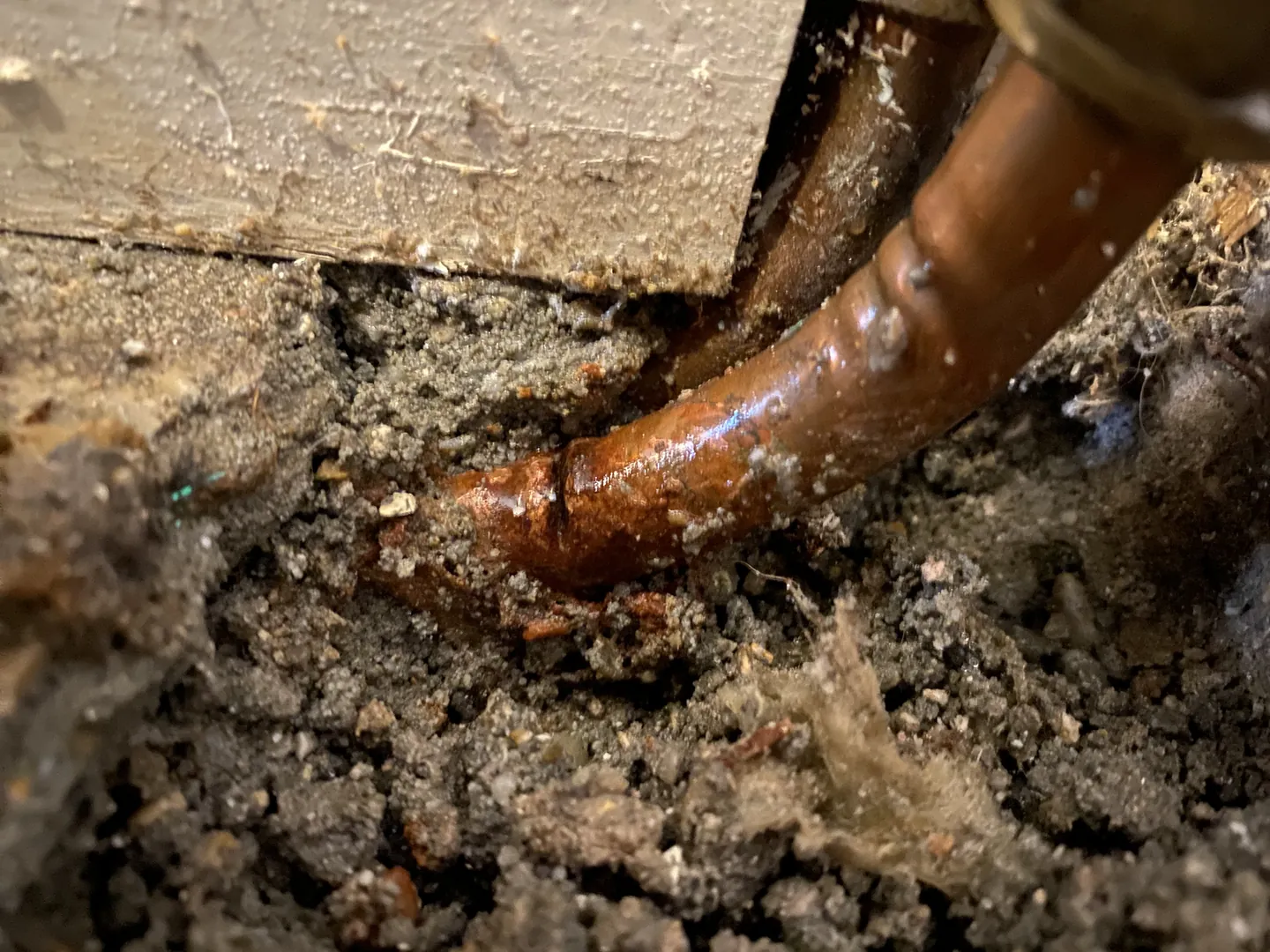
We use it under suspended timber floors, in the void between a ceiling and the floor above, and behind bath and shower panels. It also reaches inside pipe chases and boxing, kitchen plinths, the space behind kitchen units and the back of airing cupboards. The cable bends around obstacles and the camera head can be angled, so a run of several metres can be checked from one opening. What it shows is not a reading to be interpreted but a picture. That might be a drip forming on a compression joint, a corroded length of copper, a wet patch of insulation, or a dry void that rules an area out just as usefully.
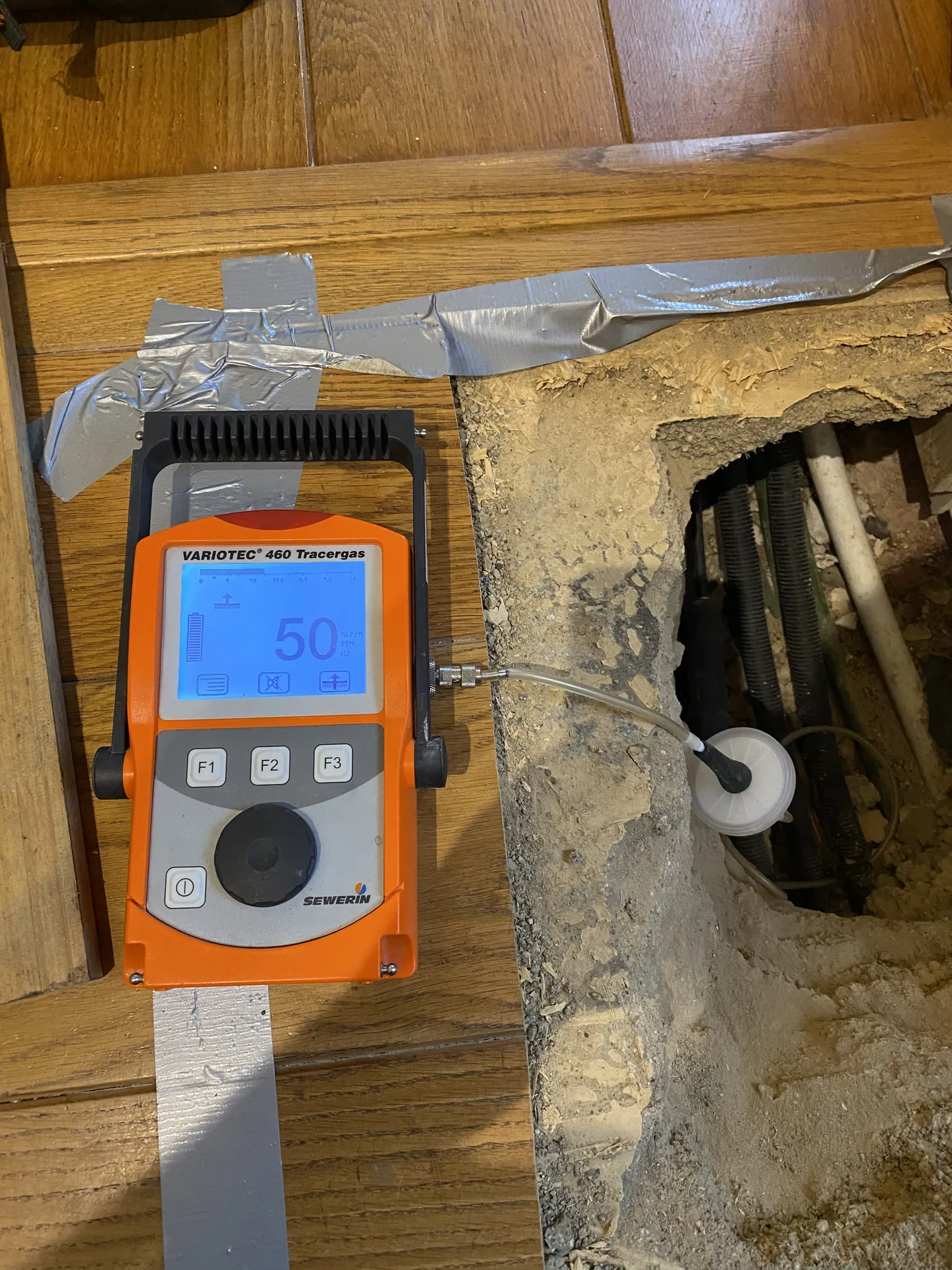
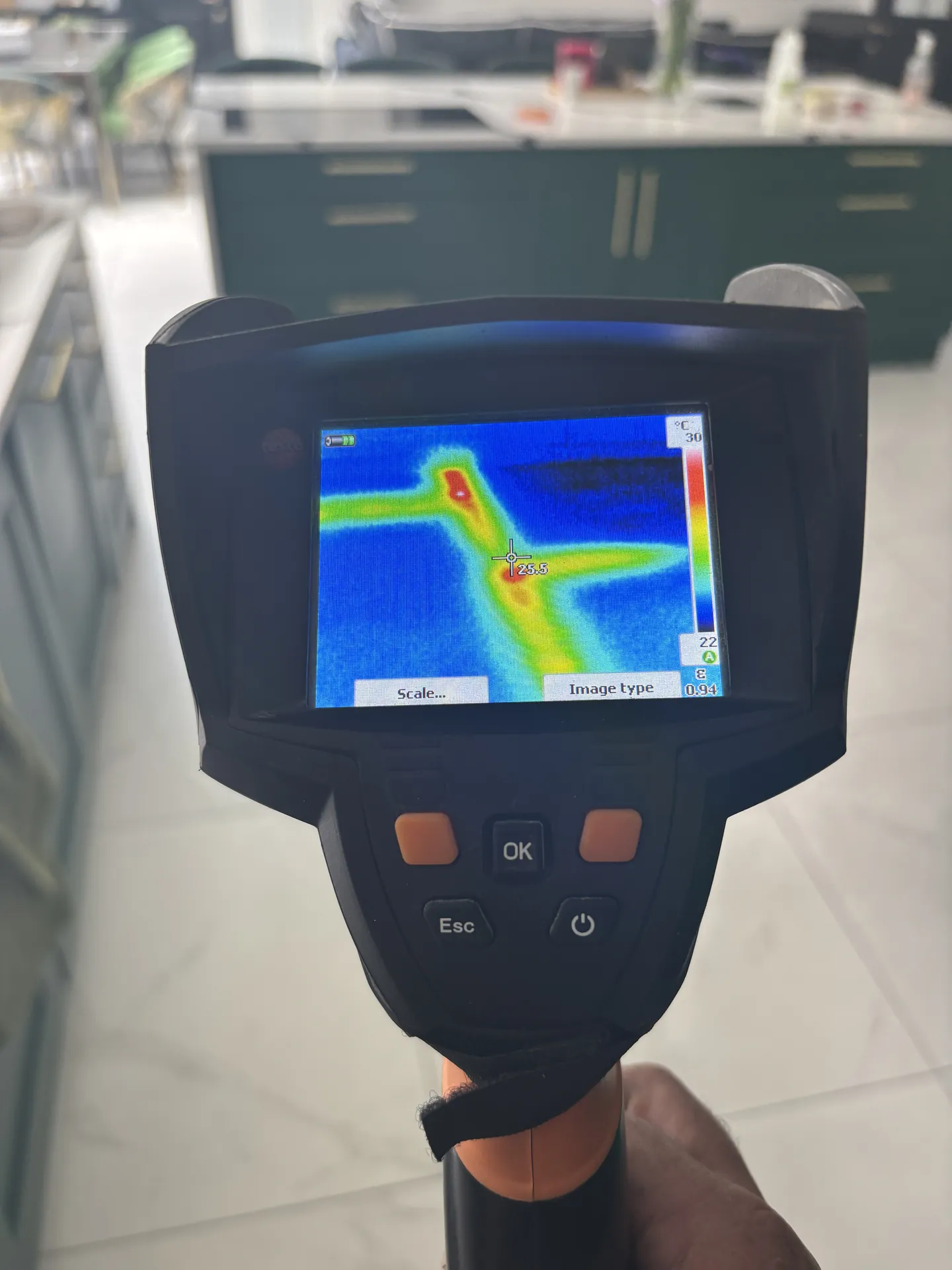
The borescope is a confirming tool rather than a search tool. The thermal camera, the acoustic microphone and tracer gas narrow the search to a small area first. The borescope then shows what is in that area, so the opening can be exactly where it needs to be and no larger. Stills from the camera go into your report alongside the thermal images and readings, which gives the insurer a photograph of the leak itself before the floor or wall was opened. If the camera shows something different from what the readings suggested, we say so and adjust the plan.
In our own photos
From your first call to a leak you can see in the report
Call or WhatsApp with a few photos and a line about the symptoms. We ask a handful of questions, agree a fixed price and book the survey, usually for the same or the next day.
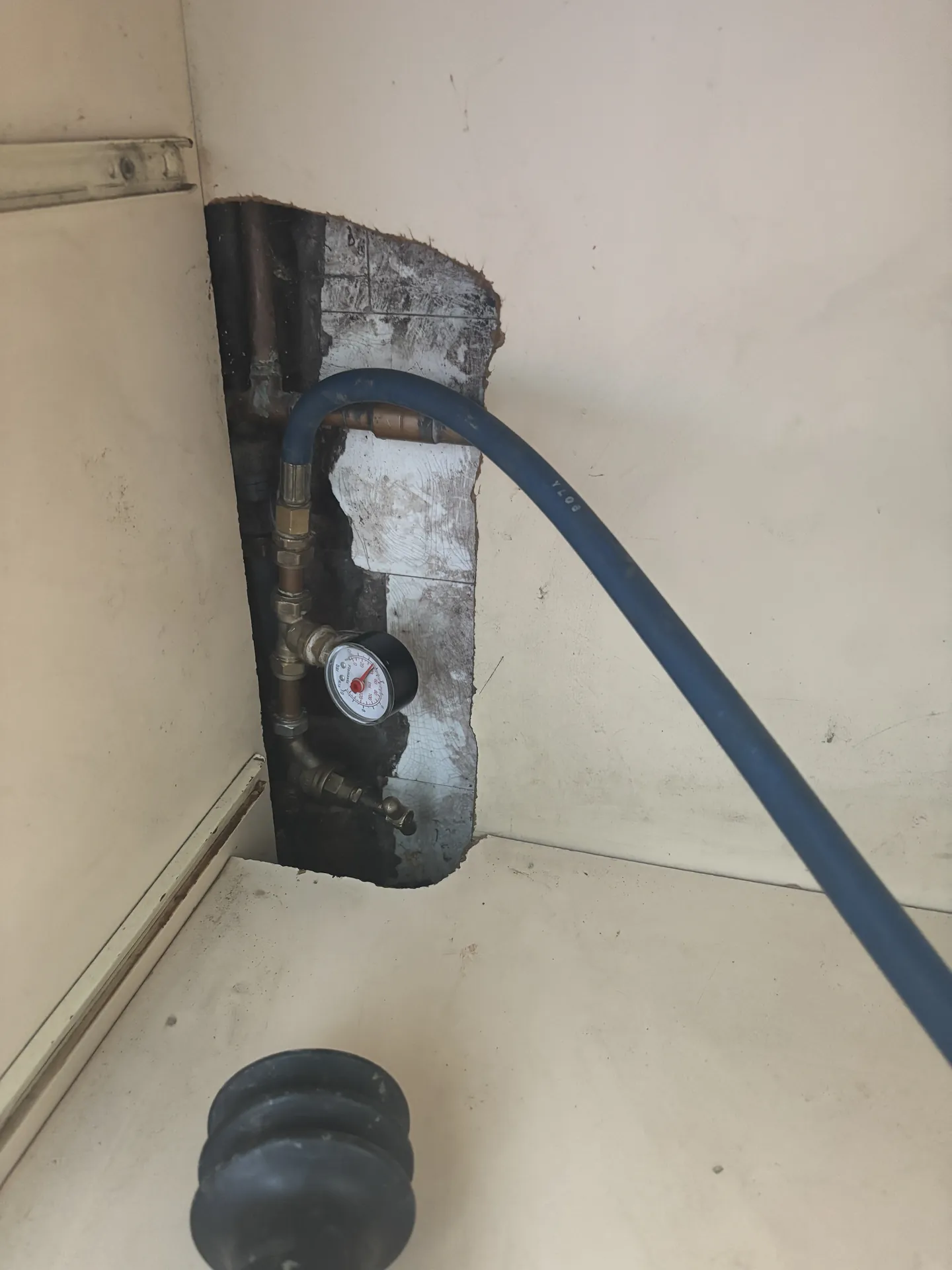
On arrival we pressure test the mains, hot water and heating, check the meter and test the escaping water, so we know what we are looking for before the detection starts.
Thermal imaging, the acoustic ground microphone and tracer gas are used as the pipework dictates until the leak is marked on the floor or wall.
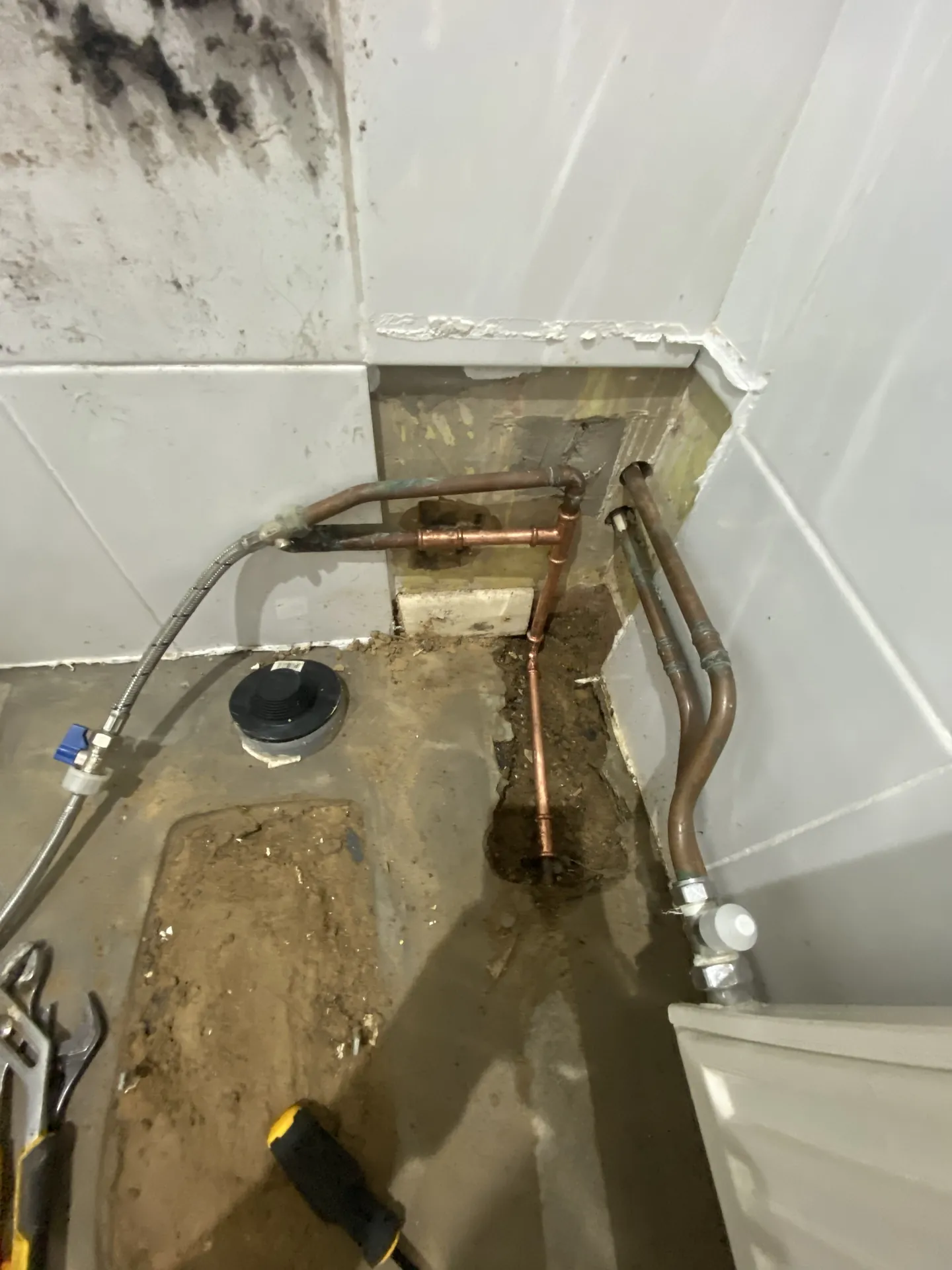
You get a written report with readings, thermal images and photographs, ready for a trace and access claim. If you want the leak fixed, we open that one spot and repair it.
A report your insurer can act on
Most buildings insurance policies include trace and access cover for finding a hidden leak and making good the way in. Our report is written for that claim: what we tested, what we found, where it is, with photographs, thermal images and readings.
- Turn off the stop tap or the heating and stop topping up
- Photograph the damage, the boiler gauge and the meter
- Tell your insurer a leak is suspected and detection is being arranged
- Trace and access pays to find the leak and make good the access
Borescope: questions answered
What is a borescope inspection?
A look inside a floor void, wall or ceiling with a small camera on a flexible cable. The camera has its own light and sends a live picture to a screen, so we can see pipes, joints and water in a space that would otherwise need opening up to inspect.
How big a hole do you need?
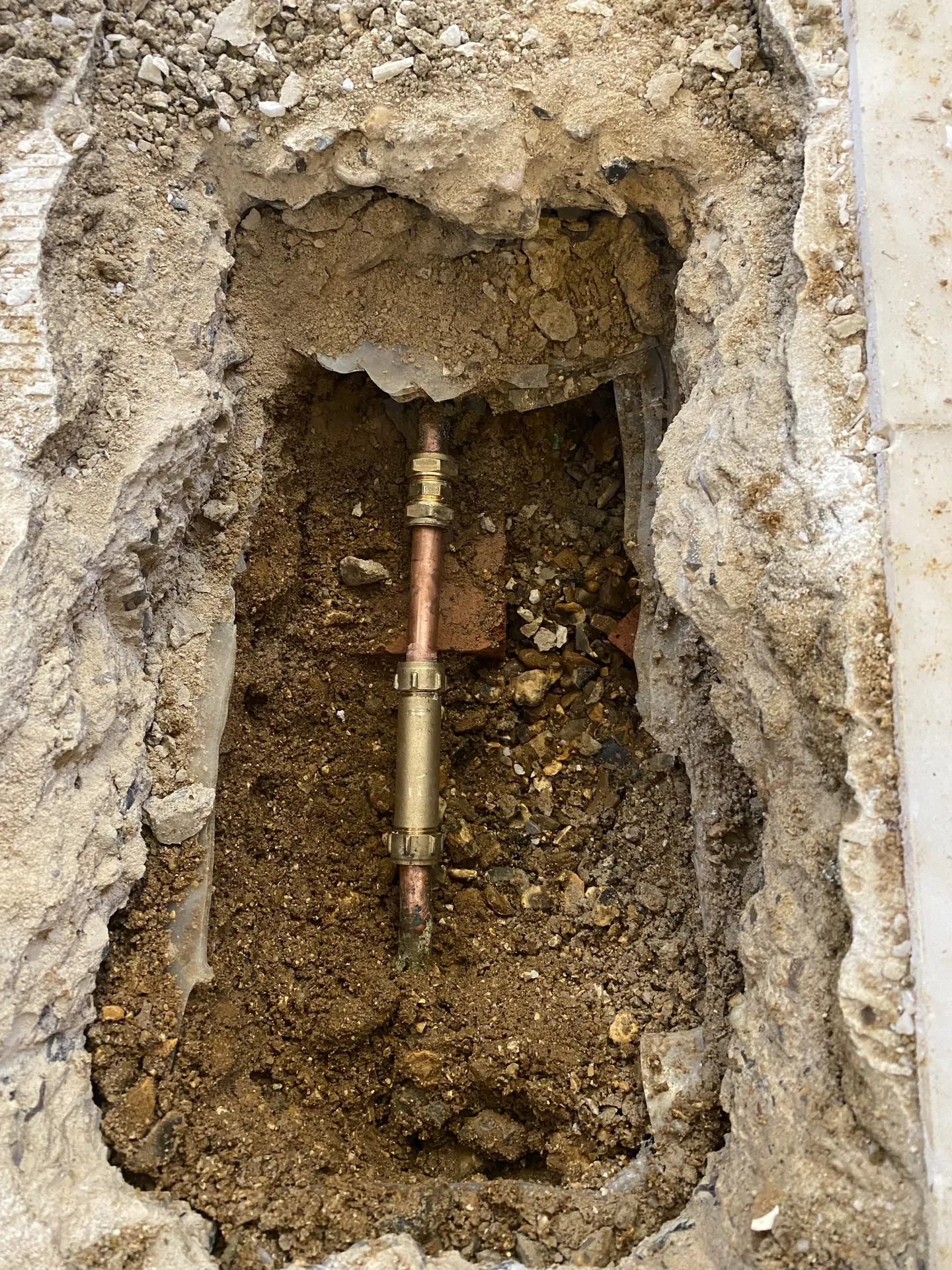
Often none. The hole around a pipe, a gap at the edge of a board, the space behind a bath panel or a downlight opening is usually enough. Where there is no gap we drill a single hole a few centimetres wide, in a spot agreed with you, which is easily filled afterwards.
Can you put a camera under my floor to look for a leak?
Yes, where there is a void to look into. Suspended timber floors and ceiling voids suit the camera well. Solid concrete and screeded floors have no void, so for those the thermal camera, acoustic microphone and tracer gas do the work instead.
Can you look inside a wall for a leak?
Where the wall is a stud partition or has a pipe chase or boxing, yes. The camera goes in through a small hole or an existing opening and follows the pipe. Solid brick or block walls with pipes buried in the plaster are checked with the thermal camera and tracer gas instead.
Do the camera pictures go to the insurer?
Yes. Stills from the borescope are included in the report with the thermal images, readings and photographs. A picture of the leaking joint taken before the floor was opened is clear evidence of where the leak was and why access was needed there.
Related services
Need borescope camera inspections?
Call now and we will tell you straight away whether it needs a same-day visit. Or send a photo of the stain, the meter or the boiler gauge on WhatsApp.
07516 755 680