Where is the leak? Finding it without opening up on a guess
Where the water shows is rarely where it starts. Pick the place you are worried about for what is usually going on there, what you can check now, when it is urgent, and how we would find it.
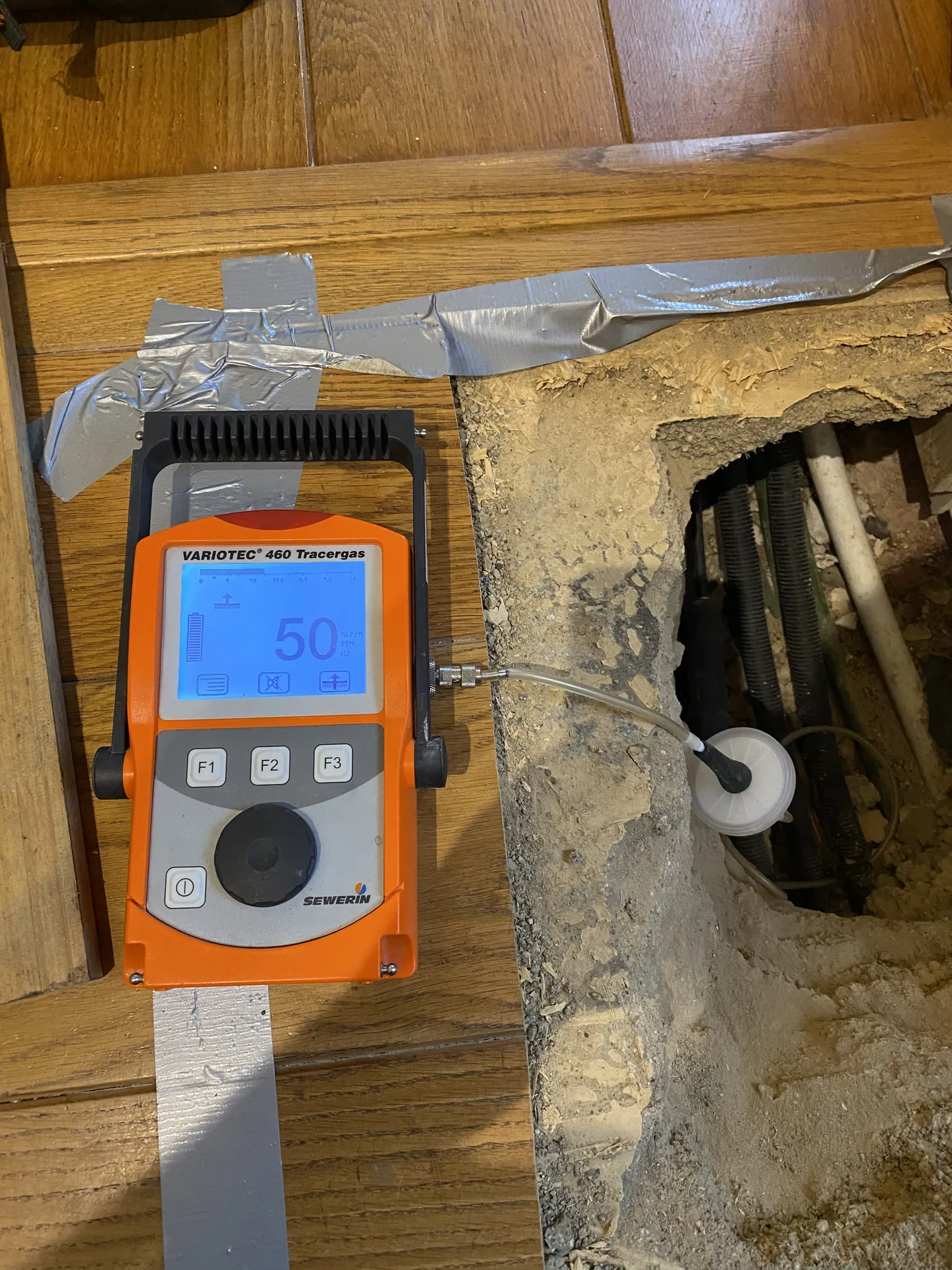
A leak under a floor can run for months before a damp patch, a warm spot or a water bill gives it away. Suspended timber floors and solid floors hide leaks in different ways, and each calls for different methods through the floor finish.
Read the guidePipes laid in a screed or under a slab leak into the concrete with nothing to see at the surface for a long time. The tools we use read through concrete, so the slab is opened once, at the point we mark, rather than broken out across the room.
Read the guidePipes run inside solid walls in chases and behind plasterboard and tiles. A leak there shows as a stain, bubbling paint or a damp patch that often sits nowhere near the pipe. We find the pipe and the leak before a single tile or patch of plaster comes off.
Read the guideA damp patch, a brown stain or a drip from a ceiling has a source somewhere above it, and that source is often not directly over the mark. We find out whether it is plumbing, heating, a tank, the flat above or rain before anyone cuts the ceiling.
Read the guideBaths, shower trays, toilets and basins leak at the seals, wastes and overflows far more often than at the pipes. The water goes straight into the floor without a drip you can see. We test each fitting in turn so the right one is fixed and the tiles stay on.
Read the guideKitchen leaks hide behind plinths, under units and in the floor, where appliance connections, wastes and heating pipes all run out of sight. We find them with the units left in place wherever that is possible.
Read the guideWater surfacing on a drive, a lawn that stays lush in a dry spell or ground that feels soft underfoot usually points to the supply pipe. It runs from the boundary stop tap to the house, and it is yours to repair.
Read the guideVictorian and Edwardian houses stand on a void with pipes running through it. A leak down there shows itself slowly, as a musty smell, boards that cup or lift, and a damp that never follows the weather.
Read the guideA stain on your ceiling tells you where the water came out, not where it went in. Finding the source means testing the flat above, fitting by fitting, and writing it down so everyone involved can act on it.
Read the guideA good plumber checks everything that can be reached. When the leak is behind a wall, under a screed or beneath a drive, the problem is not the plumber. It is that the leak cannot be seen, and finding it needs different tools.
Read the guideA damp patch has four usual explanations, and only one of them is a leak. Each behaves differently with the weather, the time of day and how the house is used, so the pattern is the first clue.
Read the guideThe loft holds more plumbing than most people expect: a cold water tank, often a small feed and expansion tank, overflow pipes and the runs to showers and bathrooms. Any of them can wet a bedroom ceiling, and so can condensation and rain.
Read the guidePinpointed before anything is opened up
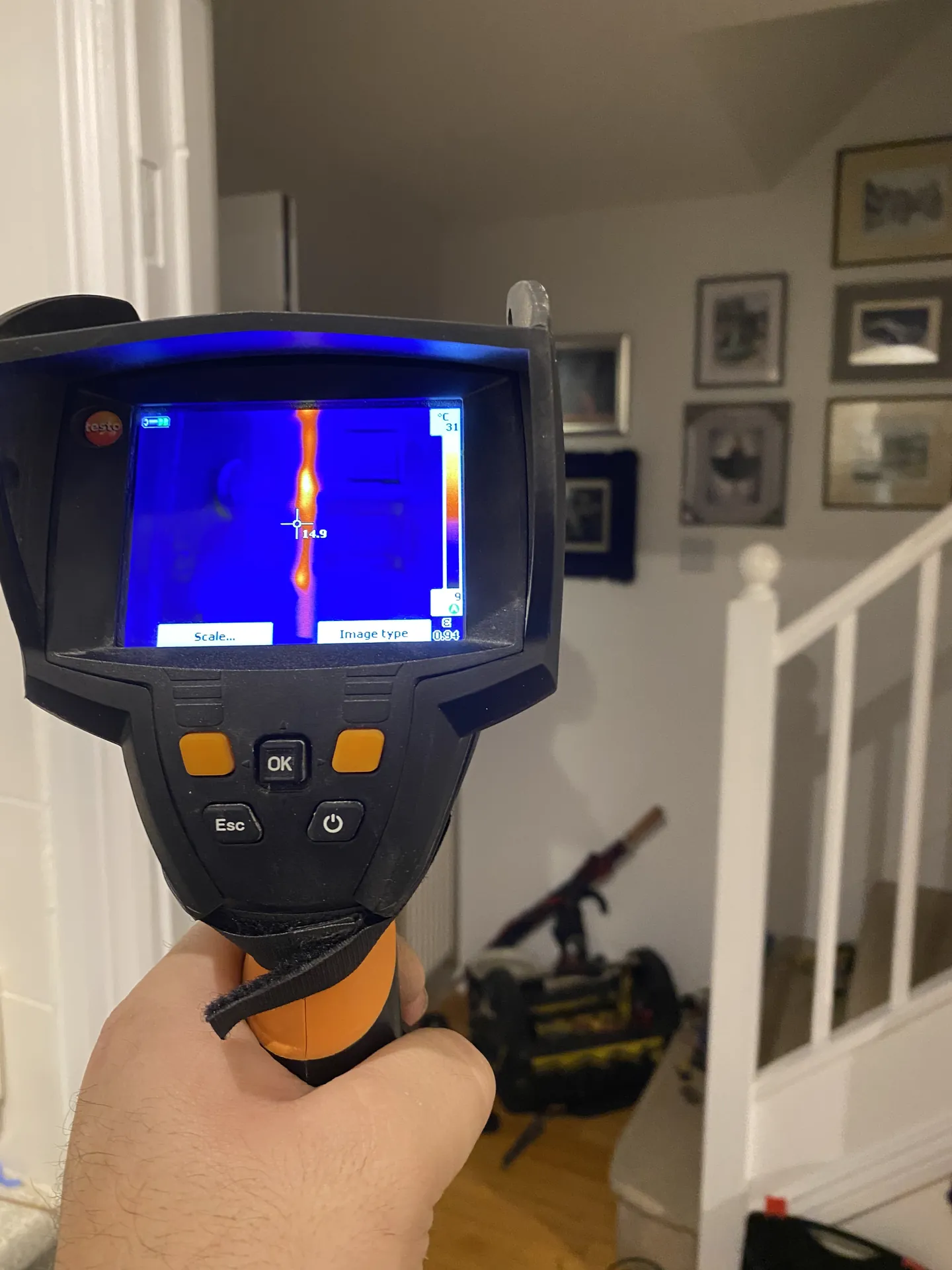
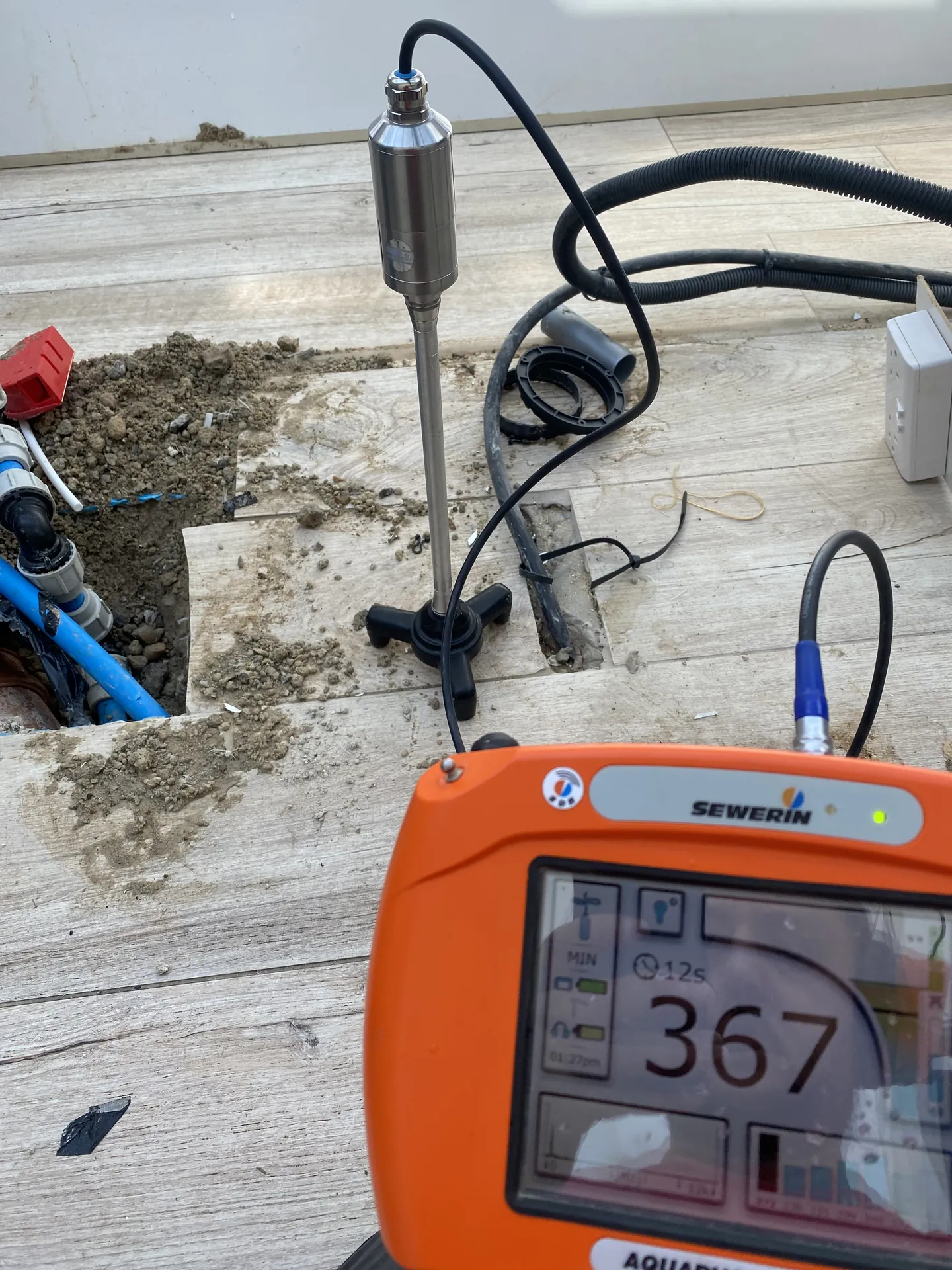
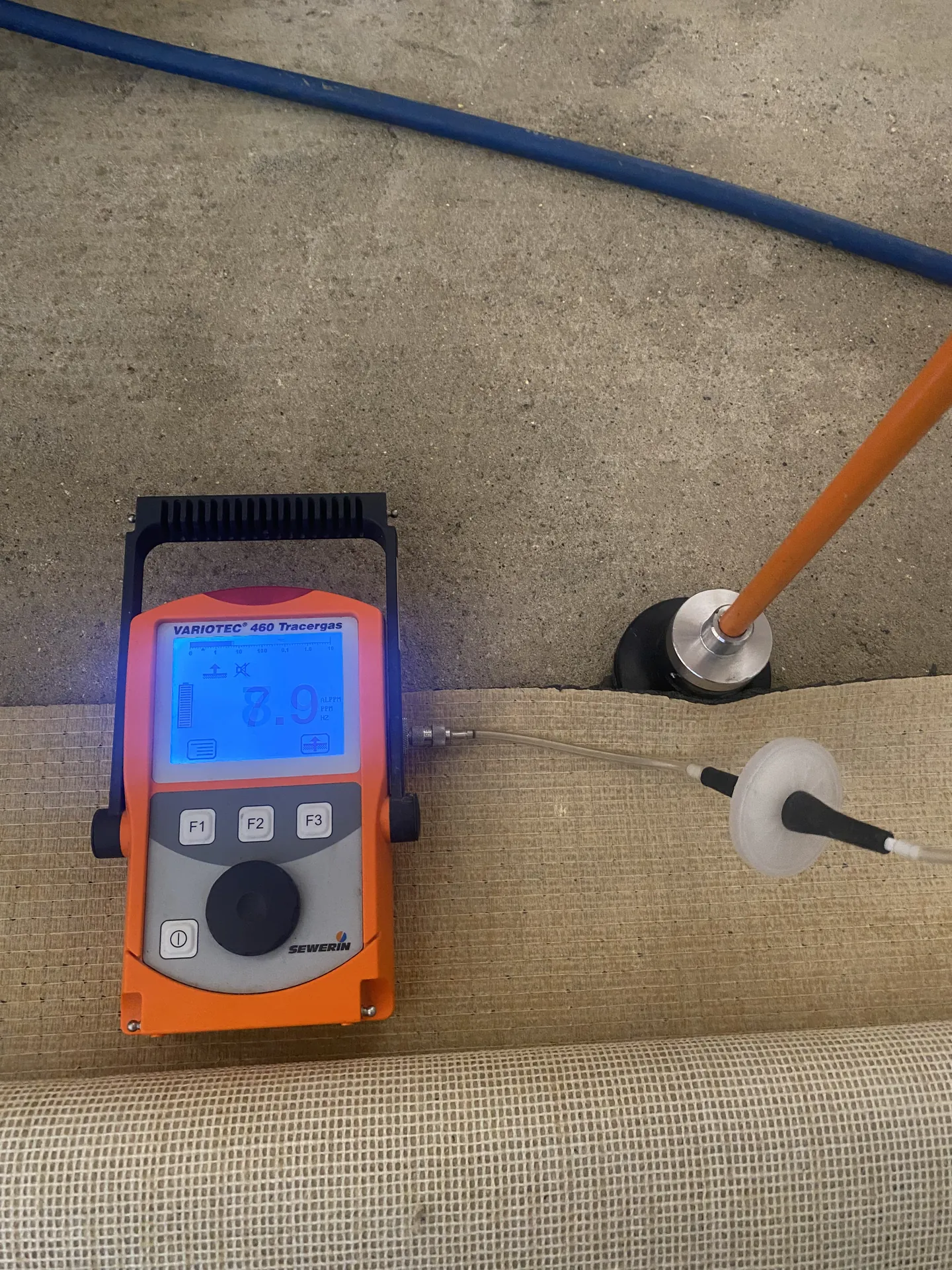
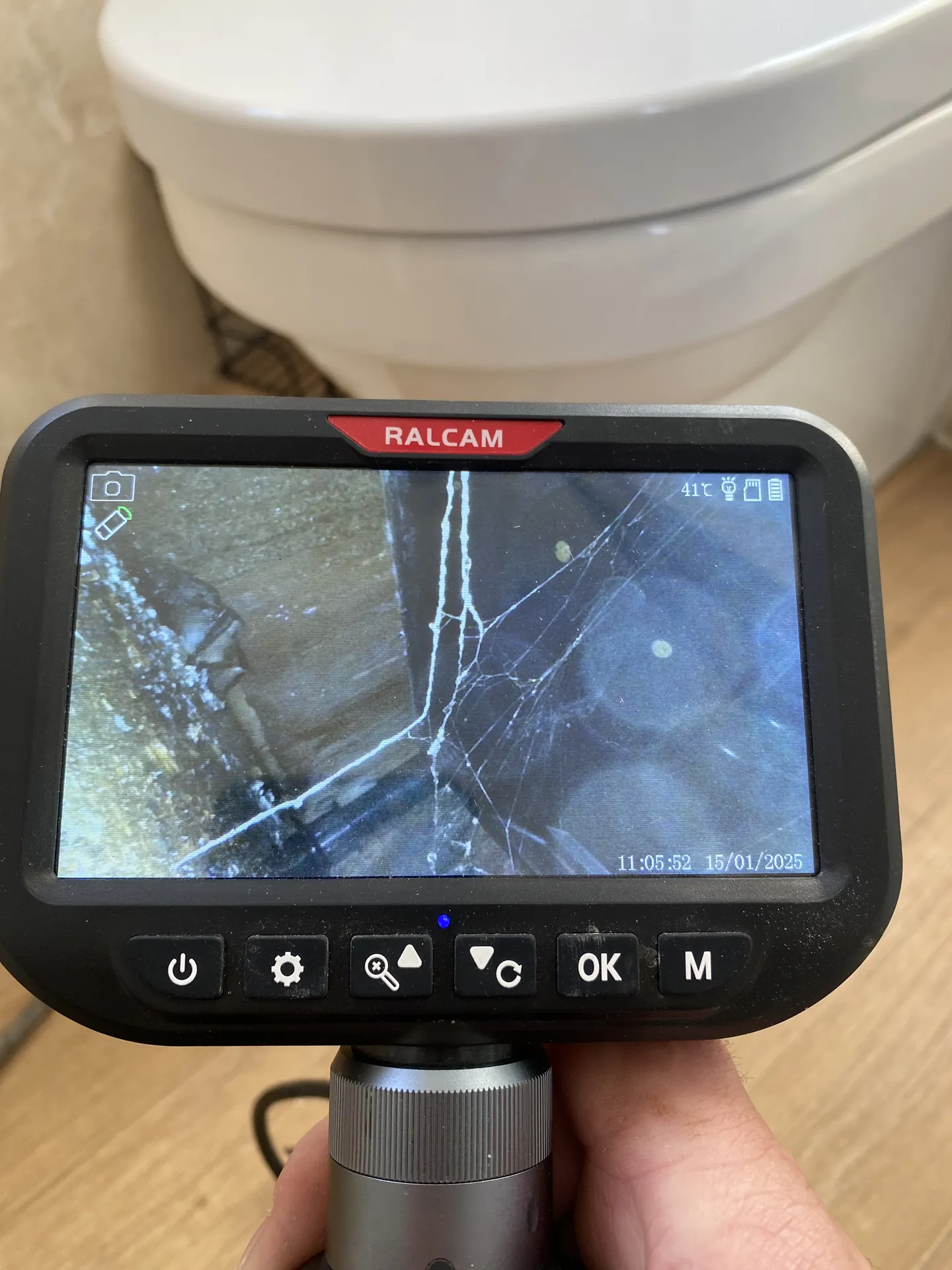
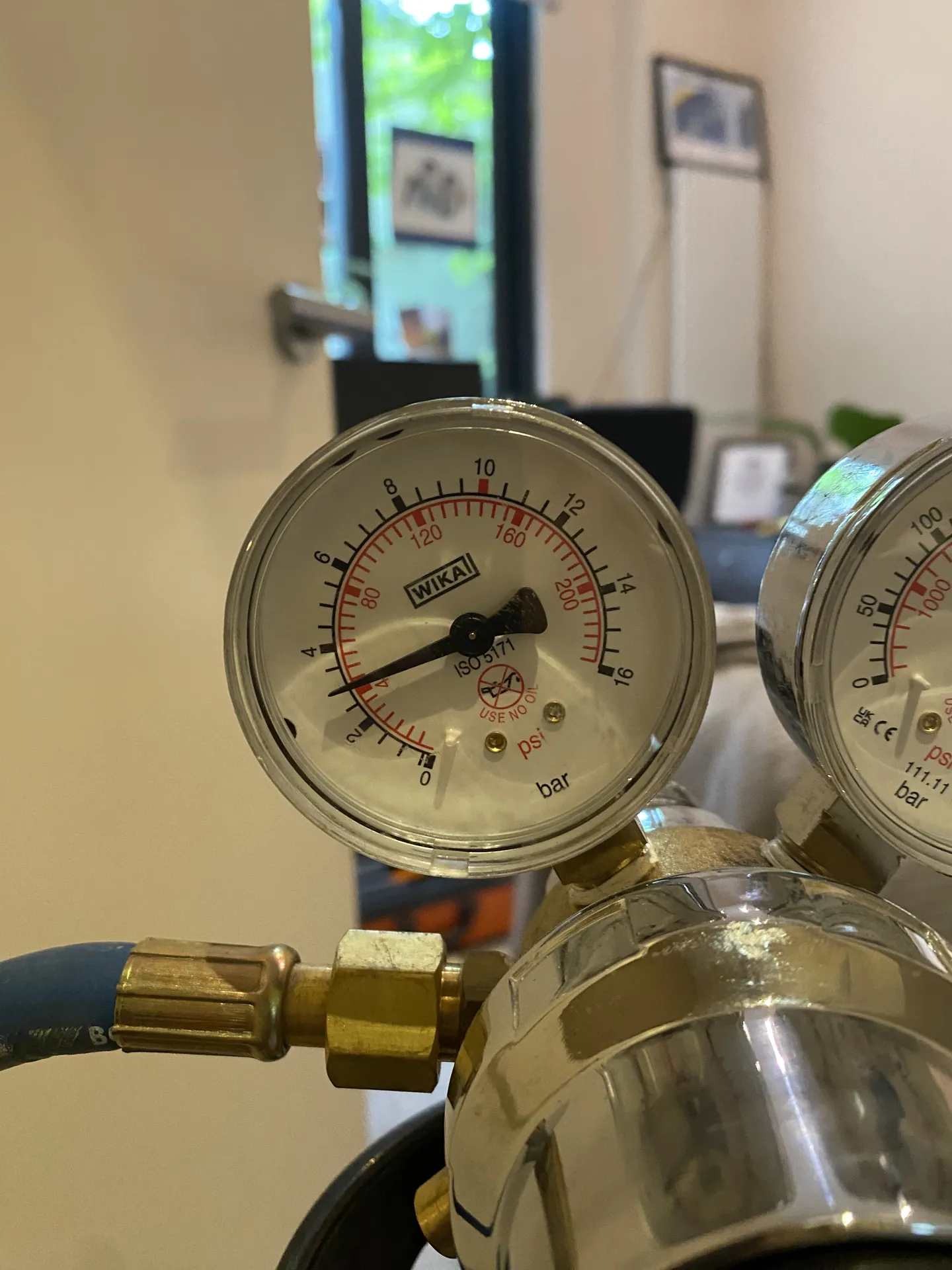
Every survey uses whichever combination of these finds your leak fastest. The photos are from our own jobs.
From your first call to a leak you can see in the report
Call or WhatsApp with a few photos and a line about the symptoms. We ask a handful of questions, agree a fixed price and book the survey, usually for the same or the next day.
On arrival we pressure test the mains, hot water and heating, check the meter and test the escaping water, so we know what we are looking for before the detection starts.
Thermal imaging, the acoustic ground microphone and tracer gas are used as the pipework dictates until the leak is marked on the floor or wall.
You get a written report with readings, thermal images and photographs, ready for a trace and access claim. If you want the leak fixed, we open that one spot and repair it.
Still losing water? Every day adds to the damage.
Call now and we will tell you straight away whether it needs a same-day visit. Or send a photo of the stain, the meter or the boiler gauge on WhatsApp.
07516 755 680