Leak Detection for Landlords and Letting Agents
A tenant has reported a damp patch, a dripping ceiling or a bill the water company says is far too high, and you are not on site. We arrange access with the tenant, find the leak and report back to you or your agent as soon as the survey is finished.
Leak detection for landlords and letting agents, step by step
Leaks in rented property rarely wait for a convenient moment. The tenant notices a stain spreading across a ceiling or a musty smell under the stairs, the agent passes the message on, and the landlord is left deciding what to do from a distance. Sending a plumber to open up walls on a guess risks a large making-good bill and an unhappy tenant. A detection survey answers the first question, where the water is coming from, before anyone picks up a tool. We work for private landlords, letting agents and small portfolio owners across Hertfordshire and London, and we are used to taking instructions from one person while the keys are held by another.
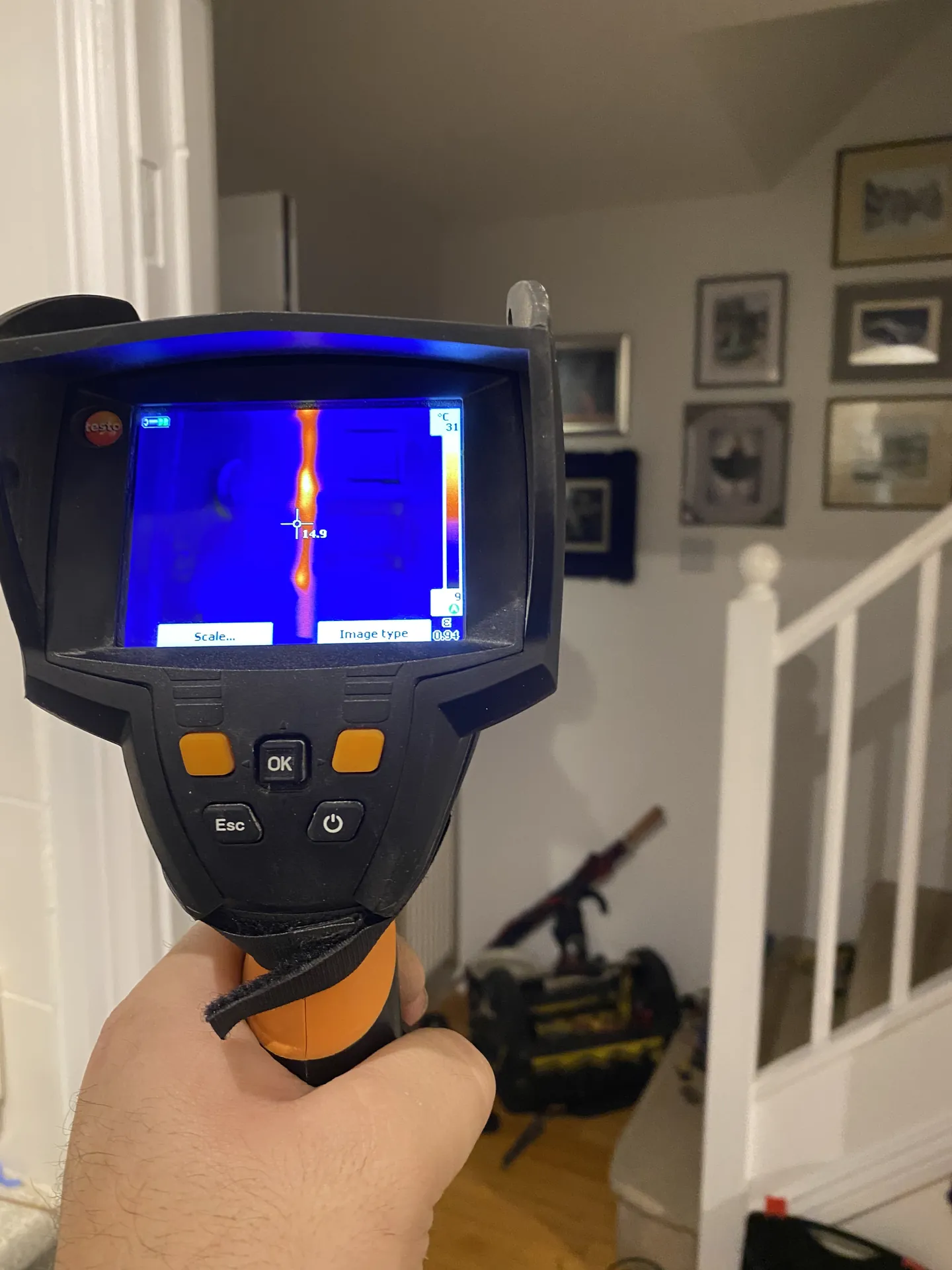
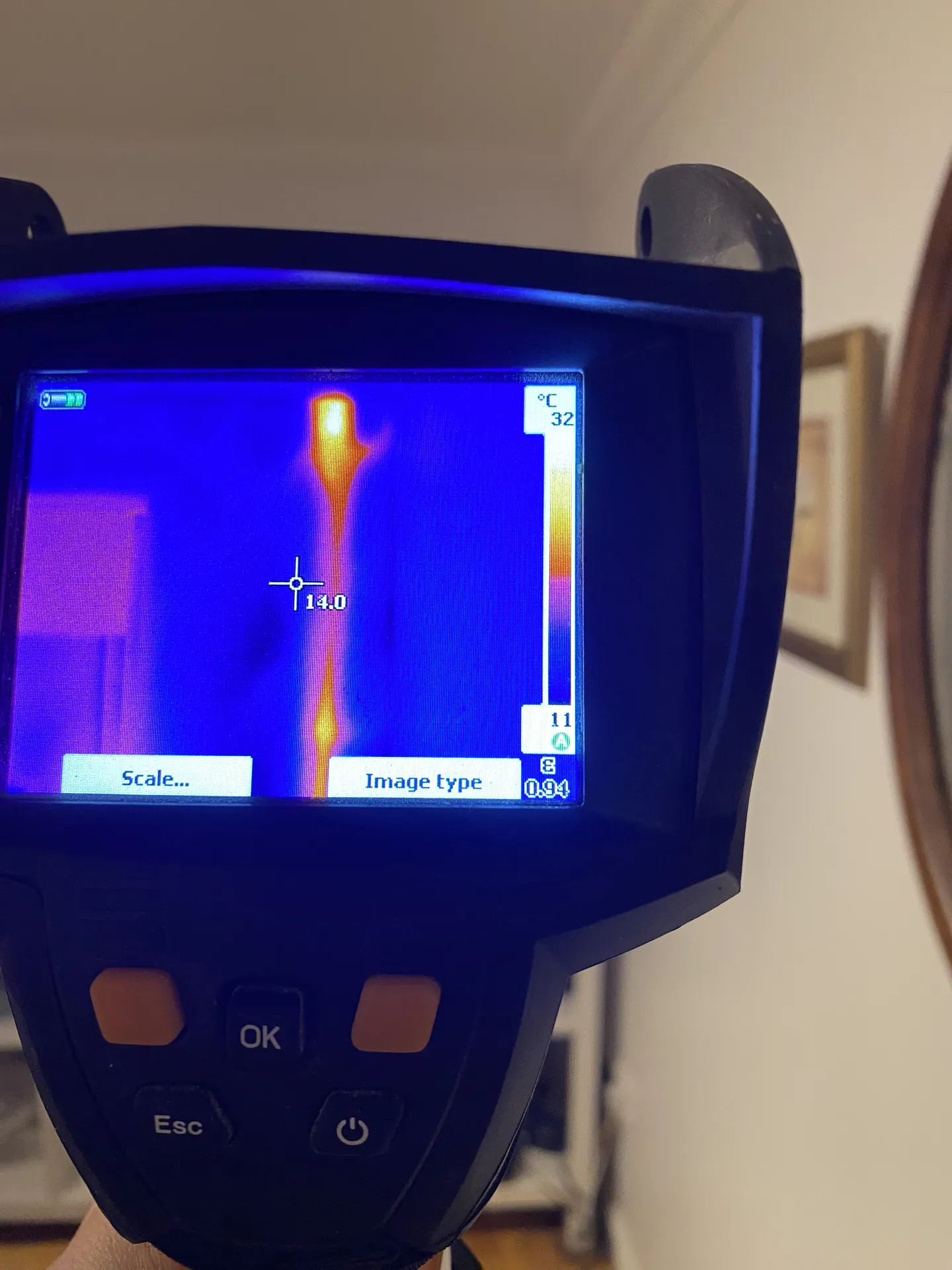
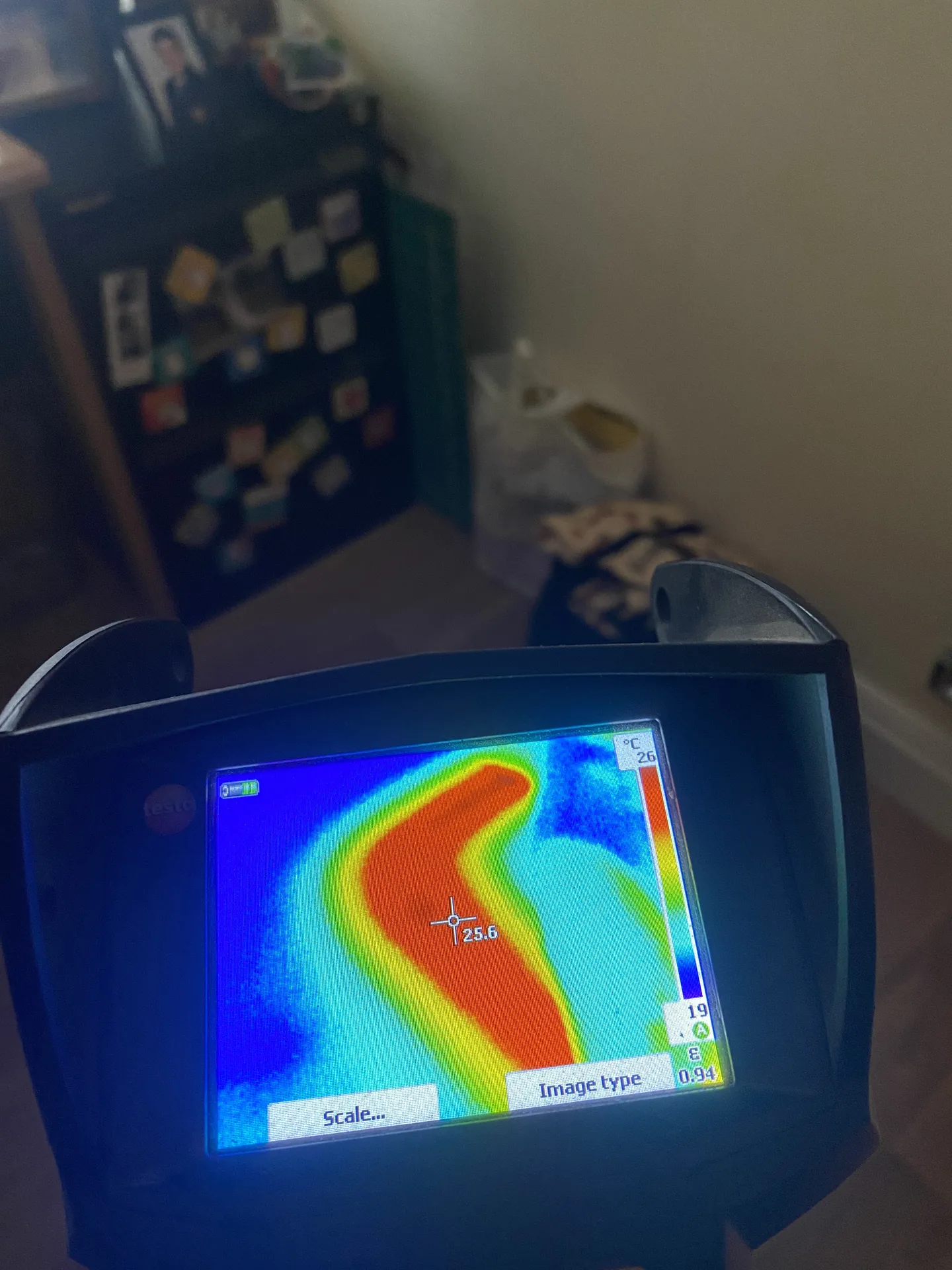
By arrangement we attend with the tenant present and the landlord or agent elsewhere. We ask the tenant to describe what they have seen and when, because the pattern of a leak often says which system it is on. Then we test each supply in turn, scan the affected rooms with the thermal camera, take moisture readings and, where the pipe is buried or boxed in, use tracer gas or the acoustic microphone. Nothing is opened without agreement from whoever is instructing us. The tenant keeps the use of their home throughout, and we leave the property tidy, which matters when the person paying is not the person living there.
You receive a written report with photographs, thermal images and readings, and we send it to the agent, the landlord or both. It states which pipe is leaking, where it is, and what access is needed to reach it, in plain terms that a claims handler can follow. Who pays for what between landlord and tenant depends on the tenancy agreement and the cause, which is not something we advise on, but a clear report takes the guesswork out of that conversation. Many buildings policies include trace and access cover, and we are happy to speak to the insurer or loss adjuster about the findings.
In our own photos
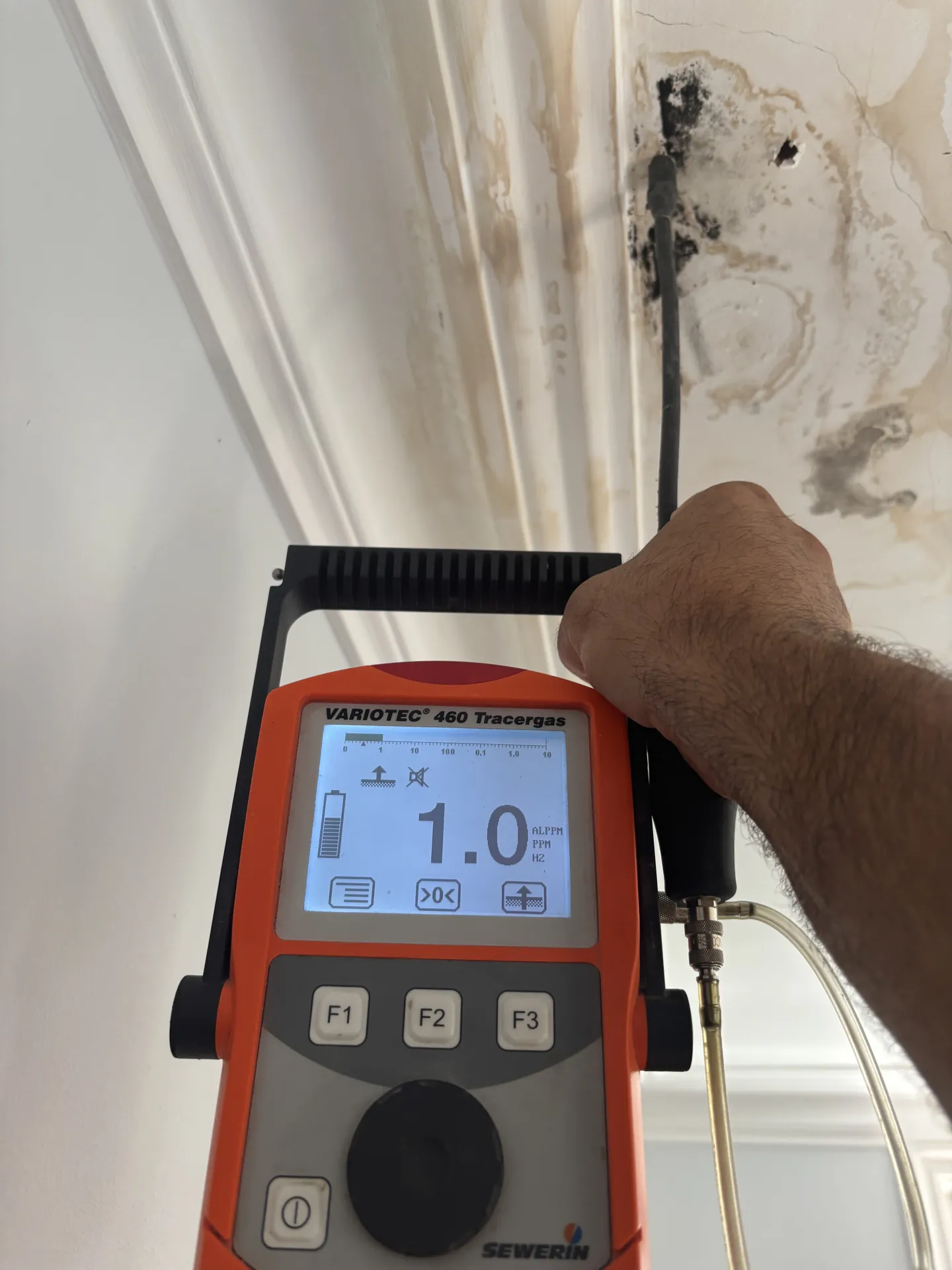
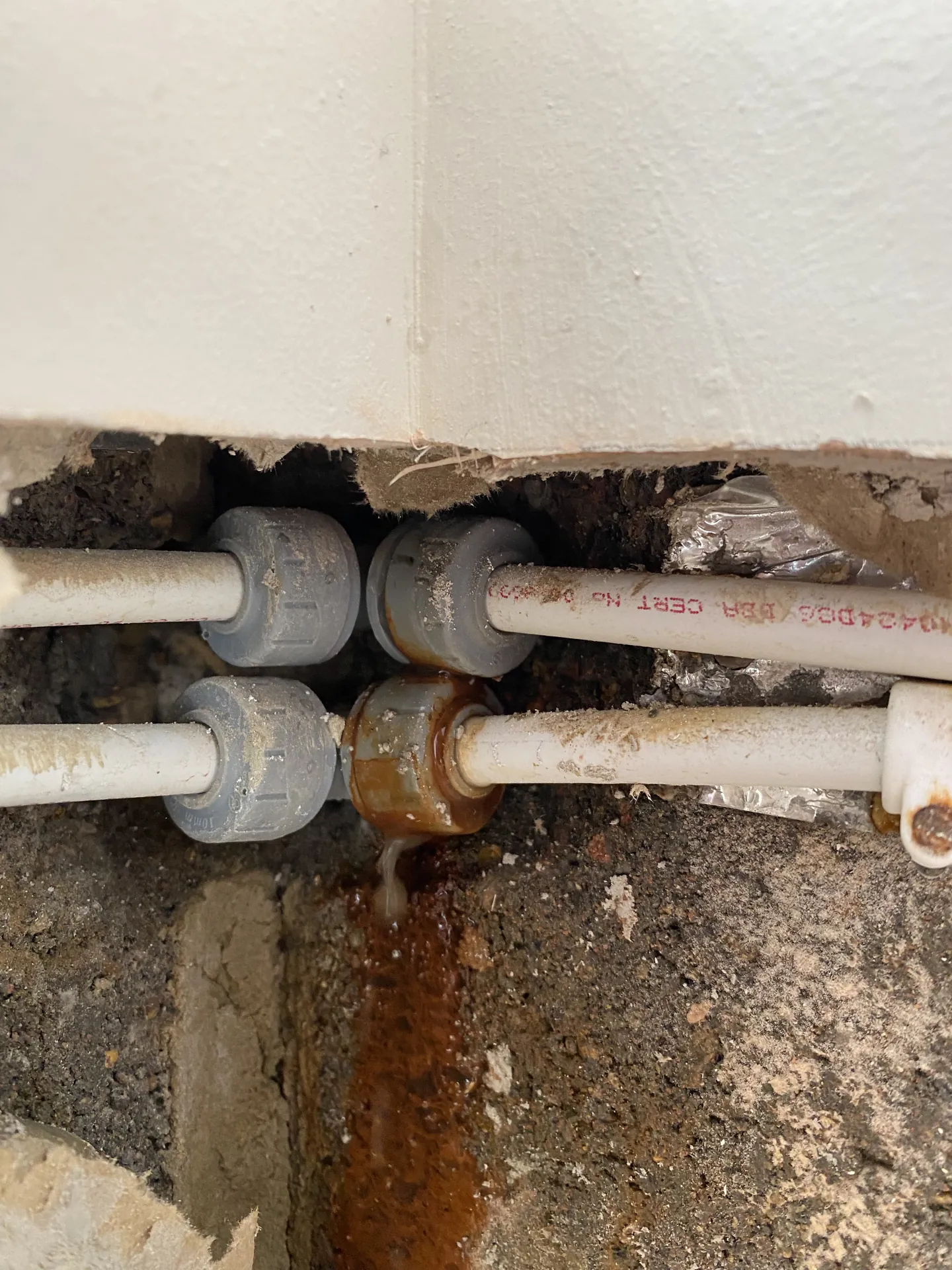
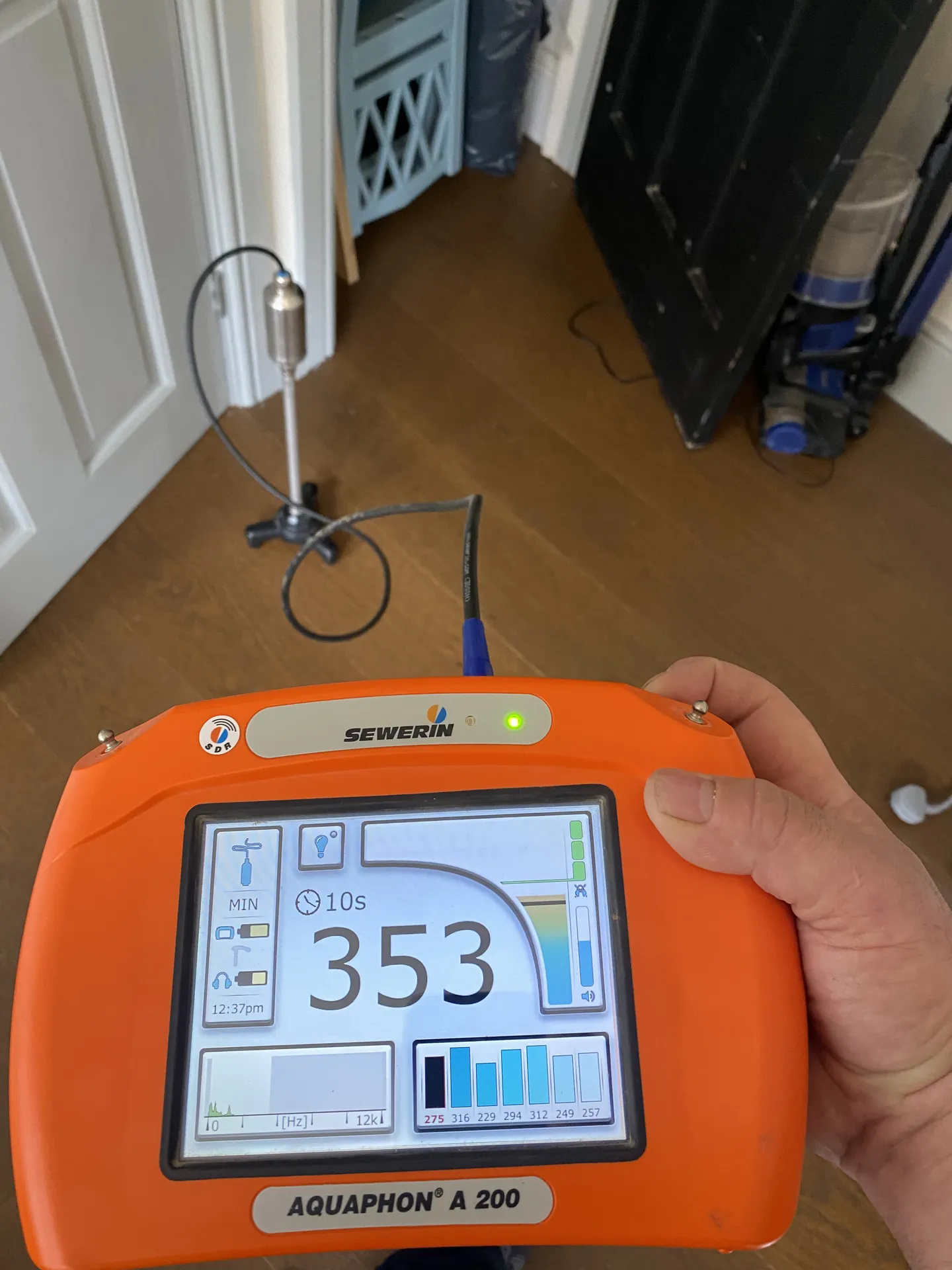
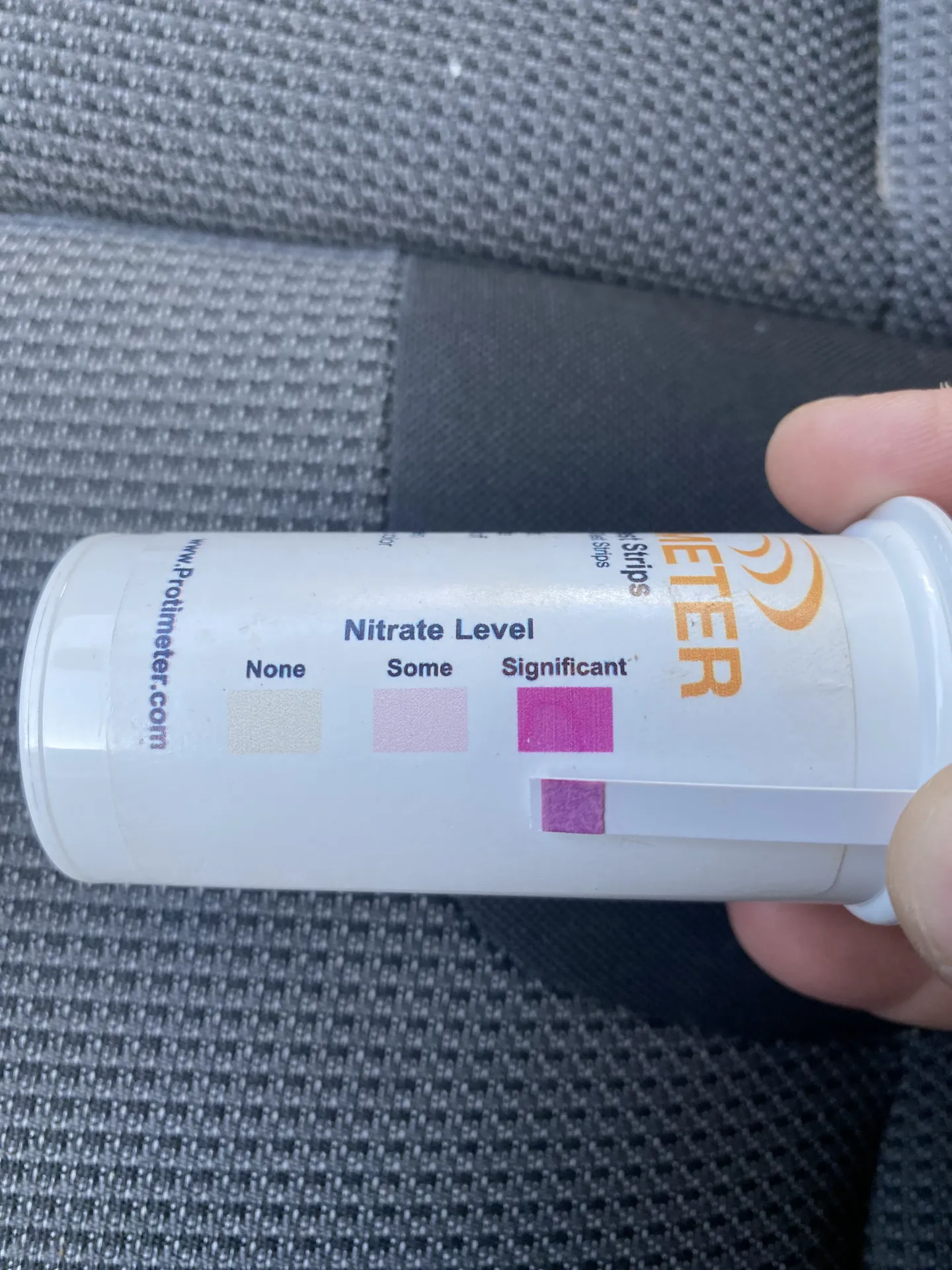
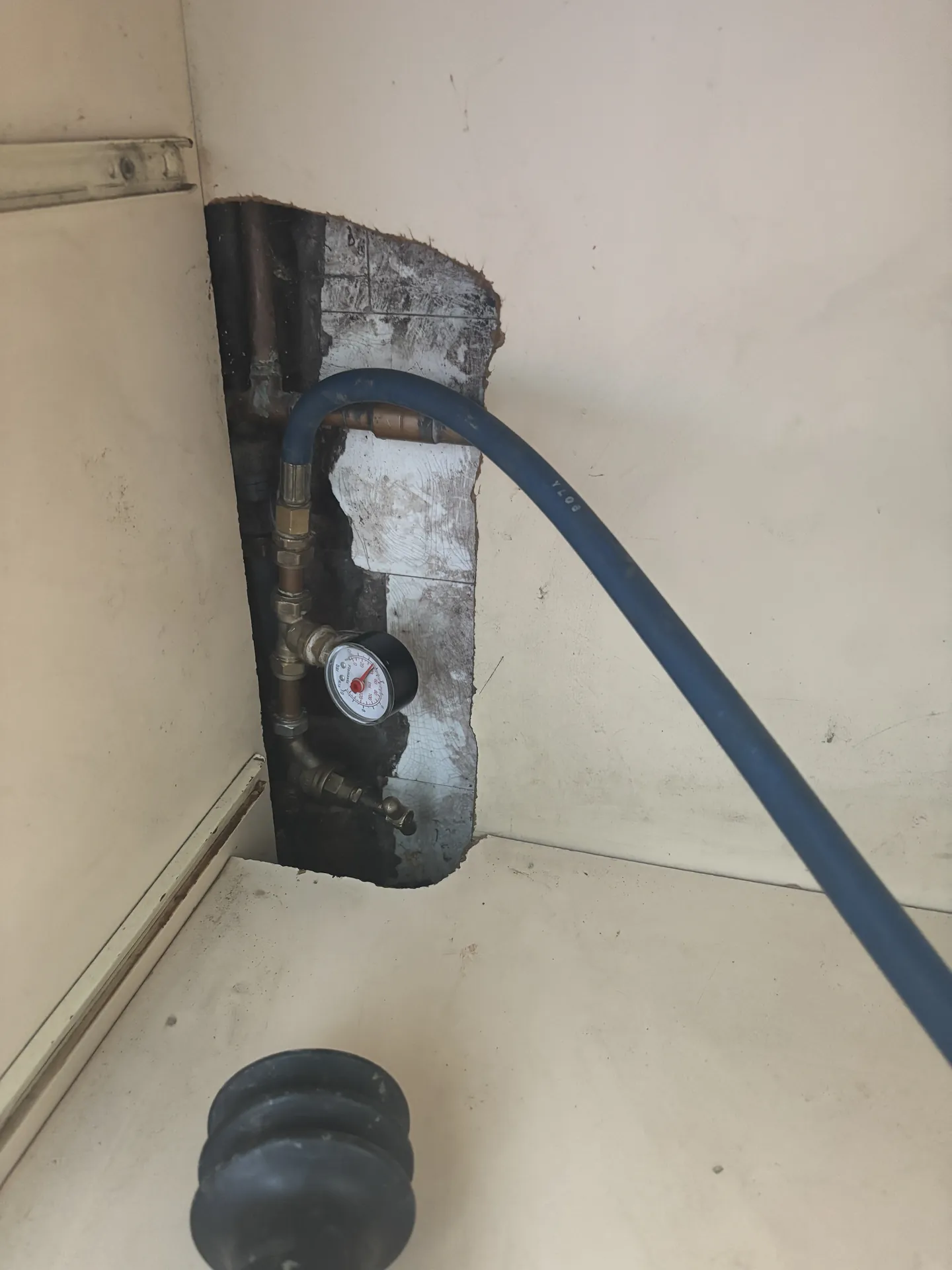
From your first call to a leak you can see in the report
Call or WhatsApp with a few photos and a line about the symptoms. We ask a handful of questions, agree a fixed price and book the survey, usually for the same or the next day.
On arrival we pressure test the mains, hot water and heating, check the meter and test the escaping water, so we know what we are looking for before the detection starts.
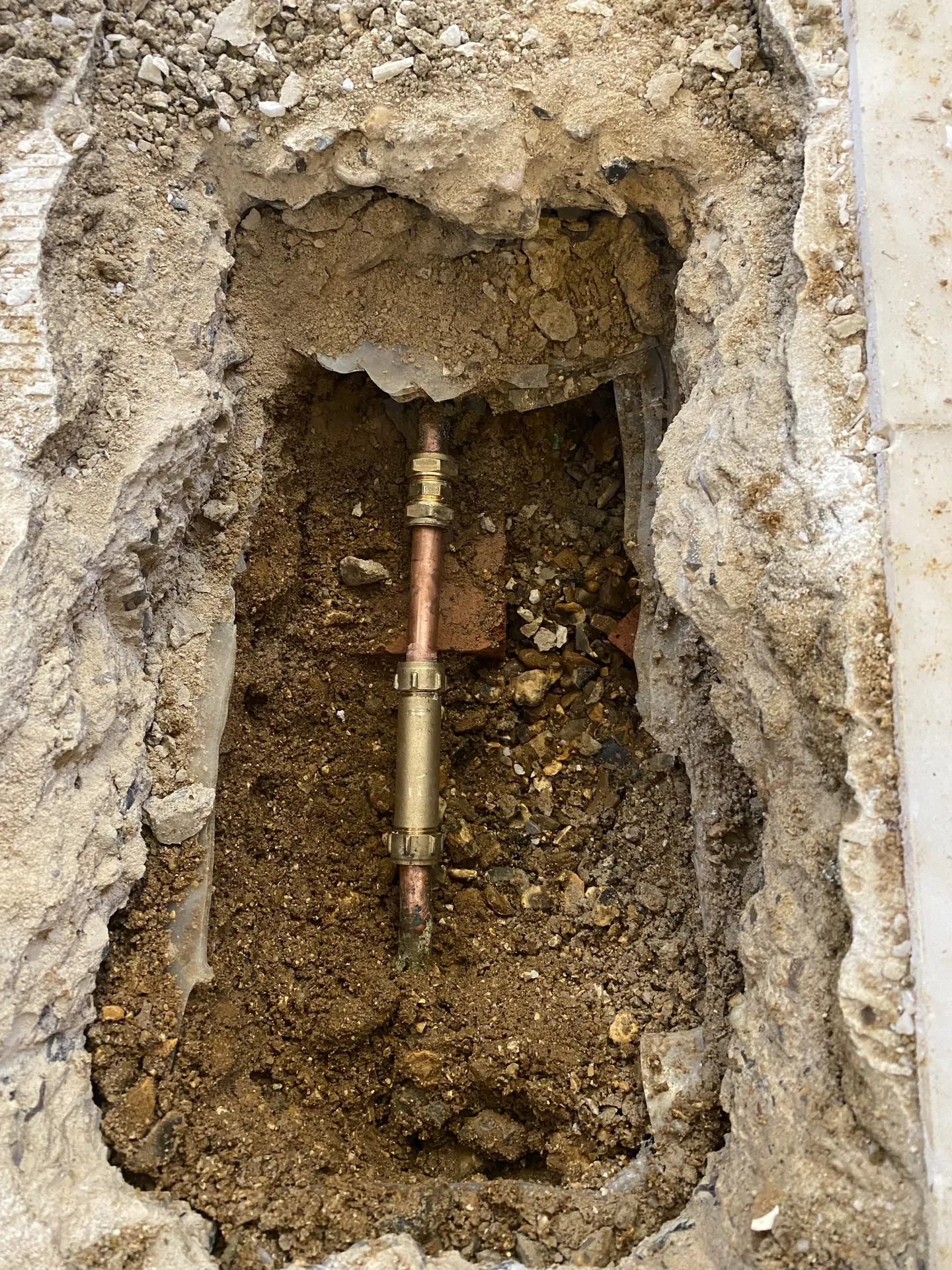
Thermal imaging, the acoustic ground microphone and tracer gas are used as the pipework dictates until the leak is marked on the floor or wall.
You get a written report with readings, thermal images and photographs, ready for a trace and access claim. If you want the leak fixed, we open that one spot and repair it.
A report your insurer can act on
Most buildings insurance policies include trace and access cover for finding a hidden leak and making good the way in. Our report is written for that claim: what we tested, what we found, where it is, with photographs, thermal images and readings.
- Turn off the stop tap or the heating and stop topping up
- Photograph the damage, the boiler gauge and the meter
- Tell your insurer a leak is suspected and detection is being arranged
- Trace and access pays to find the leak and make good the access
Landlords: questions answered
Can you attend if the landlord or agent cannot be there?
Yes, by arrangement. We agree the appointment with whoever holds the keys, usually the tenant, and keep the person instructing us informed by phone or message while we are on site. The report follows once the survey is finished.
The tenant says there is a leak but I saw nothing on my visit. Is a survey still worthwhile?
Often, yes. A hidden leak can dry out between visits and return, or show only when a particular tap or the heating is used. The thermal camera and moisture meter pick up water that is not yet visible, and a pressure test shows whether a system is losing water at all.
Who is responsible for a water leak in a rented property, the landlord or the tenant?
In general terms the landlord looks after the structure and the water and heating installations, and the tenant answers for damage they cause. The detail depends on the tenancy agreement and the cause of the leak. We do not give legal advice, but we do provide a clear statement of where the leak is and what caused it, which is what both sides need.
Will the tenant have to move out while you find the leak?
Almost never for the survey itself. Our methods work through walls and floors, and most home surveys take between two and four hours. If a repair needs the water off for a period we say so in advance so the tenant can plan around it.
Can the report be used for the landlord's insurance claim?
Yes. It includes photographs, thermal images and readings, keeps detection, access and repair separate, and sets out the extent of the water damage. Many buildings policies include trace and access cover for locating a hidden leak and making good the area opened to reach it, while escape of water cover deals with the damage itself.
Related services
Need leak detection for landlords and letting agents?
Call now and we will tell you straight away whether it needs a same-day visit. Or send a photo of the stain, the meter or the boiler gauge on WhatsApp.
07516 755 680