Moisture Surveys and Moisture Mapping
Finding the leak is half the job. A moisture survey shows how far the water has travelled through floors, walls and screeds, which way it came from, and what will need drying and making good.
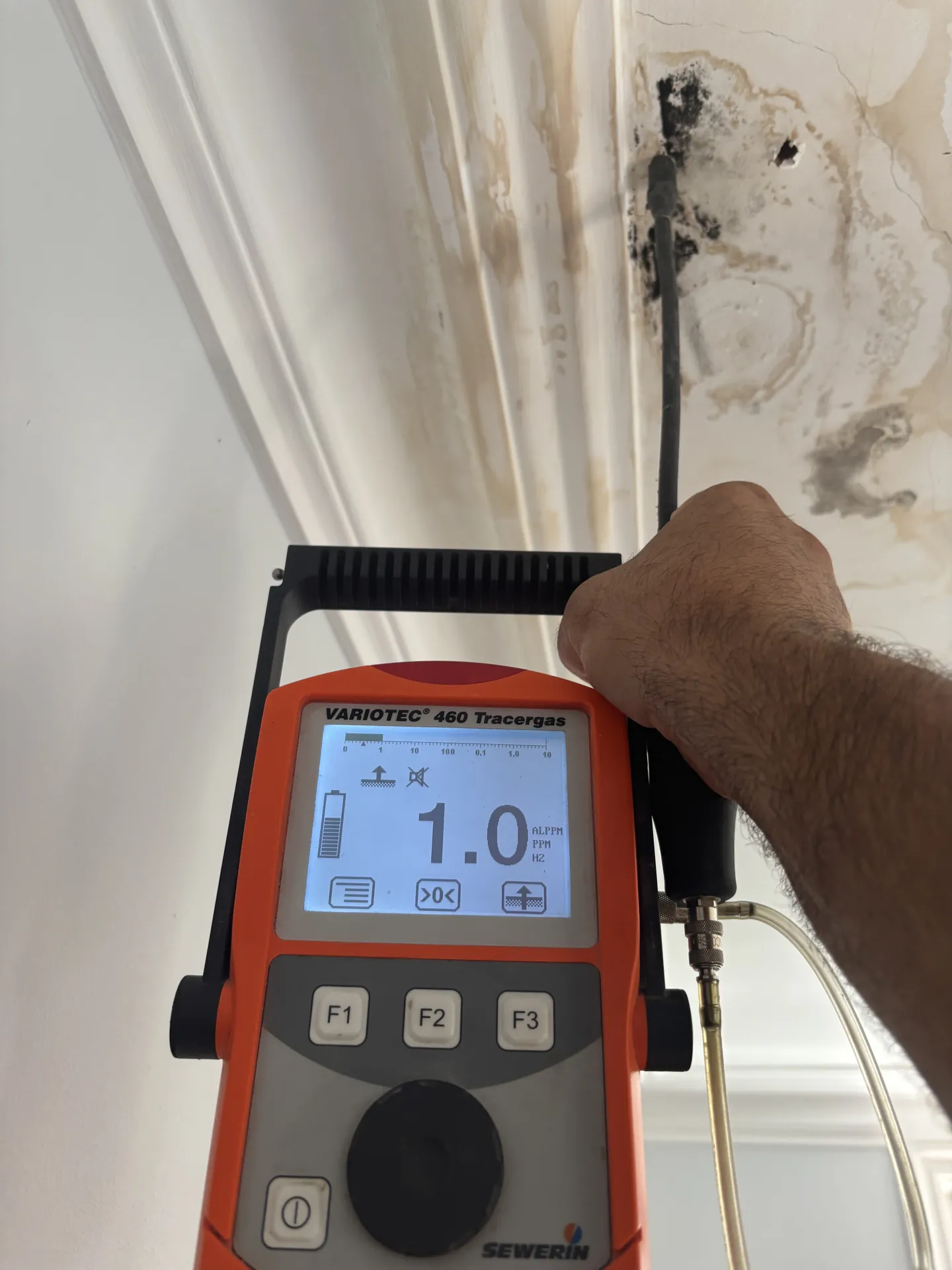
Moisture surveys, step by step
Water does not stay where it escapes. It soaks along a screed, wicks up plaster, runs under a floor finish and sits in insulation for weeks after the surface looks dry. A stain shows where water reached the surface, not where it is. A moisture survey uses a moisture meter at regular points across the affected floors and walls to record a reading at each one. Plotted together those readings form a map, with the wettest readings clustered around the source and falling away in the direction the water has moved. That map is often the quickest guide to where the leak is.
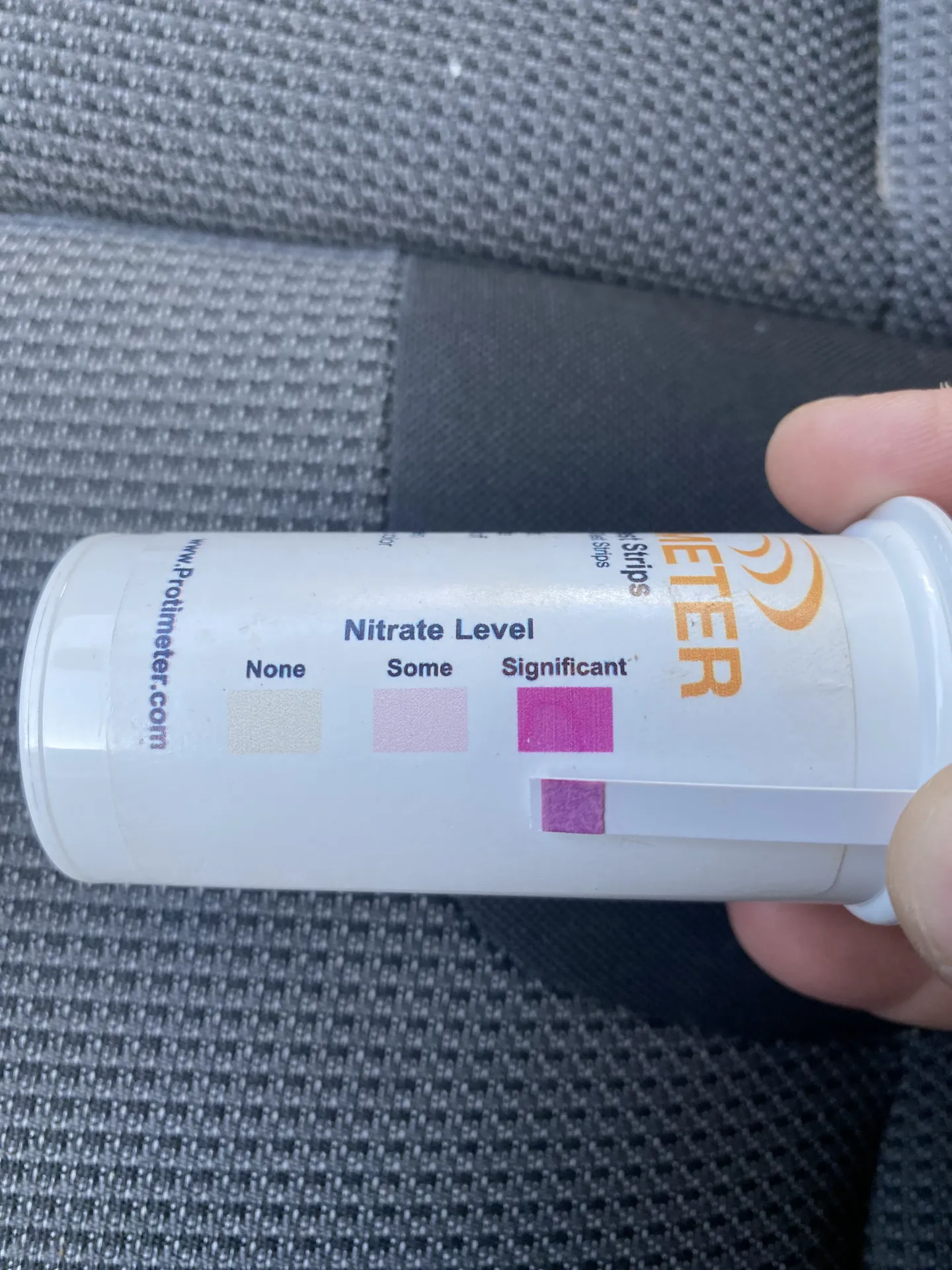
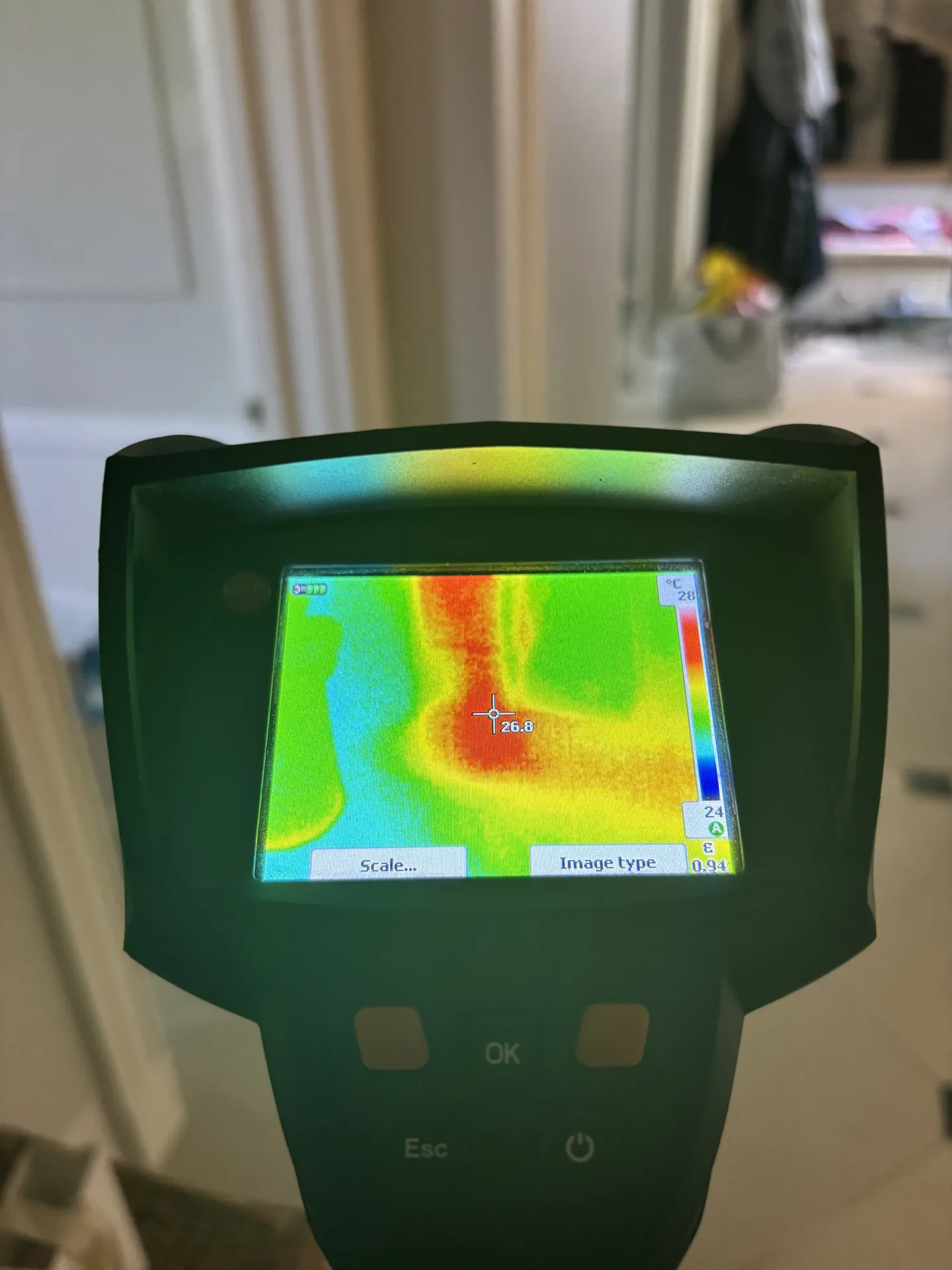
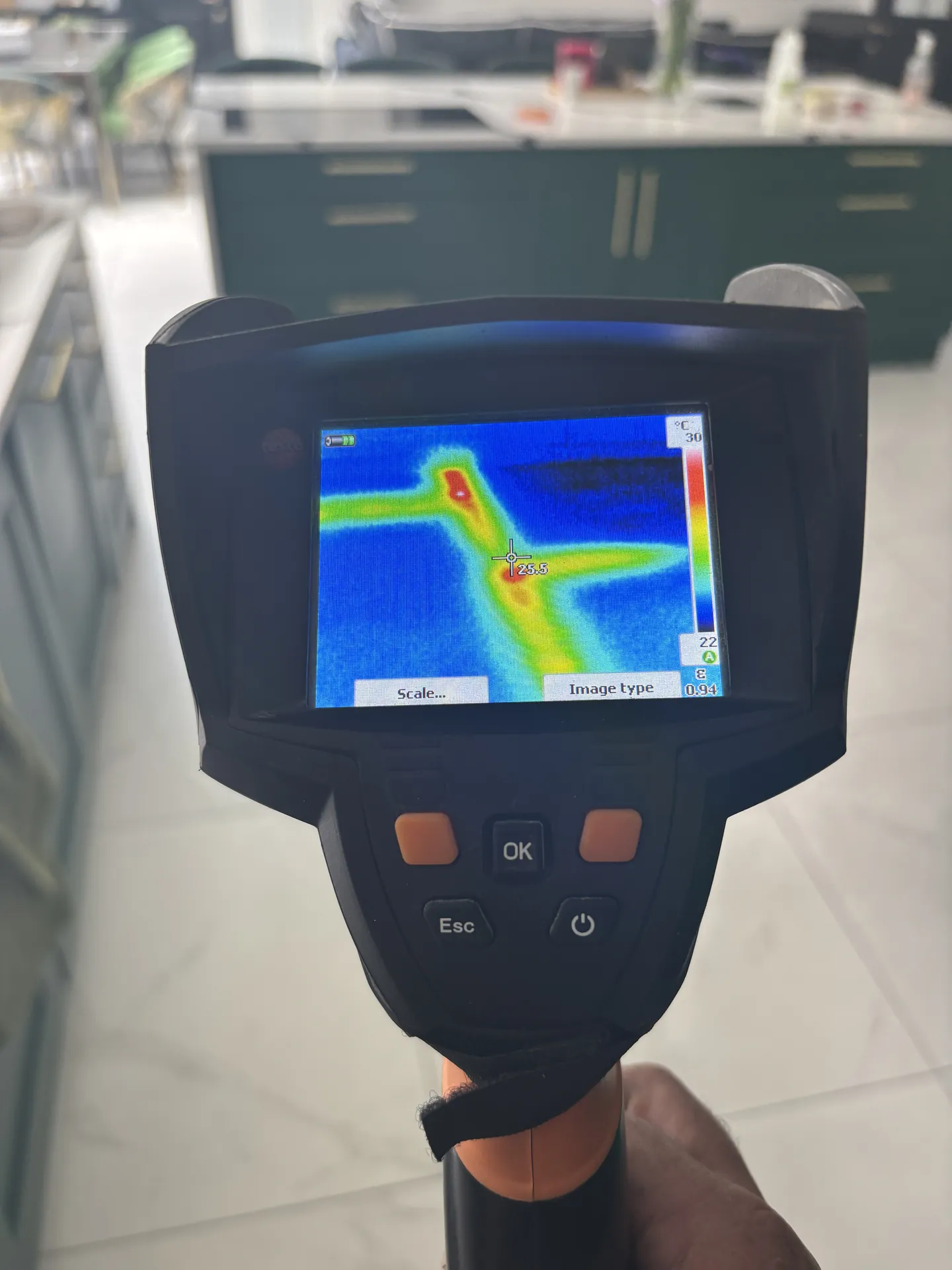
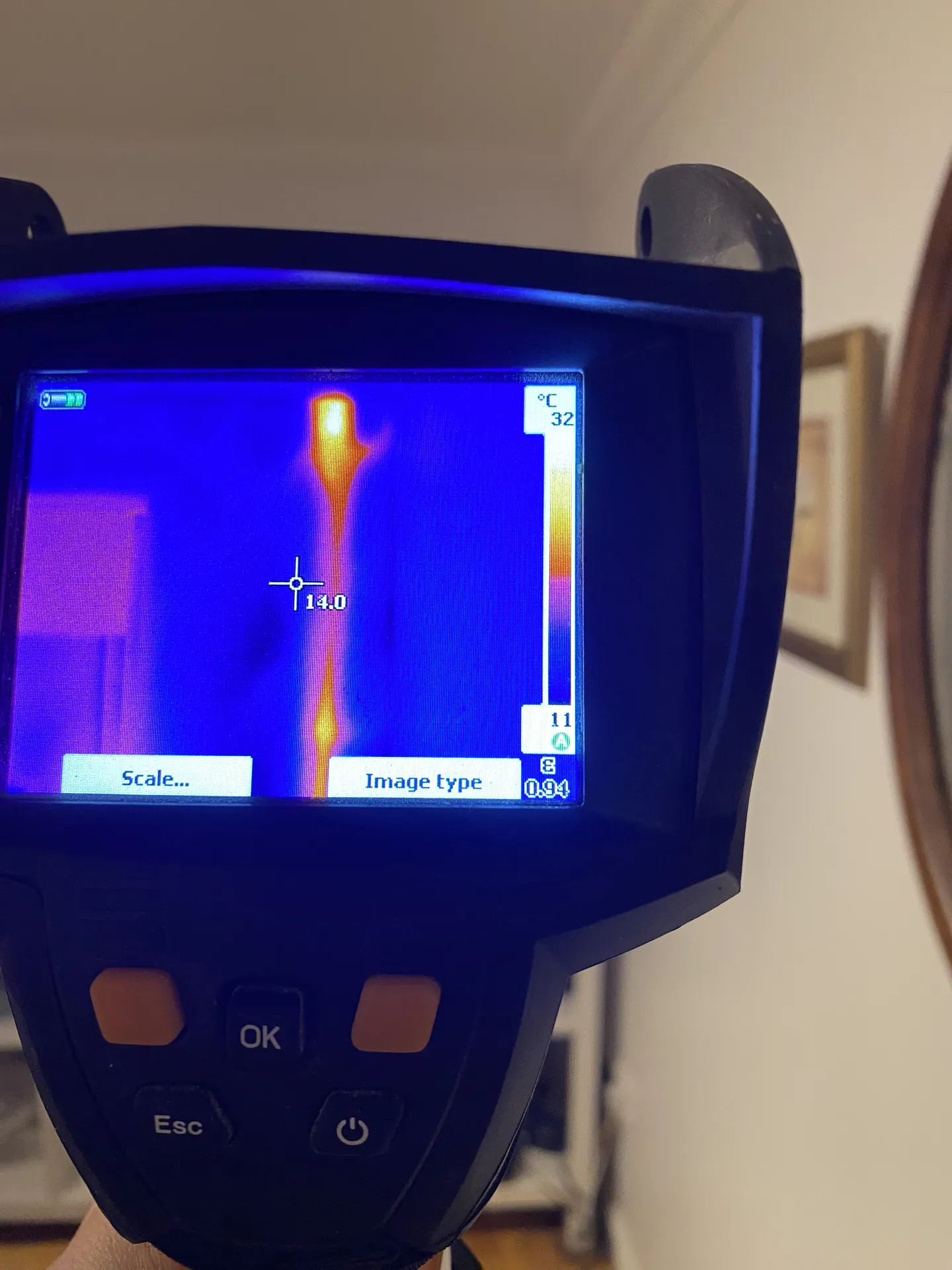
We take readings on a grid across the room and into the neighbouring rooms until the readings return to a normal, dry level, so the edge of the affected area is known rather than assumed. On walls we read at several heights to show how far water has risen. On floors we read the finish and, where there is access, the screed or boards beneath it. The meter tells wet from dry at each point, and the thermal camera shows the same pattern as a temperature difference. A test strip on any free water says whether it is mains, heating or waste. Together they give a consistent picture.
The result goes into the report as a plan with the readings marked, alongside the thermal images. For an insurer that is the extent of the water damage in black and white: which rooms, which surfaces, and how far. It is the basis for the drying and making-good part of an escape of water claim, and it separates damage caused by the leak from damage that was already there. For a homeowner it also answers a simpler question, whether the floor really is dry yet, because a second survey after drying shows the readings back to normal or not.
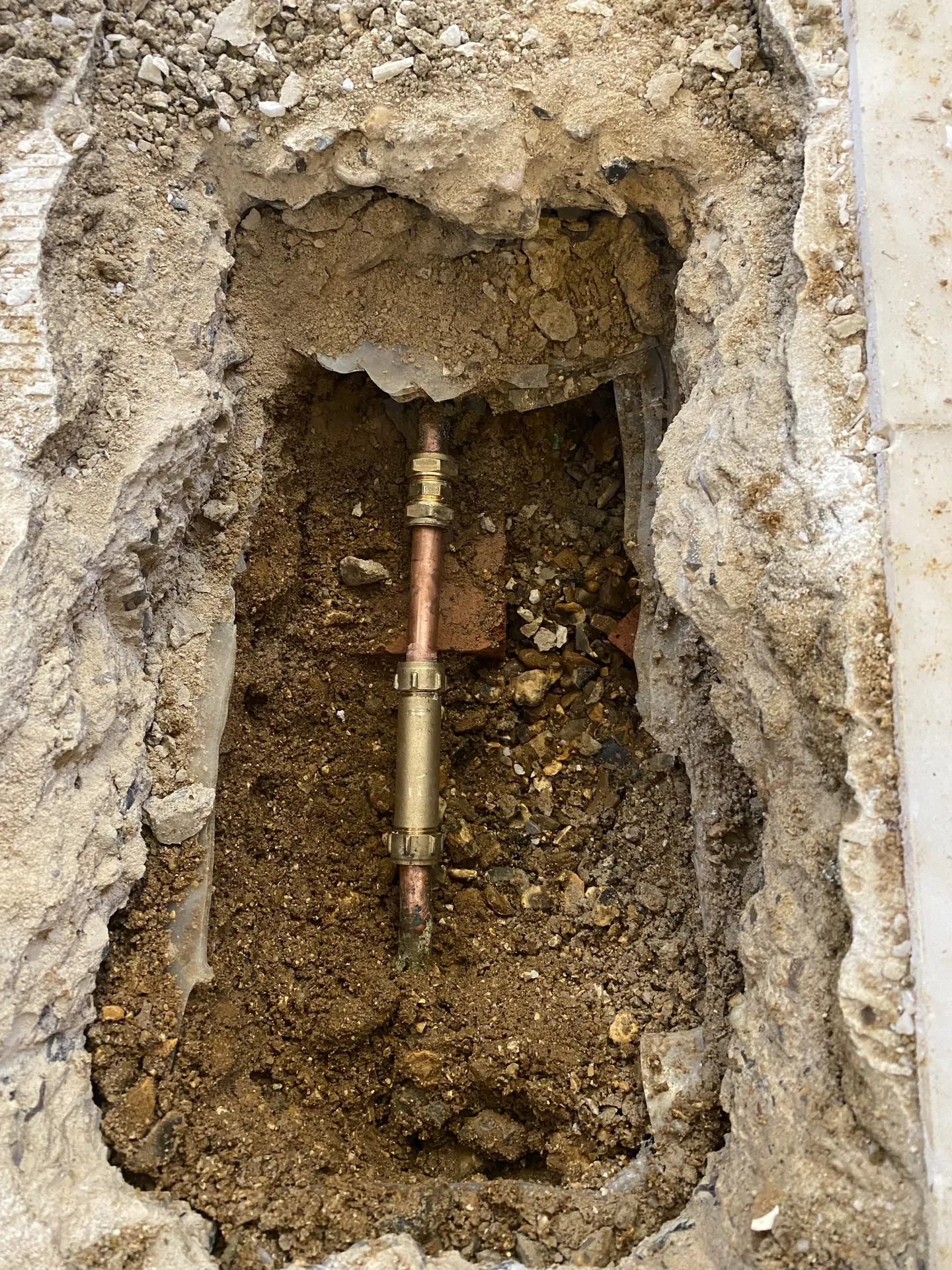
In our own photos
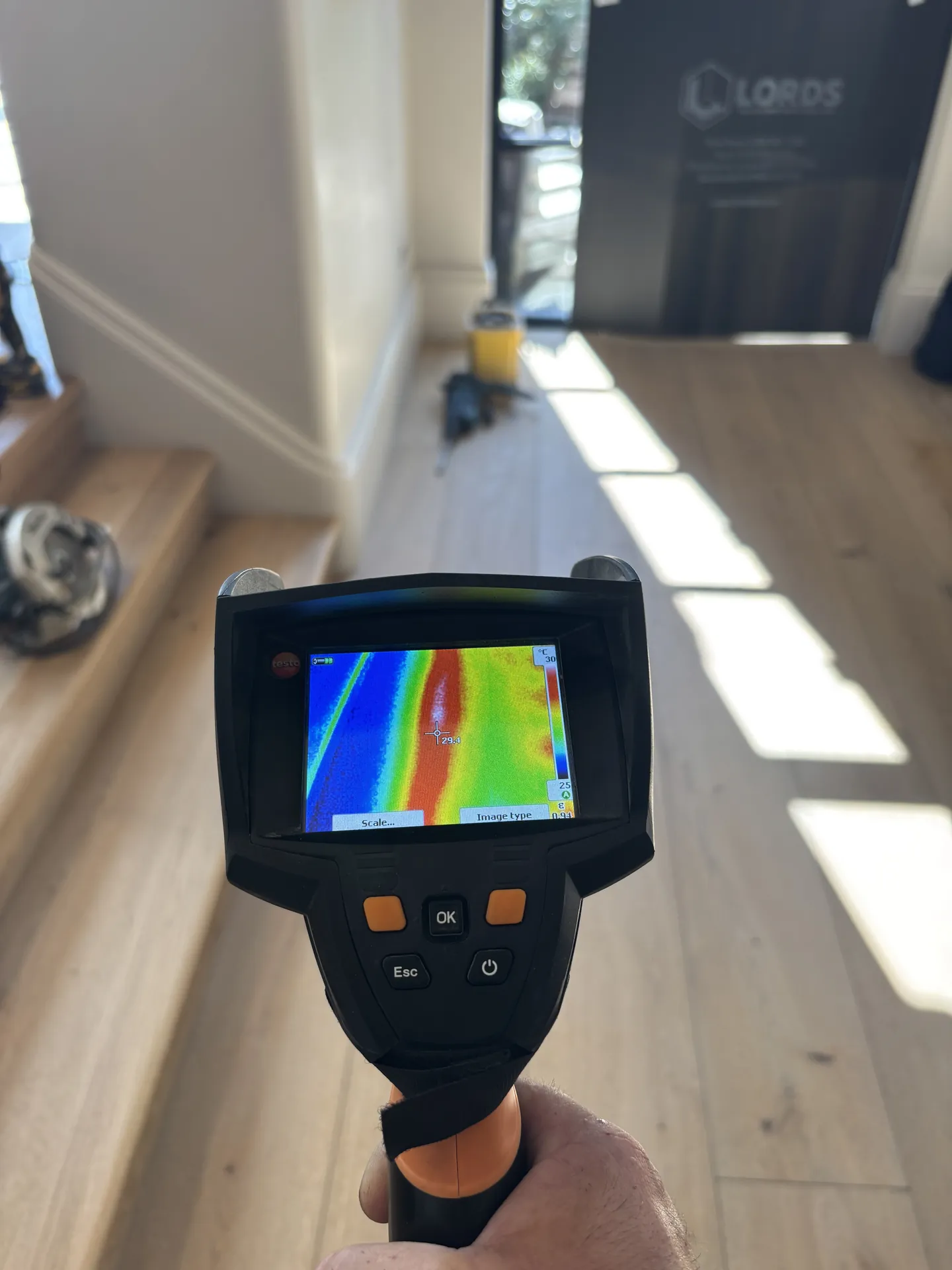
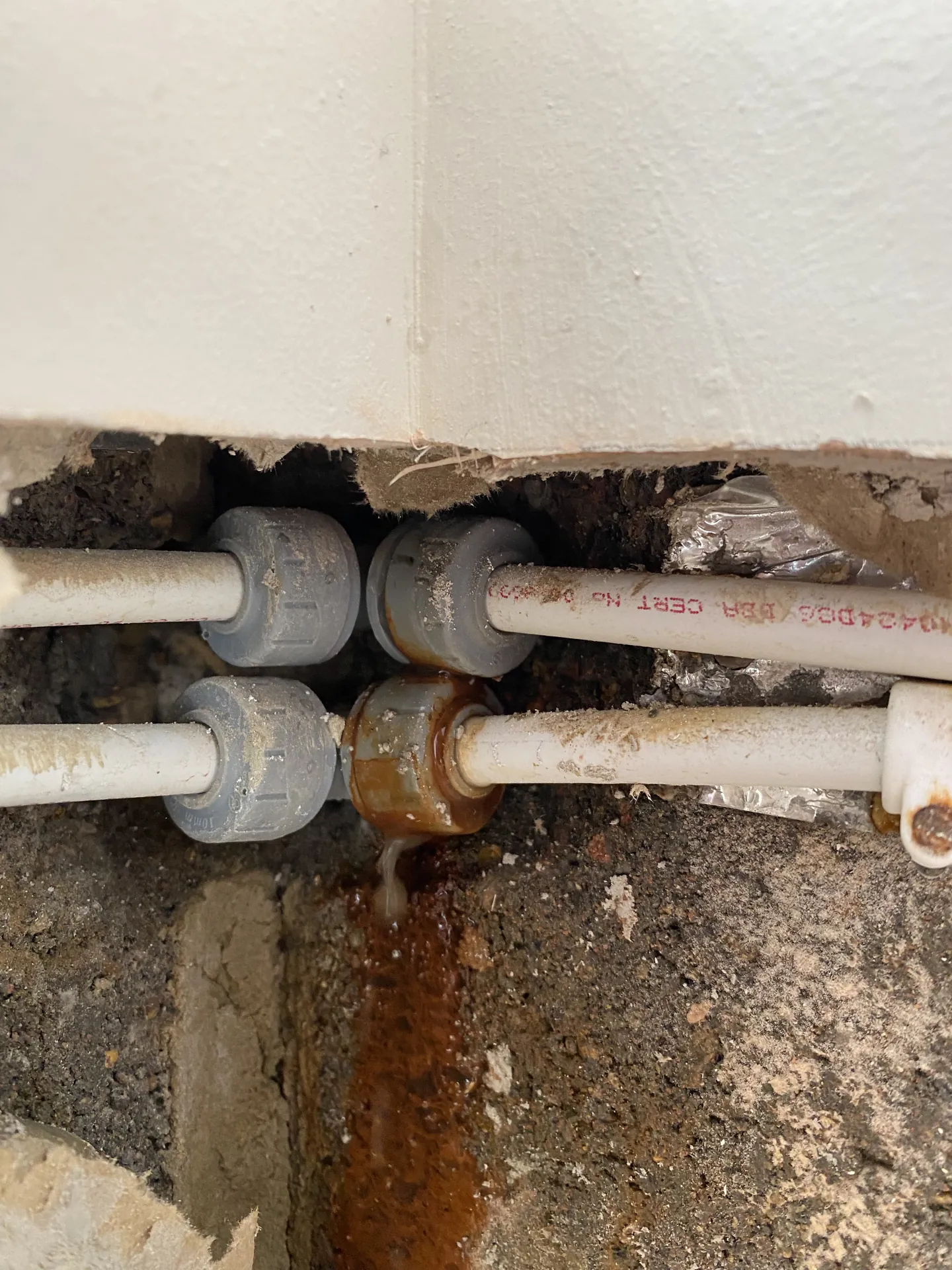
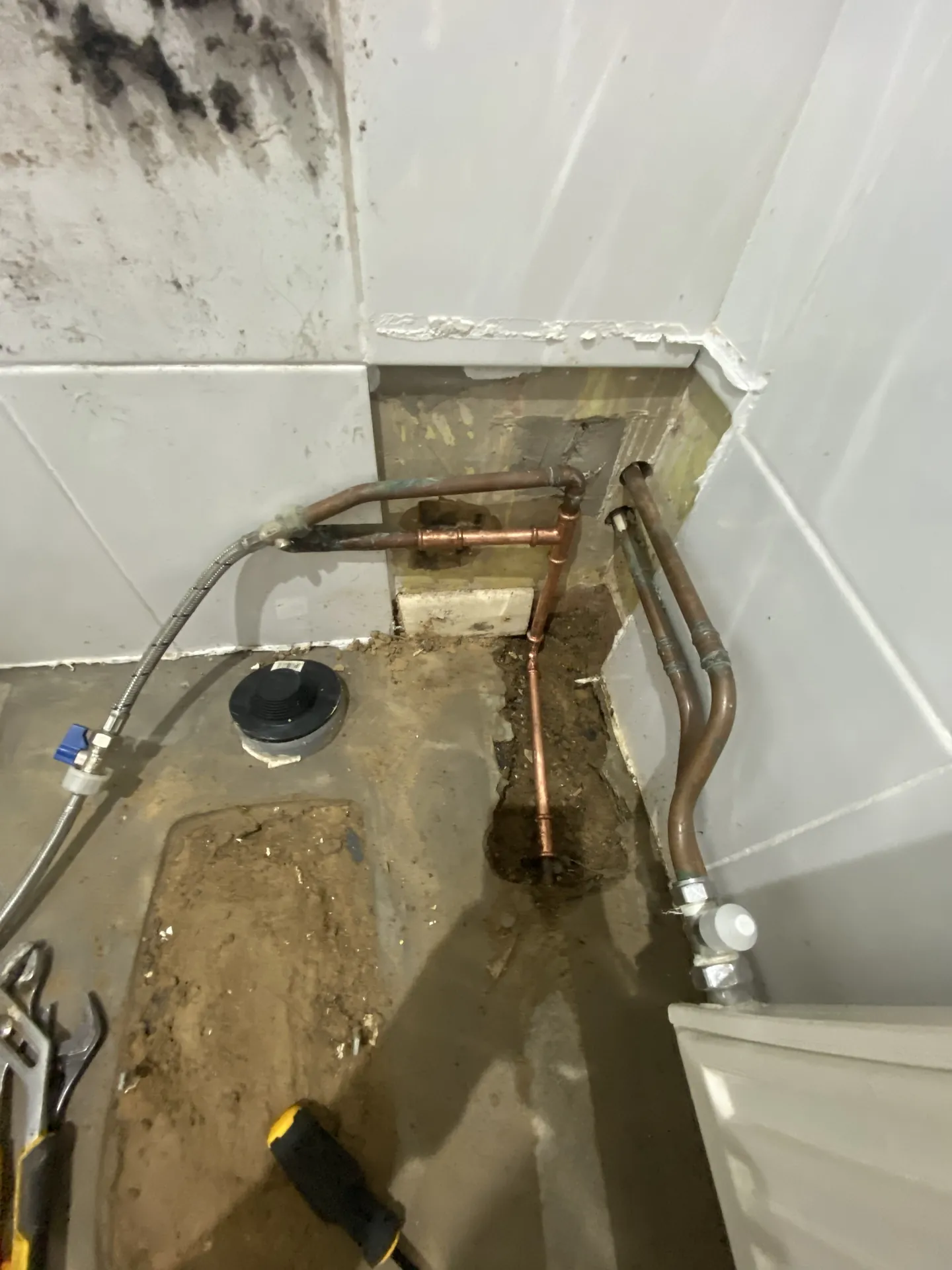
From your first call to a leak you can see in the report
Call or WhatsApp with a few photos and a line about the symptoms. We ask a handful of questions, agree a fixed price and book the survey, usually for the same or the next day.
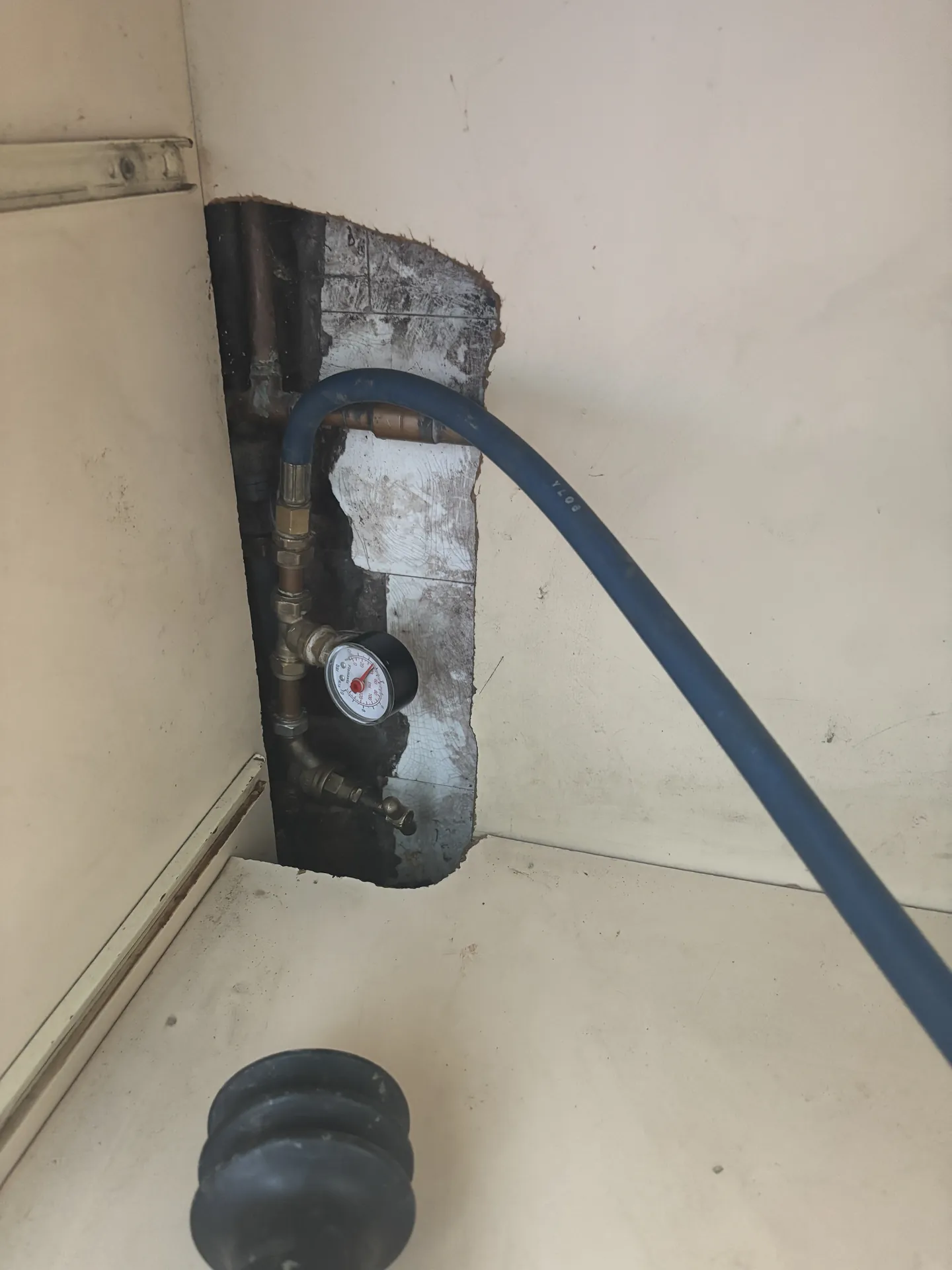
On arrival we pressure test the mains, hot water and heating, check the meter and test the escaping water, so we know what we are looking for before the detection starts.
Thermal imaging, the acoustic ground microphone and tracer gas are used as the pipework dictates until the leak is marked on the floor or wall.
You get a written report with readings, thermal images and photographs, ready for a trace and access claim. If you want the leak fixed, we open that one spot and repair it.
A report your insurer can act on
Most buildings insurance policies include trace and access cover for finding a hidden leak and making good the way in. Our report is written for that claim: what we tested, what we found, where it is, with photographs, thermal images and readings.
- Turn off the stop tap or the heating and stop topping up
- Photograph the damage, the boiler gauge and the meter
- Tell your insurer a leak is suspected and detection is being arranged
- Trace and access pays to find the leak and make good the access
Moisture survey: questions answered
What is a moisture survey?
A set of moisture meter readings taken at regular points across the floors and walls near a leak, recorded on a plan. It shows how far the water has spread, which areas are wet and which are dry, and the direction the water has travelled from the source.
Can a moisture meter find the leak itself?
It points towards it. Readings are highest close to the source and fall away with distance, so the pattern narrows the search. The leak itself is then pinpointed with the thermal camera, the acoustic microphone or tracer gas, depending on the pipe.
Does a moisture survey damage the floor or walls?
No. The readings are taken on the surface and leave no mark beyond a pinprick where a pin meter is used, and carpets and timber floors are not lifted for them. Where a reading is needed from a screed or a floor void we use an existing gap or the small opening already made at the leak.
Why does the insurer need moisture readings?
Escape of water cover pays to repair the damage the leak caused, and the claims handler needs to know how much there is. A plan of readings shows which rooms and surfaces are affected and how far, and separates leak damage from anything that was already there. It also supports the drying and making-good part of the claim.
Can you check whether my floor is dry after a leak?
Yes. A repeat set of readings at the same points shows whether they have returned to the dry level recorded in unaffected rooms. That is worth doing before a new floor finish goes down, because a finish laid over a damp screed is likely to lift or stain.
Related services
Need moisture surveys?
Call now and we will tell you straight away whether it needs a same-day visit. Or send a photo of the stain, the meter or the boiler gauge on WhatsApp.
07516 755 680