Non-Invasive Leak Detection
Non-invasive means the search happens from the room, through whatever finish is in the way. Floors, walls and ceilings stay as they are until the leak has been marked, and then one small area is opened, and only if a repair is wanted.
Non-invasive leak detection, step by step
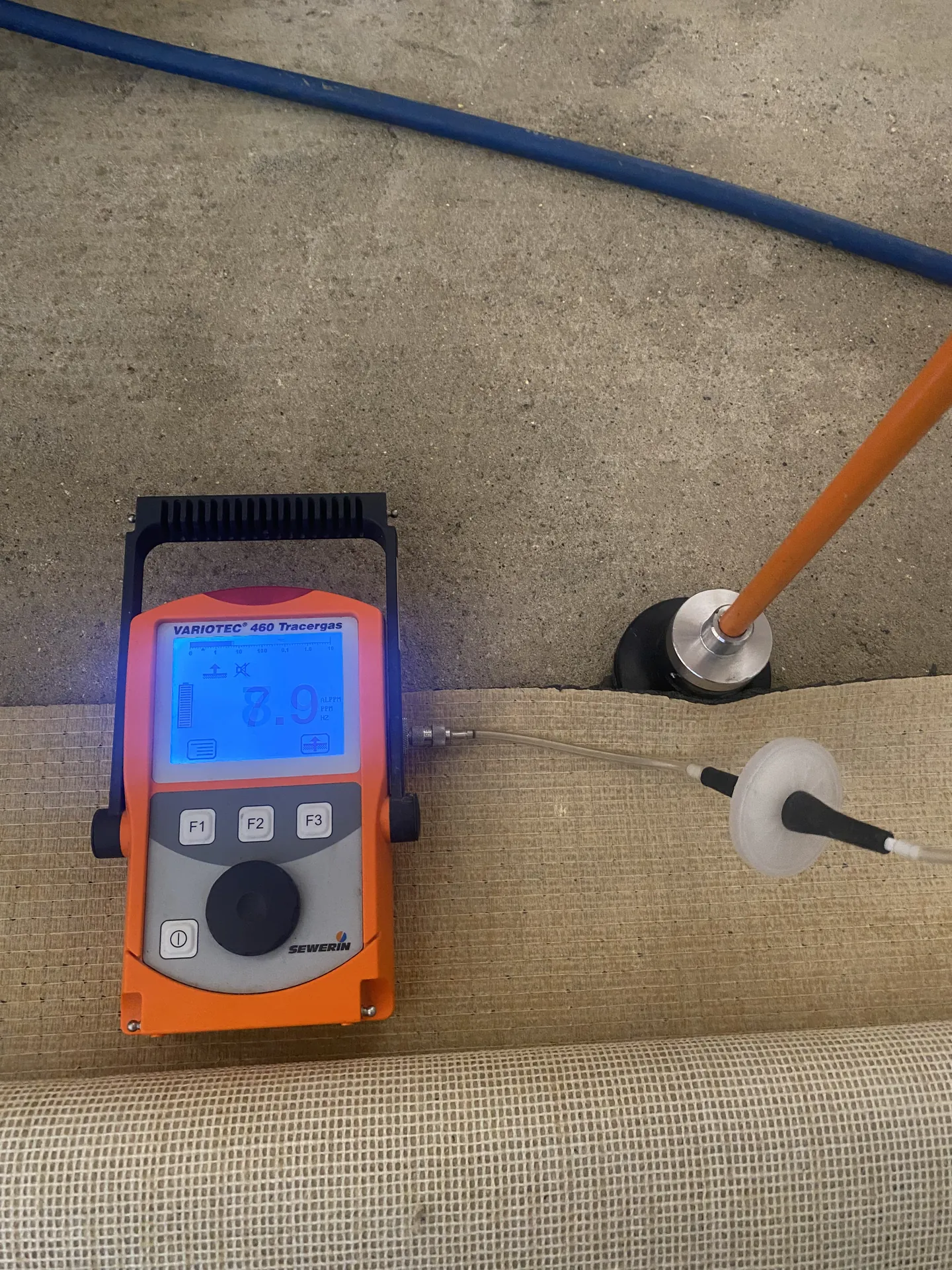
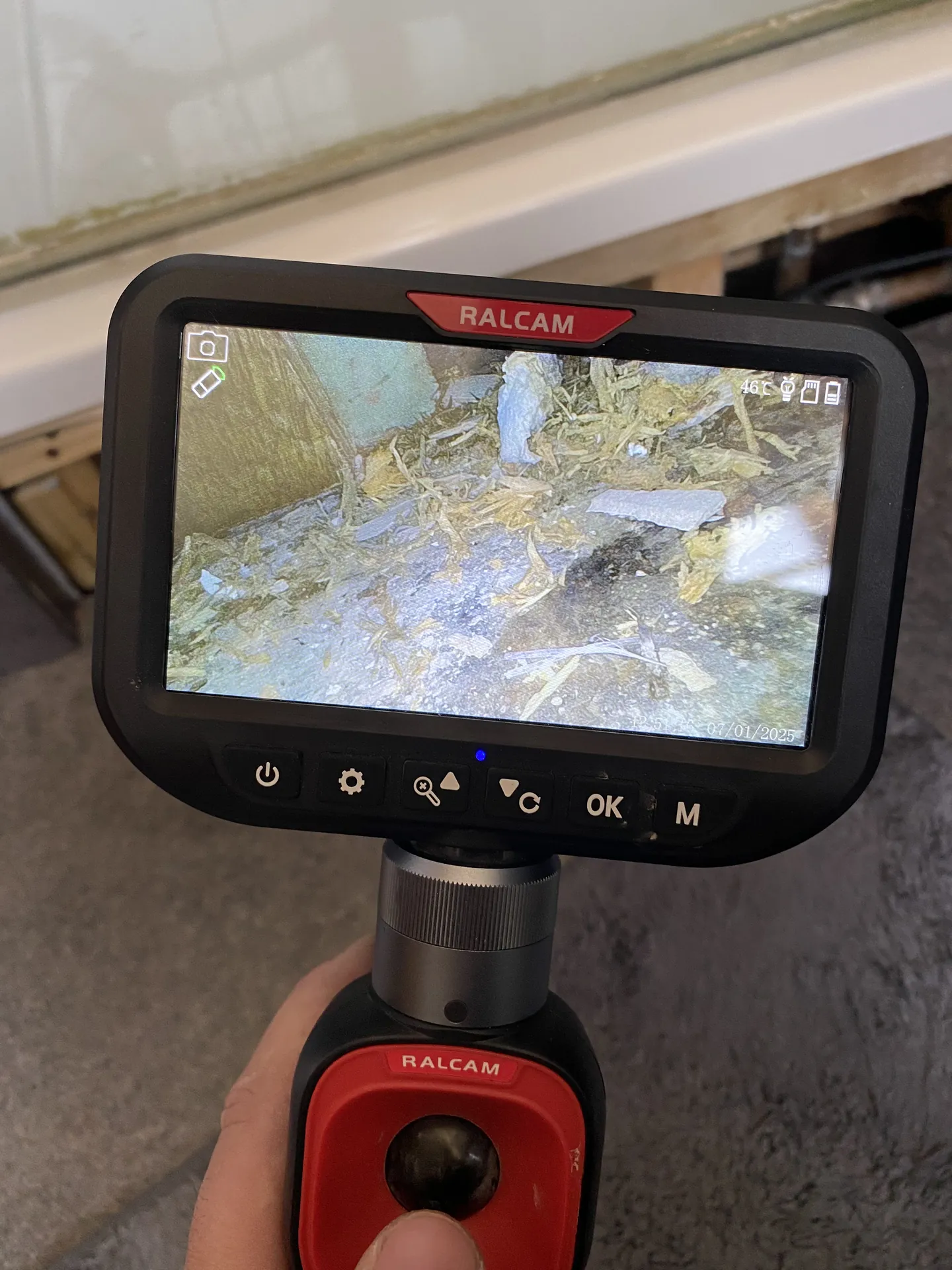
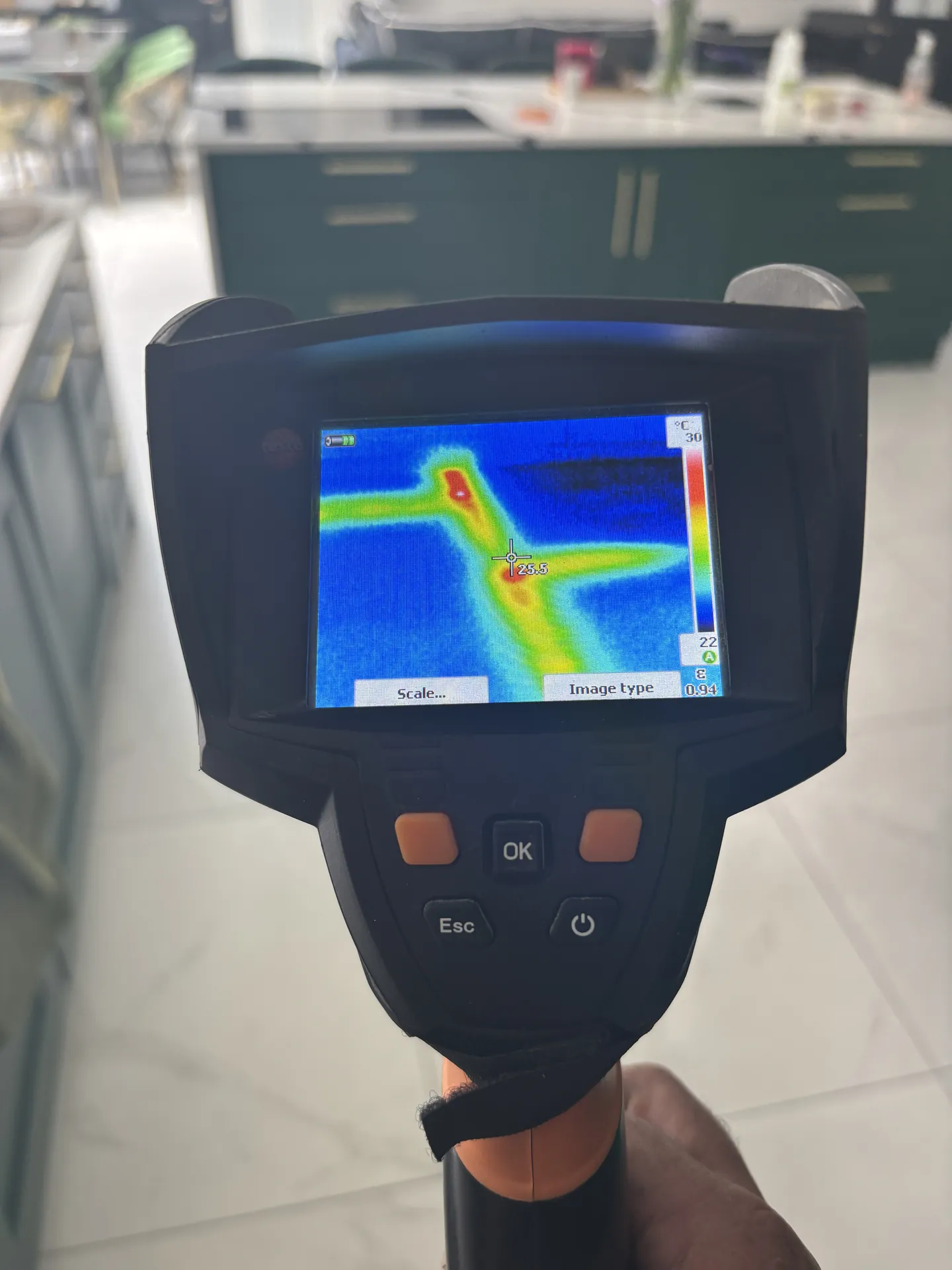
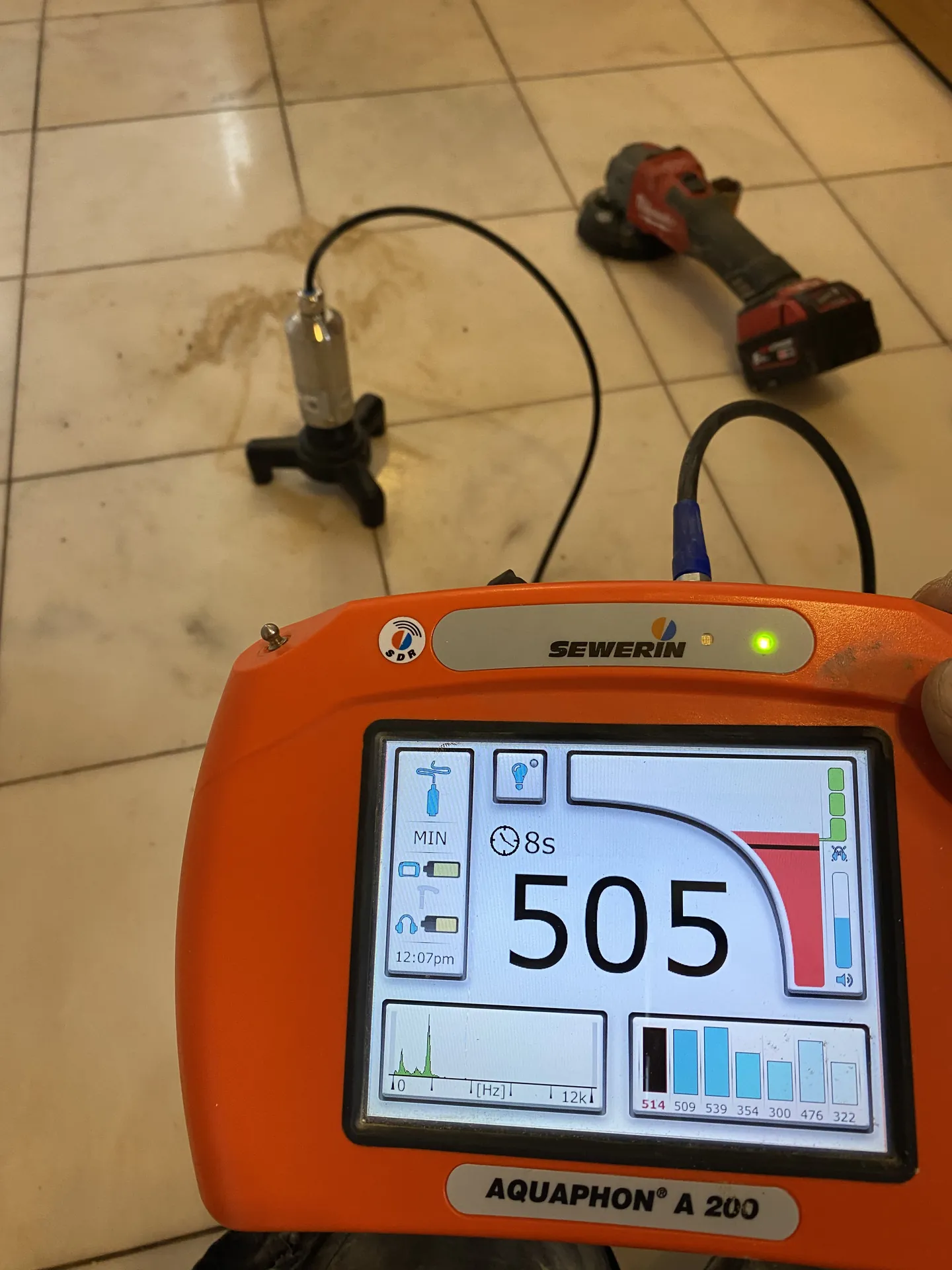
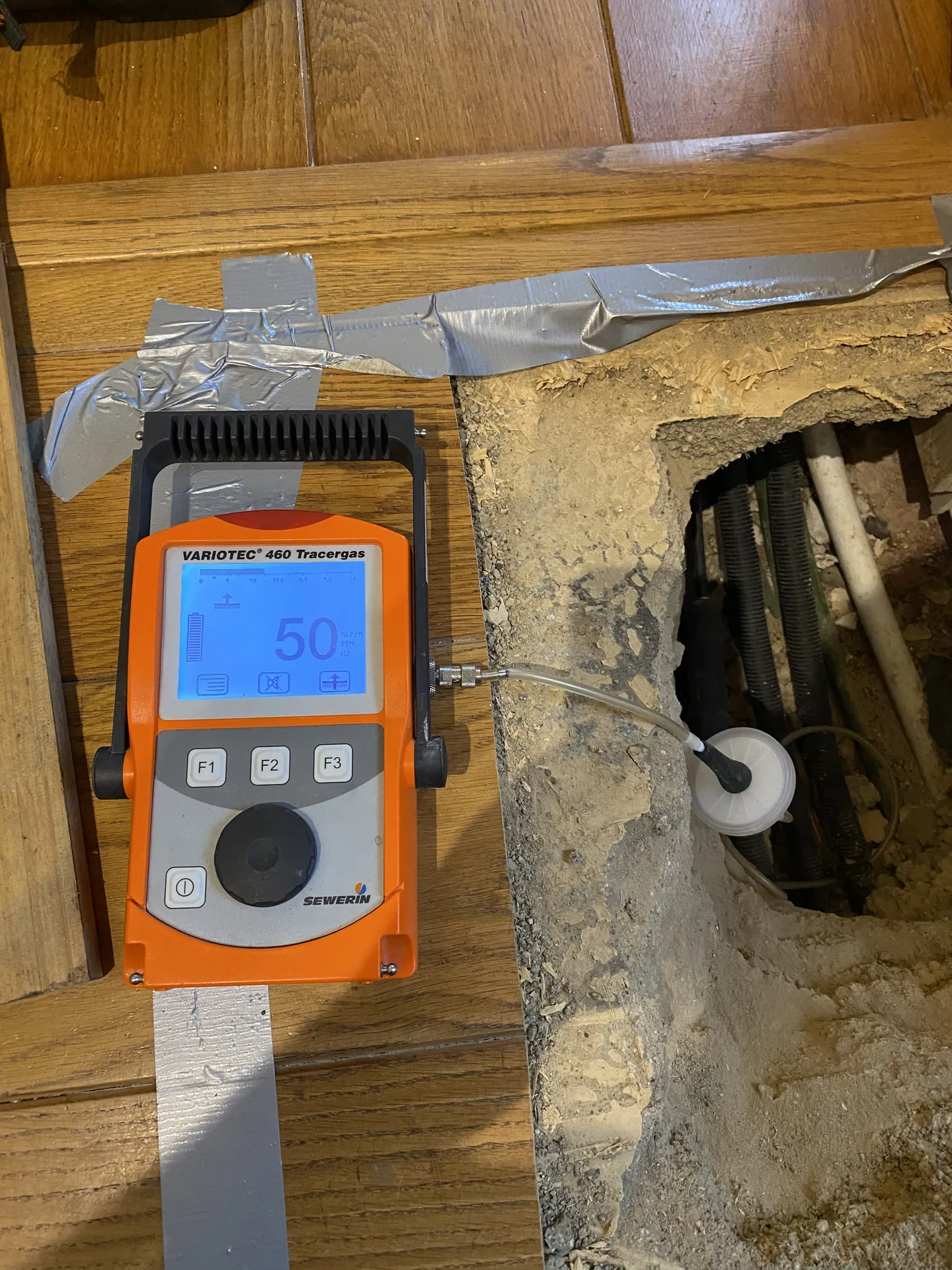
Every method we use is chosen because it works through a finished surface. The thermal imaging camera reads the temperature of the floor or wall itself, so a warm pipe run or a cool wet patch beneath shows on screen without touching the finish. The acoustic ground microphone listens for water escaping under pressure through tiles, screed, concrete and block paving. Hydrogen tracer gas, put into a drained pipe, rises through carpet, laminate, timber, grout lines and paving joints to a detector held at the surface. A borescope camera goes through an existing gap, such as a pipe hole or an air brick, to look inside a void.
It is worth being clear about what non-invasive does not mean. It does not mean nothing is ever opened. Once the leak is marked, repairing it means exposing the pipe, and that takes one small opening at that one point. The gain is that the opening is a few tiles, a short wall chase or a single hand-dug hole, rather than a floor lifted along the whole run. It also does not mean the water and heating stay on throughout. Tracer gas needs the pipe drained for a while, and we plan that with you before the visit.
Non-invasive methods have limits, and we would rather say so than pretend otherwise. Very slow leaks can be too quiet for the microphone and too cool for the camera. Deep insulation and thick screeds reduce what thermal imaging can see. Tracer gas is usually the answer in those cases. If a leak still cannot be located from the surface we tell you plainly. We explain what has been ruled out and discuss the options rather than opening up on a guess. The report records everything tested, which is useful whatever you decide to do next.
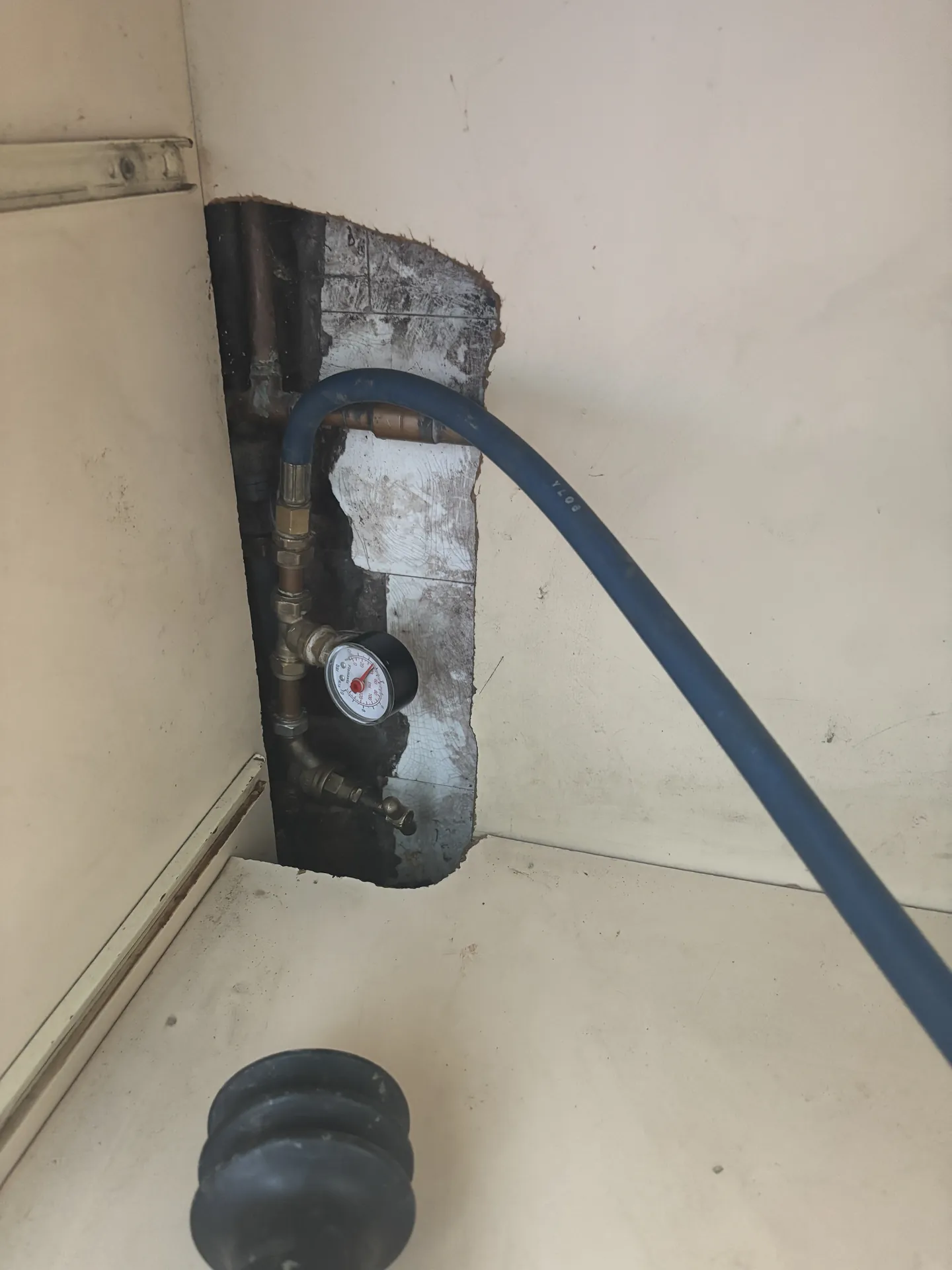
In our own photos
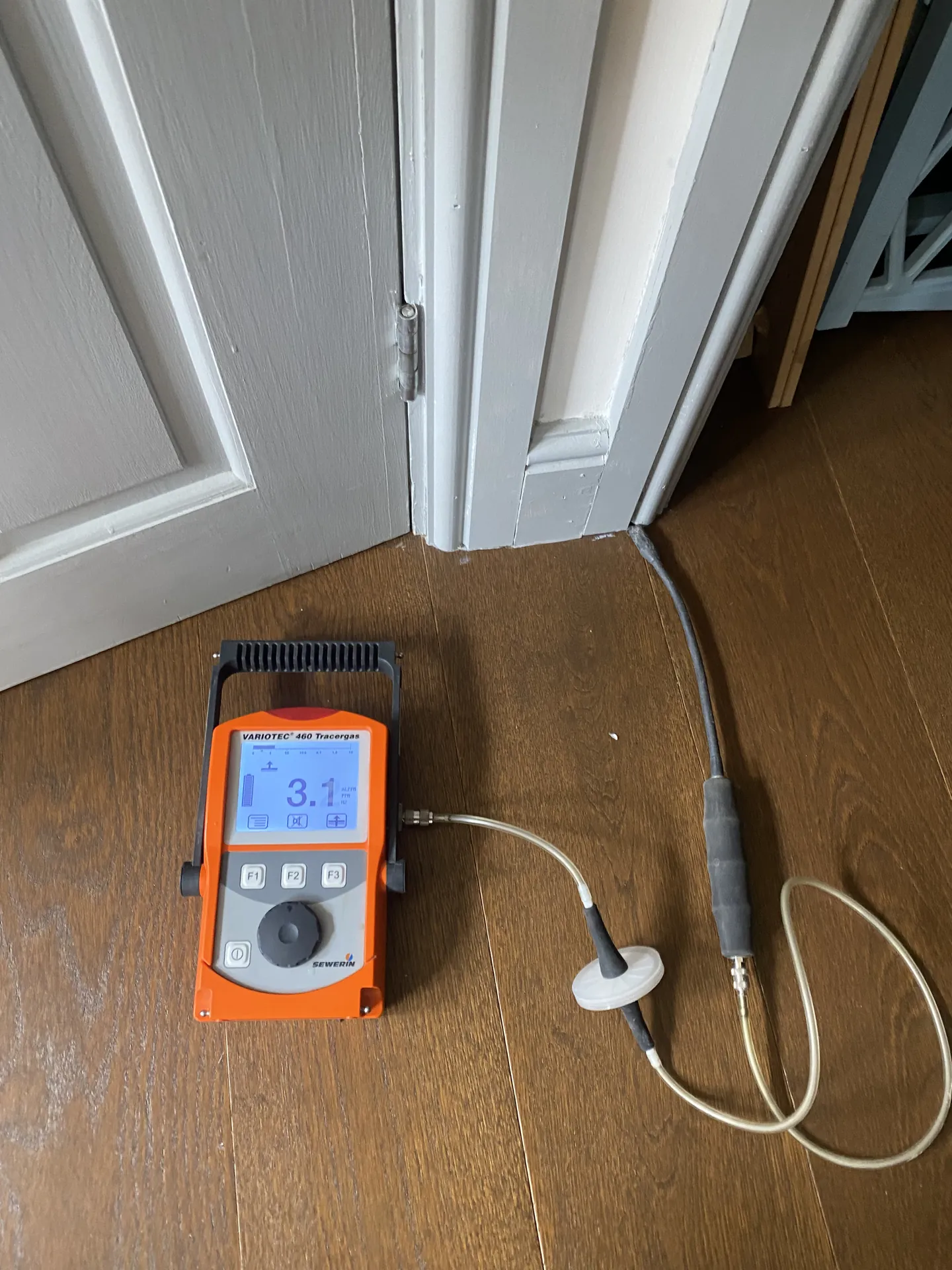
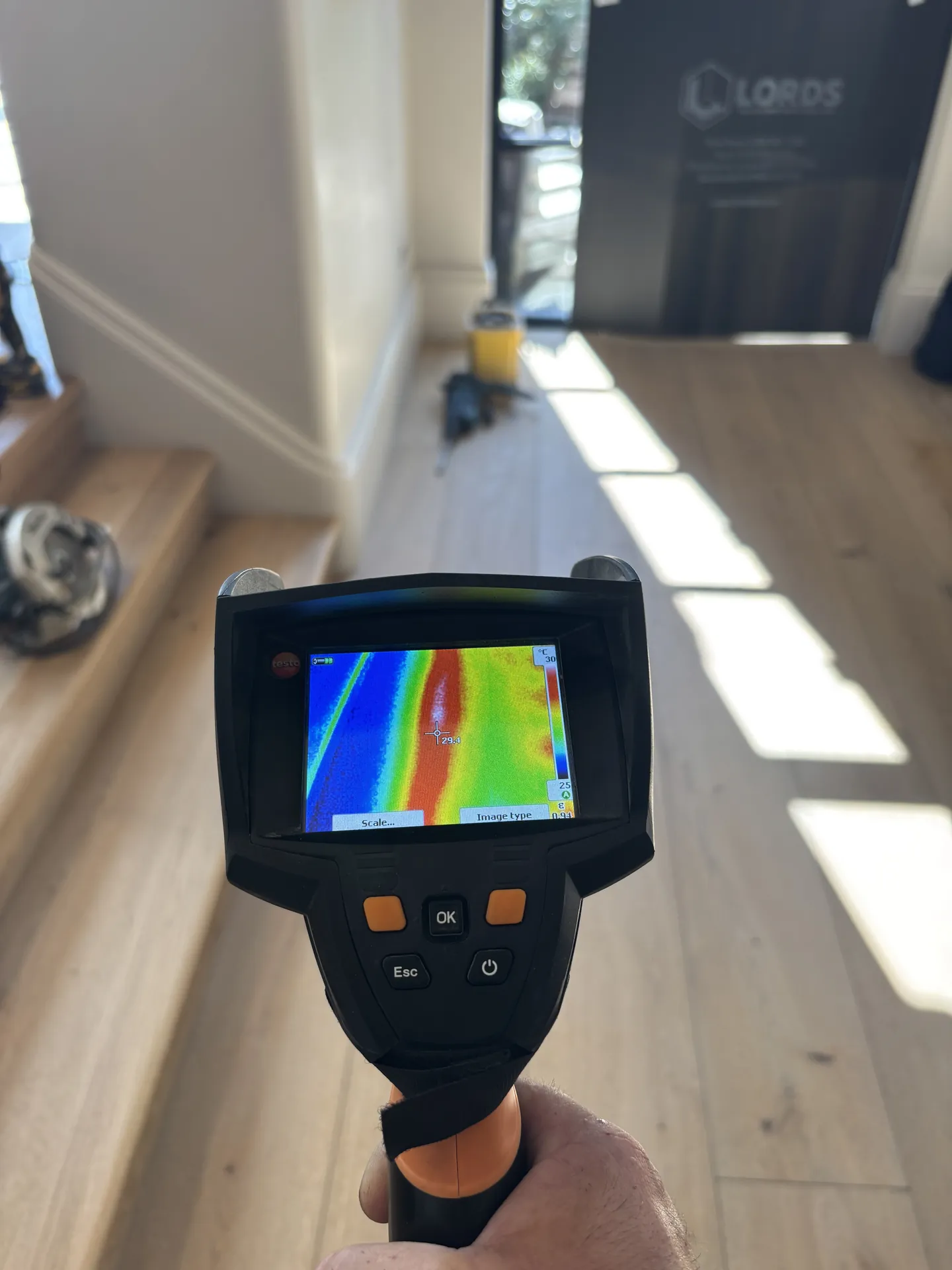
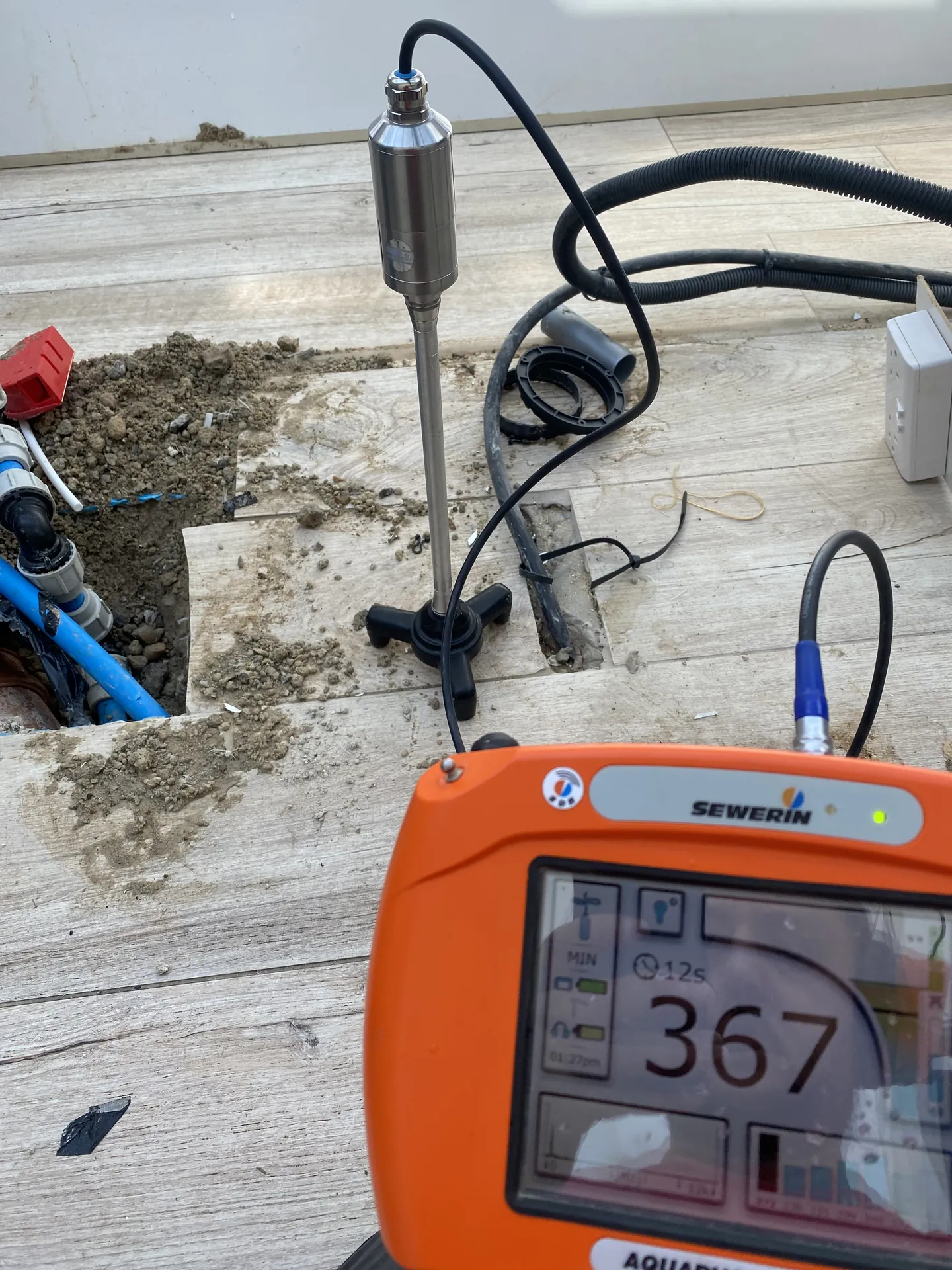
From your first call to a leak you can see in the report
Call or WhatsApp with a few photos and a line about the symptoms. We ask a handful of questions, agree a fixed price and book the survey, usually for the same or the next day.
On arrival we pressure test the mains, hot water and heating, check the meter and test the escaping water, so we know what we are looking for before the detection starts.
Thermal imaging, the acoustic ground microphone and tracer gas are used as the pipework dictates until the leak is marked on the floor or wall.
You get a written report with readings, thermal images and photographs, ready for a trace and access claim. If you want the leak fixed, we open that one spot and repair it.
A report your insurer can act on
Most buildings insurance policies include trace and access cover for finding a hidden leak and making good the way in. Our report is written for that claim: what we tested, what we found, where it is, with photographs, thermal images and readings.
- Turn off the stop tap or the heating and stop topping up
- Photograph the damage, the boiler gauge and the meter
- Tell your insurer a leak is suspected and detection is being arranged
- Trace and access pays to find the leak and make good the access
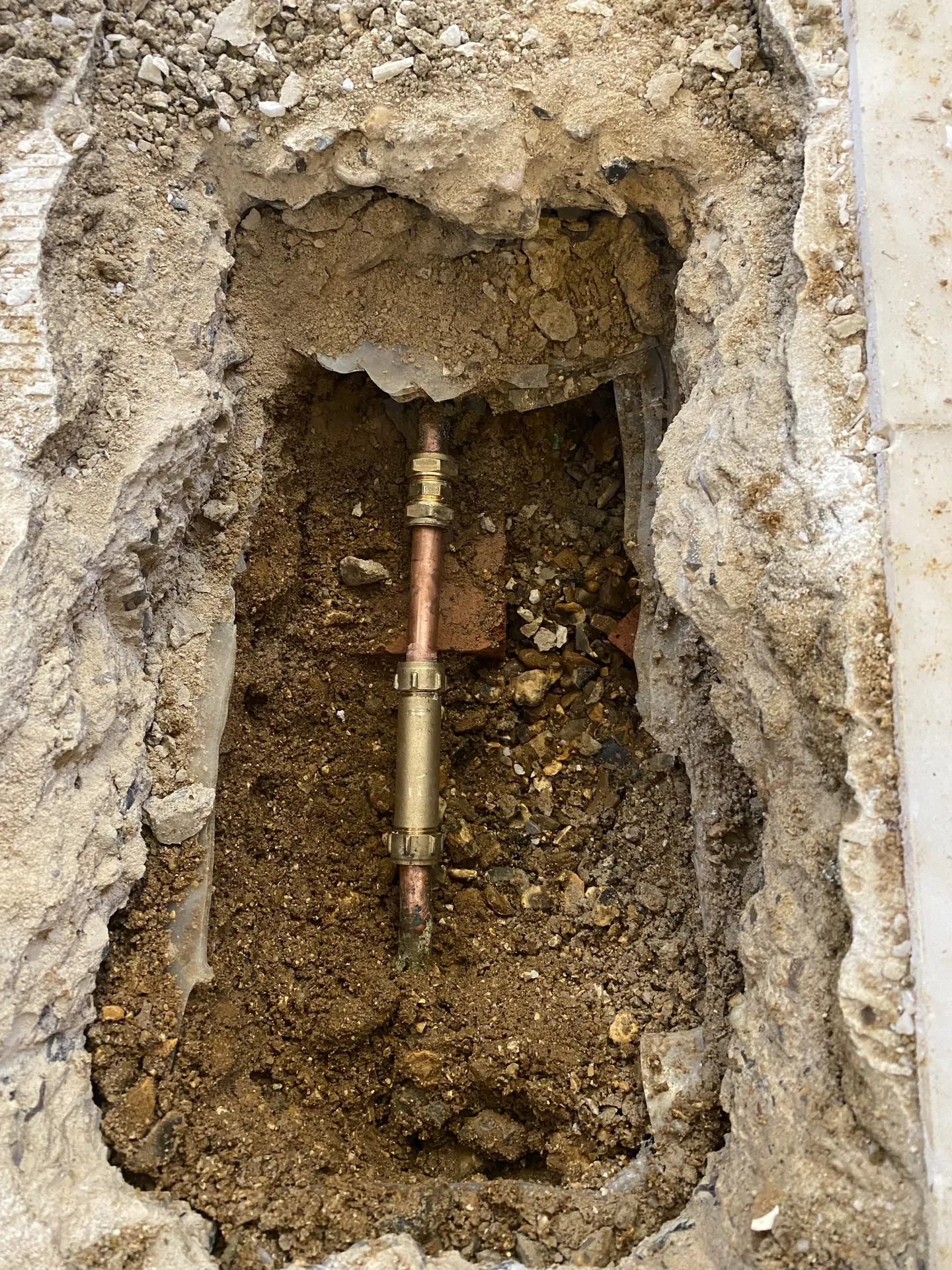
Non-invasive: questions answered
Can you find a leak without ripping up the floor?
The search is carried out from above with thermal imaging, the acoustic microphone and tracer gas, and the floor stays down while it happens. If a repair is wanted, the floor is opened in one small place at the marked point.
Is non-invasive the same as non-destructive or non-intrusive?
Yes, the three terms are used to mean the same thing: locating the leak through the finished surfaces rather than by opening them up to look. We say non-invasive, but the methods are the same whichever word you have come across.
Does the search leave any mess?
Very little. The kit sits on the floor or is held against the wall. Tracer gas needs the pipe drained and refilled, and a dye test needs a bath or shower run, so some water is moved about, but nothing is cut or lifted during the detection stage.
What if the leak cannot be found from the surface?
We tell you, and we explain which systems and areas have been ruled out. Sometimes the answer is a second visit under different conditions, such as the heating running longer, and sometimes a small exploratory opening in the most likely spot is the sensible next step. That decision is yours, with the evidence in front of you.
Will my floor tiles be damaged?
Not by the search. If the leak is under tiles and you want it repaired, a few tiles over the marked point are lifted and the floor is handed back to your tiler afterwards. Spare tiles, if you have them, are worth finding before the visit.
Related services
Need non-invasive leak detection?
Call now and we will tell you straight away whether it needs a same-day visit. Or send a photo of the stain, the meter or the boiler gauge on WhatsApp.
07516 755 680