Pressure Testing and Pipe Tracing
Before any leak can be found, two questions need answering: which system is leaking, and where its pipes actually run. A pressure test on each circuit answers the first, and the thermal camera and borescope answer the second.
Pressure testing and pipe tracing, step by step
A house has several separate pipe systems, and only one of them is usually leaking. The cold mains feeds the taps and the cistern, and the hot water comes from a cylinder or a combination boiler. The central heating is a sealed loop of its own, and underfloor heating runs as several loops off a manifold. A leak shows up as a damp patch or a falling gauge without saying which of these it belongs to. Searching all of them at once is slow. Isolating each one and testing it under pressure narrows the search to a single system within the first part of the survey.
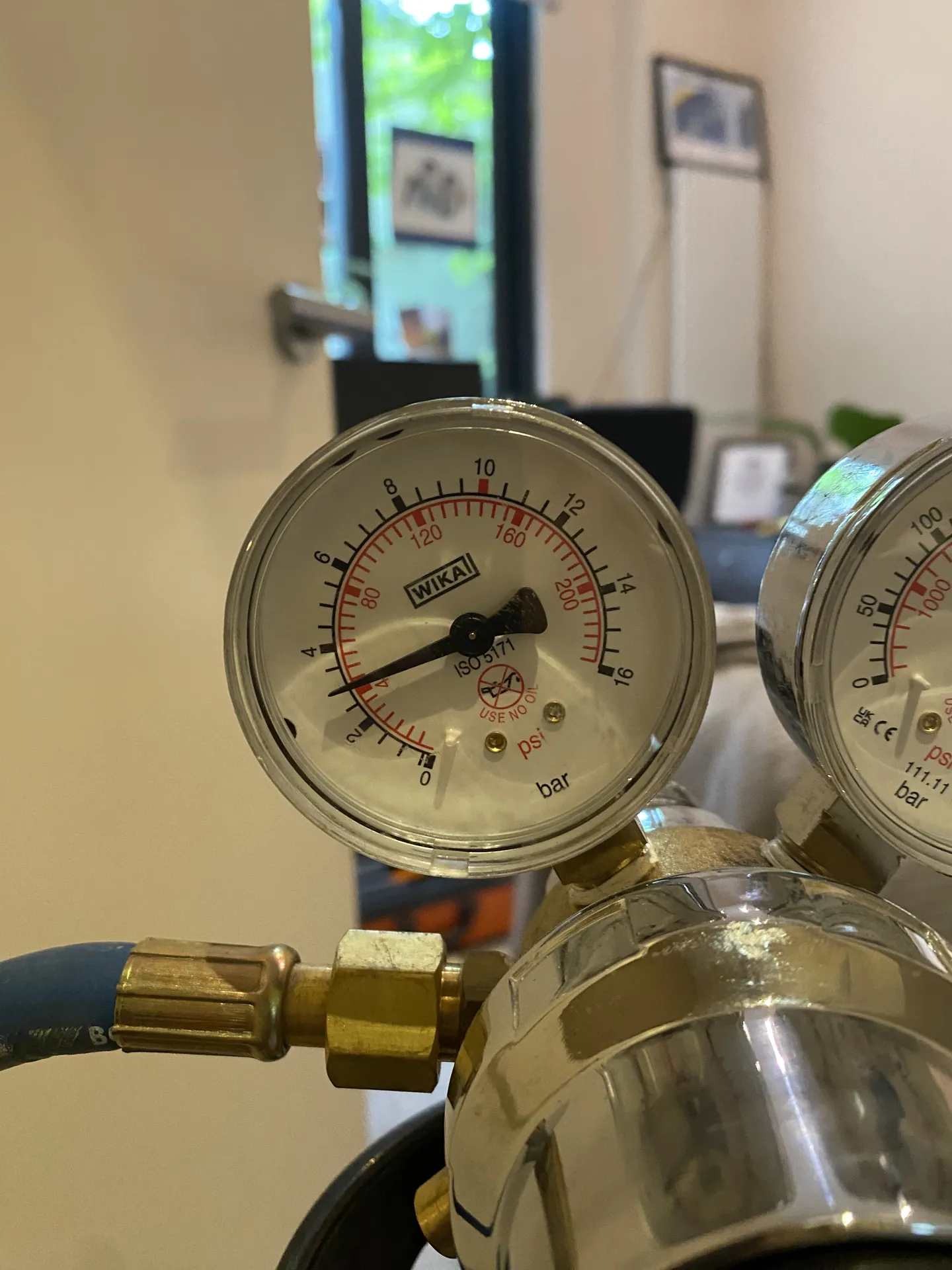
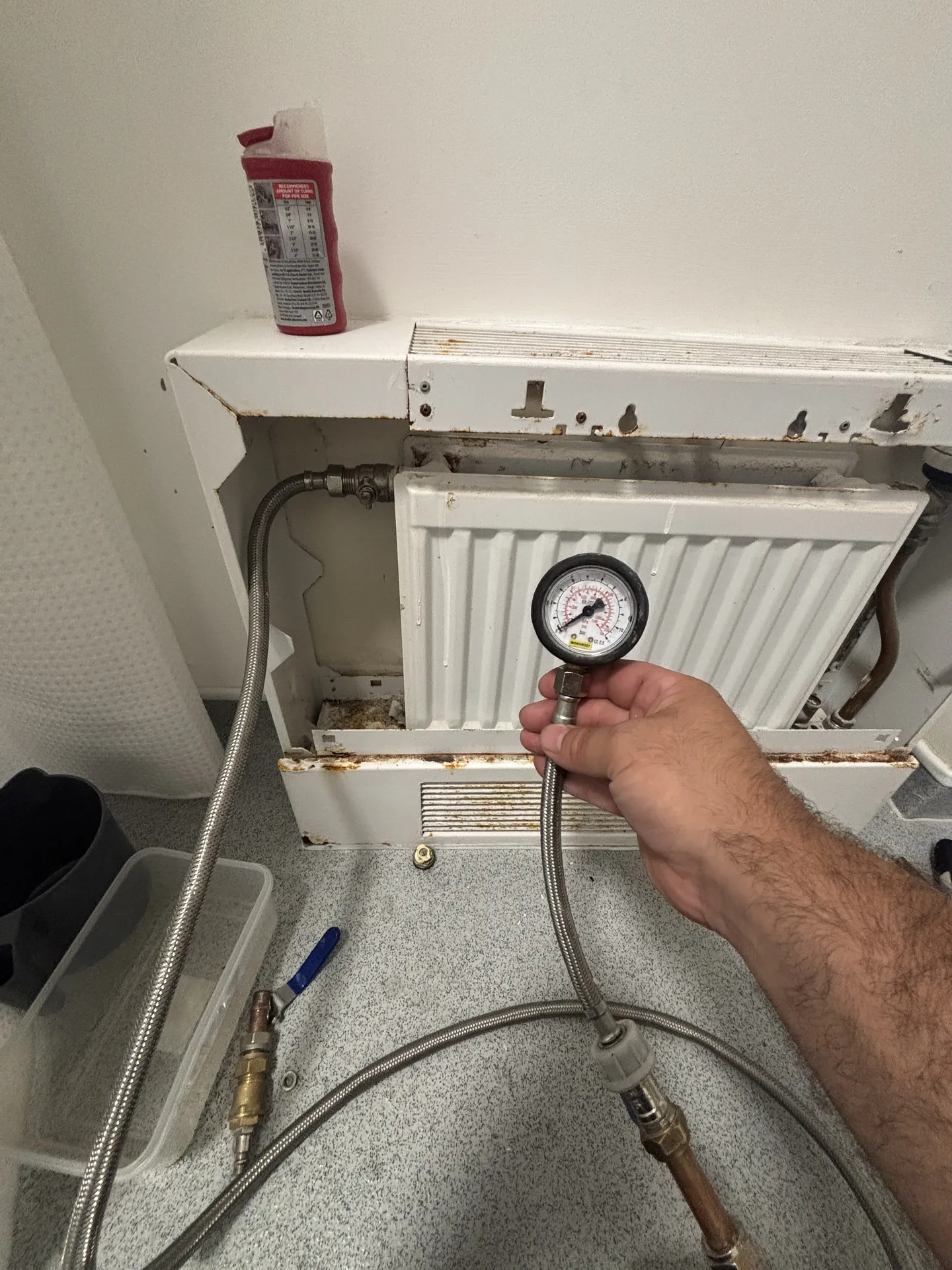
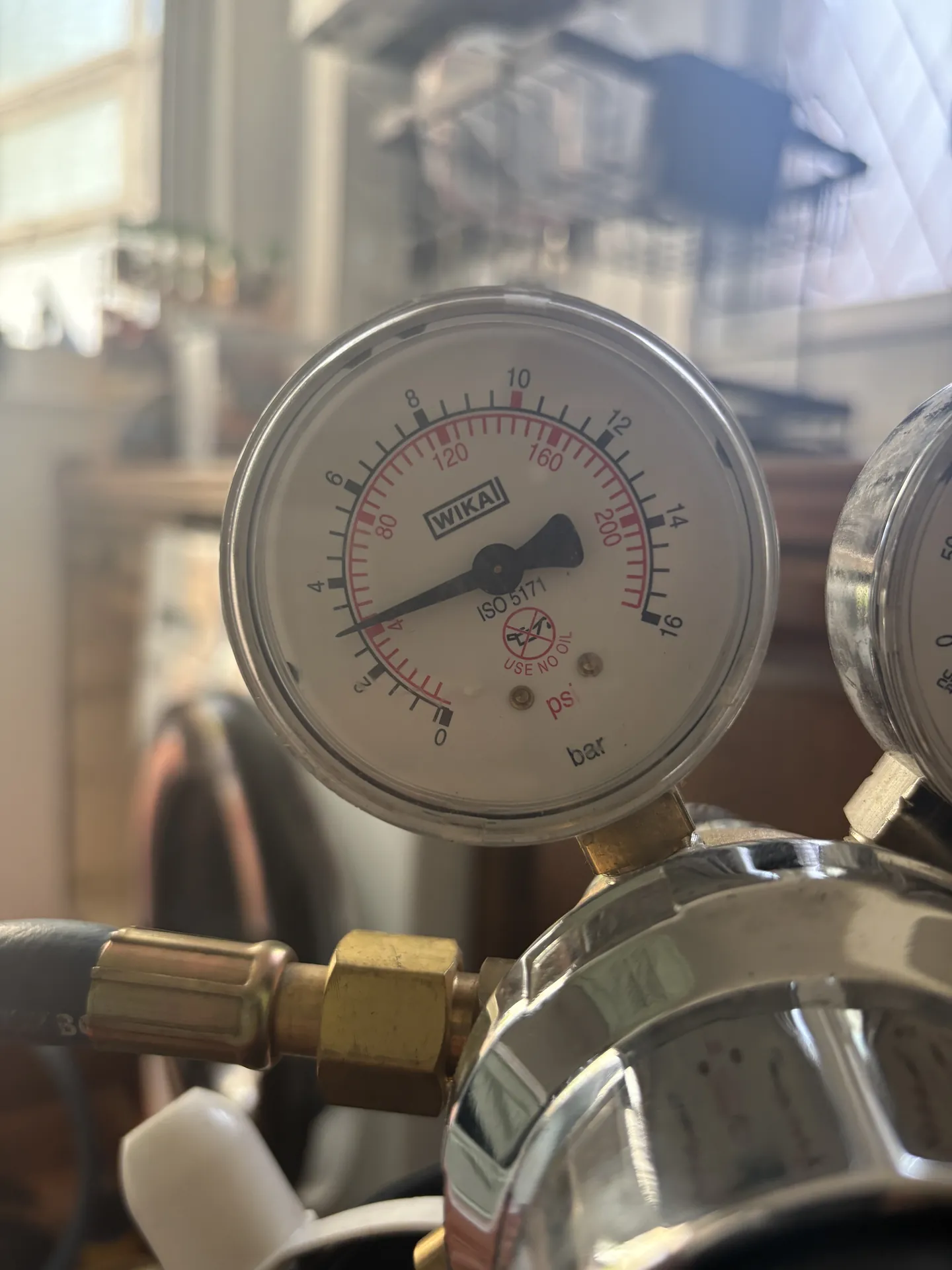
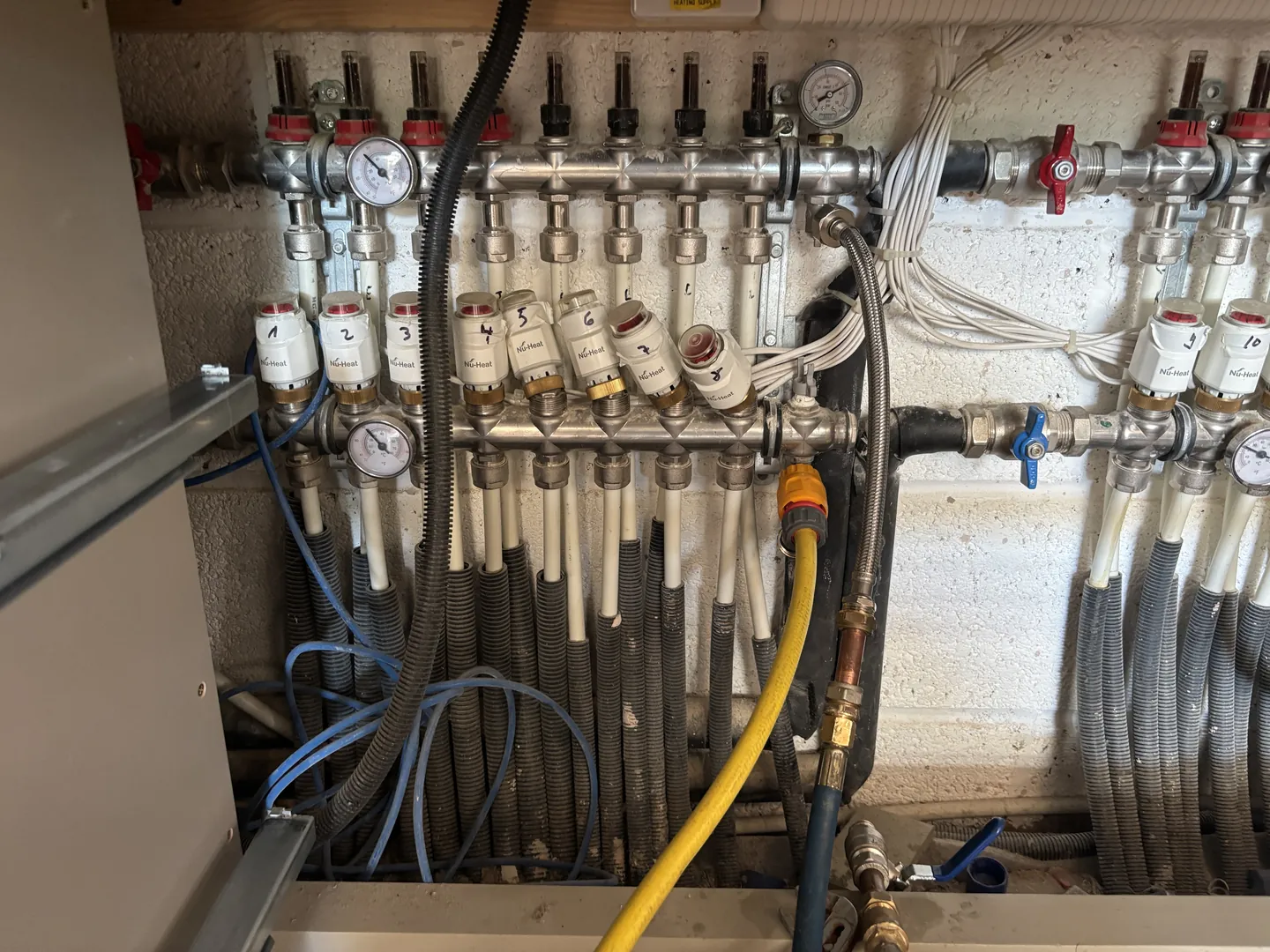
For a pressure test the system is drained or isolated and charged with nitrogen to a set pressure, then watched on a gauge. A system that holds pressure is not leaking. One that falls is, and the rate of fall gives a rough idea of the size of the escape. For heating we connect gauges at the boiler and at a radiator so a drop can be seen across the whole circuit, and underfloor loops are tested one at a time at the manifold. Nitrogen is inert and dry, so testing adds no water to a floor that is already wet.
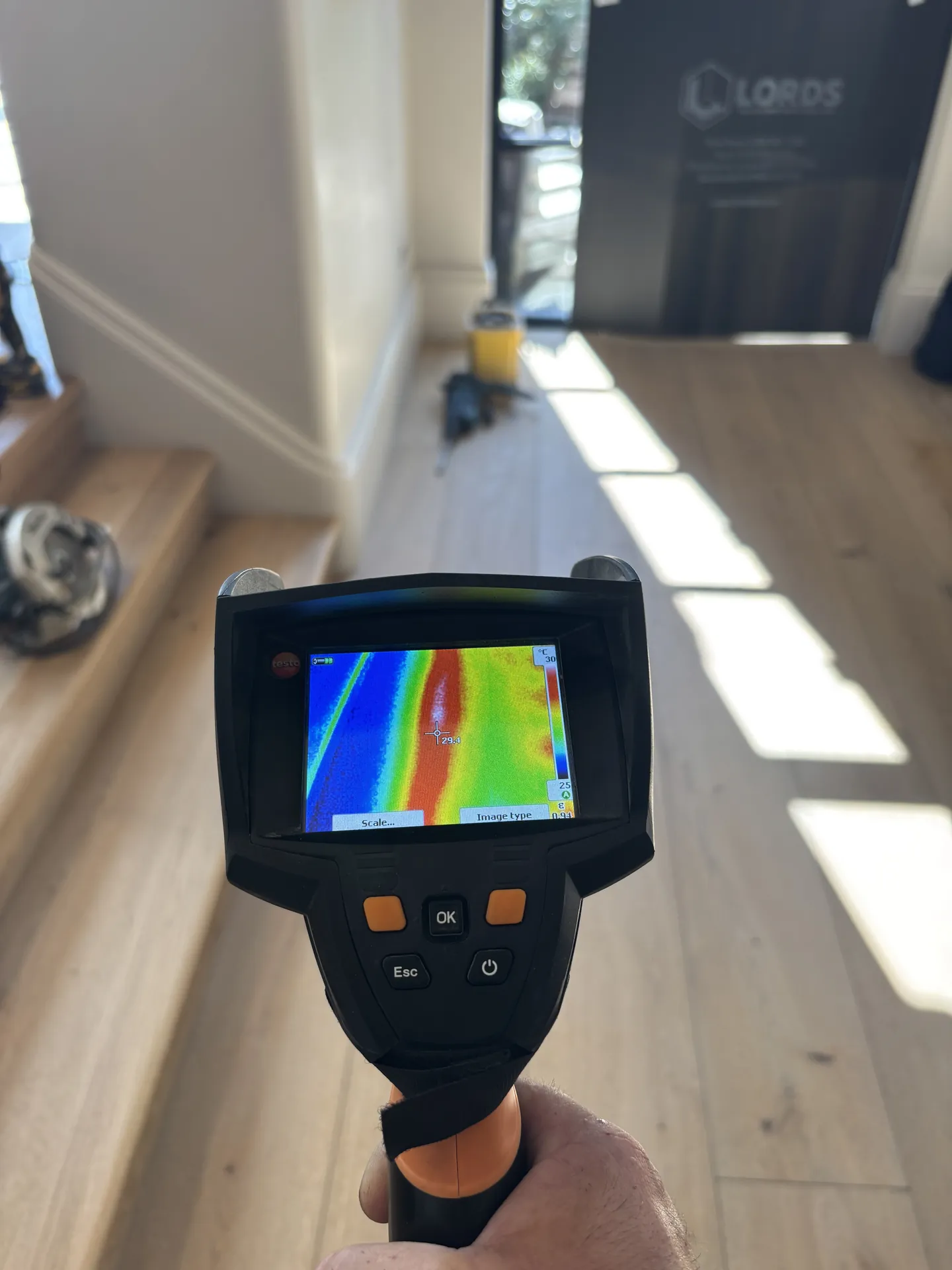
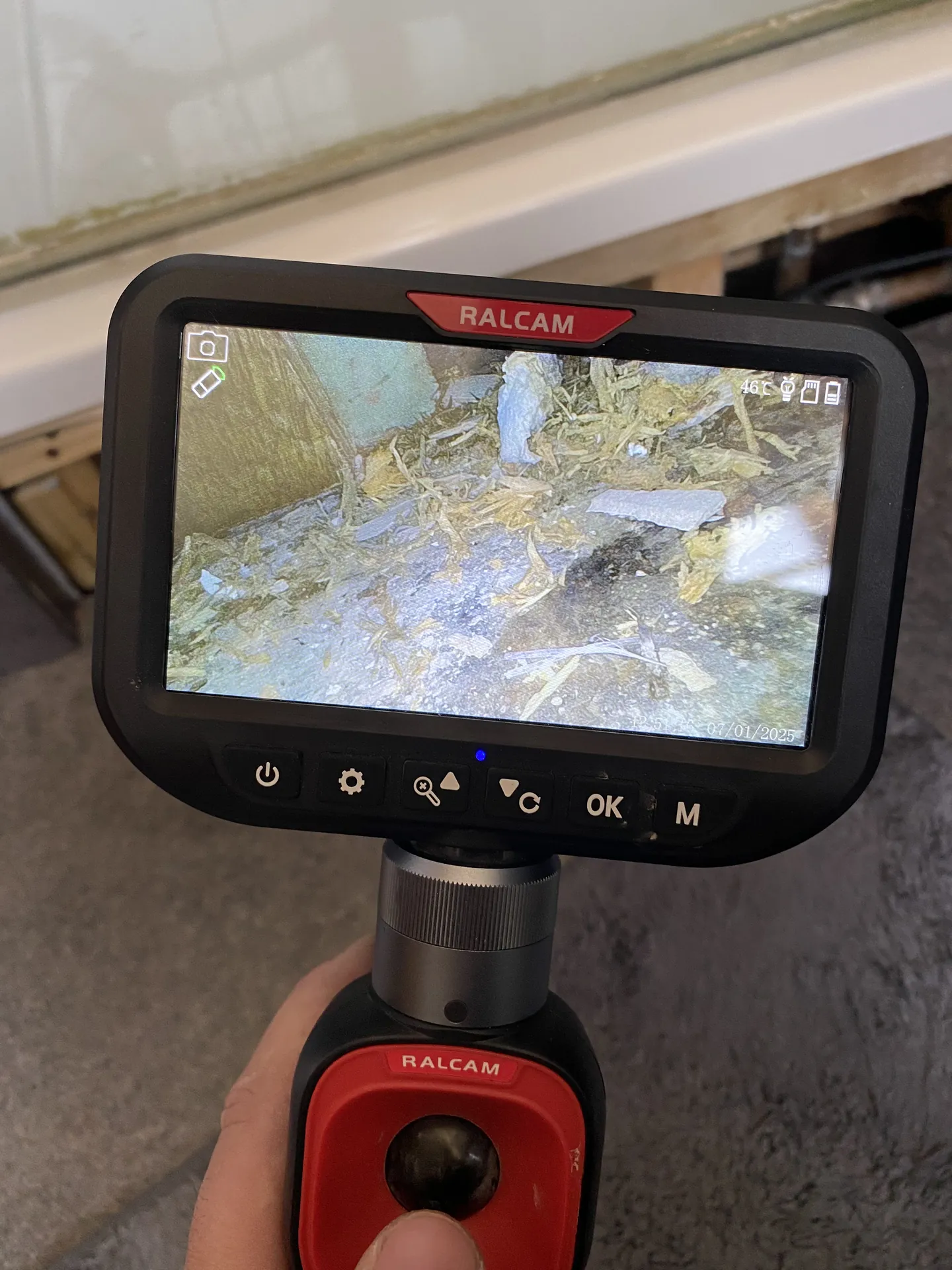
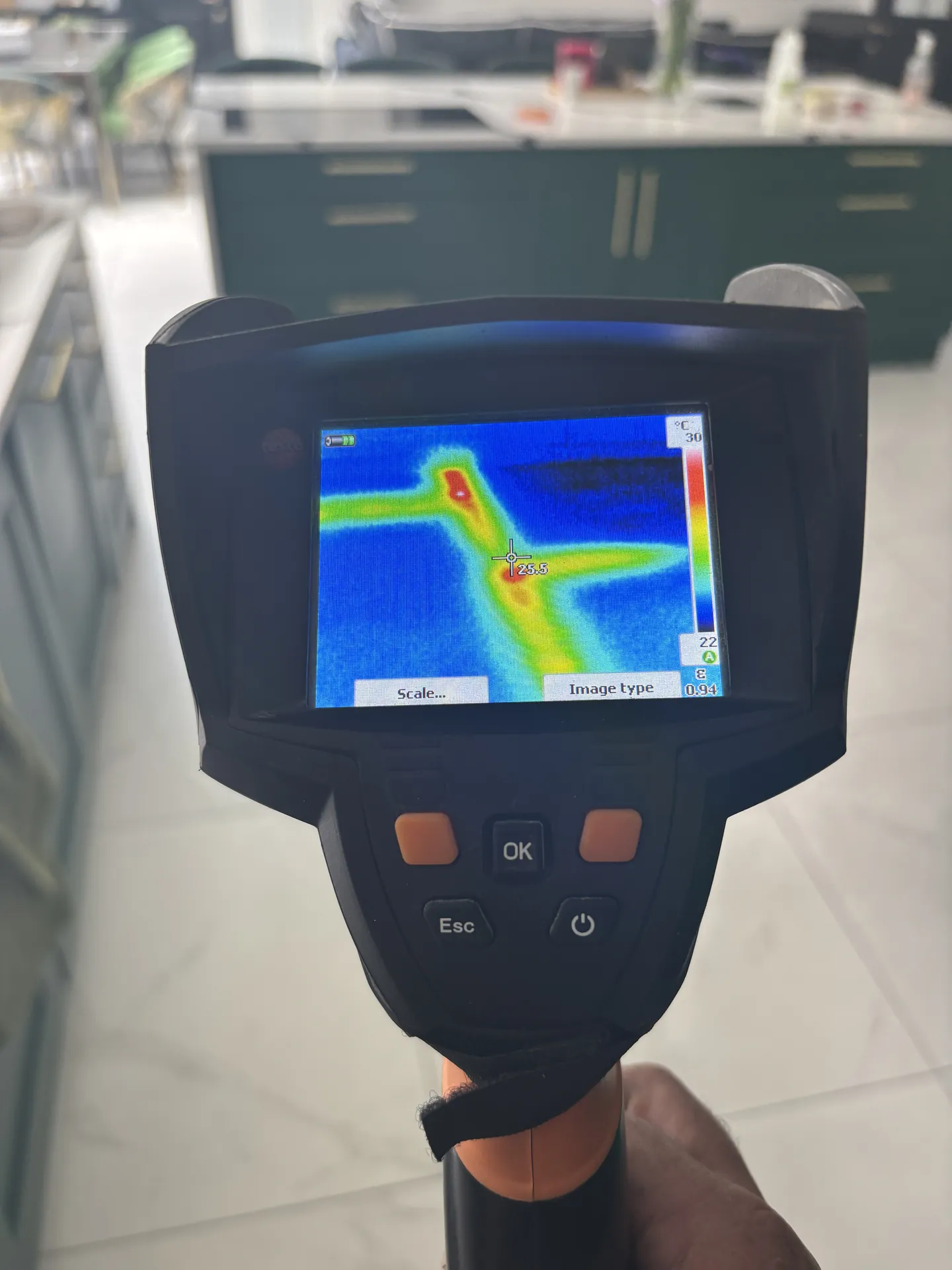
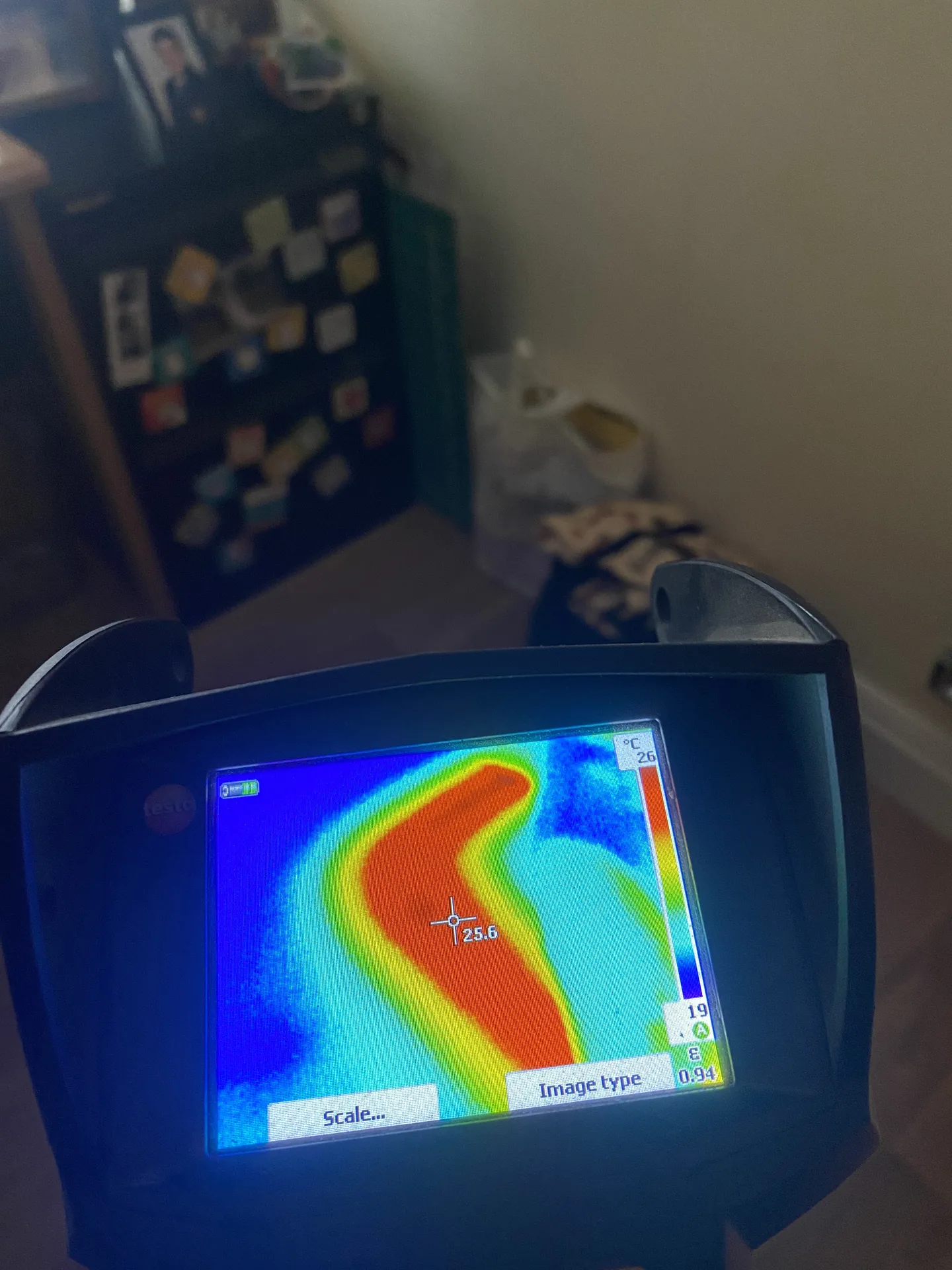
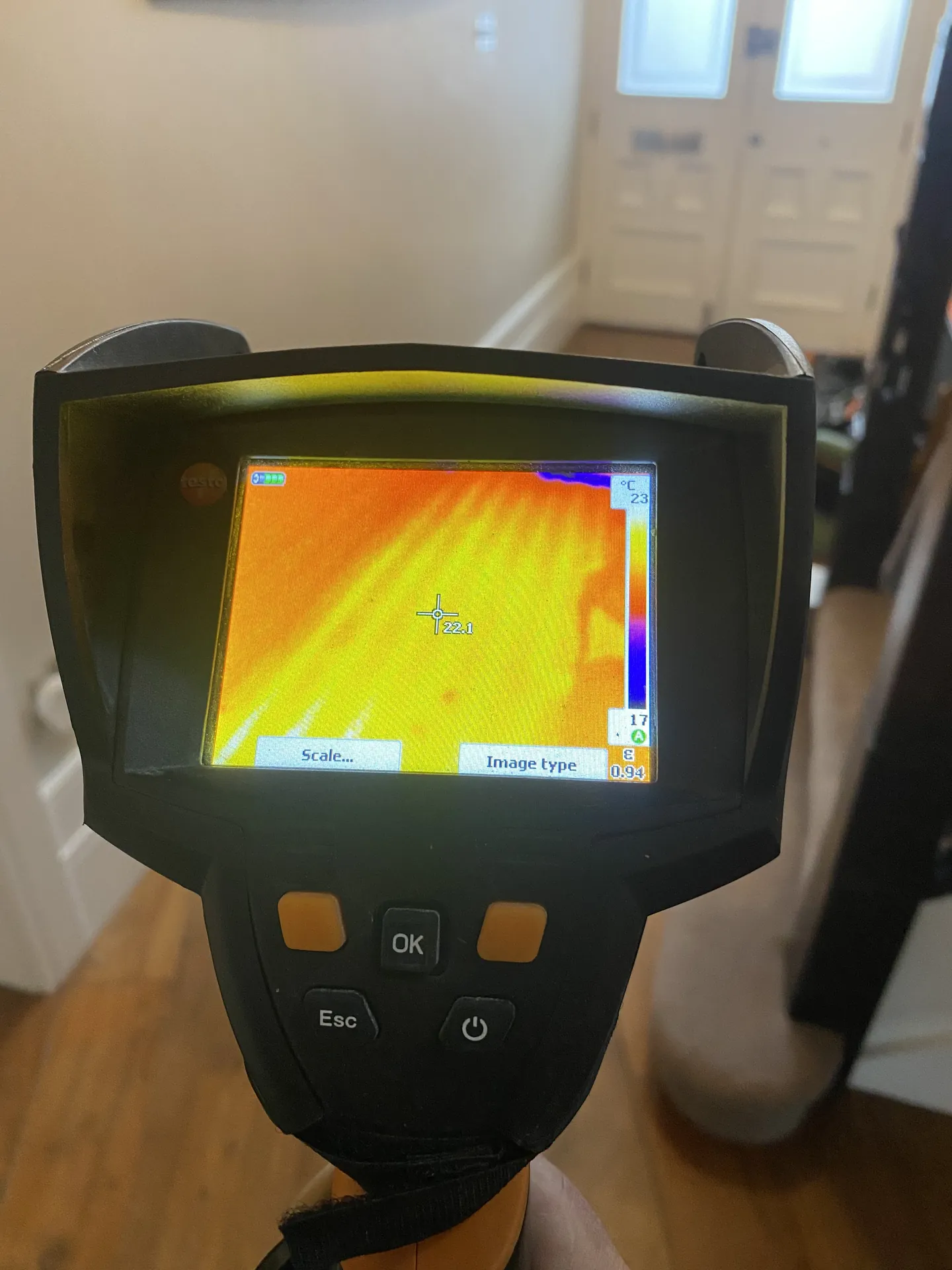
Pipe tracing here means mapping where the pipes go, not electronic cable tracing. Plans are rarely accurate and pipes are routed around obstacles by whoever fitted them. With the heating running, the thermal camera picks out warm pipes under floors and behind plaster, and a run of cold mains shows as a cold line on a warm floor. Where the camera cannot see, a borescope through a small existing gap shows the pipe in the void. The result is a marked route on the floor or wall, so that when something has to be opened it is opened in the right place and nowhere else.
In our own photos
From your first call to a leak you can see in the report
Call or WhatsApp with a few photos and a line about the symptoms. We ask a handful of questions, agree a fixed price and book the survey, usually for the same or the next day.
On arrival we pressure test the mains, hot water and heating, check the meter and test the escaping water, so we know what we are looking for before the detection starts.
Thermal imaging, the acoustic ground microphone and tracer gas are used as the pipework dictates until the leak is marked on the floor or wall.
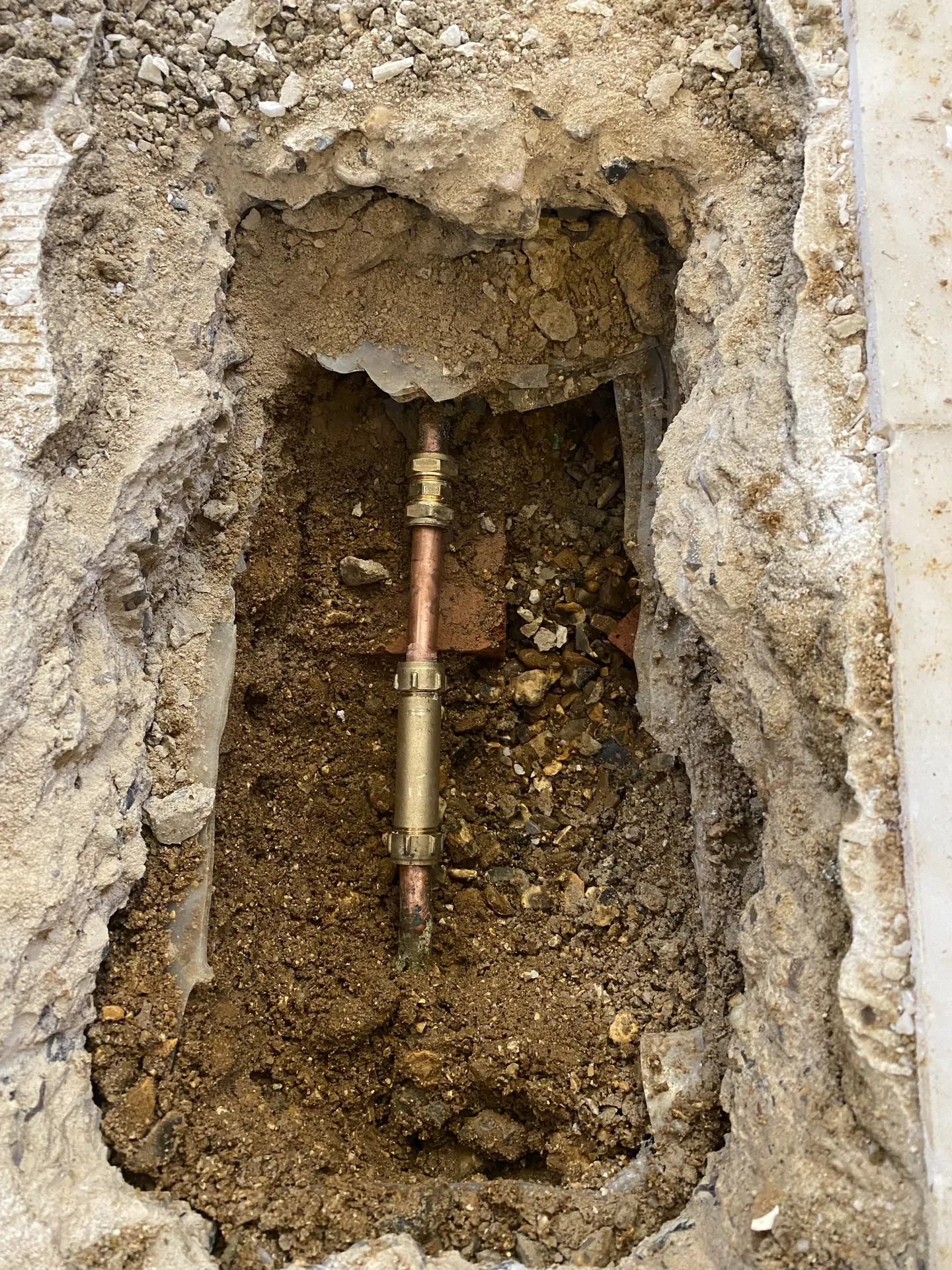
You get a written report with readings, thermal images and photographs, ready for a trace and access claim. If you want the leak fixed, we open that one spot and repair it.
A report your insurer can act on
Most buildings insurance policies include trace and access cover for finding a hidden leak and making good the way in. Our report is written for that claim: what we tested, what we found, where it is, with photographs, thermal images and readings.
- Turn off the stop tap or the heating and stop topping up
- Photograph the damage, the boiler gauge and the meter
- Tell your insurer a leak is suspected and detection is being arranged
- Trace and access pays to find the leak and make good the access
Pressure testing: questions answered
How do you pressure test a heating system for leaks?
The system is isolated at the boiler, brought to a set test pressure with nitrogen and watched on a gauge. We fit a second gauge at a radiator so a drop can be seen across the circuit rather than only at the boiler. A steady gauge clears the heating, and a falling one confirms the leak is in that circuit.
Why test with nitrogen rather than water?
Nitrogen is dry and inert, so the test adds no more water to a floor or wall that is already wet. It also leaves the pipework dry and ready for hydrogen tracer gas if the leak then needs pinpointing, using the same connection.
What is a low pressure test?
A test run below the usual test pressure, for pipework that should not be loaded to a full charge, such as older heating circuits, some plastic systems and waste pipes. It still shows whether the pipework holds. It simply takes a little longer to read on the gauge.
Can you pressure test the supply pipe under my driveway?
Yes. The supply pipe is closed at the boundary stop tap where one exists, connected to at the internal stop tap and tested between the two. If it fails, the acoustic ground microphone and tracer gas take over to find the point on the run.
What does pipe tracing involve and will it damage anything?
Nothing is opened for tracing. With the heating on, warm pipes show through floors and walls on the thermal camera, a cold mains run shows as a cold line, and a borescope looks into any void with an existing gap. We mark the route on the surface with tape or pencil so it can be removed afterwards.
Related services
Need pressure testing and pipe tracing?
Call now and we will tell you straight away whether it needs a same-day visit. Or send a photo of the stain, the meter or the boiler gauge on WhatsApp.
07516 755 680