How Leak Detection Works, Step by Step
Leak detection is a process of narrowing down, from the whole property to one system, then to one pipe run, then to one point. This is what happens at each stage and what to expect on the day.
How it works: what you need to know
It starts with a call or a message. We ask what you have noticed, such as a boiler losing pressure, a meter turning with everything off, a warm patch or a damp patch that keeps coming back. We ask about the age of the house, the floor types and the heating. From that we agree a fixed price before we start and book a slot, and same-day and next-day surveys are usually available. Before we arrive, leave the heating on if it is a heating leak and clear the area around the stop tap and the boiler. Note down when the symptoms happen and anything that makes them worse.
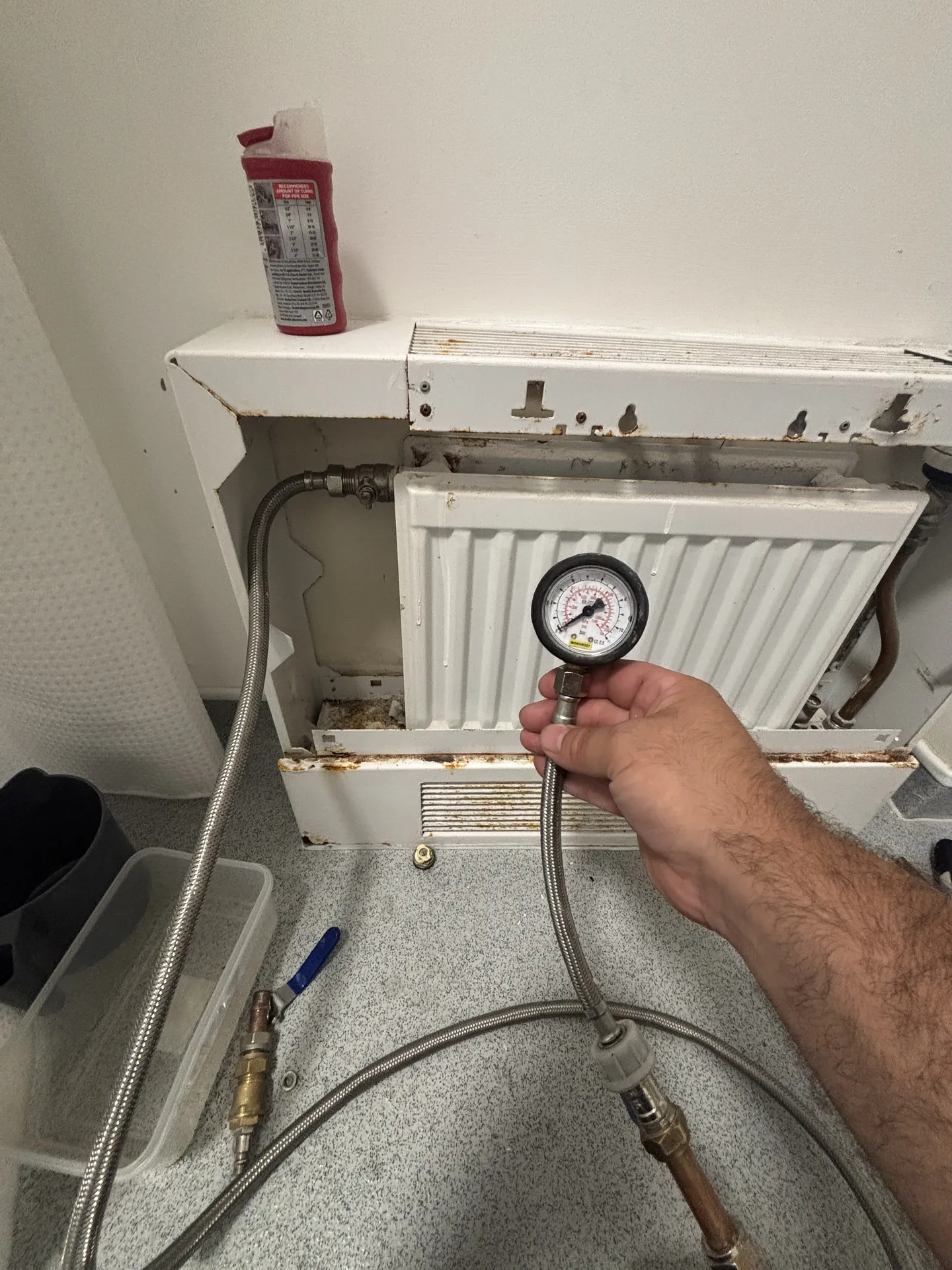
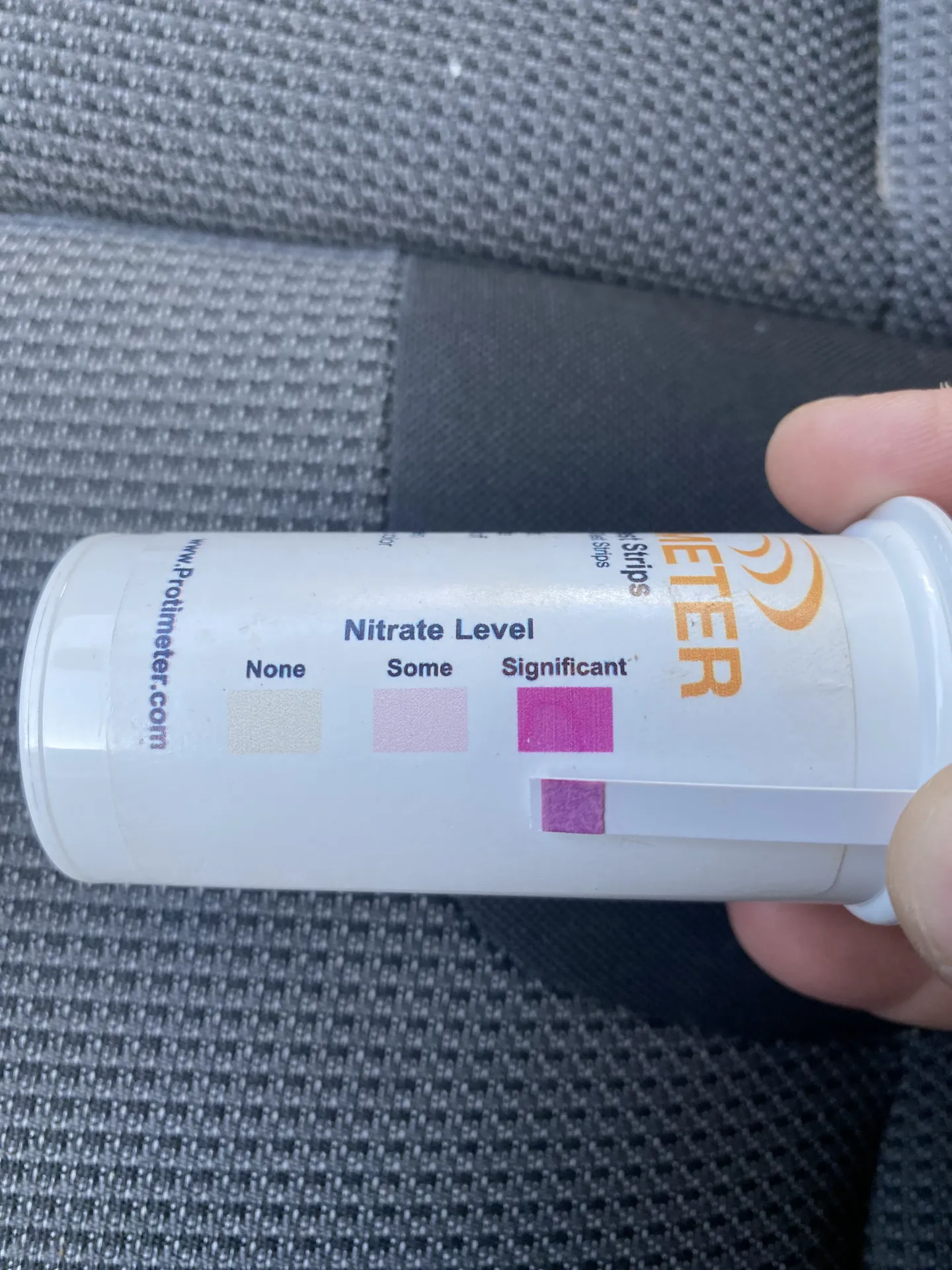
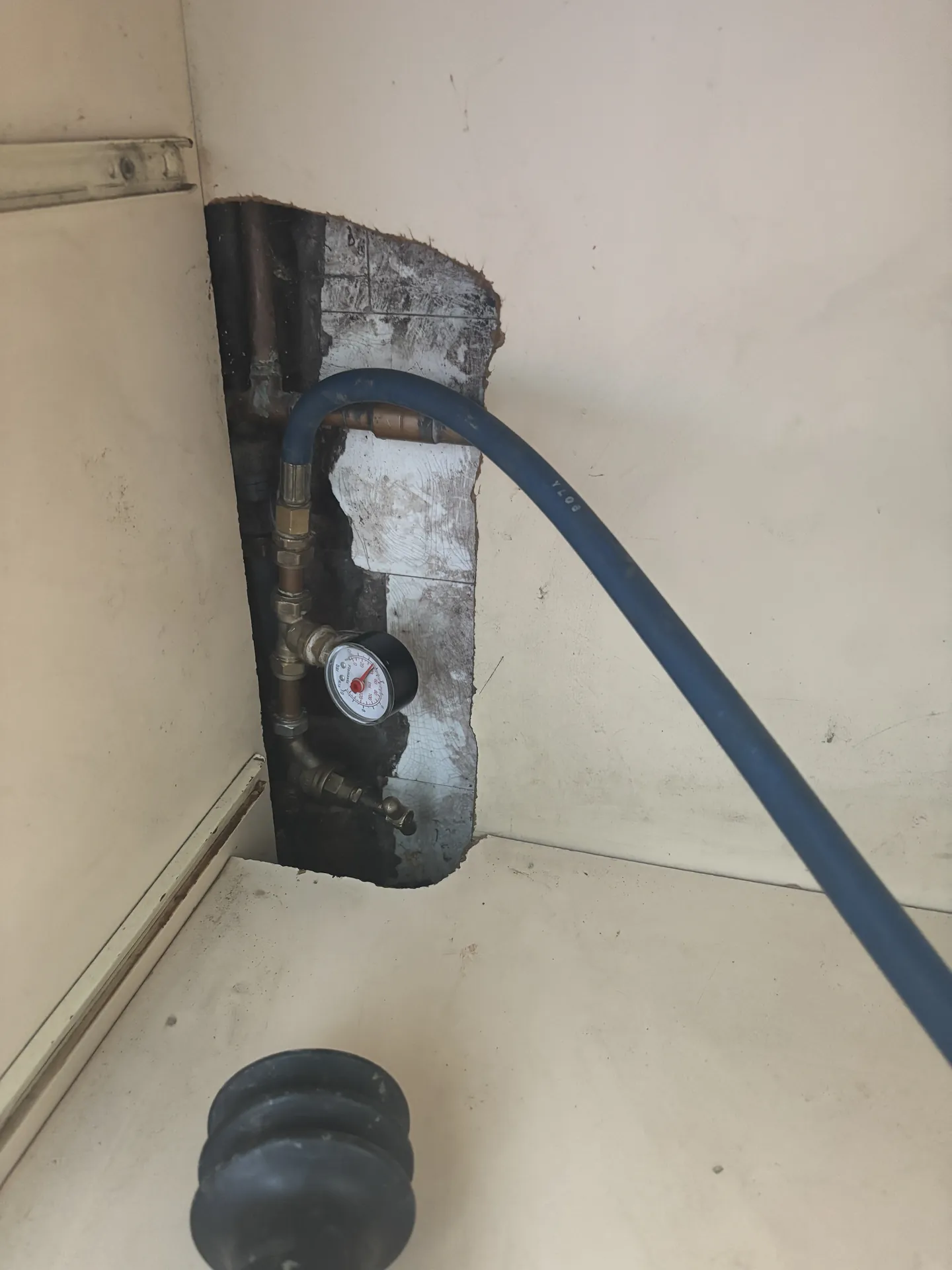
On arrival we work out which system is leaking before we look for where. A meter test with every outlet off shows whether the cold mains is losing water. Turning off the internal stop tap and watching the meter again separates the outside supply pipe from the inside pipework. A pressure gauge on the central heating shows whether the heating circuit is losing pressure on its own. Where there is a damp patch to sample, water test strips tell mains water from heating water. This stage matters because each system needs a different method, and it stops time being spent listening for a leak on the wrong pipe.
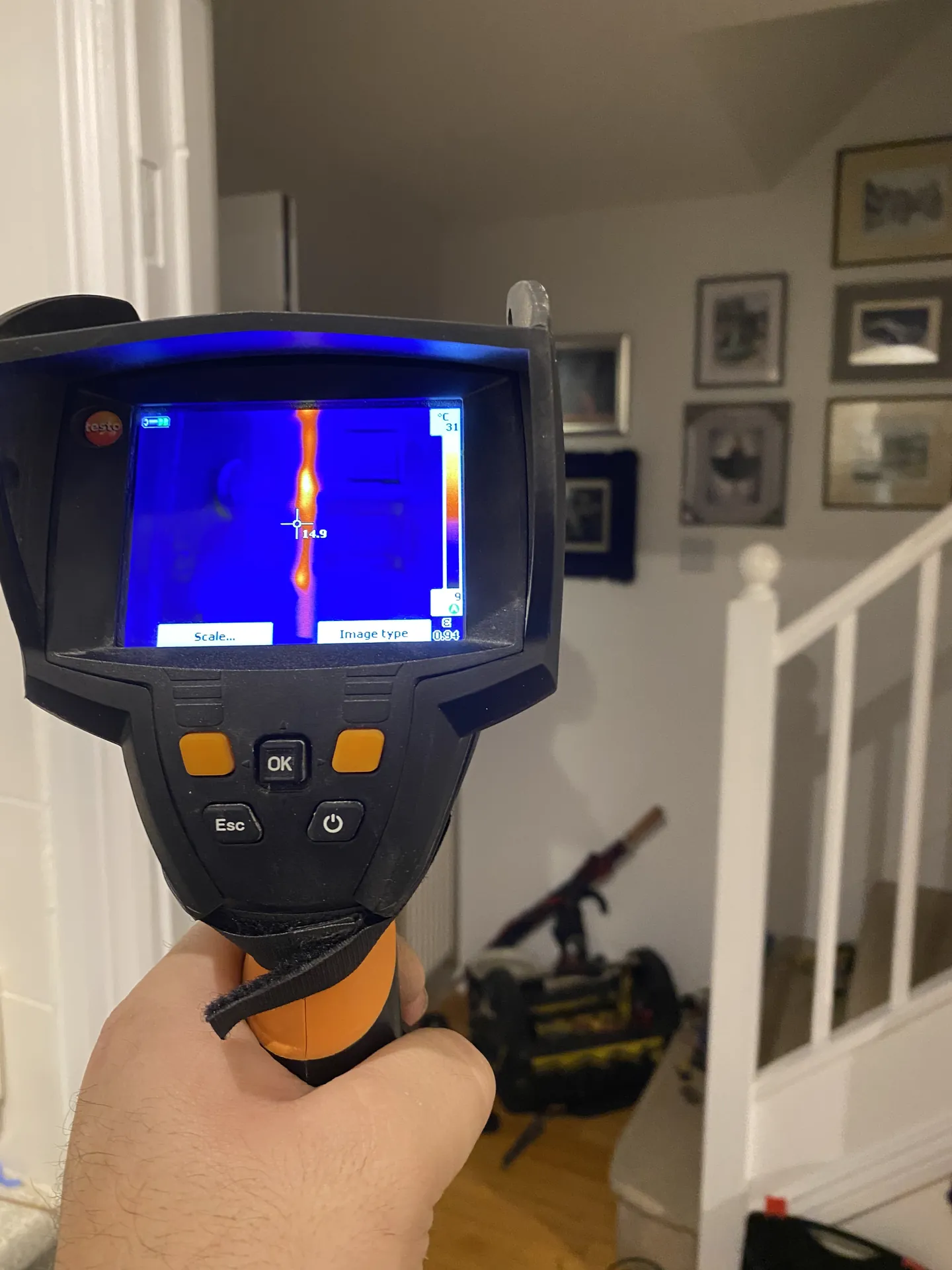
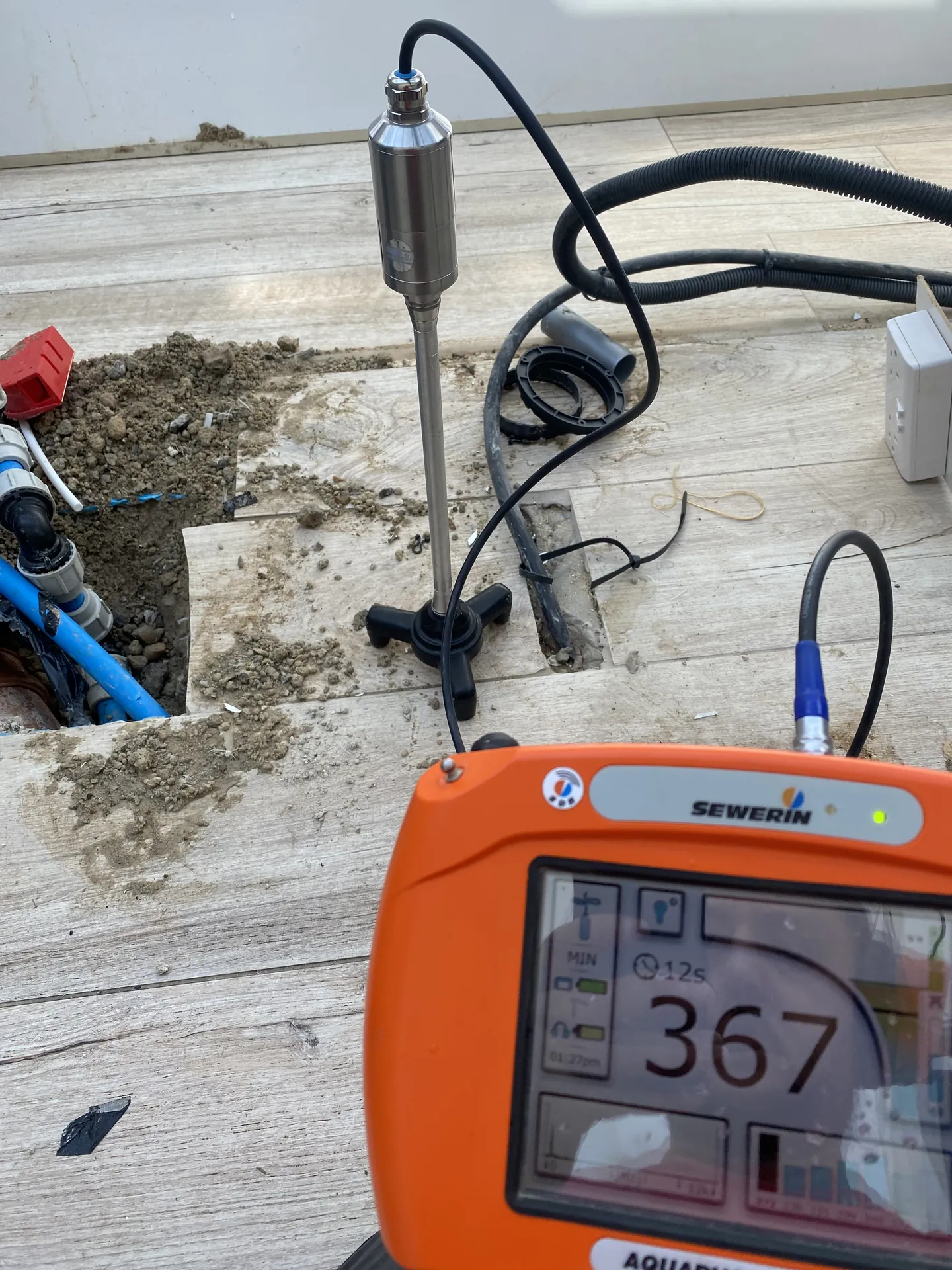
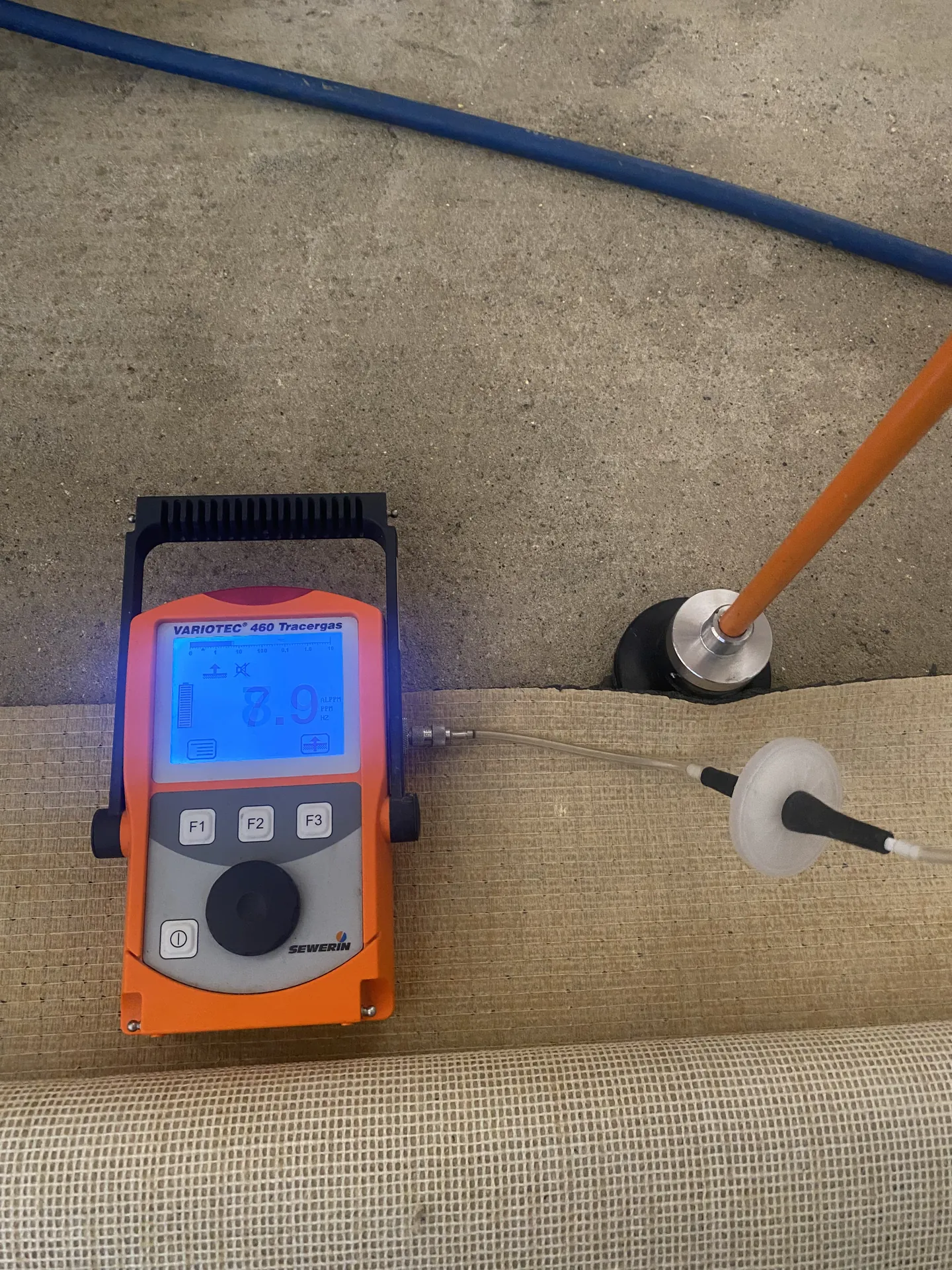
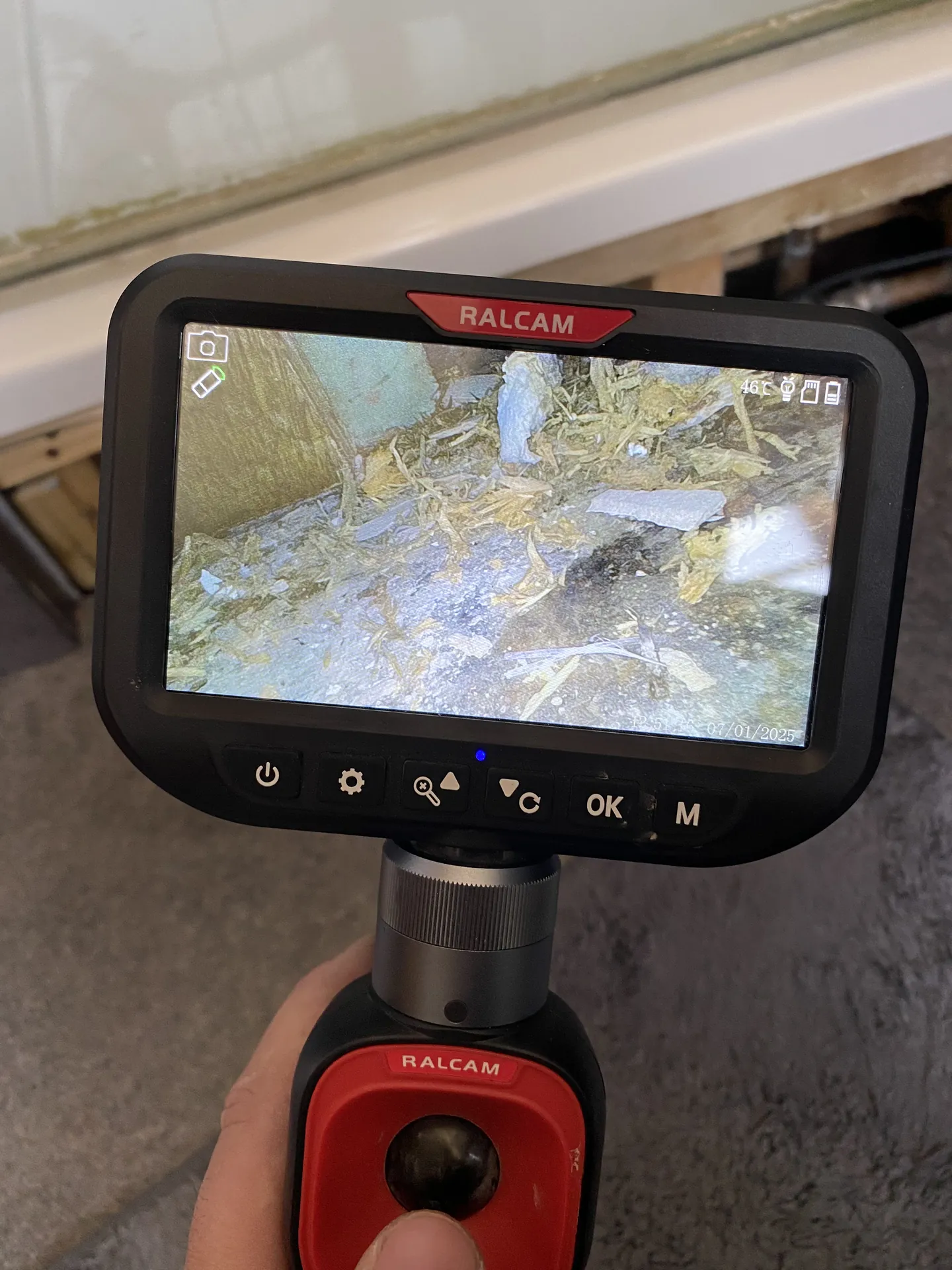
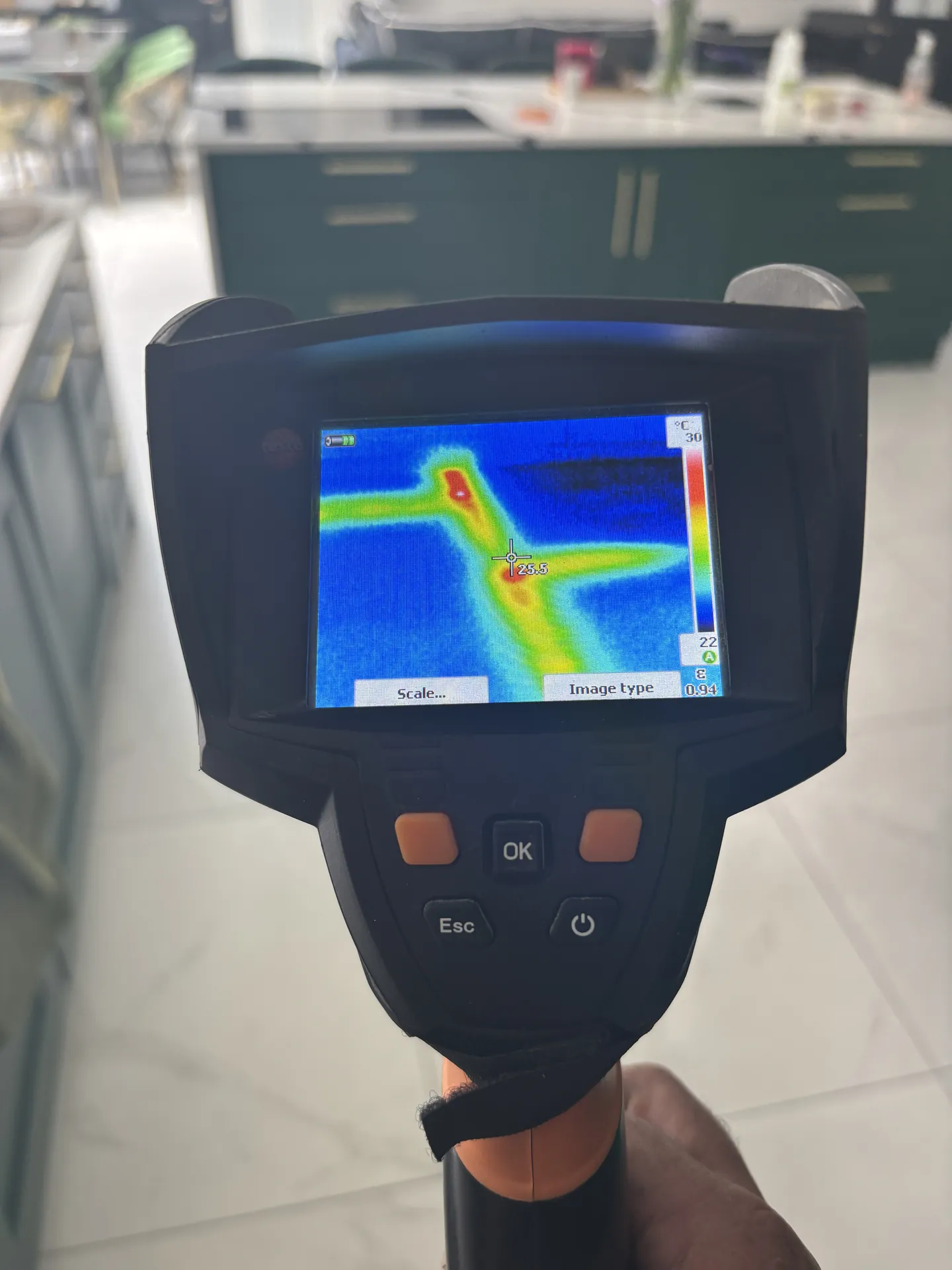
The thermal imaging camera goes first on heating and hot water leaks. With the heating running it shows the pipe runs through the floor and plaster, and a leak appears as heat spreading away from the line. On live cold mains and supply pipes the acoustic ground microphone listens for water escaping under pressure through tiles, concrete and paving, and the reading peaks over the leak. Where the pipe is plastic, buried or too quiet to hear, it is drained and filled with a hydrogen and nitrogen tracer gas. A detector then follows the pipe to where the gas surfaces. That is a detection tool, not gas-safety work. A borescope looks into voids, and dye tests trace bath leaks.
Some of this means the water or the heating being off for short periods. A meter test needs every outlet off for a few minutes. A tracer gas test needs the pipe drained, and a pressure test needs the heating circuit closed while the gauge is read. We tell you before each one and put things back as soon as the reading is taken. Most home surveys take between two and four hours. Large properties, long buried supply pipes and underfloor heating take longer, and we say so before we start if that looks likely. Floors and walls are not opened to find the leak, only at the marked point if you ask us to repair it.
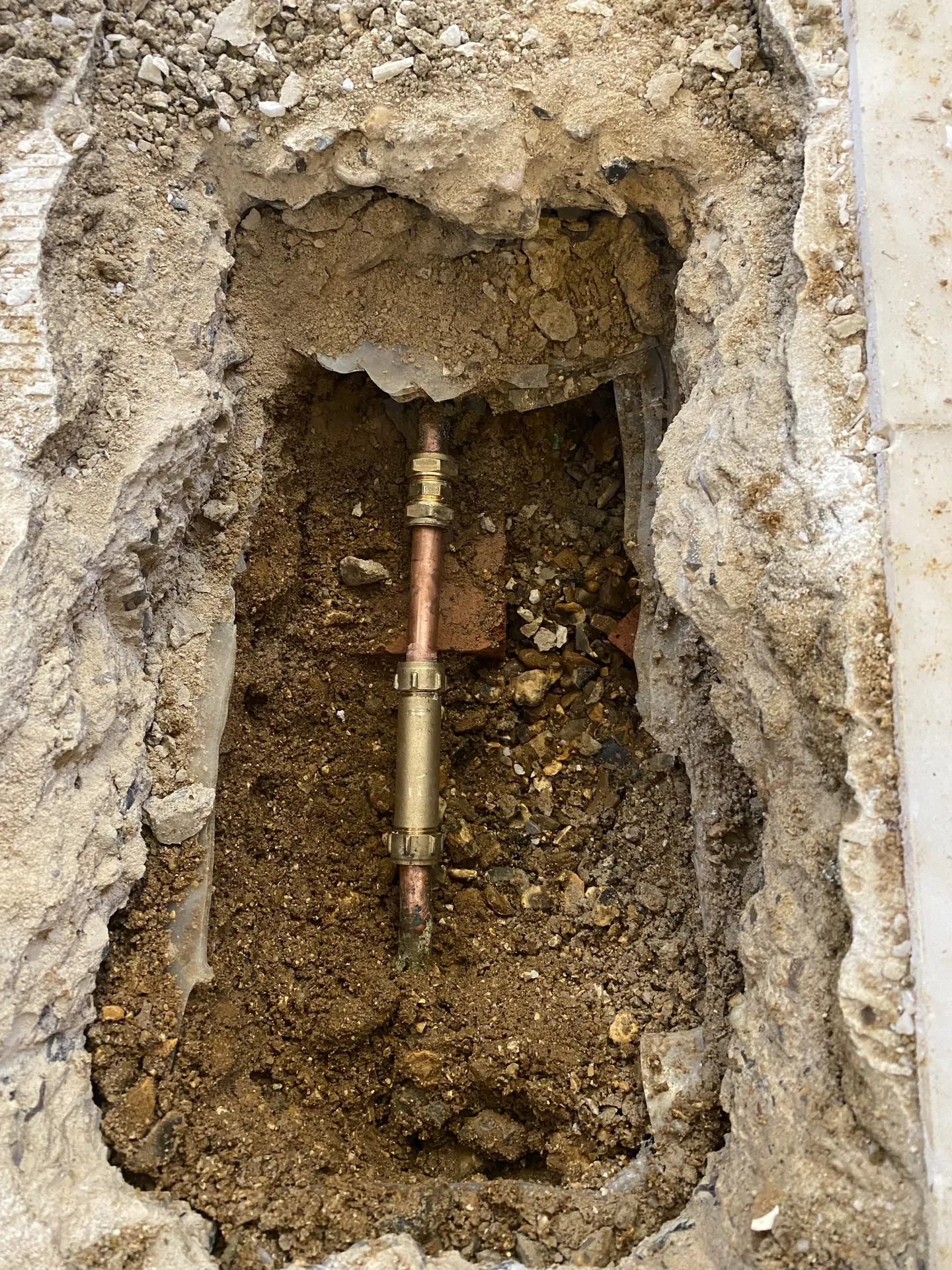
The survey ends with the leak marked, photographed and written up. The report sets out the symptoms, the systems tested, the methods and readings, the thermal images and the position of the leak on a plan, and goes to you as a PDF. If you want the repair done, we open that one spot, replace the pipe, refill and test, and add the repair photographs. We cannot promise to find every leak. Some are too small to register during the visit, and some are intermittent. If a leak cannot be located non-invasively, we say so, explain what has been ruled out and what the next step would be, rather than opening floors on a guess.
What this looks like in practice
How we help
Thermal imaging leak surveys
A thermal imaging camera shows warm pipe runs and cool wet patches through floors and walls, so the leak is seen before anything is opened.
Thermal imaging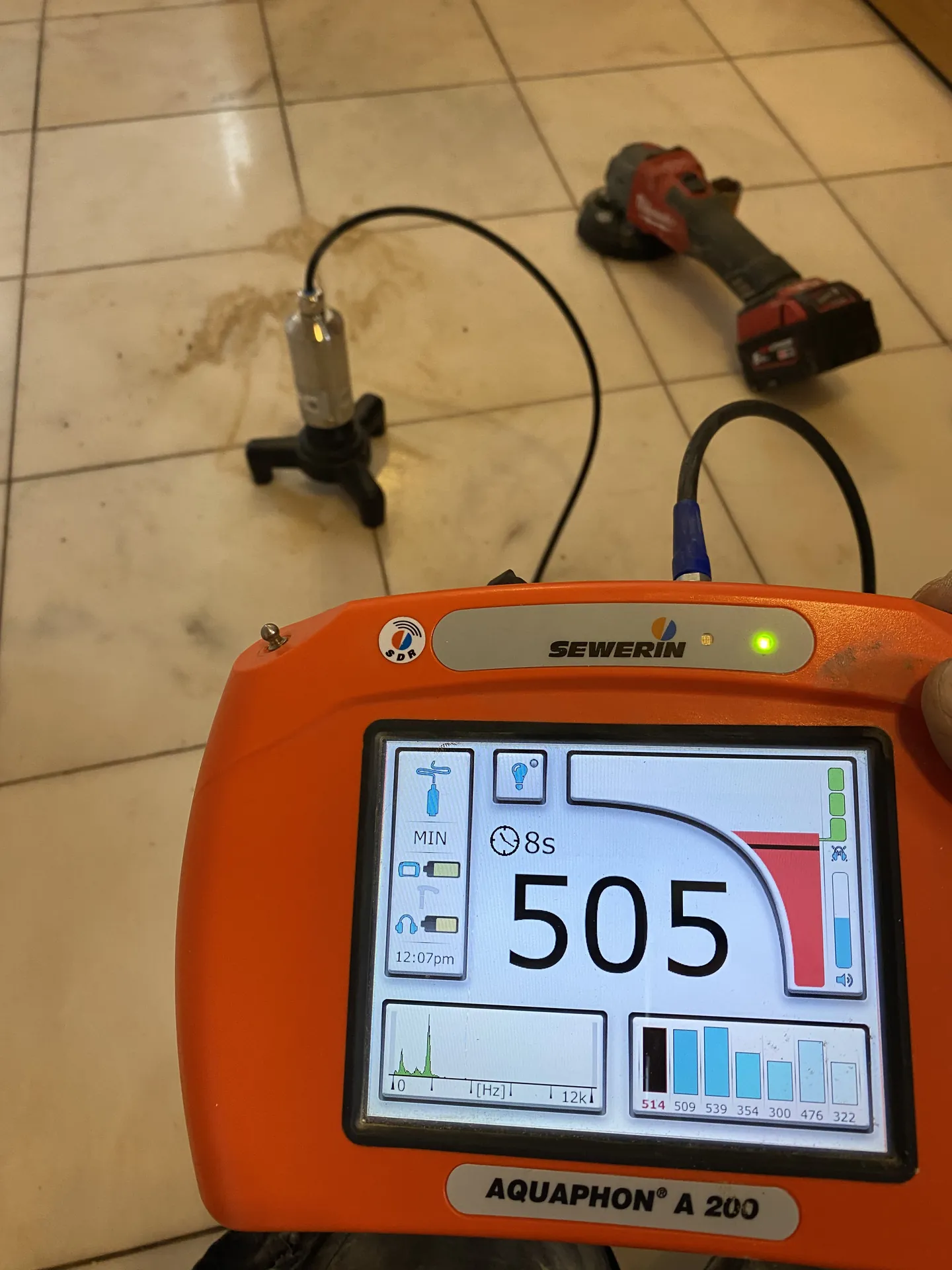
Acoustic leak detection
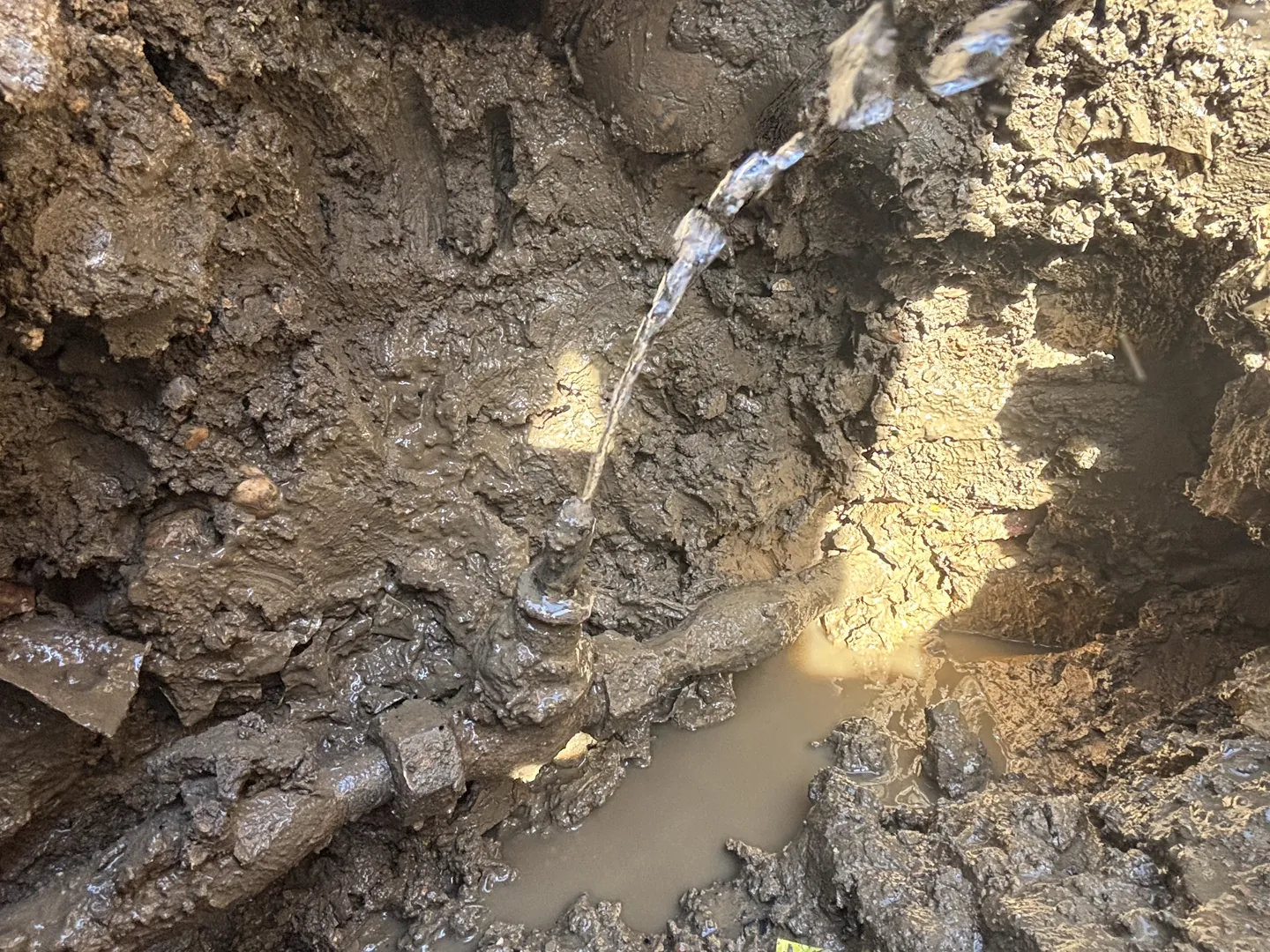
A ground microphone listens for the sound of water escaping under pressure through floors, concrete and paving, and the reading peaks directly over the leak.
Acoustic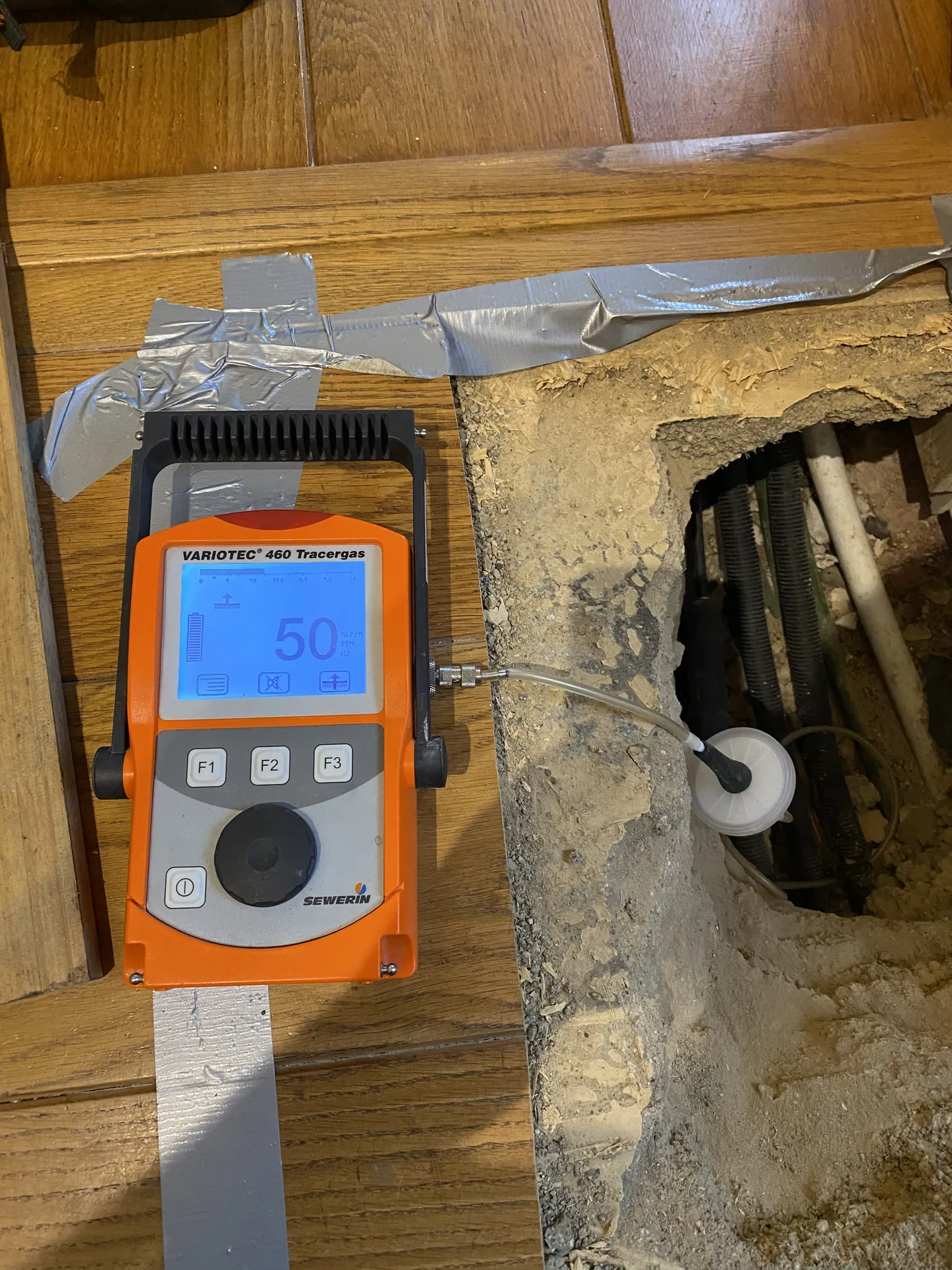
Tracer gas leak detection
A safe hydrogen and nitrogen mix is put into the drained pipe, rises through the floor or wall and is picked up by the detector directly above the leak.
Tracer gasFrom your first call to a leak you can see in the report
Call or WhatsApp with a few photos and a line about the symptoms. We ask a handful of questions, agree a fixed price and book the survey, usually for the same or the next day.
On arrival we pressure test the mains, hot water and heating, check the meter and test the escaping water, so we know what we are looking for before the detection starts.
Thermal imaging, the acoustic ground microphone and tracer gas are used as the pipework dictates until the leak is marked on the floor or wall.
You get a written report with readings, thermal images and photographs, ready for a trace and access claim. If you want the leak fixed, we open that one spot and repair it.
How it works: questions answered
Does leak detection actually work?
Yes, when the right method is matched to the right pipe. Each method has conditions it needs, such as pressure for acoustic listening or a drained pipe for tracer gas, and the survey is planned so those conditions are met. Where a leak cannot be located on the day, we say so plainly.
What should I do before the engineer arrives?
Leave the heating on if the boiler is losing pressure, clear access to the stop tap, the boiler and the meter, and write down when you notice the symptoms. If you have photographs of a damp patch when it was at its worst, keep them to hand.
Will you turn my water off?
For short periods, yes. The meter test needs every outlet off for a few minutes, and a tracer gas test needs the pipe drained. We tell you before each one, and the water is back on as soon as the reading has been taken.
How long does leak detection take?
Between two and four hours for most homes. A long buried supply pipe, a large house or underfloor heating with many loops can take longer, and we tell you at the start if that is likely.
Do you guarantee to find the leak?
No. The methods are reliable on the pipes they are designed for, and the survey is planned around them. If a leak is not located, you get a clear account of what was tested and ruled out, so the next step is an informed one rather than a guess.
Want it looked at rather than read about?
Call now and we will tell you straight away whether it needs a same-day visit. Or send a photo of the stain, the meter or the boiler gauge on WhatsApp.
07516 755 680