Damp or a Leak? How to Tell the Difference
A damp patch has four usual explanations, and only one of them is a leak. Each behaves differently with the weather, the time of day and how the house is used, so the pattern is the first clue.
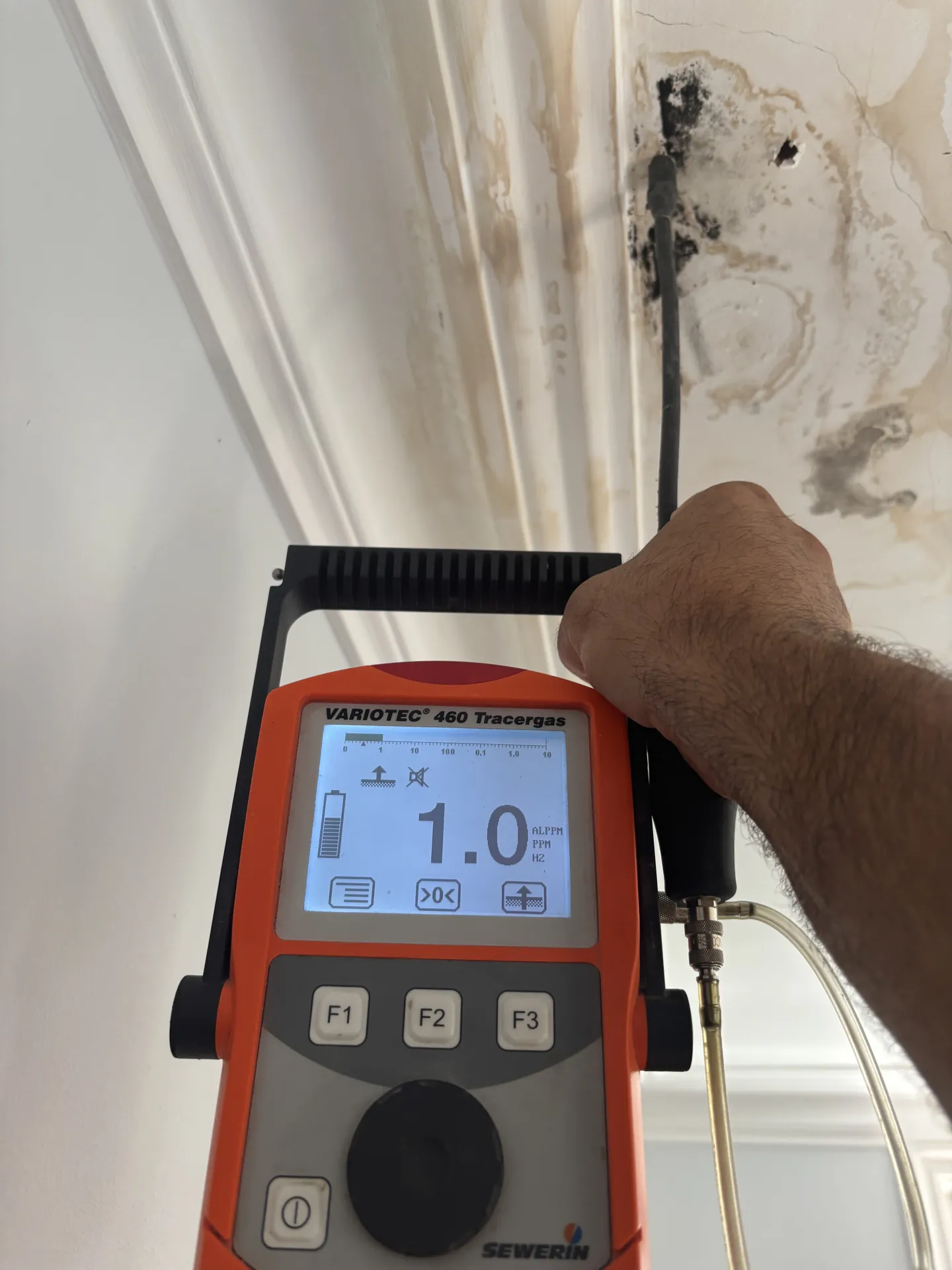
Damp or a leak?: what is usually going on
Condensation forms where warm, moist air meets a cold surface. It shows as black mould in corners, behind furniture and around windows, worst in winter and in rooms where washing is dried. Rising damp comes up from the ground through a wall without a working damp-proof course. It leaves a tide mark up to about a metre high with salts on the plaster, and it is confined to ground floor walls. Neither of them is a plumbing problem, and neither is helped by a leak survey, so it matters to tell them apart early.
Penetrating damp comes through the building from outside, from a blocked gutter, cracked render, a failed window seal or a chimney without a cap. It gets worse after rain and dries out in a dry spell. A chimney breast that is damp in the middle, well above skirting level, is often rain coming down an unused flue or salts drawn out of old soot. A plumbing leak ignores the weather entirely. It follows the pipes, gets worse when water or heating is used, and keeps coming back after it has been dried and repainted.
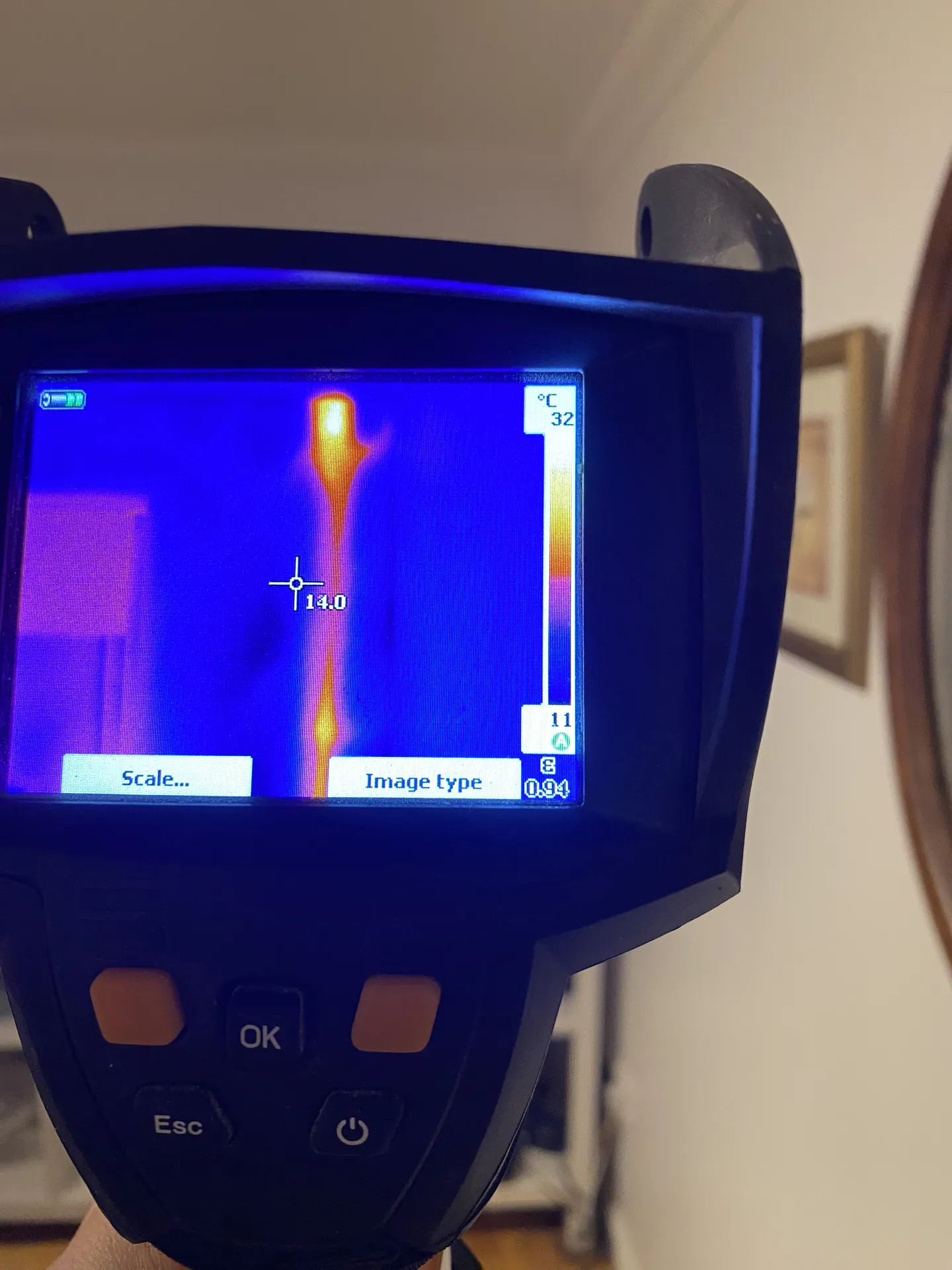
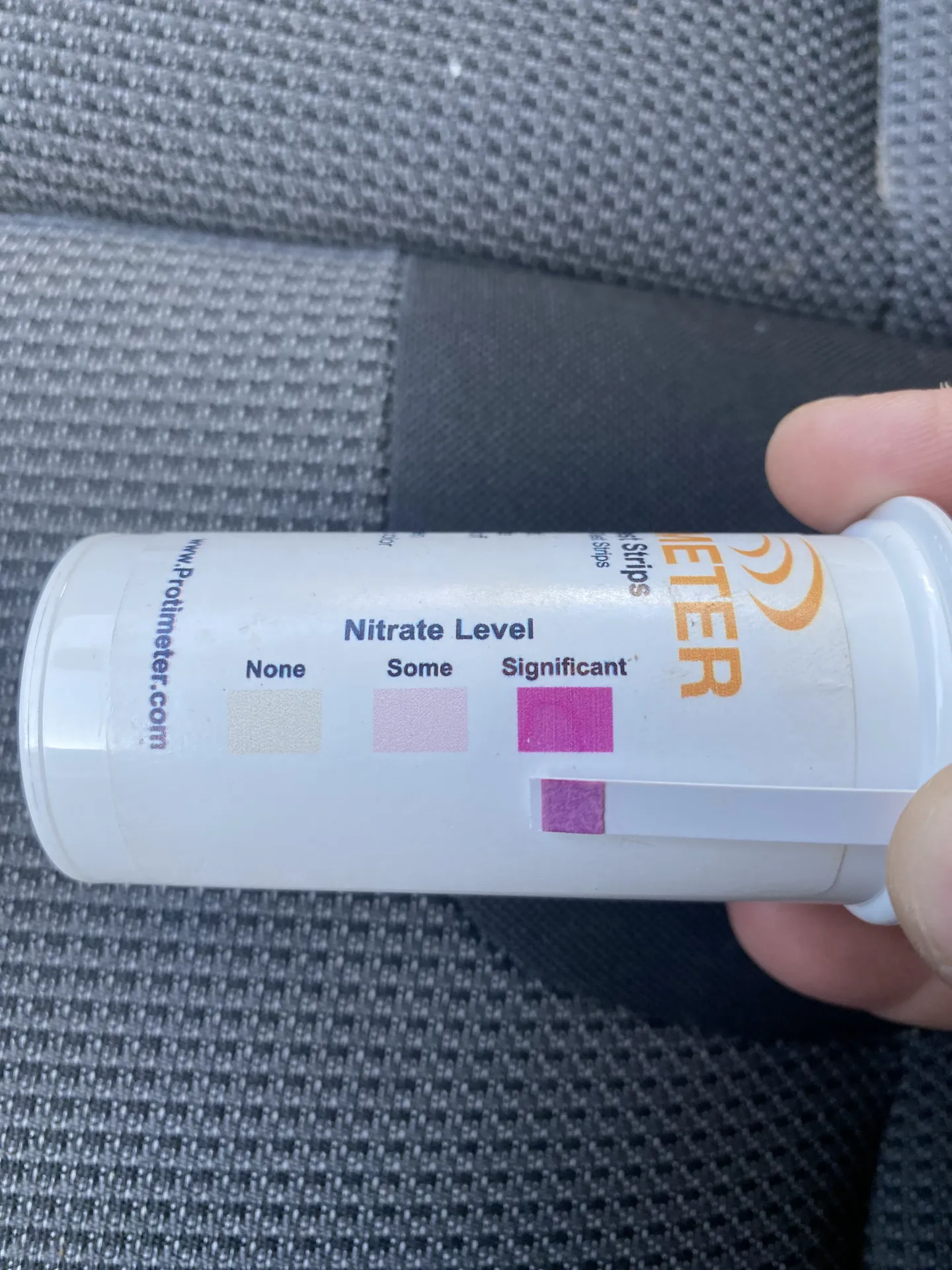
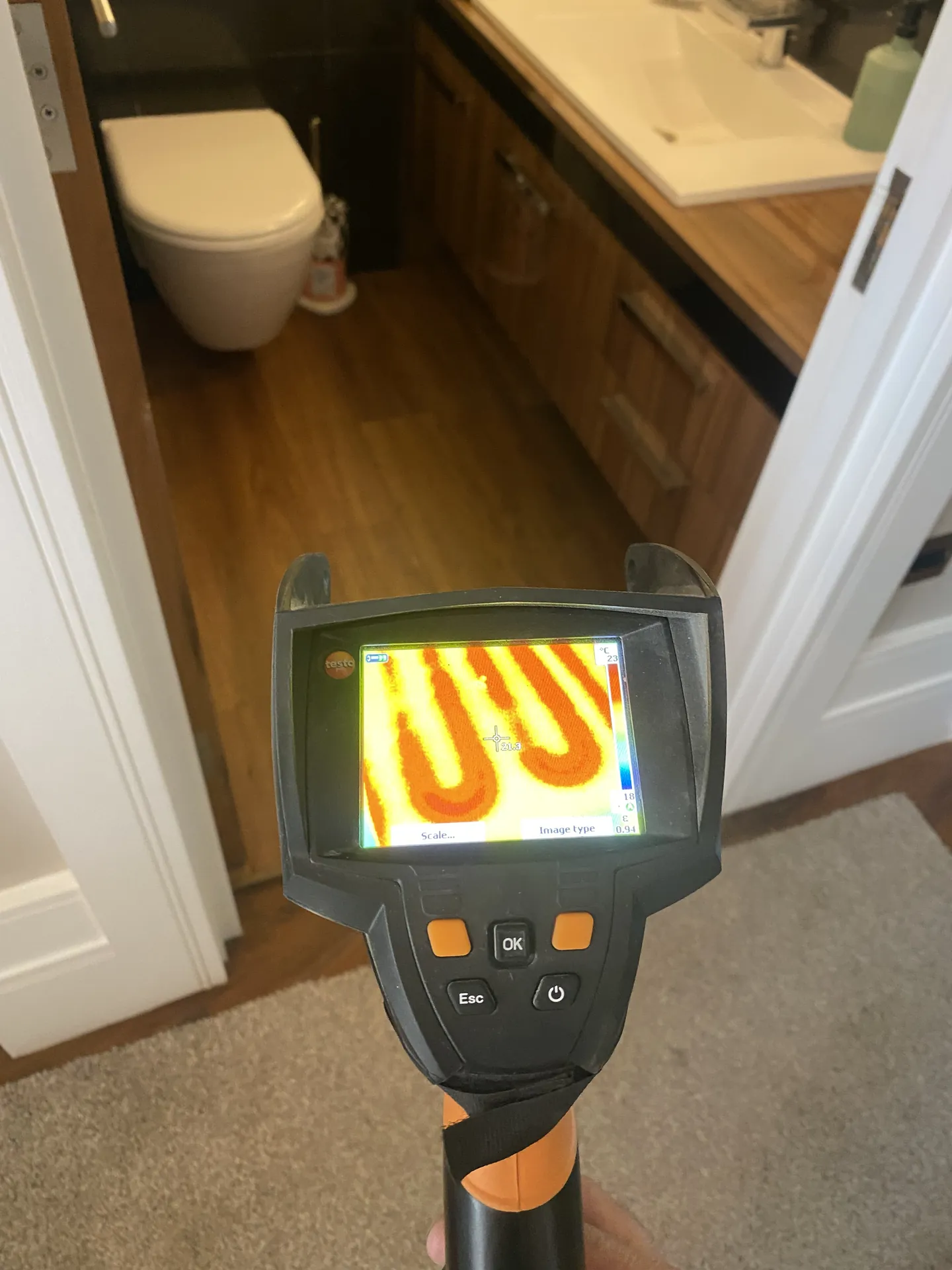
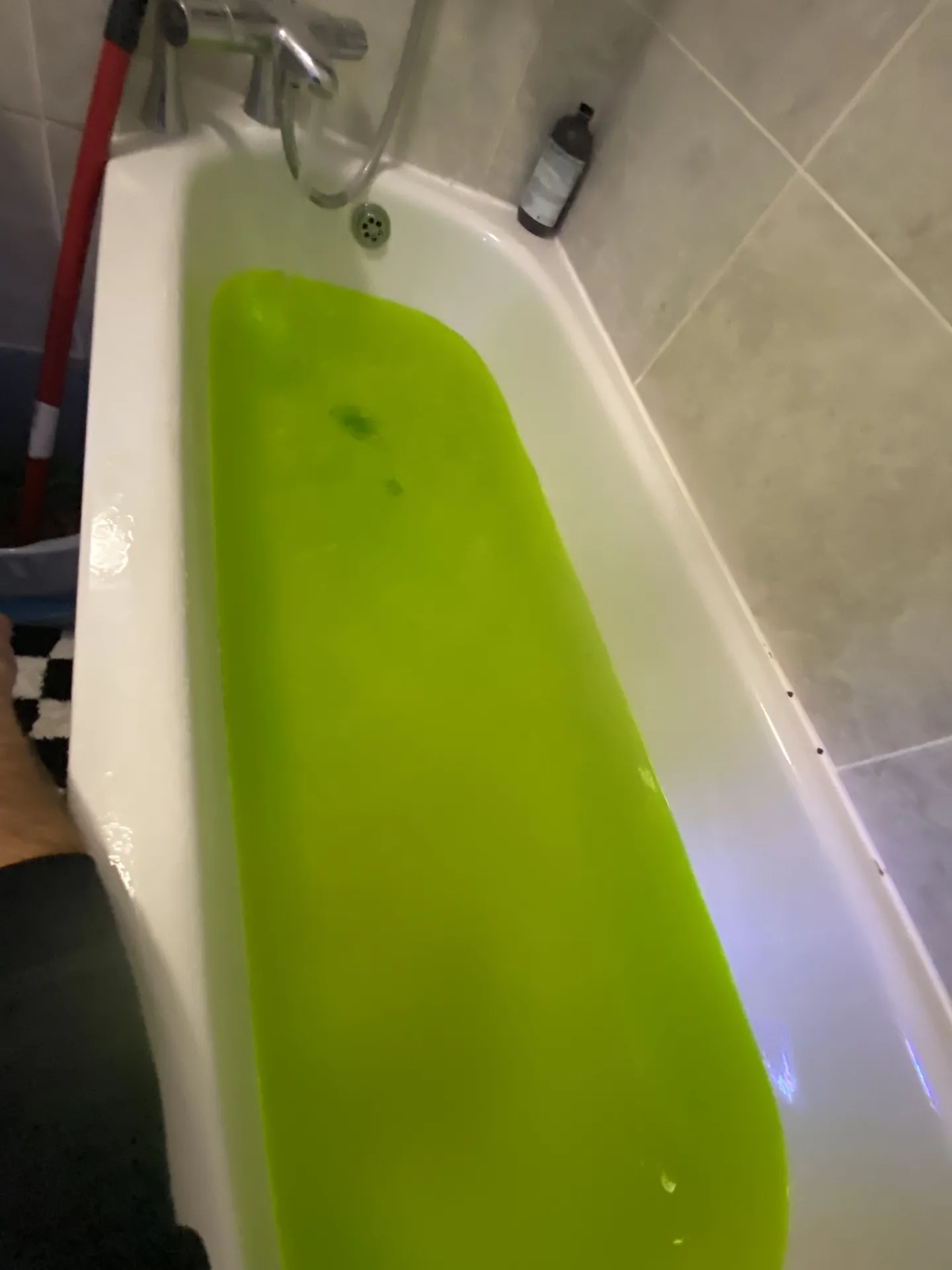
The survey starts with the pattern you describe, then tests it. A moisture meter maps the damp area and shows whether it is spreading from a point or rising from the floor. A water test strip on any free water tells mains water from heating water and from rain. The thermal imaging camera shows pipe runs behind the plaster and whether the wet area sits on one of them. Where a pipe is a suspect, a pressure test on the heating or the mains, and the meter test, prove whether water is being lost at all.
The answer may be that it is not a leak, and we say so. A report that rules out plumbing is still useful, because it points you to a roofer, a builder or better ventilation instead of another round of repainting. It also matters for insurance. Damage from a sudden escape of water is usually covered by a buildings policy, and trace and access cover pays for finding the leak. Gradual damp, condensation and rising damp are usually excluded, so knowing which you have decides whether a claim is worth making.
Call today if
- The patch is on a ceiling and growing from one point rather than a corner.
- The boiler is losing pressure and the damp is near a radiator or pipe run.
- Water is beading on the surface or running down the wall with no rain.
- A floor is wet or warm in one spot and the weather has been dry.
What this looks like on the day
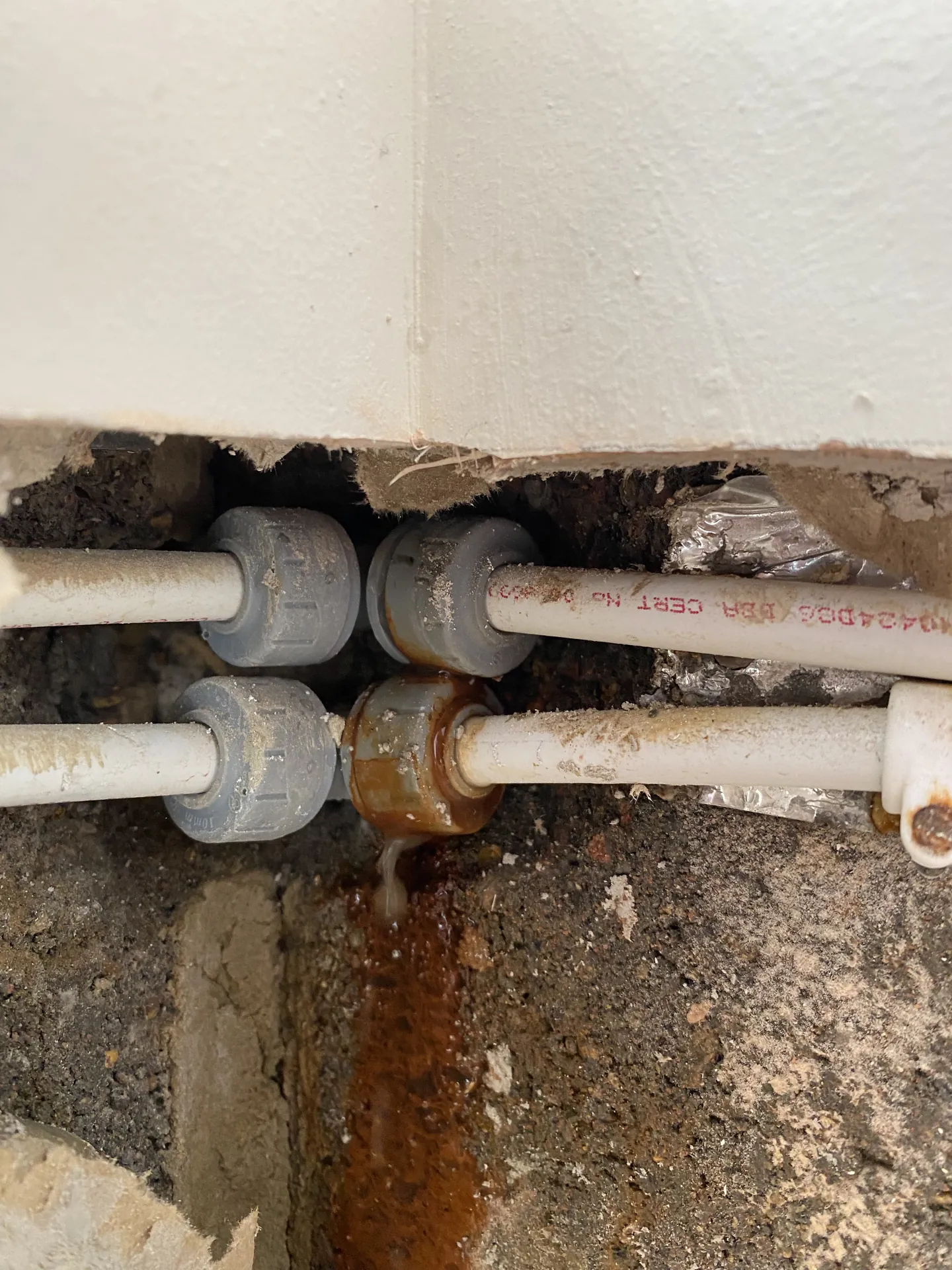
How we would find this leak
Water leak detection
Hidden leaks behind walls, under floors and in ceilings, pinpointed with thermal, acoustic and tracer gas kit before anything is opened up.
Water leaks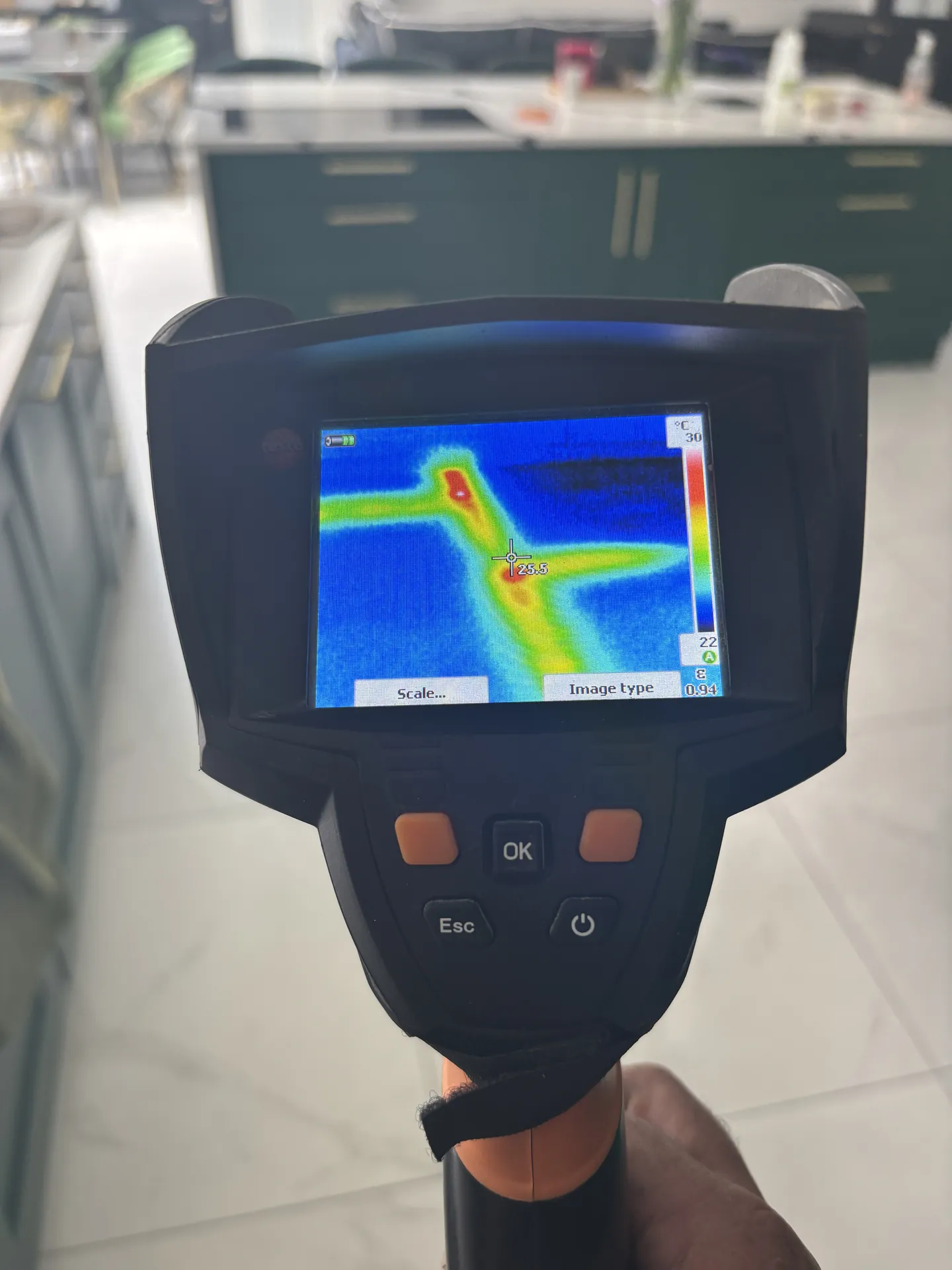
Thermal imaging leak surveys
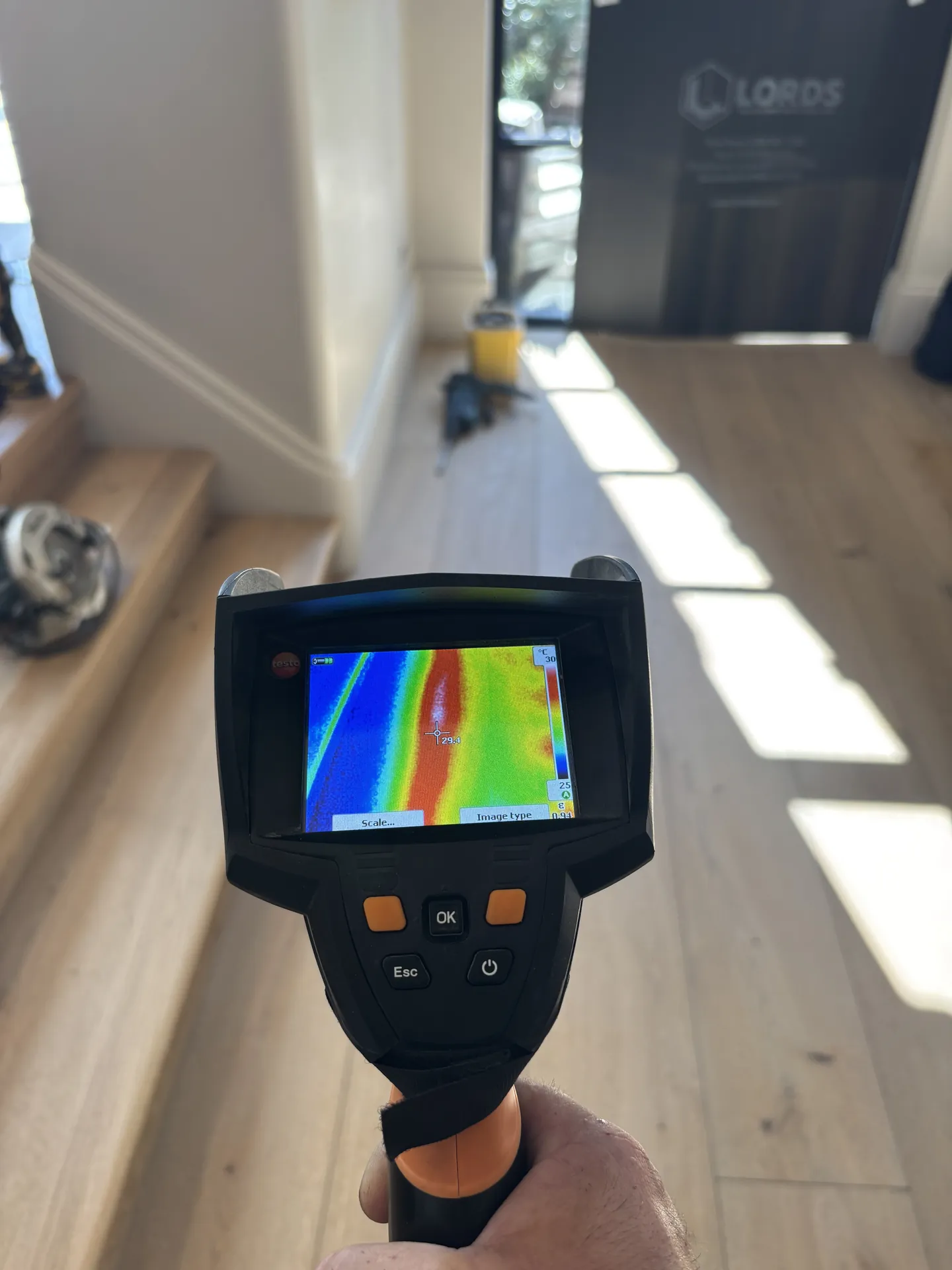
A thermal imaging camera shows warm pipe runs and cool wet patches through floors and walls, so the leak is seen before anything is opened.
Thermal imaging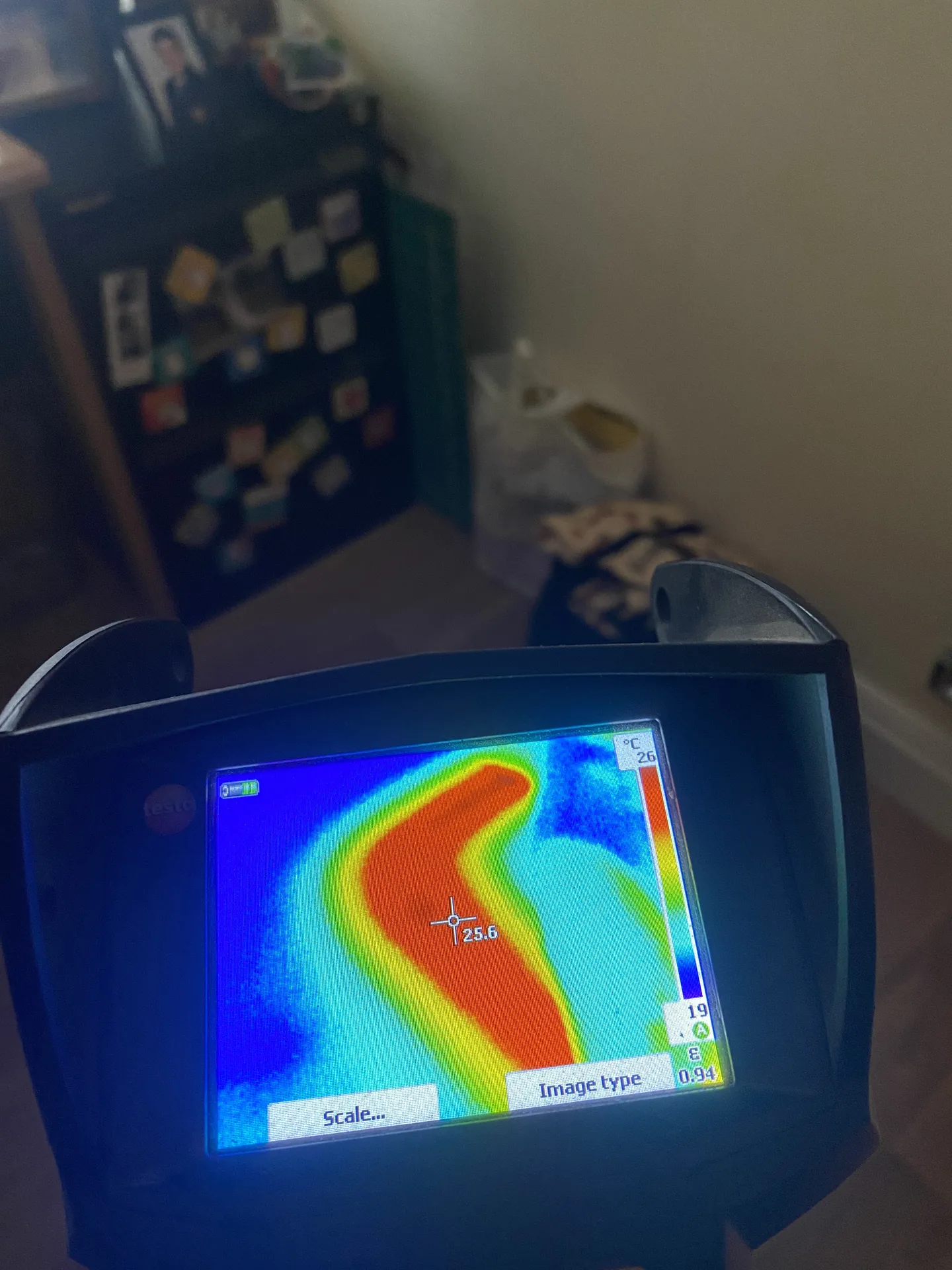
Central heating leak detection
A boiler that keeps dropping pressure means water is escaping somewhere in the heating circuit. We find the pipe or fitting and fix it.
Heating leaksFrom your first call to a leak you can see in the report
Call or WhatsApp with a few photos and a line about the symptoms. We ask a handful of questions, agree a fixed price and book the survey, usually for the same or the next day.
On arrival we pressure test the mains, hot water and heating, check the meter and test the escaping water, so we know what we are looking for before the detection starts.
Thermal imaging, the acoustic ground microphone and tracer gas are used as the pipework dictates until the leak is marked on the floor or wall.
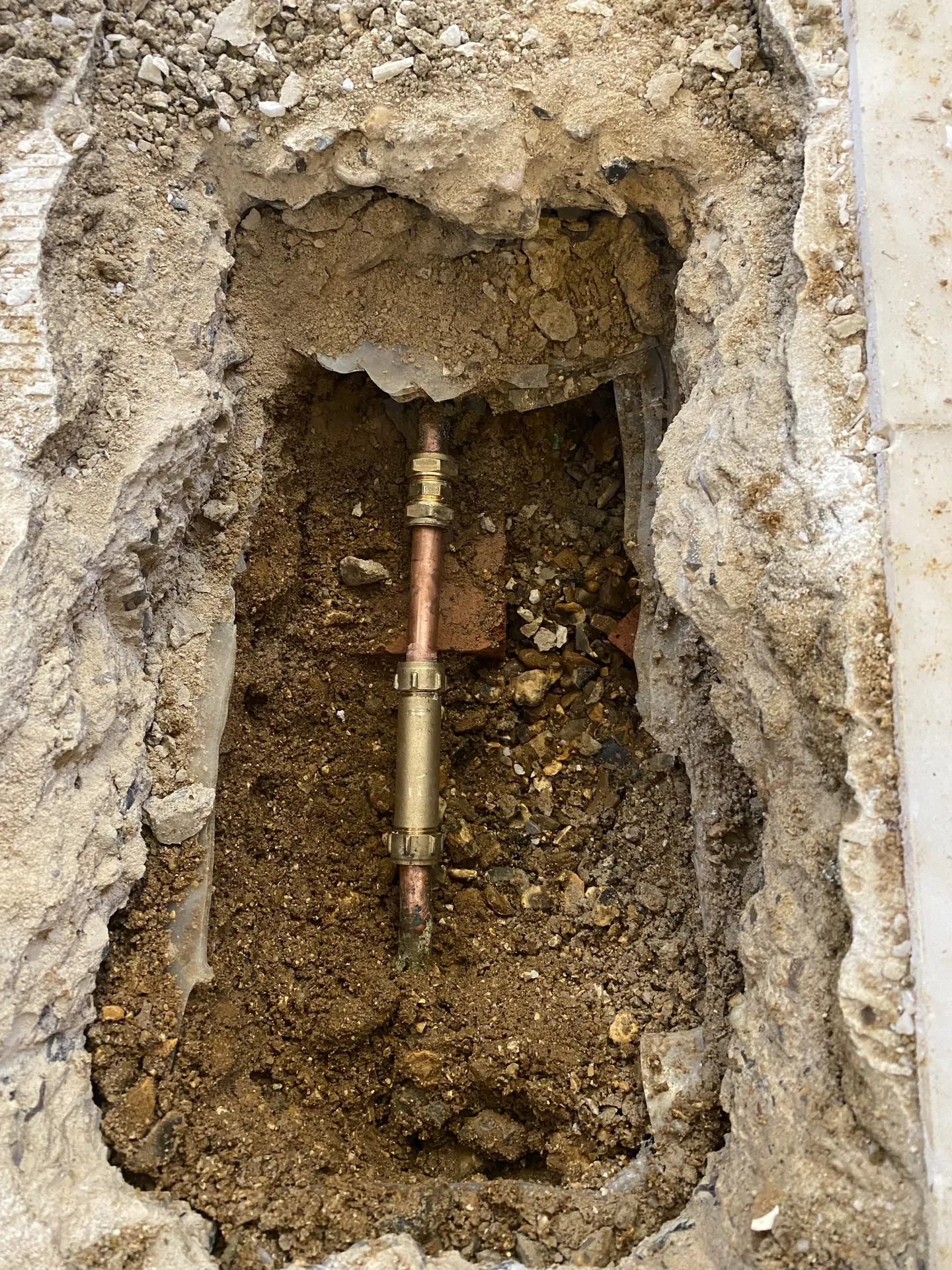
You get a written report with readings, thermal images and photographs, ready for a trace and access claim. If you want the leak fixed, we open that one spot and repair it.
Damp or a leak?: questions answered
How can I tell if a damp patch is a leak?
A leak follows the pipes, not the weather. If the patch is worse after water is used or the heating runs, keeps returning after being dried, or sits on a pipe route, a leak is likely. If it is worse after rain or in cold weather, look at the building first.
Why is there a damp patch in the middle of my wall?
A patch well above skirting level and away from a window is rarely rising damp. The usual causes are a pipe in the wall, a leak from the floor or room above, or rain coming through render or a chimney. Thermal imaging shows whether a pipe runs behind it.
My chimney breast is damp. Is that a leak?
Often not. An unused flue without a cap lets rain in, and old soot leaves salts that draw moisture from the air. If there is no pipe in or near the chimney breast, the survey can rule plumbing out and point you to a roofer.
What if you find it is not a leak?
We tell you plainly, and the report says what the evidence shows instead: condensation, rising damp or penetrating damp. You still get the readings and thermal images, which help the next trade and your insurer.
Does insurance cover damp?
Usually not. Gradual damp, condensation and rising damp are normally excluded. A sudden escape of water from a pipe or fitting usually is covered, and trace and access cover pays for locating it. Check your policy wording.
Leak somewhere else?
Noticed this at home? Do not wait for it to get worse.
Call now and we will tell you straight away whether it needs a same-day visit. Or send a photo of the stain, the meter or the boiler gauge on WhatsApp.
07516 755 680