Water Leak Under the Floor? How We Find It
A leak under a floor can run for months before a damp patch, a warm spot or a water bill gives it away. Suspended timber floors and solid floors hide leaks in different ways, and each calls for different methods through the floor finish.
Leak under the floor: what is usually going on
Houses around Watford and across London have two kinds of floor, and a leak behaves differently under each. Victorian and Edwardian terraces and most 1930s semis have suspended timber floors at ground level, with a void beneath and pipes clipped to the joists. A leak there drips into the void, soaks the ground or the joist ends, and often shows only as a musty smell or a springy board. Later houses and extensions have solid concrete floors with pipes laid in the screed. Water from a leak in a screed spreads sideways under the finish and appears wherever it finds a way up.
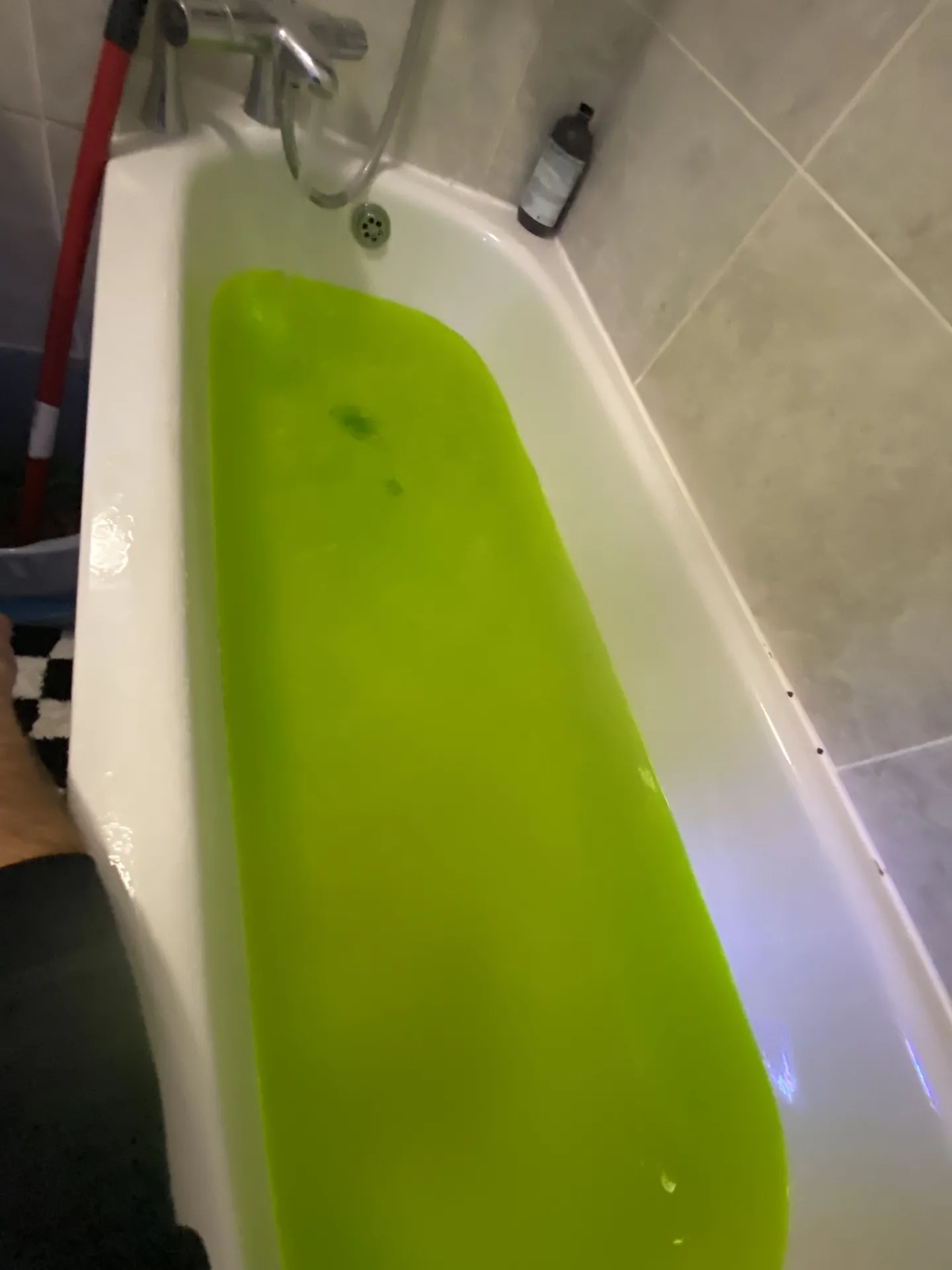
The first mistake people make is to open the floor where the damp is. Water travels along joists, over the damp proof membrane and through the screed, so the wet patch is often a metre or more from the pipe. Lifting boards at random, or chasing out tiles until the leak appears, destroys a floor finish that may be hard to match. Before anything comes up we find out which system is leaking. The meter test with everything off points to the cold mains. A boiler that keeps losing pressure points to the heating. A test strip on any water we can reach tells the two apart.
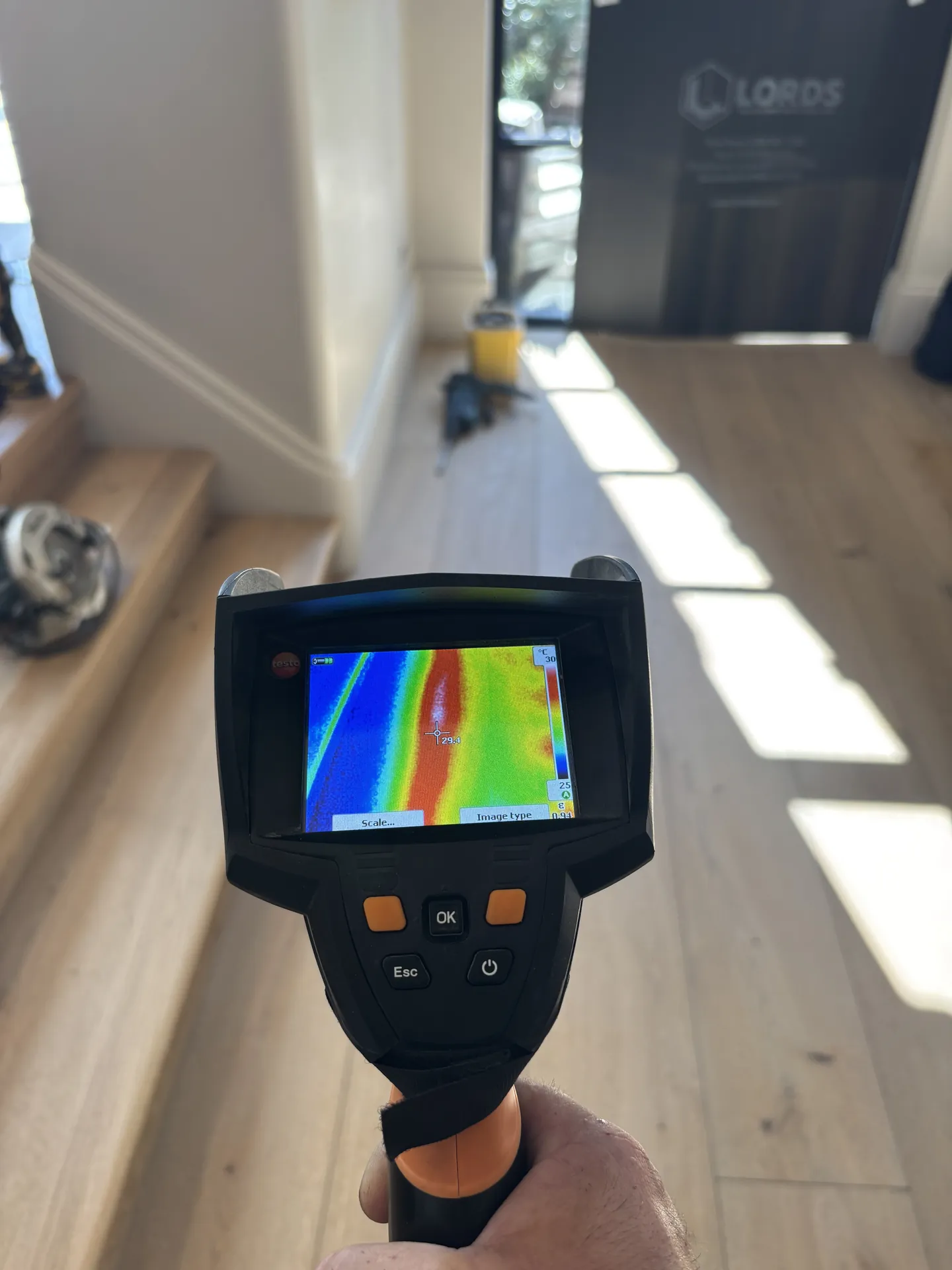
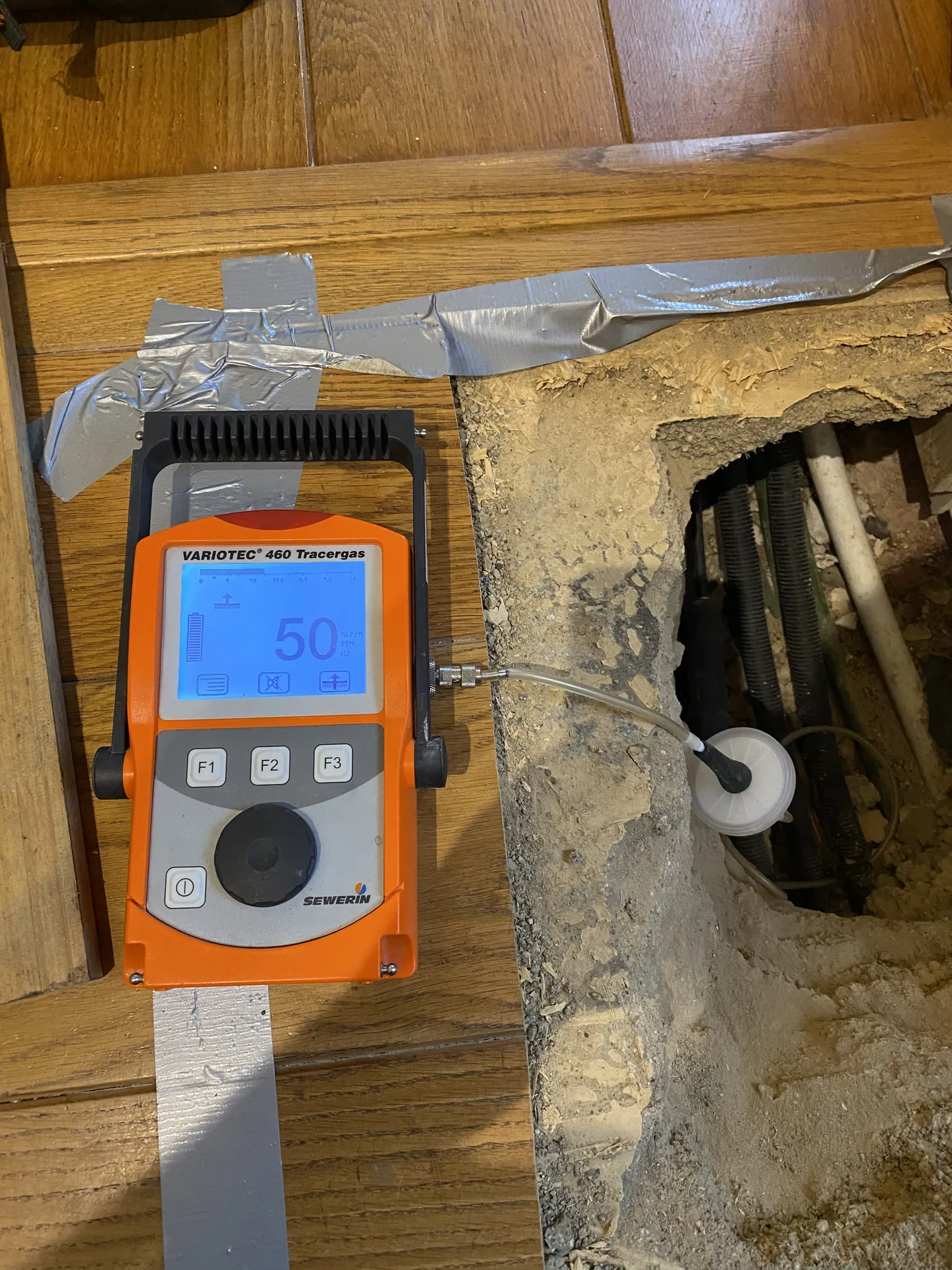
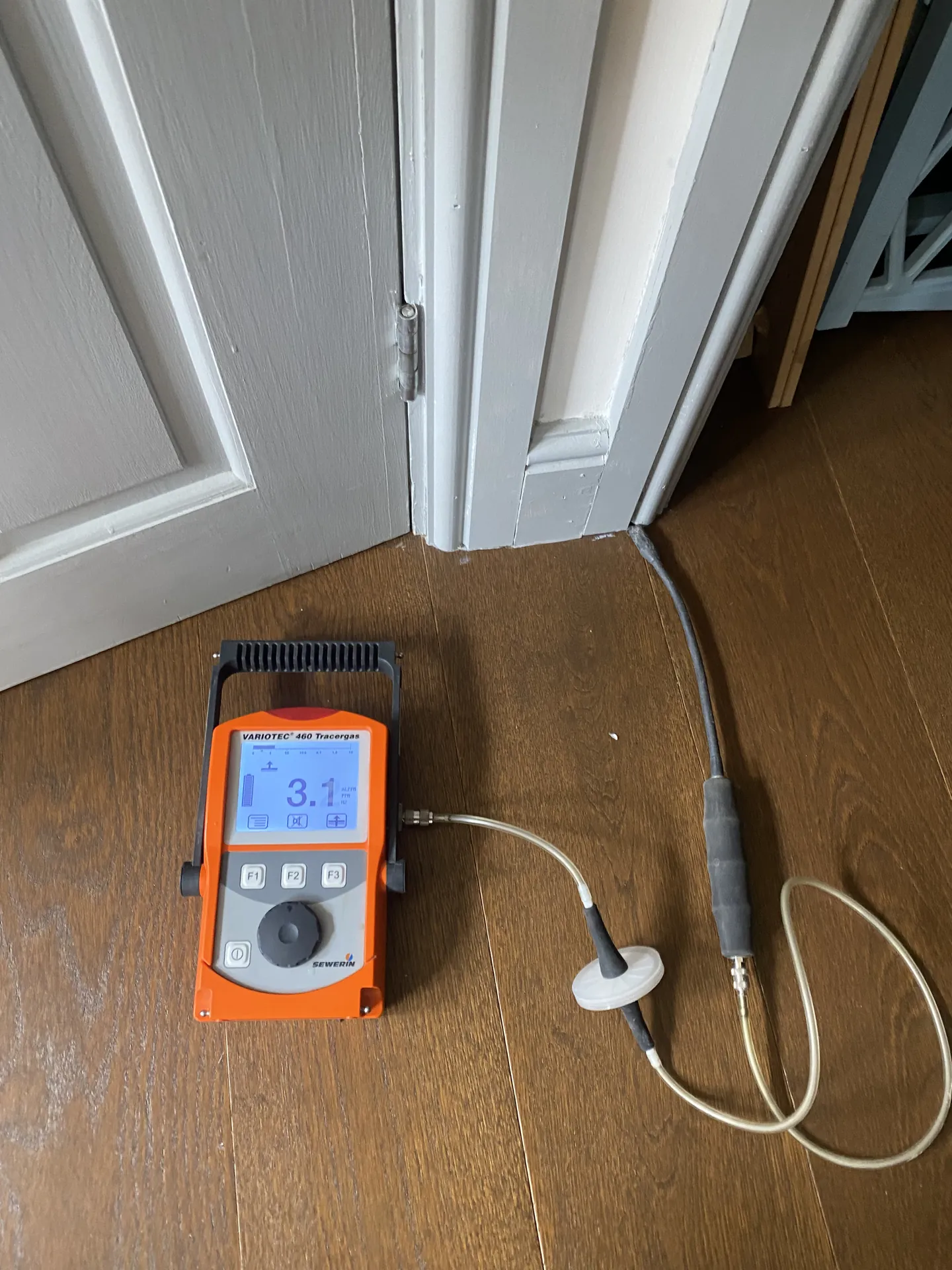
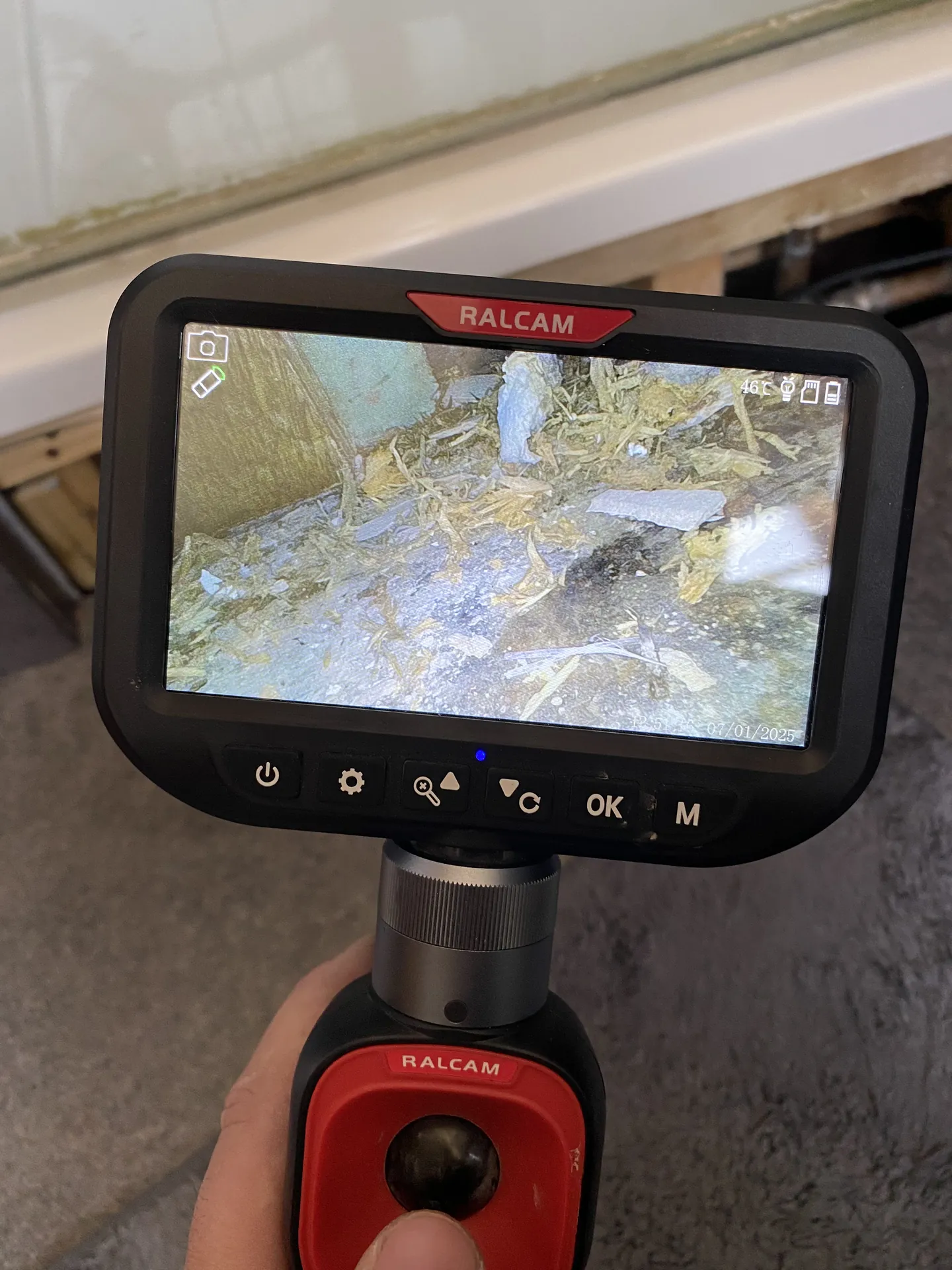
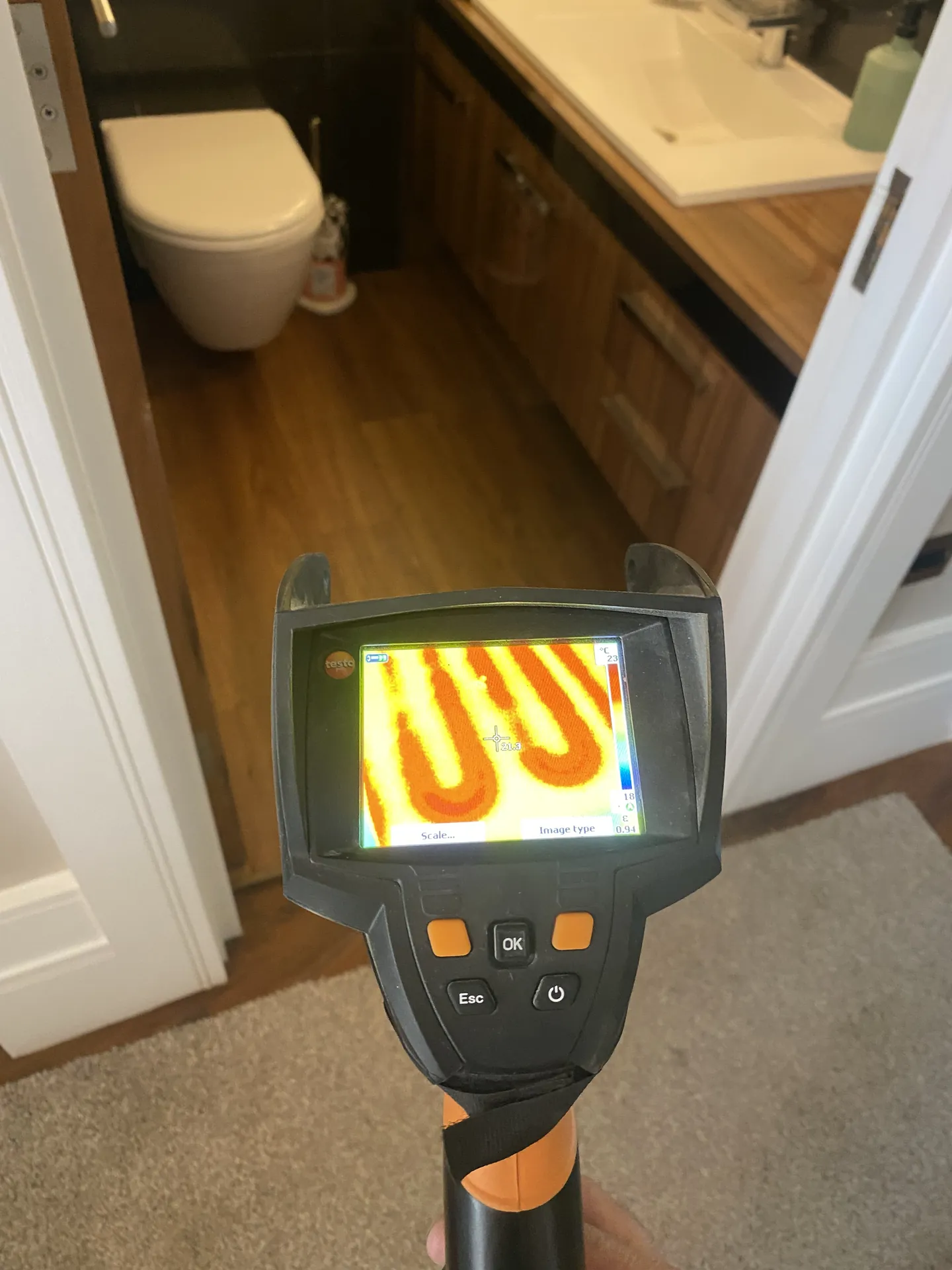
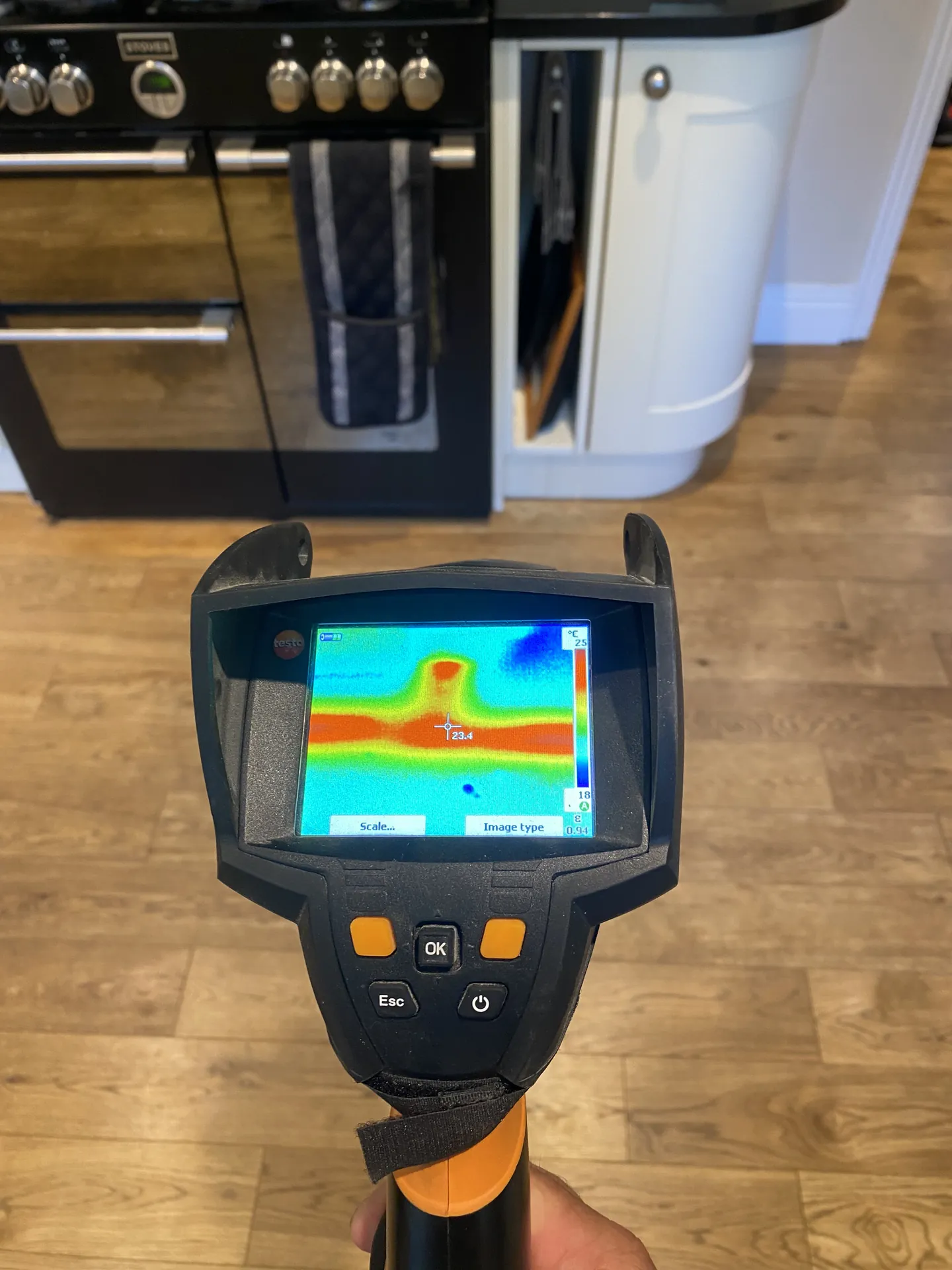
Each method does something different through the floor finish. The thermal imaging camera reads through laminate, carpet and tiles to show a warm heating pipe and the cooler patch where water has soaked the floor. The acoustic ground microphone sits on the surface and listens through boards, tiles and concrete for the noise of a pressurised mains leak. Where a pipe is silent or plastic, we drain it and fill it with a hydrogen and nitrogen tracer gas. The detector then samples along board joints, skirting boards and grout lines until it finds where the gas is surfacing. A borescope through a small hole lets us look into the void.
That combination is why only one board or one tile normally comes up. The leak is located to a small area, marked on the floor, photographed and recorded in a written report with the readings and thermal images. If you want the repair done on the same visit we open the marked point by hand, repair in copper or barrier pipe, and leave the opening ready to make good. Most buildings insurance policies include trace and access cover, which pays for finding the leak and making good the floor. If a leak cannot be located without opening the floor, we say so and explain the options.
Call today if
- Boards are sagging or feel soft underfoot, which means the joists may be rotting.
- Water is pooling on the surface or seeping up between laminate boards.
- The boiler needs topping up every day and part of the floor stays warm with the heating off.
- Sockets or electrics near the floor have tripped or show signs of damp.
What this looks like on the day
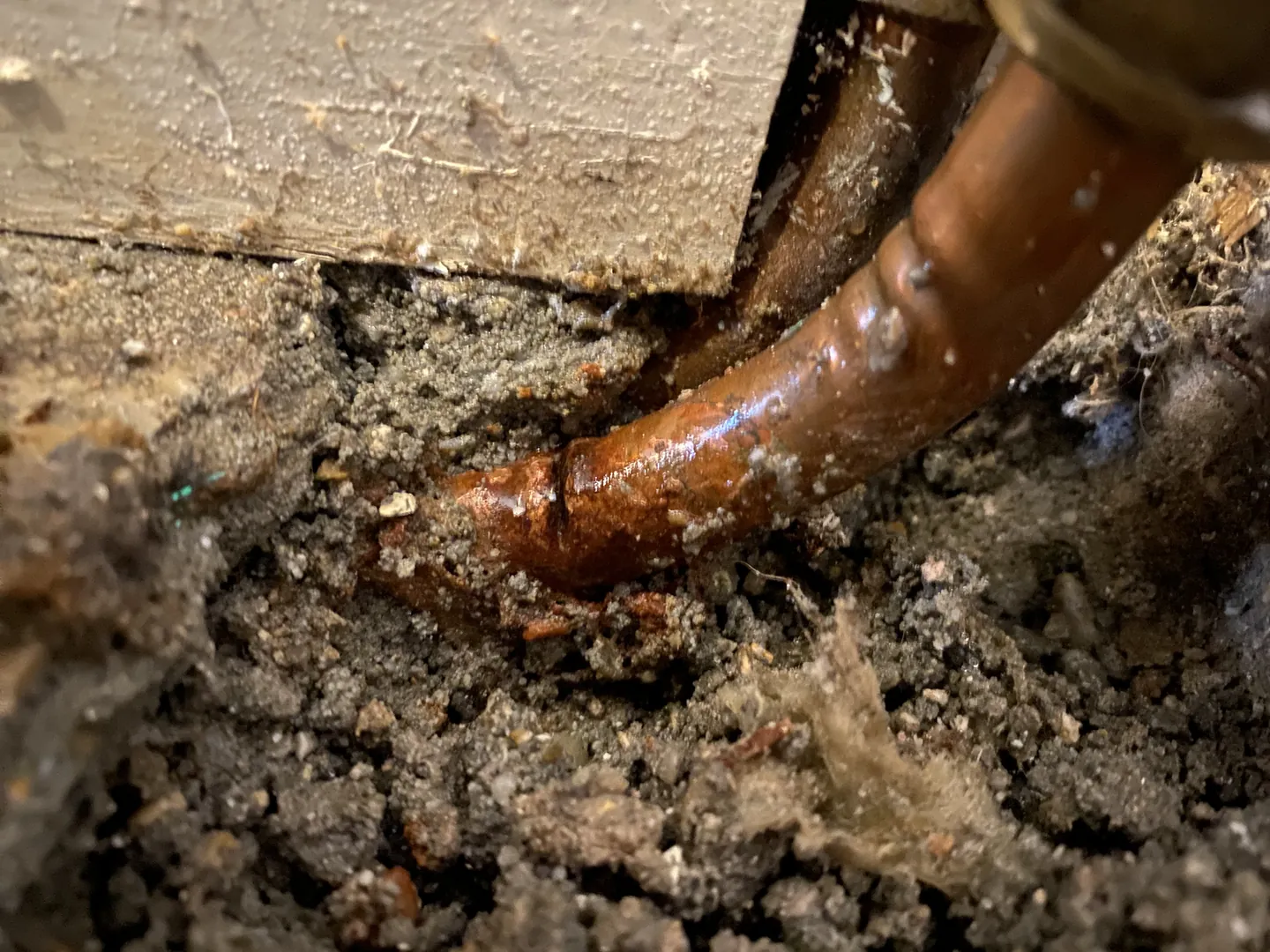
How we would find this leak
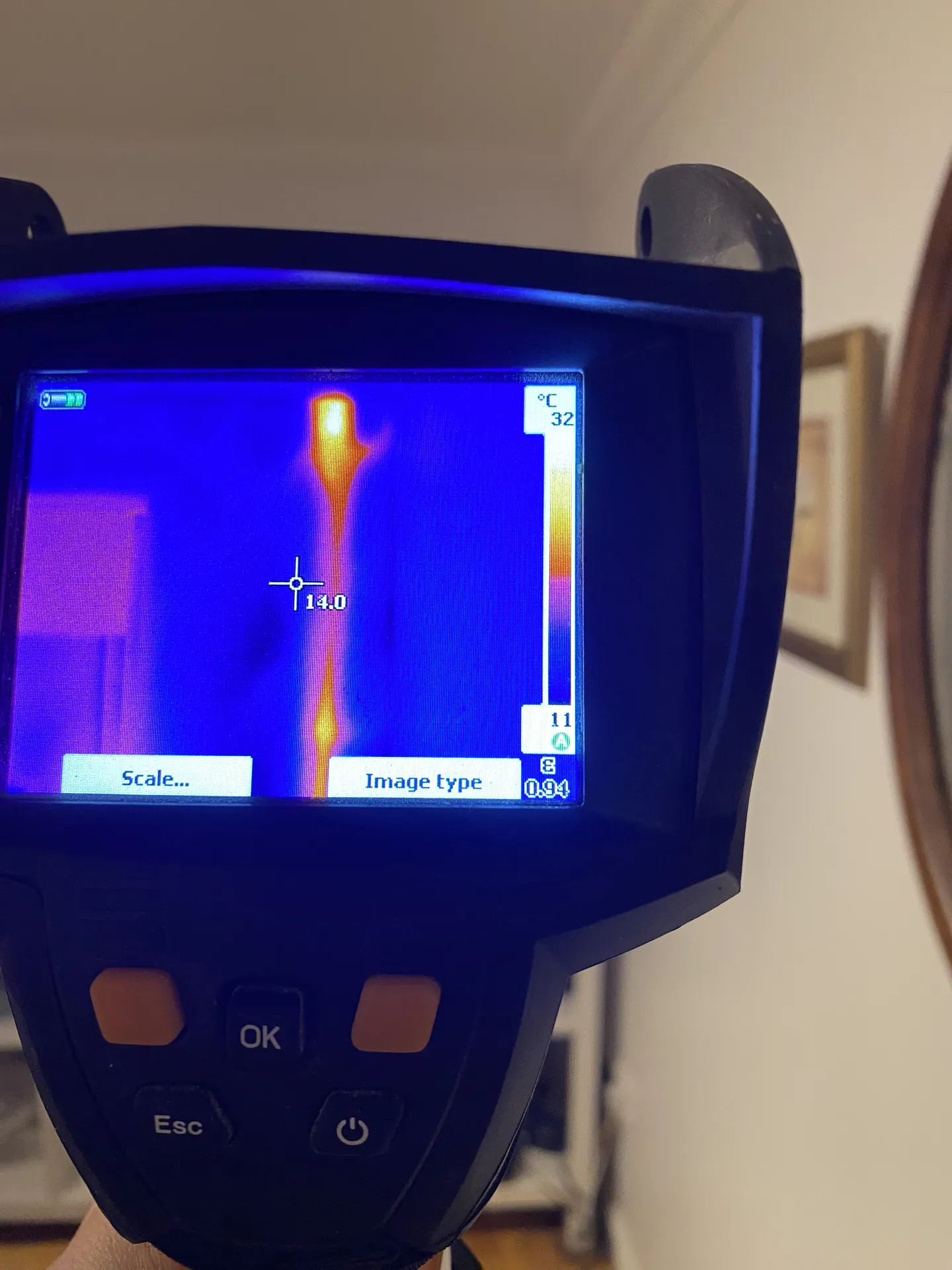
Water leak detection
Hidden leaks behind walls, under floors and in ceilings, pinpointed with thermal, acoustic and tracer gas kit before anything is opened up.
Water leaks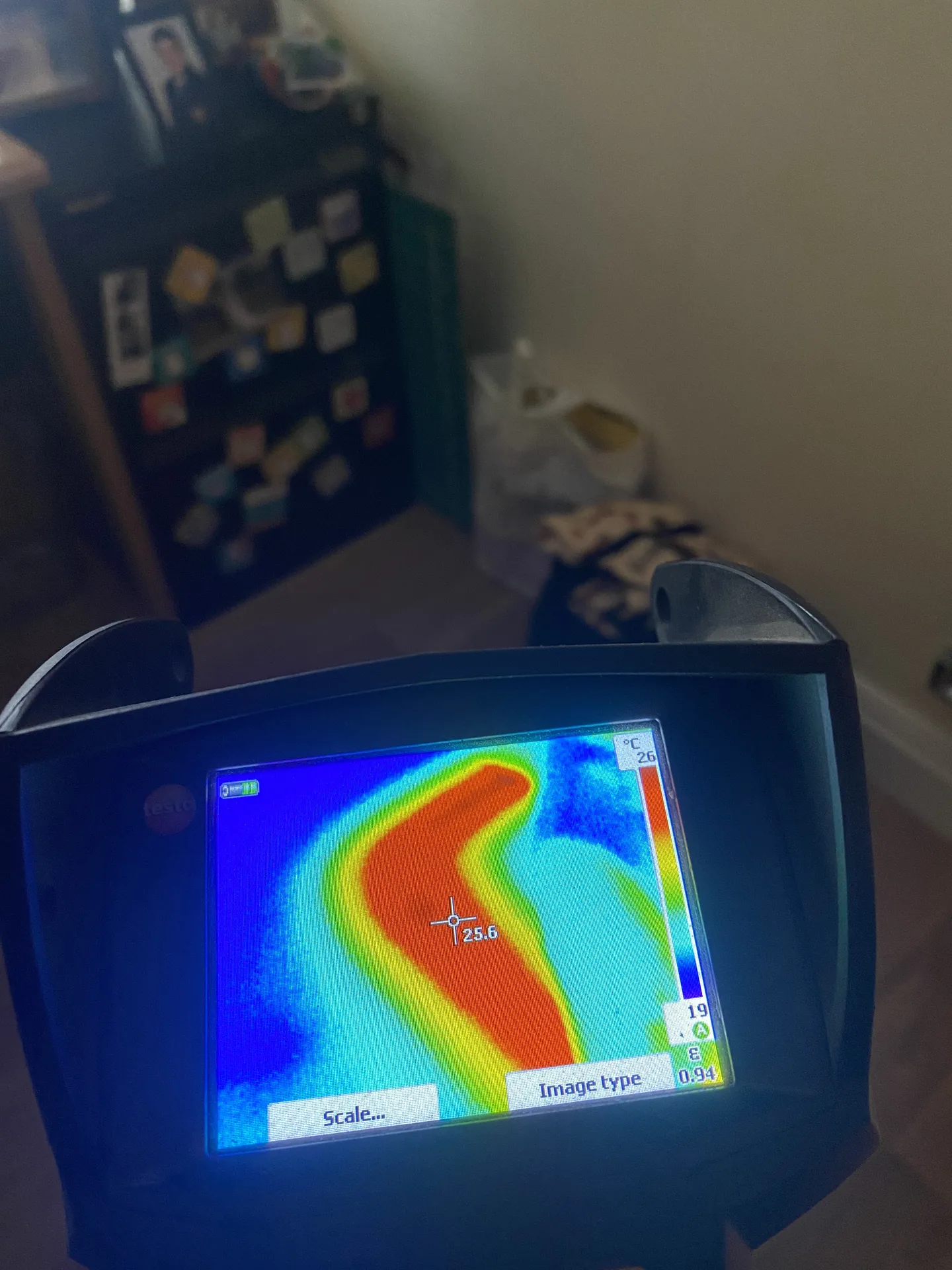
Central heating leak detection
A boiler that keeps dropping pressure means water is escaping somewhere in the heating circuit. We find the pipe or fitting and fix it.
Heating leaksTracer gas leak detection
A safe hydrogen and nitrogen mix is put into the drained pipe, rises through the floor or wall and is picked up by the detector directly above the leak.
Tracer gasFrom your first call to a leak you can see in the report
Call or WhatsApp with a few photos and a line about the symptoms. We ask a handful of questions, agree a fixed price and book the survey, usually for the same or the next day.
On arrival we pressure test the mains, hot water and heating, check the meter and test the escaping water, so we know what we are looking for before the detection starts.
Thermal imaging, the acoustic ground microphone and tracer gas are used as the pipework dictates until the leak is marked on the floor or wall.
You get a written report with readings, thermal images and photographs, ready for a trace and access claim. If you want the leak fixed, we open that one spot and repair it.
Leak under the floor: questions answered
How do plumbers find leaks under floors?
A general plumber usually lifts boards or tiles near the damp patch and looks. We use thermal imaging, an acoustic ground microphone, tracer gas and a borescope through the floor finish first, so the floor is opened once, in the right place.
Do you have to lift the whole floor?
No. The methods narrow the leak to a small area, so normally one board or one tile comes up. The opening is made by hand at the marked point and photographed for your records.
Can you find a leak under floor tiles without breaking them?
Yes, the locating is done on top of the tiles. Thermal imaging, acoustic listening and tracer gas all read through tiles and grout. One tile is lifted only when the leak has been pinpointed and you want it repaired.
Is the leak on my heating or my water supply?
The meter test and the boiler gauge usually answer that before we arrive. A meter that moves with everything off means mains water. A boiler that keeps losing pressure means the heating circuit. A test strip confirms it from any water we can sample.
Will my insurance pay for the floor to be opened?
Most buildings policies include trace and access cover, which pays for locating the leak and making good the floor afterwards. The pipe repair itself is usually not covered. Our report separates detection, access and repair so the claim is straightforward.
Leak somewhere else?
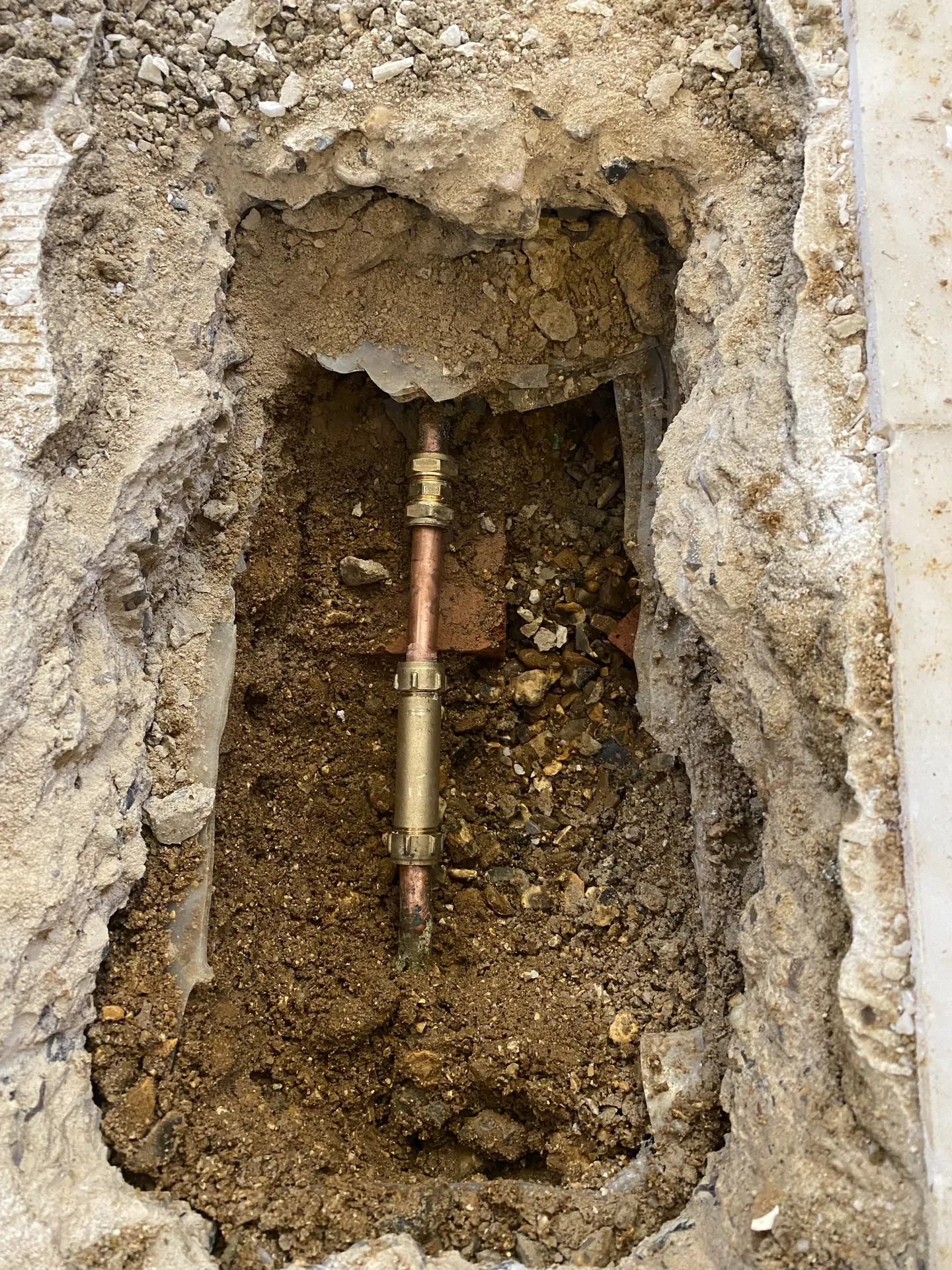
Noticed this at home? Do not wait for it to get worse.
Call now and we will tell you straight away whether it needs a same-day visit. Or send a photo of the stain, the meter or the boiler gauge on WhatsApp.
07516 755 680