Leak Under a Concrete Floor? Find It Through the Slab
Pipes laid in a screed or under a slab leak into the concrete with nothing to see at the surface for a long time. The tools we use read through concrete, so the slab is opened once, at the point we mark, rather than broken out across the room.
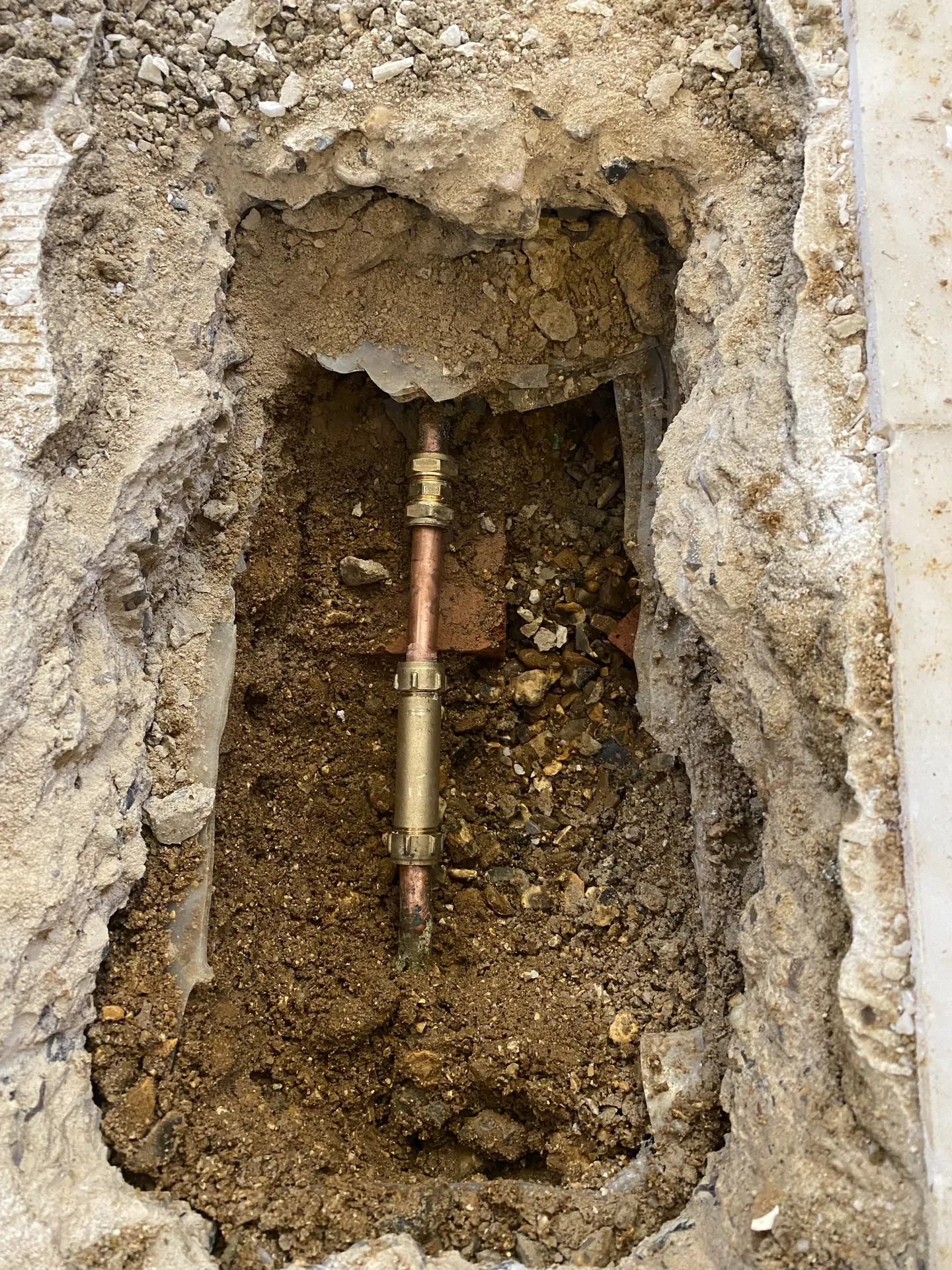
Leak under concrete: what is usually going on
Many houses built after the war, and most extensions since, have a solid concrete ground floor. Heating pipes were laid straight into the screed, sometimes in copper with no sleeve, and the cold supply pipe was often run under the hall floor. Decades of contact with cement and damp slowly corrode copper, and ground movement strains the joints. When a pipe in a screed fails, the water has nowhere to go but into the concrete and the ground below. The first signs are often a boiler losing pressure, a bill that has risen, or a floor that feels warm or damp in one place.
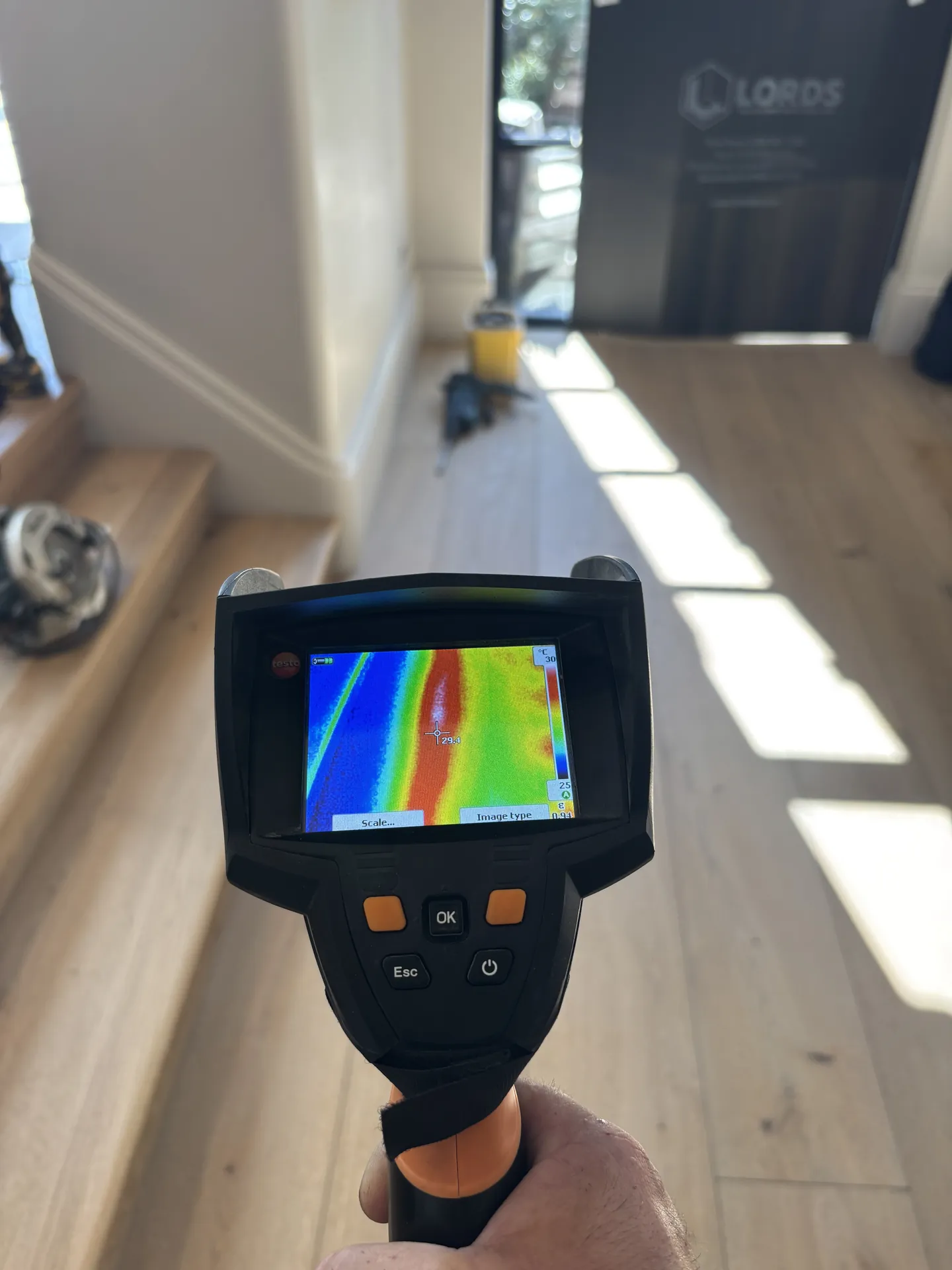
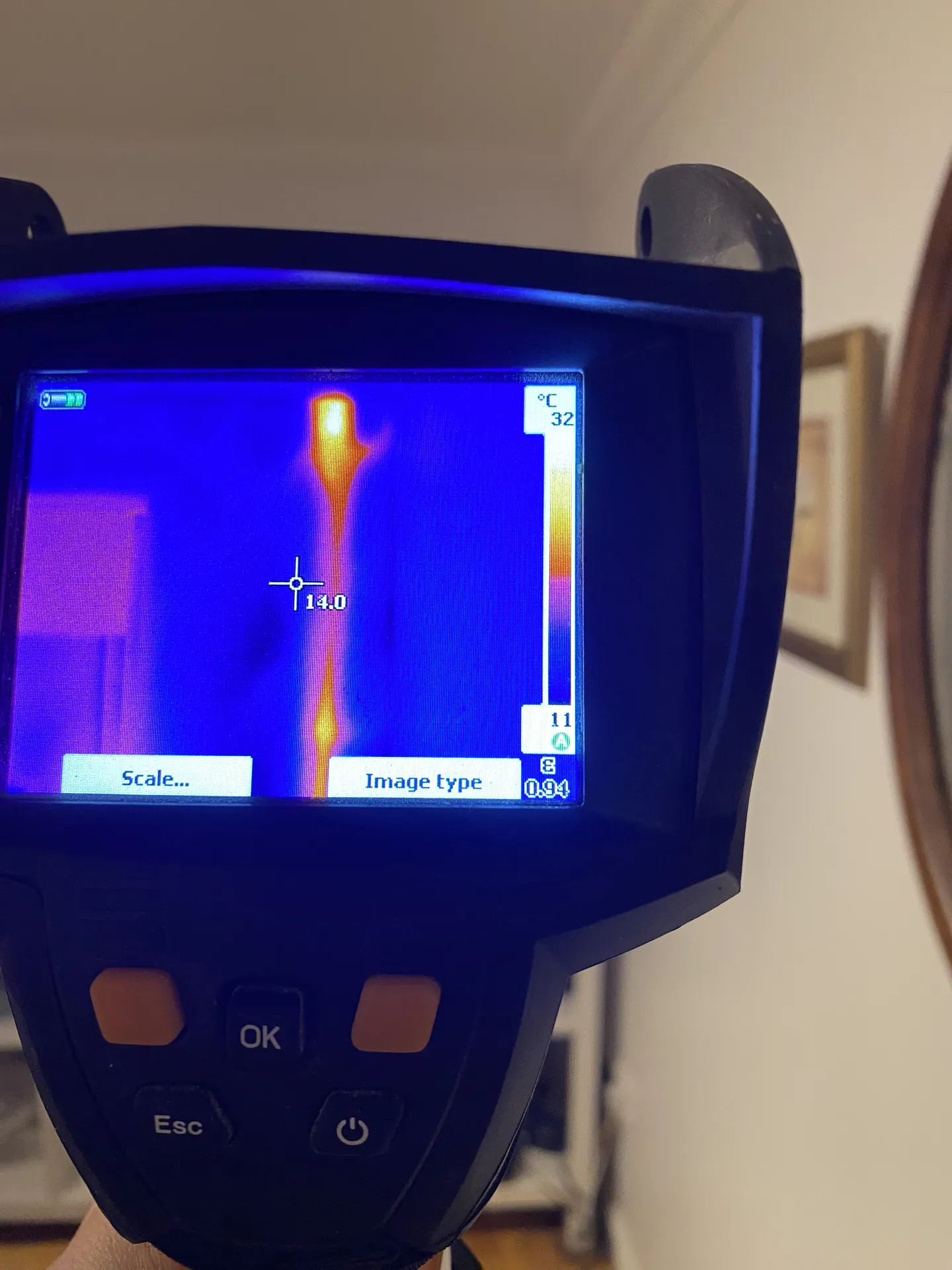
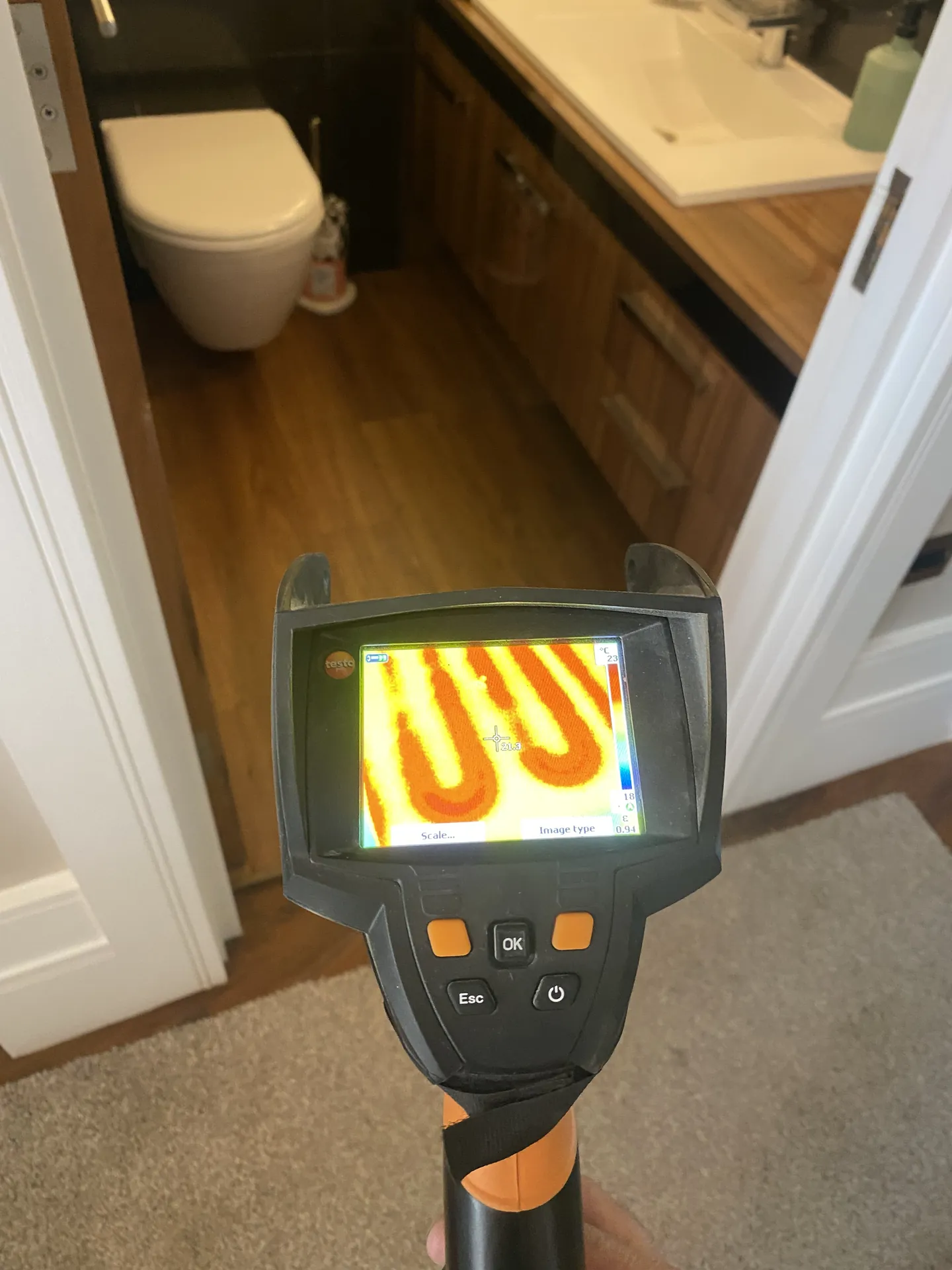
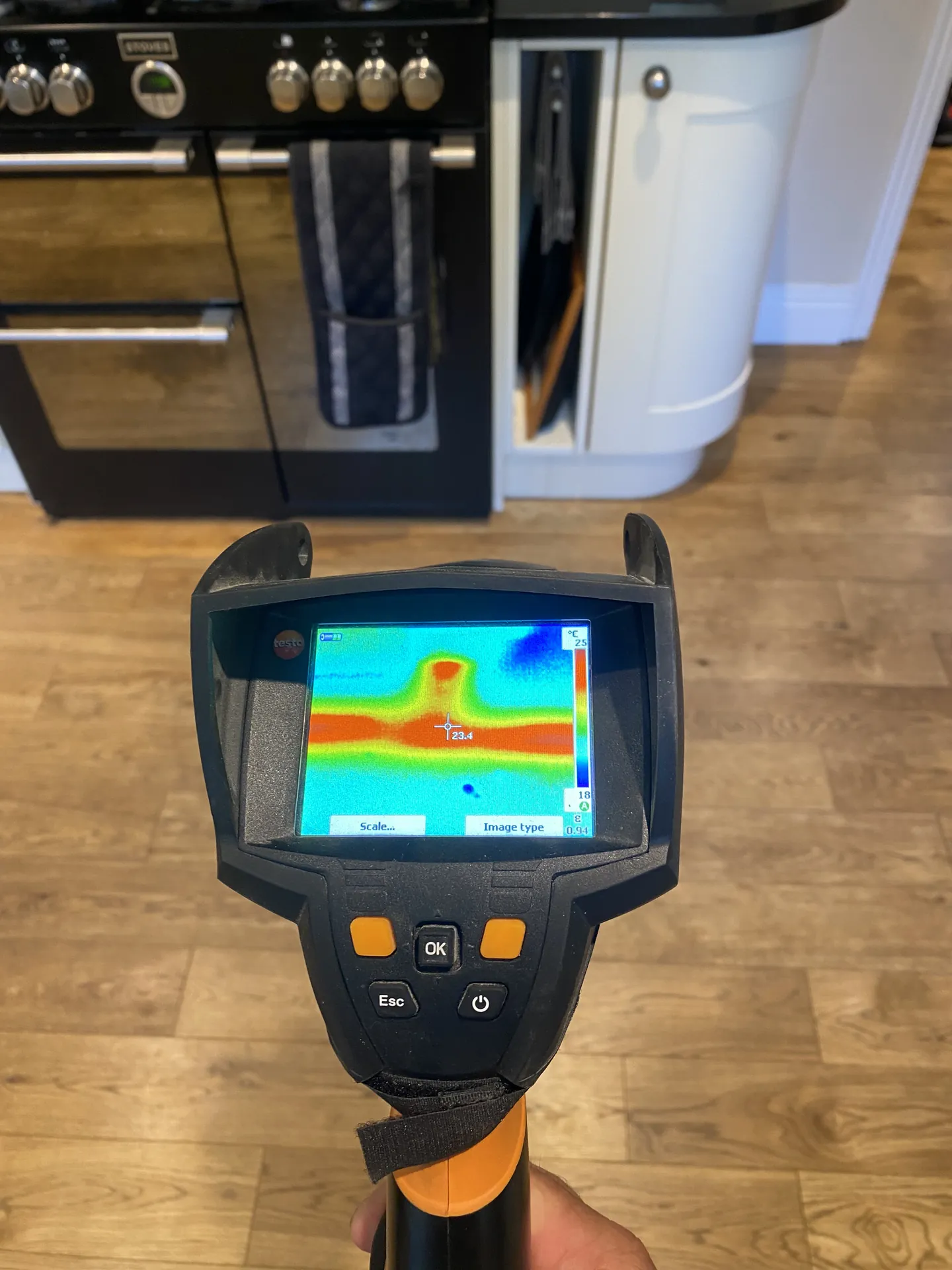
Finding a leak under concrete is a matter of using methods that read through the slab. The acoustic ground microphone picks up the sound a pressurised leak makes as water forces its way through the concrete and the ground. We move it across the floor in a grid and the reading peaks over the leak. For heating pipes, the thermal imaging camera shows the warm line of the pipe run and the spread of heat where hot water is escaping. The exact route to open is visible before any tools come out. A moisture meter confirms how far the water has travelled under the finish.
Where the pipe is plastic, deep, or too quiet to hear, we drain it and introduce a hydrogen and nitrogen tracer gas. Hydrogen is the lightest gas there is and rises through screed, concrete and floor coverings. The Variotec detector finds where it surfaces. This is a leak detection method and has nothing to do with gas safety. Nitrogen pressure tests on each circuit tell us which pipe to concentrate on. Underfloor heating loops can be isolated at the manifold one at a time, so the leaking loop is identified before the floor is touched.
Once the leak is pinpointed we mark the slab, photograph the location and write it into the report with the readings and thermal images. If you want the repair done, we cut one small opening by hand at the mark and expose the pipe. We repair it in copper or barrier pipe and leave the opening ready for making good. Trace and access cover on most buildings policies pays for locating the leak and reinstating the floor. Escape of water cover deals with the damage the water has caused. We keep those costs separate in the report and will speak to the claims handler if that helps.
Call today if
- The boiler cuts out on low pressure every day and the floor is warm in one spot.
- Water is surfacing through the floor or along a wall at floor level.
- Floor tiles or wood flooring have lifted or cracked in a line.
- The meter spins quickly with the stop tap open and stops when it is closed.
What this looks like on the day
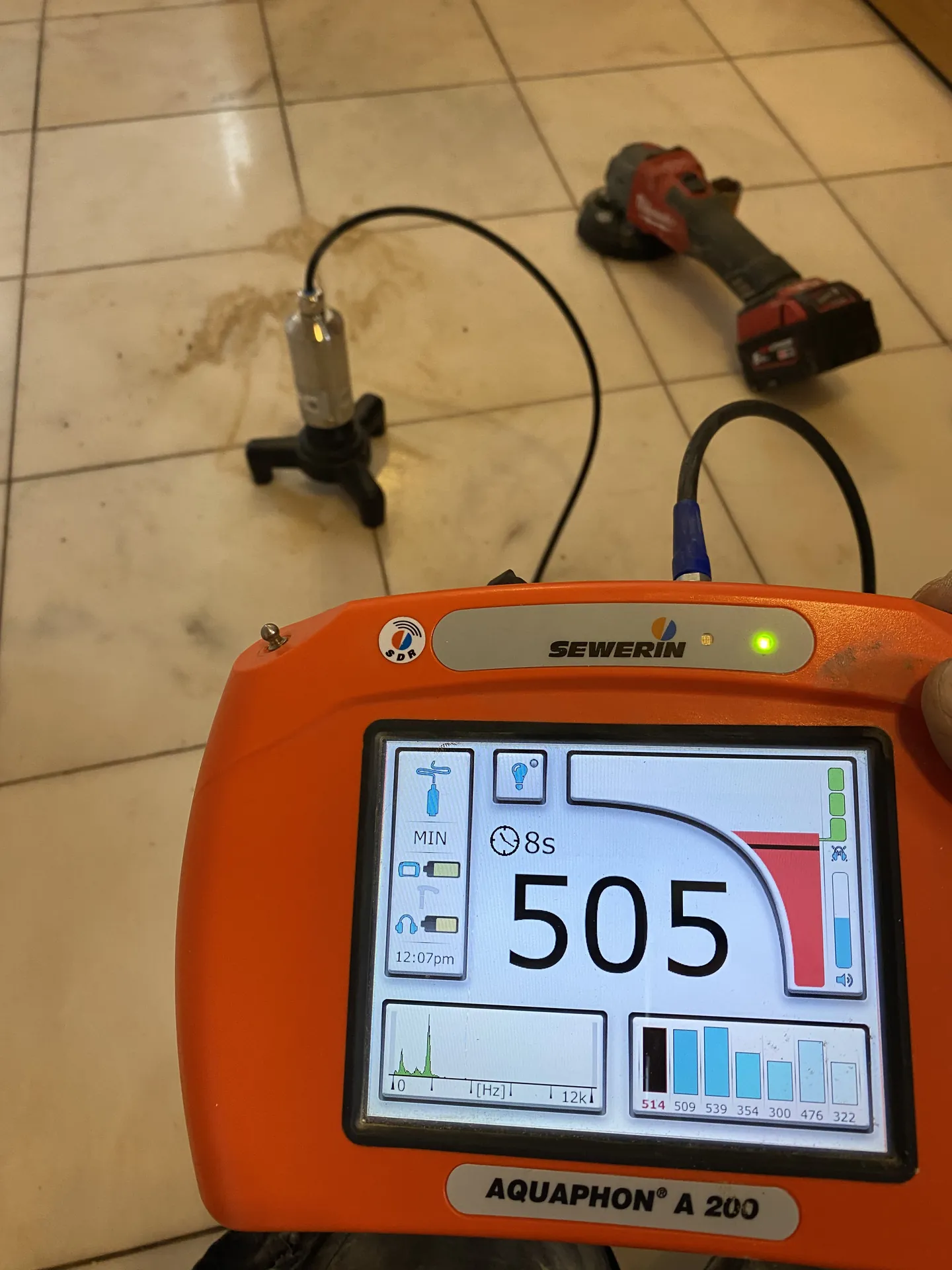
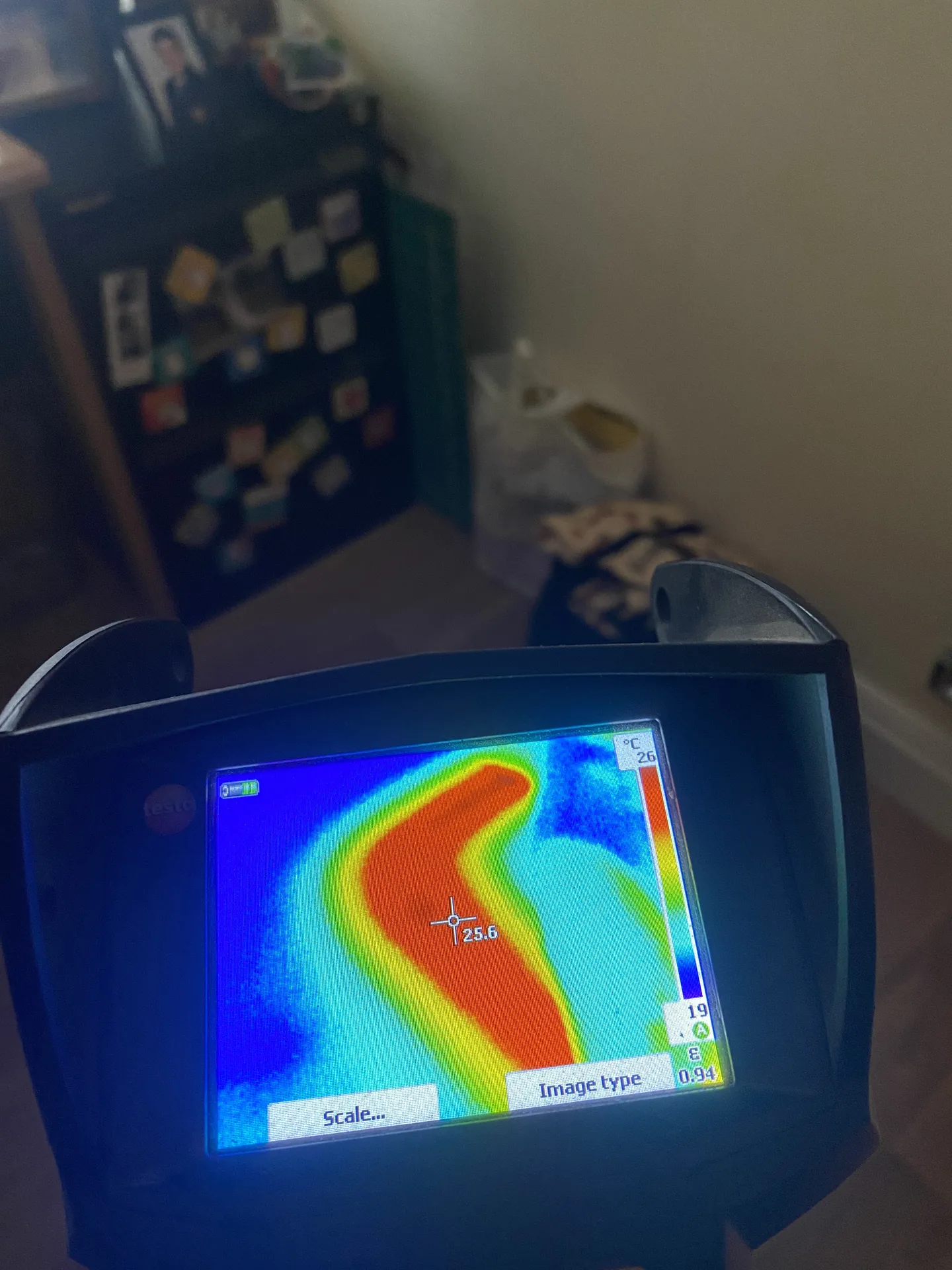
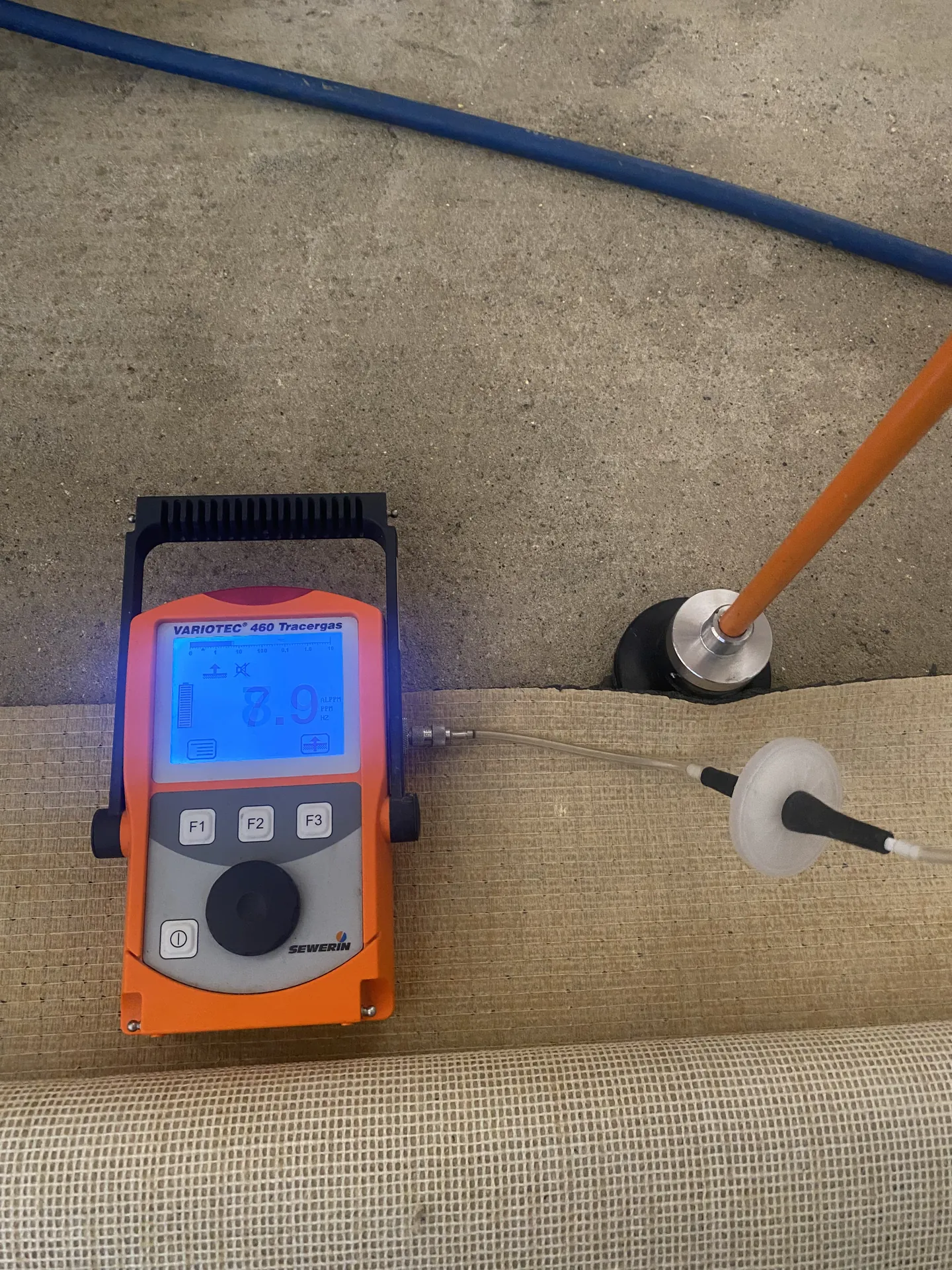
How we would find this leak
Central heating leak detection
A boiler that keeps dropping pressure means water is escaping somewhere in the heating circuit. We find the pipe or fitting and fix it.
Heating leaksAcoustic leak detection
A ground microphone listens for the sound of water escaping under pressure through floors, concrete and paving, and the reading peaks directly over the leak.
Acoustic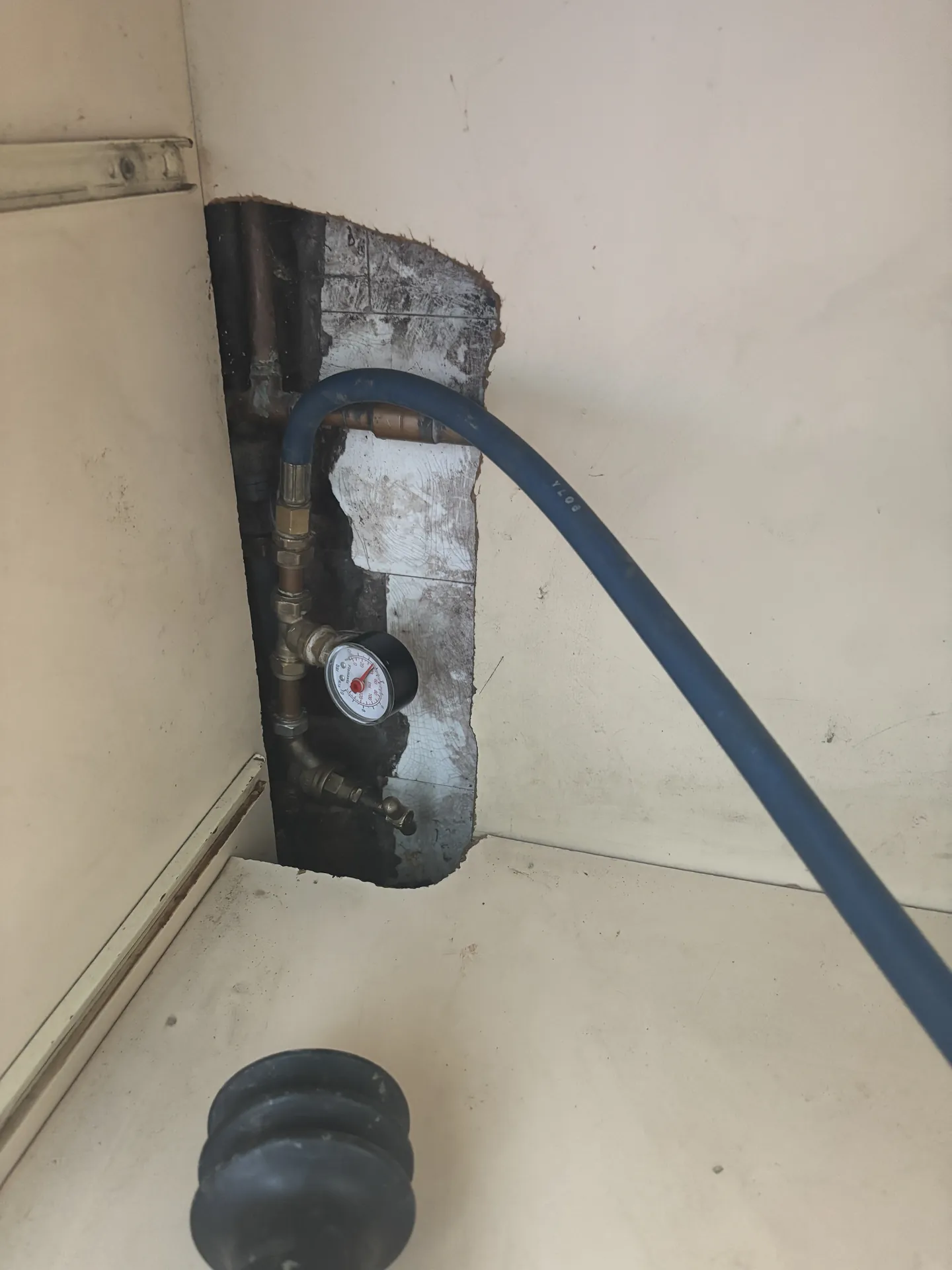
Trace and access insurance reports
Leak detection carried out and documented the way insurers expect, with a report your claims handler can act on straight away.
Insurance reportsFrom your first call to a leak you can see in the report
Call or WhatsApp with a few photos and a line about the symptoms. We ask a handful of questions, agree a fixed price and book the survey, usually for the same or the next day.
On arrival we pressure test the mains, hot water and heating, check the meter and test the escaping water, so we know what we are looking for before the detection starts.
Thermal imaging, the acoustic ground microphone and tracer gas are used as the pipework dictates until the leak is marked on the floor or wall.
You get a written report with readings, thermal images and photographs, ready for a trace and access claim. If you want the leak fixed, we open that one spot and repair it.
Leak under concrete: questions answered
How do you find a leak under a concrete floor?
We confirm which system is losing water, then listen through the slab with an acoustic ground microphone and scan it with a thermal camera. If the pipe is quiet we drain it and use hydrogen tracer gas, which rises through the concrete to the detector. The leak is marked to a small area before anything is cut.
Do you have to break up the whole floor?
No. One small opening is cut by hand at the marked point. The rest of the floor stays as it is, and the opening is photographed for your insurer.
Can a heating pipe in the screed be repaired, or does it need rerouting?
Often a short section can be repaired in the opening and sleeved. Where the pipe is badly corroded along its length, rerouting the run above the floor or through the ceiling can be the better option, and we will tell you which we would do.
Is a leak under the slab dangerous?
Not usually in the short term, but water under a slab can undermine the floor and track into the walls. If the floor is lifting, or the boiler will not hold pressure, turn the system off and call today.
Does buildings insurance cover a leak under a concrete floor?
Most policies include trace and access, which pays to locate the leak and reinstate the floor that was opened. Escape of water cover deals with the resulting damage. Our report is written to support both parts of the claim.
Leak somewhere else?
Noticed this at home? Do not wait for it to get worse.
Call now and we will tell you straight away whether it needs a same-day visit. Or send a photo of the stain, the meter or the boiler gauge on WhatsApp.
07516 755 680