Kitchen Leak Under the Sink, Units or Floor?
Kitchen leaks hide behind plinths, under units and in the floor, where appliance connections, wastes and heating pipes all run out of sight. We find them with the units left in place wherever that is possible.
Kitchen leaks: what is usually going on
A kitchen packs a lot of water into a small space. The sink has hot and cold feeds, a trap and a waste. The washing machine and dishwasher have their own supply valves, inlet hoses and drain hoses pushed onto spigots under the sink. A boiler is often on the wall or in a cupboard. Under the floor, heating pipes feed the radiators and, in extensions, cross the room in the screed. All of it is behind plinths, inside cupboards or under the floor. A leak shows only when water reaches the front of the units, lifts the floor or appears in the room next door.
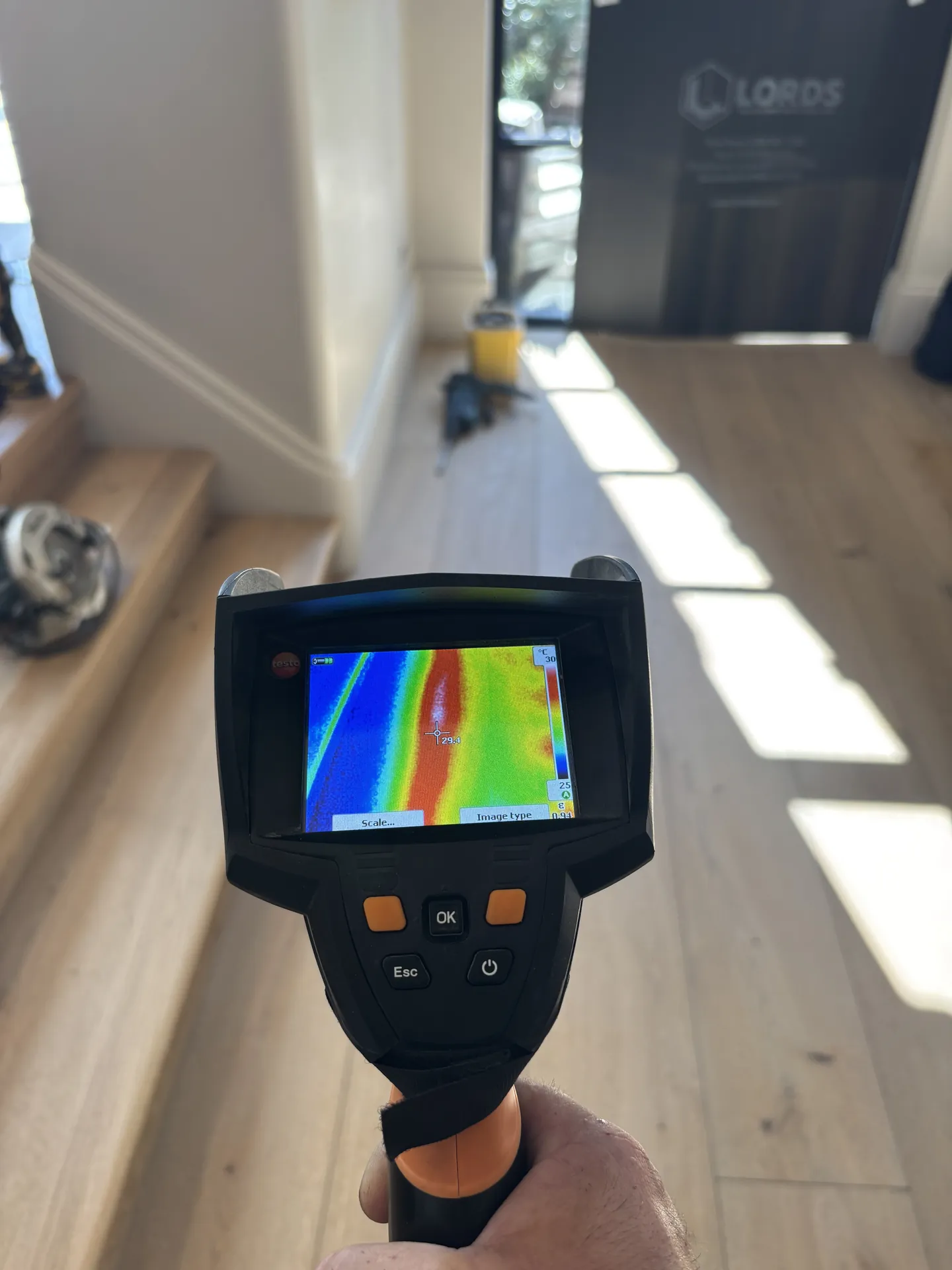
The signs are usually small at first. A plinth that has swollen or gone dark at the bottom. A cupboard base that feels soft under the sink. Laminate or vinyl lifting at the edge of the units. A warm patch on the floor in front of the cooker or the sink with the heating on. A musty smell when the dishwasher door is opened. A boiler that needs topping up. In kitchen extensions on a solid floor, a heating pipe laid in the screed can leak for a long time with nothing to see but a rising bill and a warm floor.
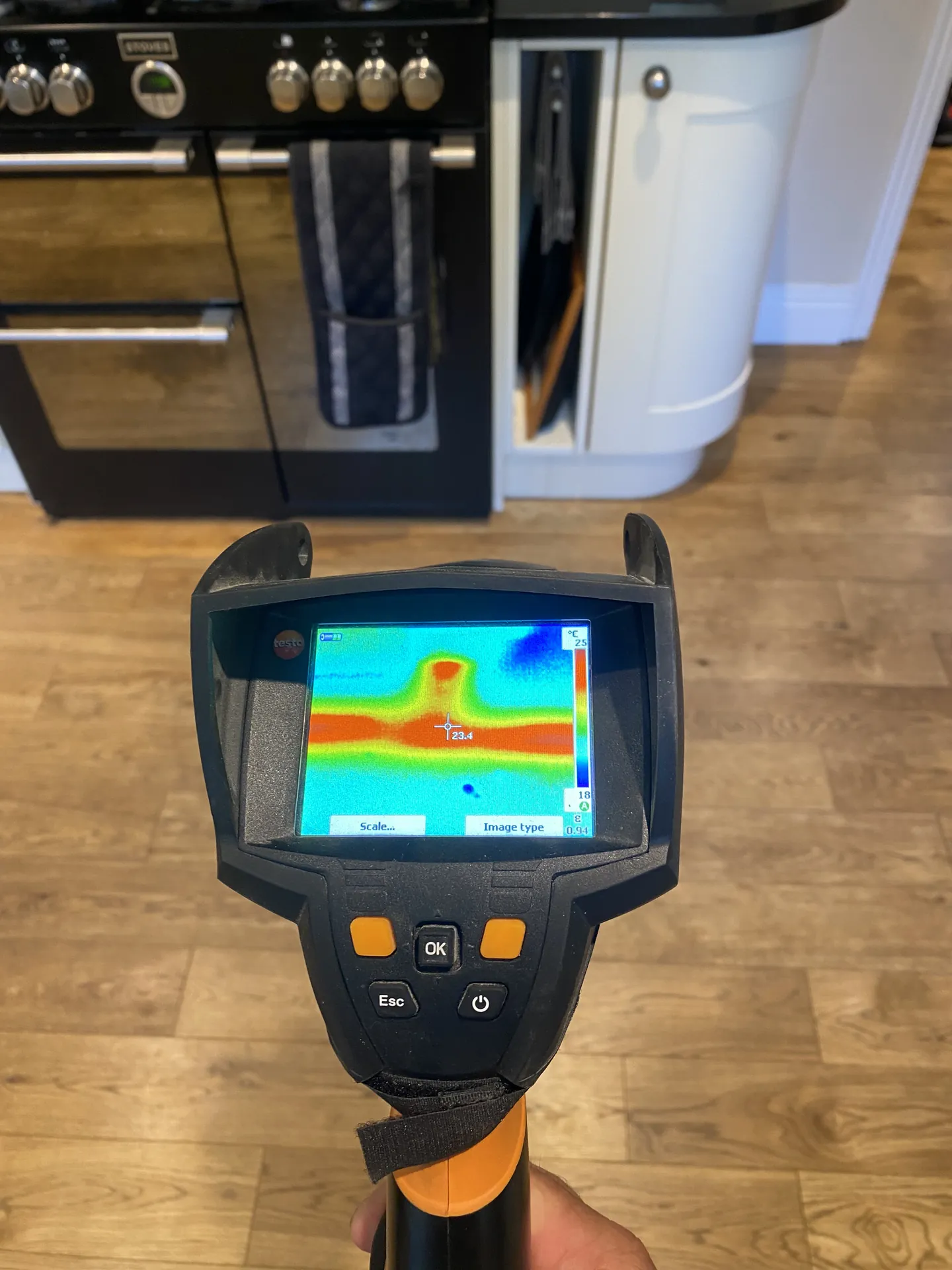
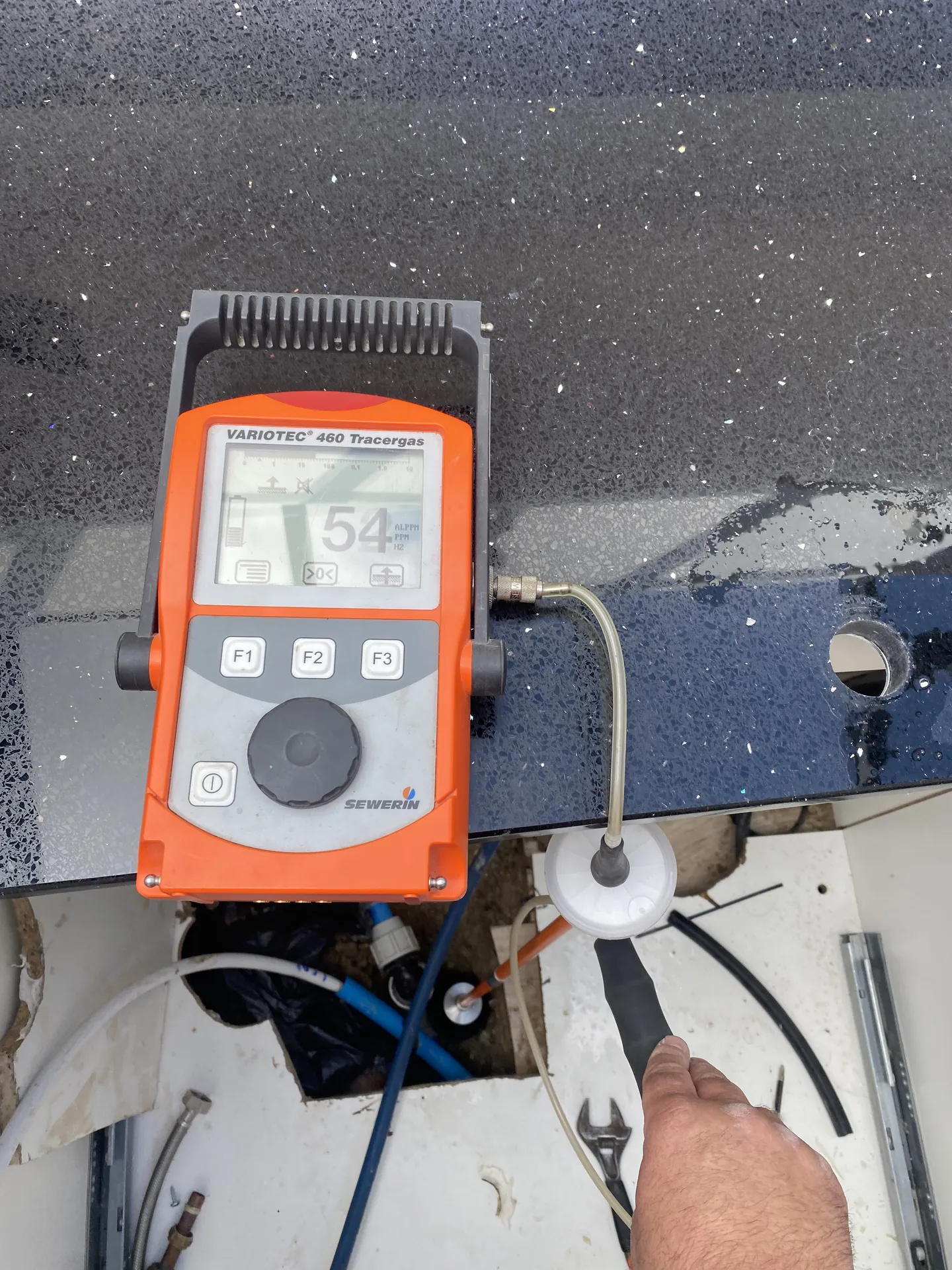
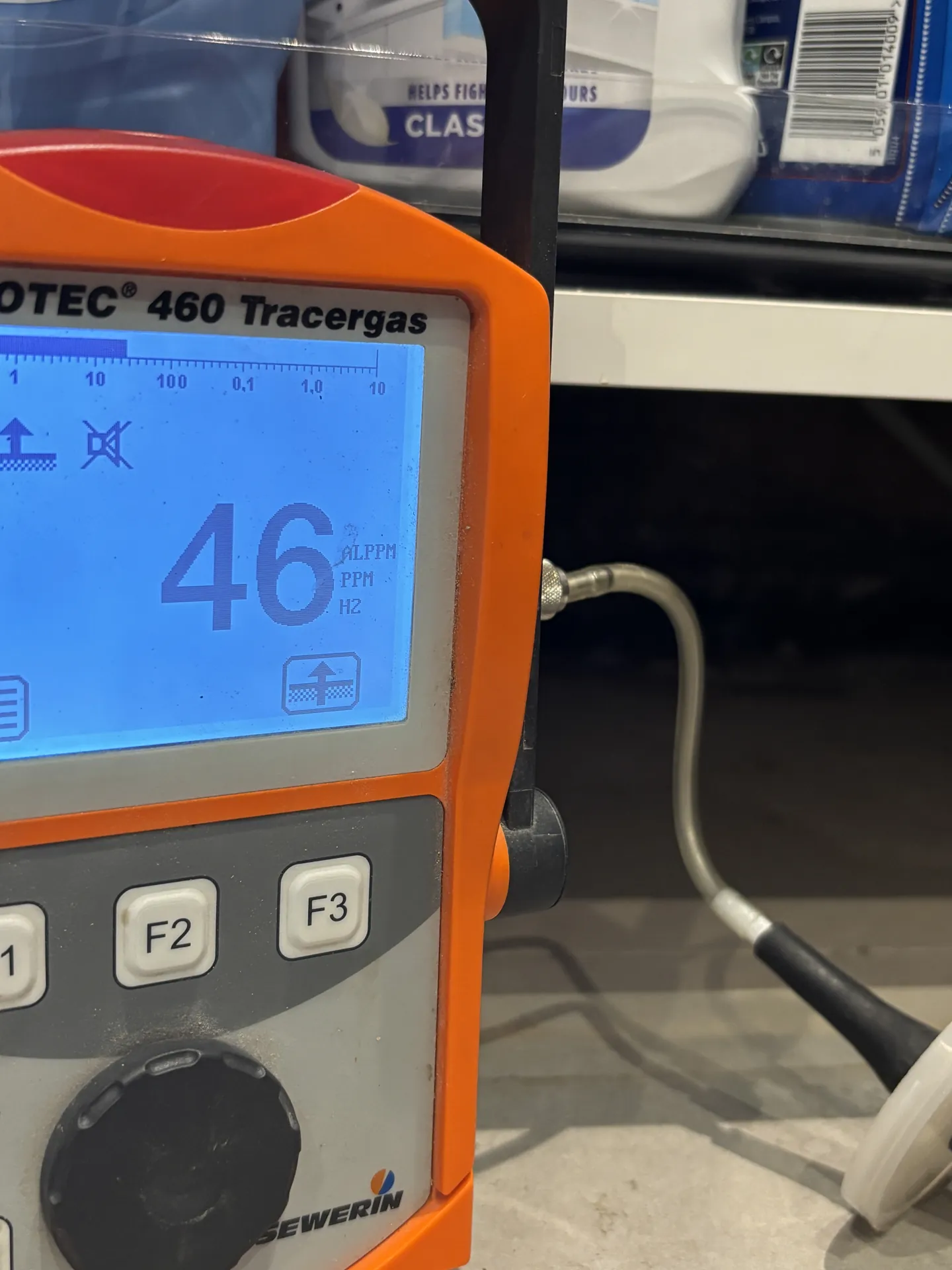
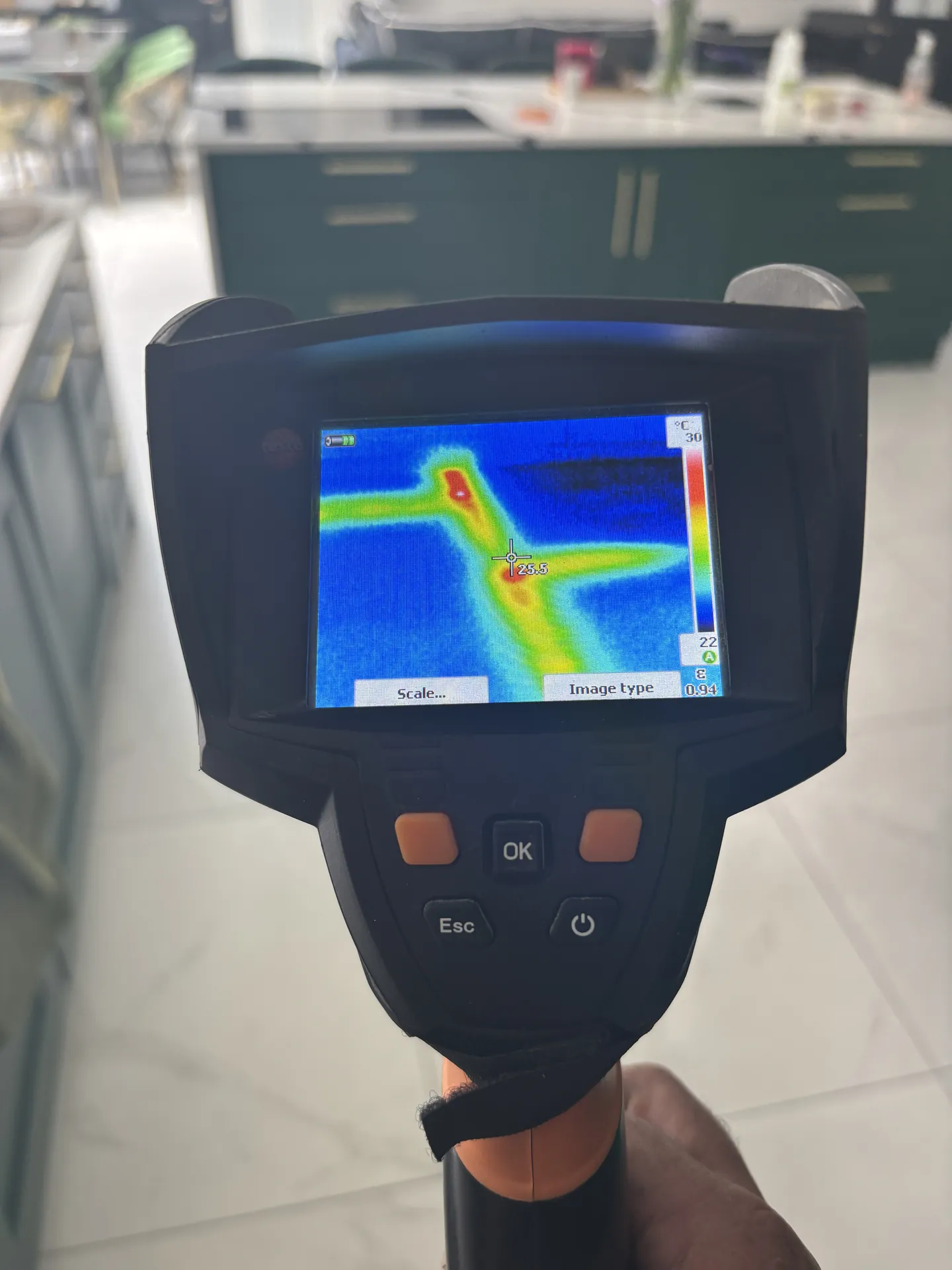
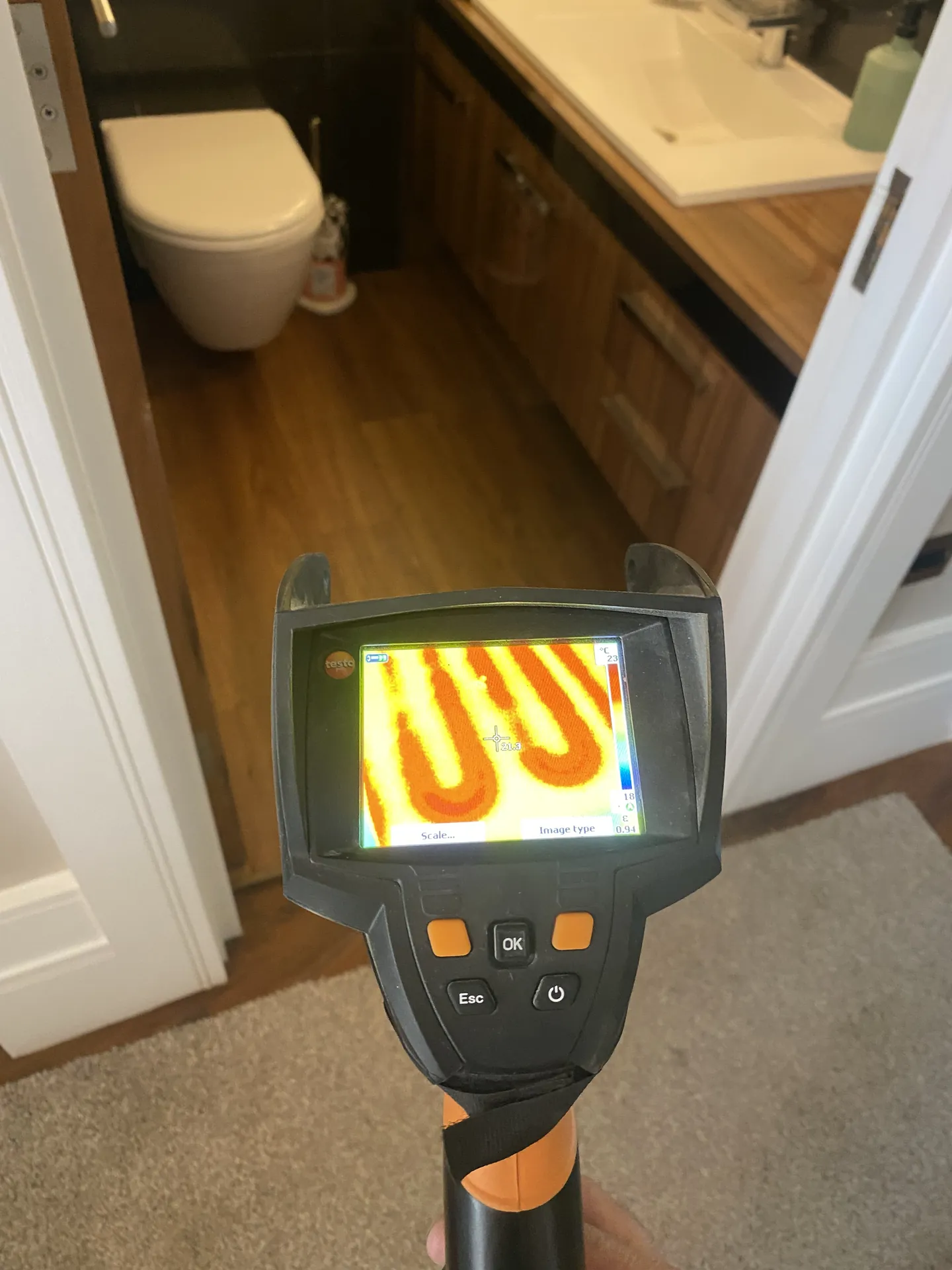
Appliance connections and wastes are tested first because they fail most often. The plinths come off and each valve, hose and spigot is checked while the appliance fills and drains. A moisture meter maps the base of the units. The thermal camera then scans the floor and the walls behind the units for heating pipes and the warmth of escaping hot water. Where a pipe is quiet, we drain it and introduce hydrogen tracer gas, sampling through a plinth gap or a small opening in a worktop. This is a detection method, not gas-safety work. If you smell gas, leave the property and call the gas emergency number.
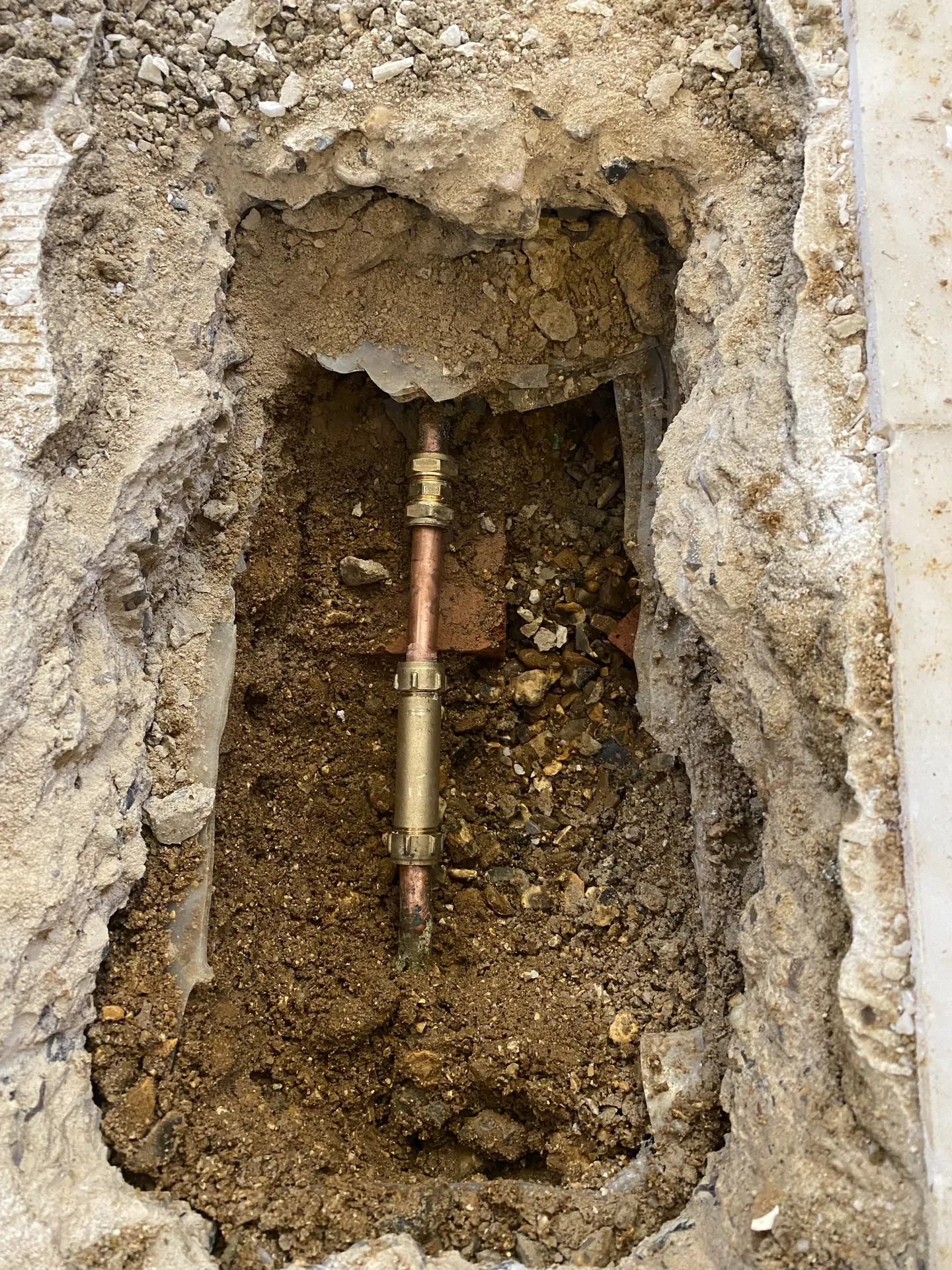
Once the leak is pinpointed, we mark it, photograph it and record the readings in your written report. A failed hose, valve or waste can often be replaced on the same visit. A pipe under the floor is reached through one small opening at the mark, by hand, and repaired in copper or barrier pipe. Units are only removed when the opening falls directly beneath them, and we say so before starting. Where the leak has damaged units or the floor, trace and access cover on most buildings policies pays for locating it and making good the opening. Escape of water cover deals with the damage.
Call today if
- Water is coming out from under the units or across the floor.
- The floor in front of the units feels soft, or laminate has lifted along the run.
- An appliance is tripping the electrics or there is water near a socket.
- The boiler cuts out on low pressure and the kitchen floor is warm in one spot.
What this looks like on the day
How we would find this leak
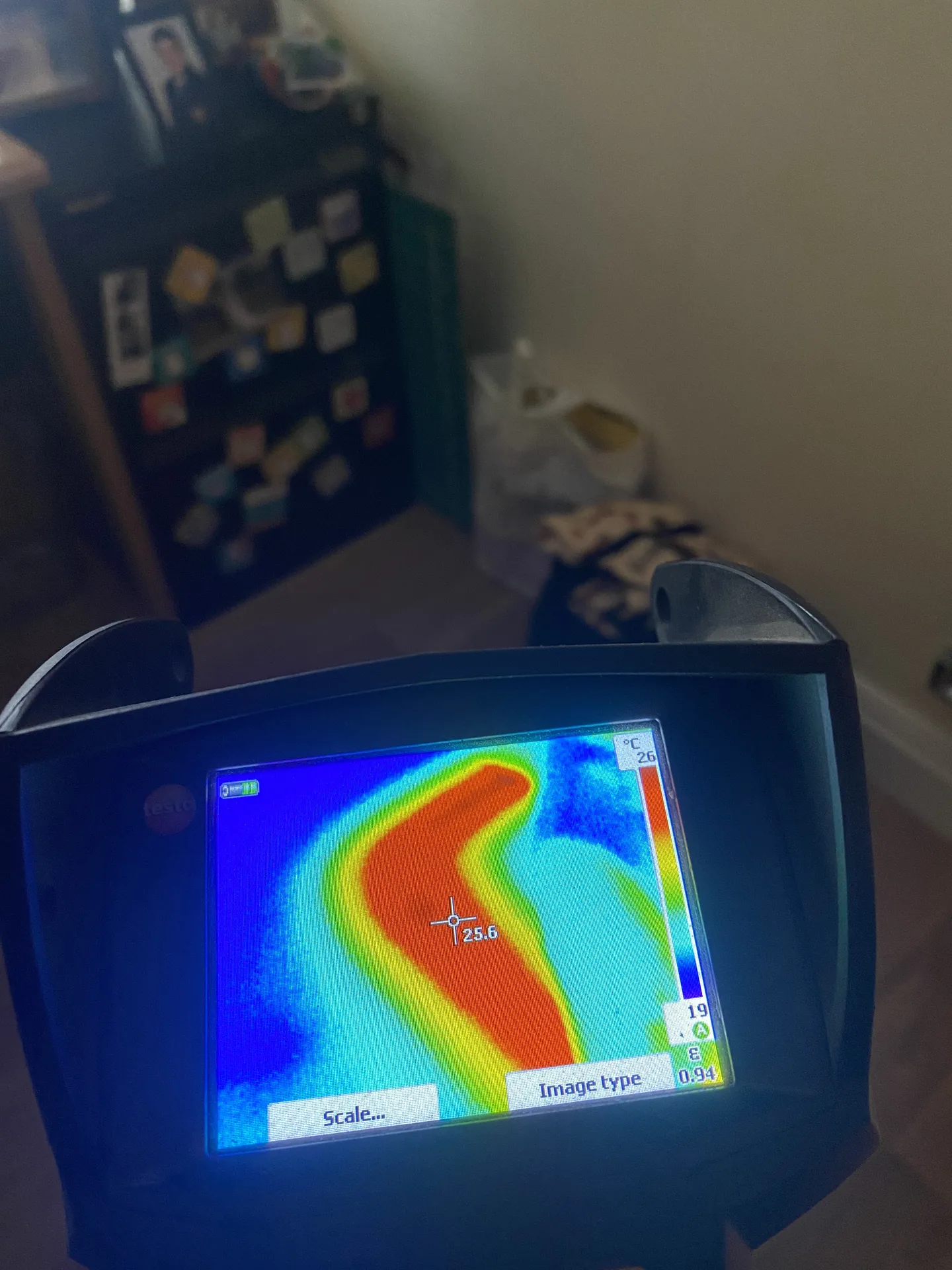
Central heating leak detection
A boiler that keeps dropping pressure means water is escaping somewhere in the heating circuit. We find the pipe or fitting and fix it.
Heating leaks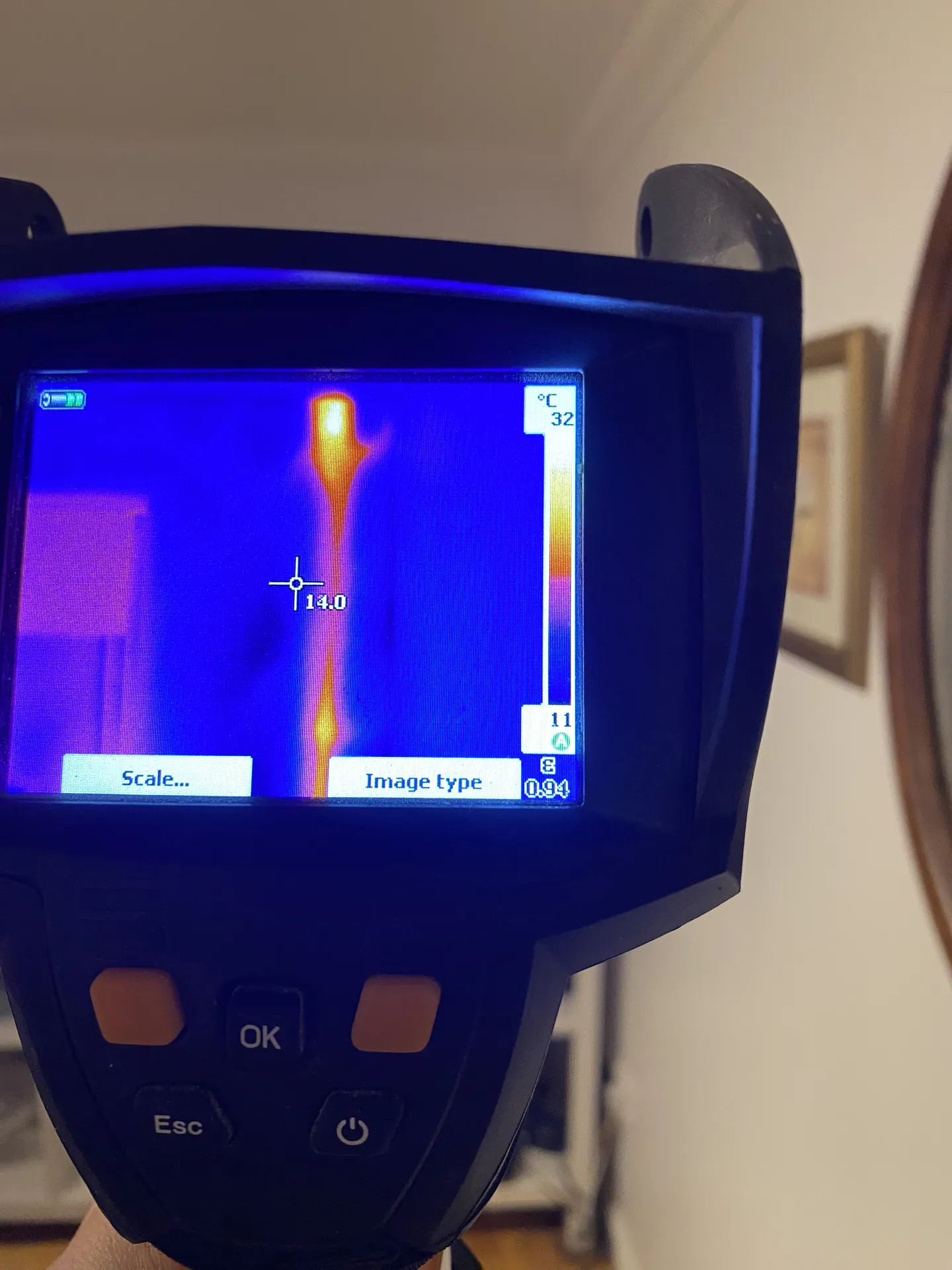
Water leak detection
Hidden leaks behind walls, under floors and in ceilings, pinpointed with thermal, acoustic and tracer gas kit before anything is opened up.
Water leaks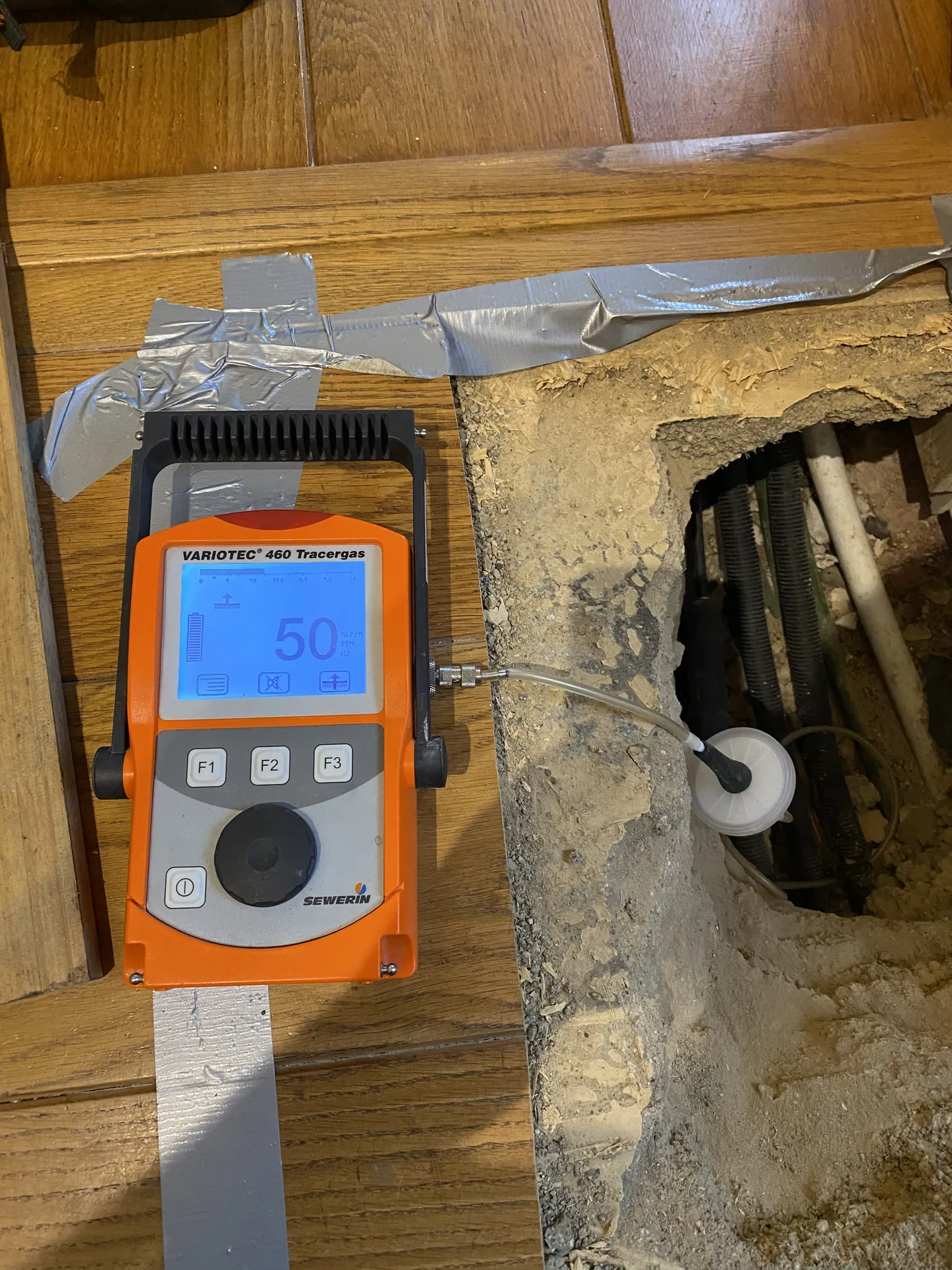
Tracer gas leak detection
A safe hydrogen and nitrogen mix is put into the drained pipe, rises through the floor or wall and is picked up by the detector directly above the leak.
Tracer gasFrom your first call to a leak you can see in the report
Call or WhatsApp with a few photos and a line about the symptoms. We ask a handful of questions, agree a fixed price and book the survey, usually for the same or the next day.
On arrival we pressure test the mains, hot water and heating, check the meter and test the escaping water, so we know what we are looking for before the detection starts.
Thermal imaging, the acoustic ground microphone and tracer gas are used as the pipework dictates until the leak is marked on the floor or wall.
You get a written report with readings, thermal images and photographs, ready for a trace and access claim. If you want the leak fixed, we open that one spot and repair it.
Kitchen leaks: questions answered
There is water under my kitchen sink but nothing is dripping. Where is it from?
Most often the drain hose spigot, the trap or a tap tail that only leaks while the sink or an appliance is draining. We run each one in turn with the plinth off and a moisture meter on the base. If everything tests dry, the pipe under the floor is checked next.
Do you have to take the kitchen units out?
Not usually. Plinths come off, cupboard bases lift, and tracer gas can be sampled through a gap or a small opening in a worktop. A unit is only moved when the leak is directly beneath it and there is no other way to reach the pipe.
Why is the floor warm in front of the cooker?
With the heating on, a warm patch on a solid floor usually sits over a hot pipe that is leaking into the screed. The thermal camera shows the pipe run and the shape of the warmth, and a pressure test confirms whether the heating is losing water.
Is it the washing machine or the pipe behind it?
Running the machine through a full cycle with the hoses and the valve in view usually answers it. If the machine and hoses stay dry, the feed or the heating pipe behind the units is tested with thermal imaging and tracer gas.
Will insurance cover a leak under my kitchen floor?
Most buildings policies include trace and access cover for locating the leak and making good the floor, and escape of water cover for damage to units and flooring. Repairing the pipe is normally outside both. Our report keeps the three separate.
Leak somewhere else?
Noticed this at home? Do not wait for it to get worse.
Call now and we will tell you straight away whether it needs a same-day visit. Or send a photo of the stain, the meter or the boiler gauge on WhatsApp.
07516 755 680