Leak From the Flat Above? How We Find the Source
A stain on your ceiling tells you where the water came out, not where it went in. Finding the source means testing the flat above, fitting by fitting, and writing it down so everyone involved can act on it.
Leak from flat above: what is usually going on
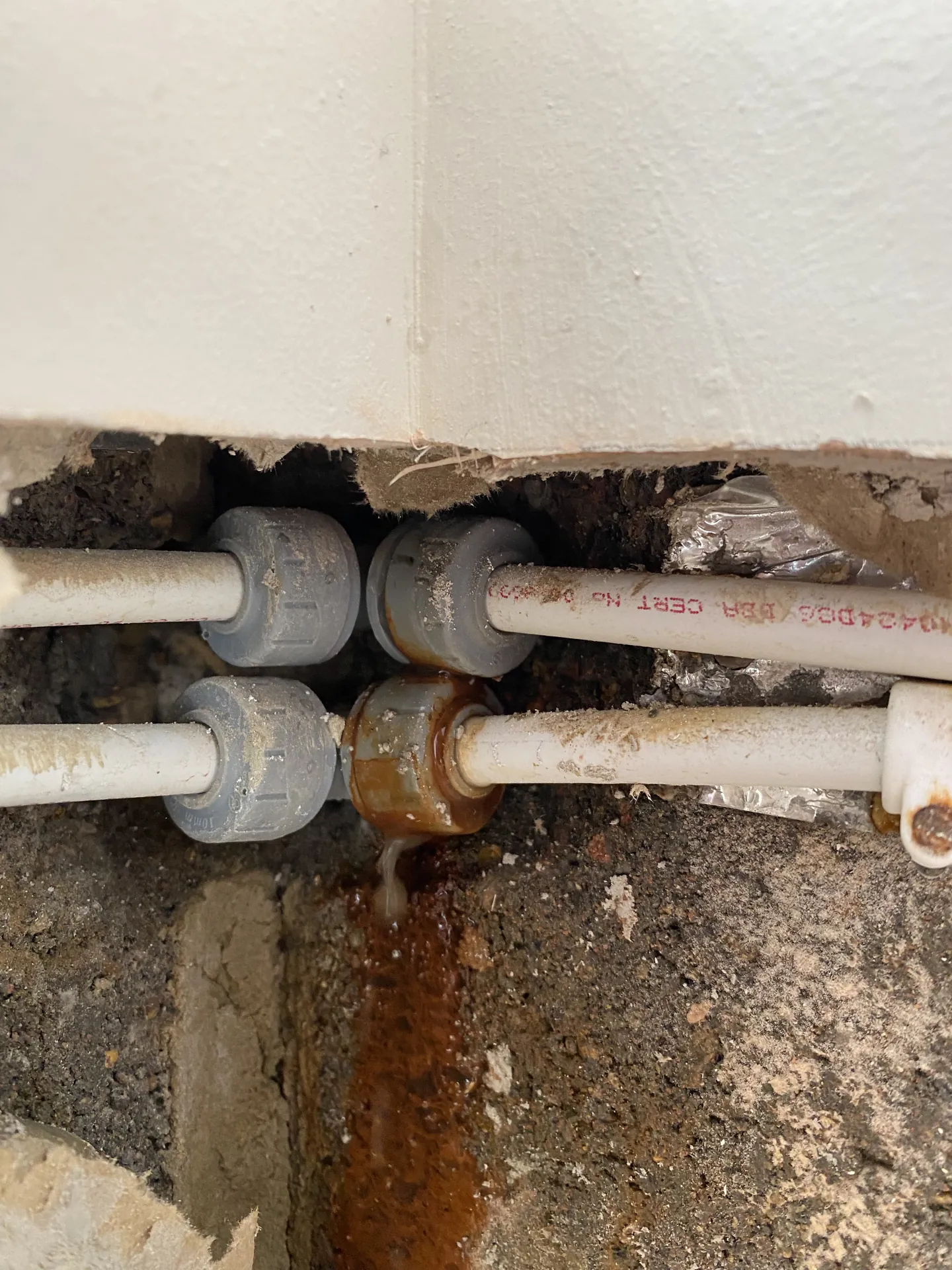
Water travels. It runs along joists, follows pipe runs and collects on the top of plasterboard before dropping through the weakest point. So a wet patch above your bathroom door can come from a shower tray two rooms away upstairs. A stain in a bedroom can come from a kitchen appliance connection above it. In purpose-built blocks around Watford and across London the pipes also run in communal risers and ducts. The water may not belong to the flat directly above at all. The source has to be found, not assumed.
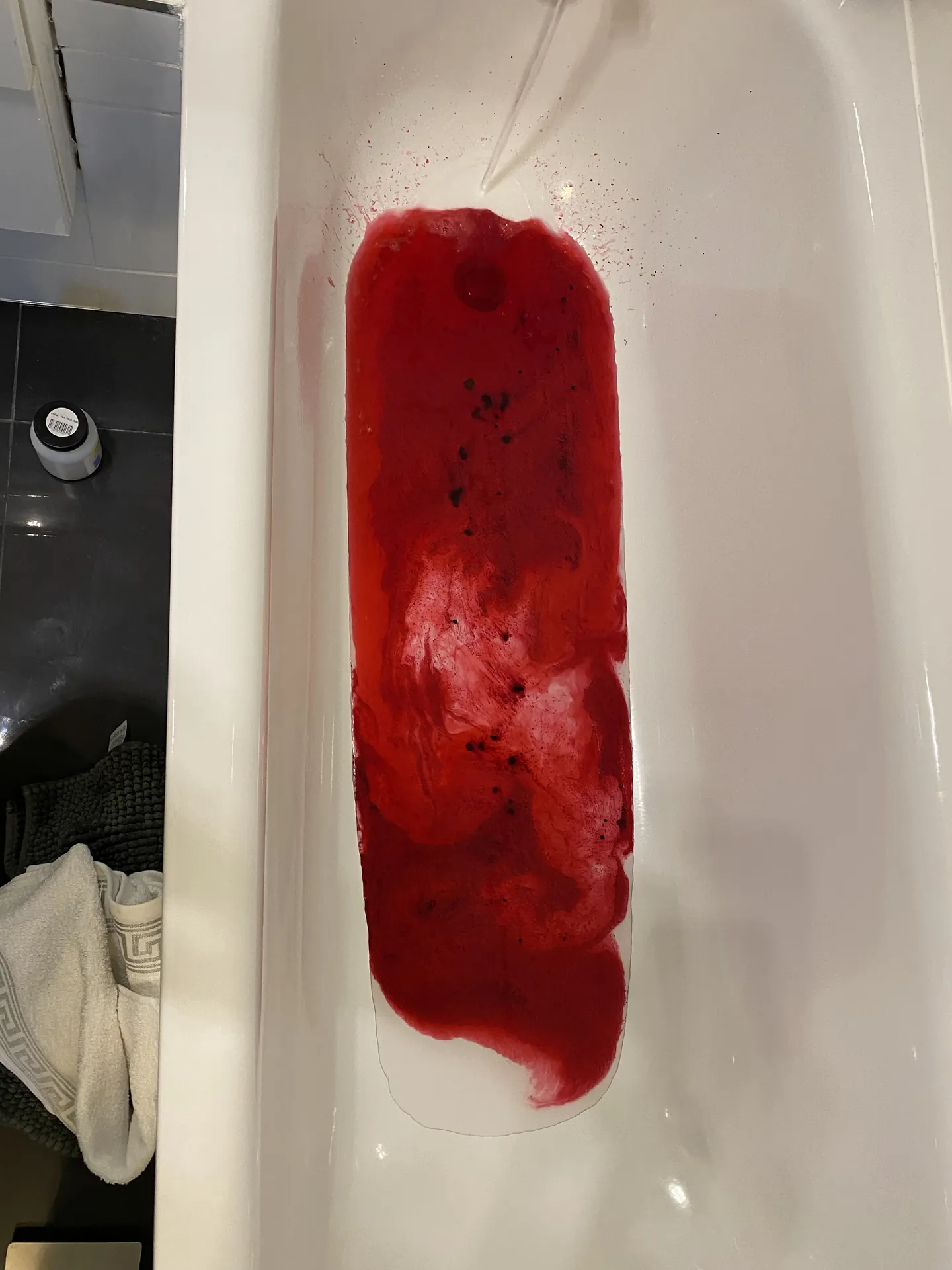
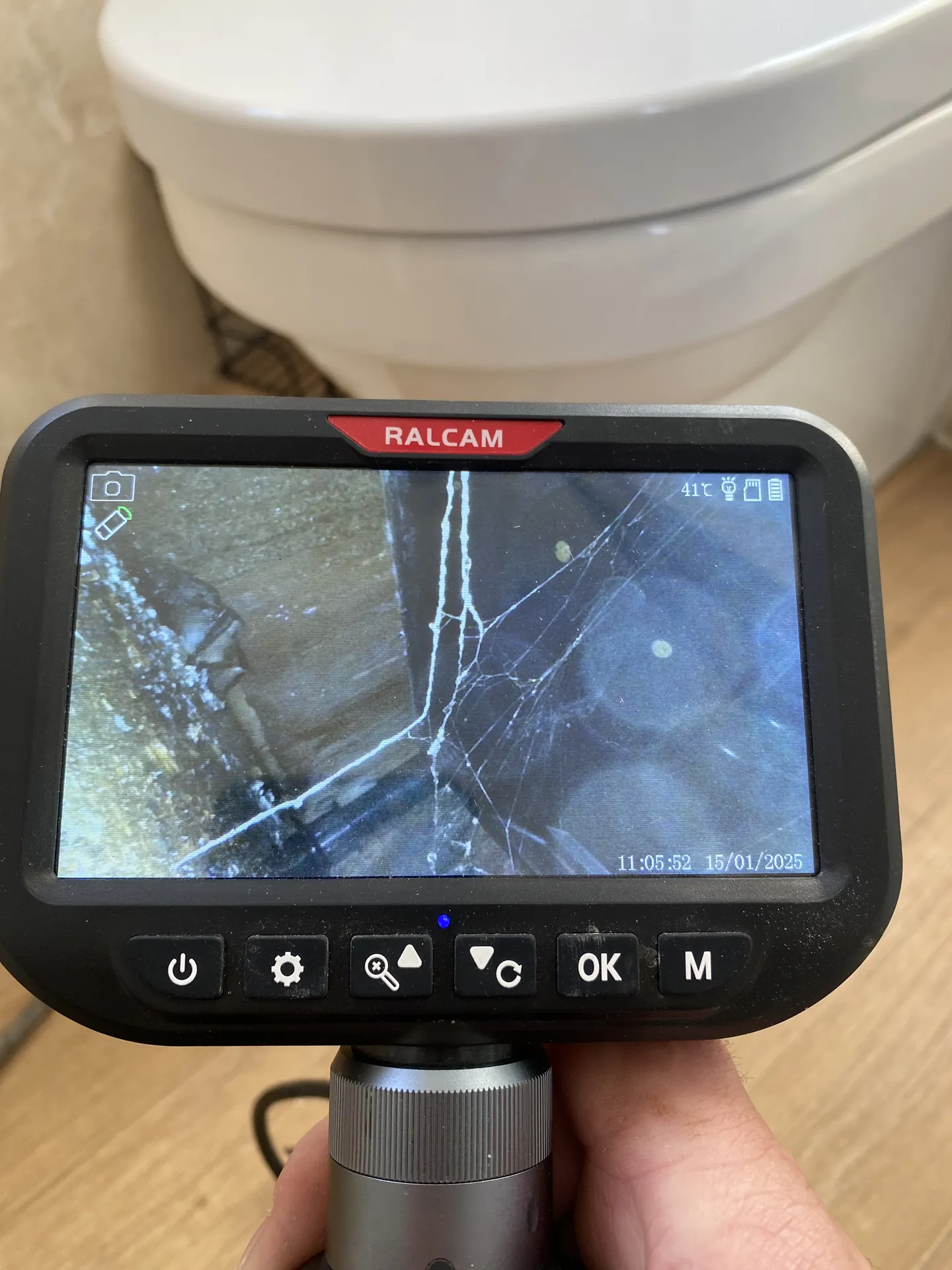
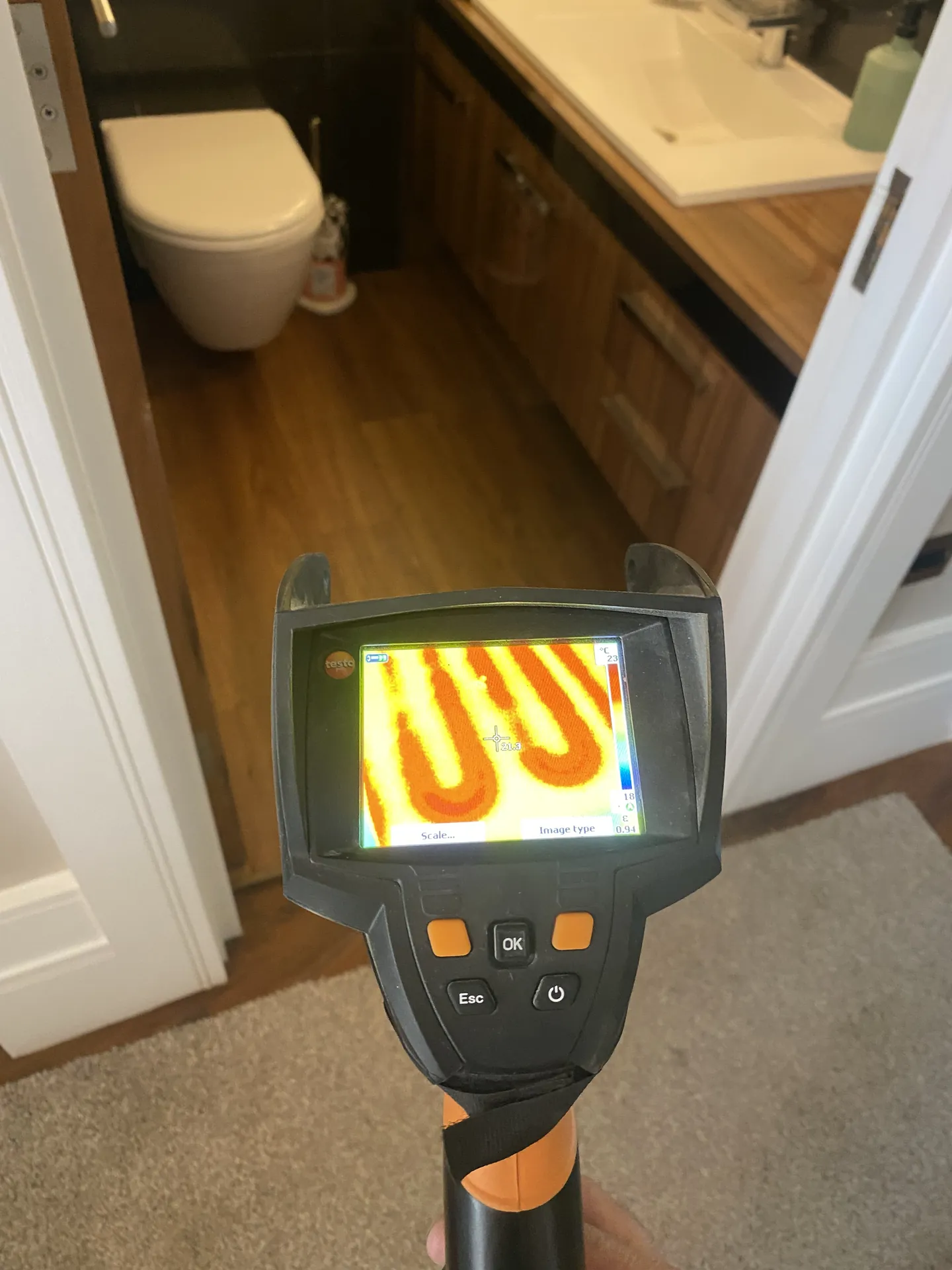
With access to the flat above, the survey works through every fitting that could be responsible. Baths, shower trays, basins and toilets are tested with dye and running water while the ceiling below is watched. Pipework is pressure tested with nitrogen to show whether a hidden pipe is holding or losing. A thermal camera picks out hot water and heating runs behind tiles and under floors, and the moisture meter maps how far the water has spread. A test strip on the water tells mains from heating water, which matters when a communal riser is a suspect.
If the neighbour is away, or will not allow access, the survey still has value. We document everything that can be seen from your flat and from the common parts. That means the extent of the staining, the moisture readings, thermal images of the ceiling and any riser cupboards, and whether the water is mains, heating or waste. That gives the managing agent a factual basis to request access or arrange it under the lease. We do not enter another flat without the permission of the occupier or the agent.
The report is written for the people who have to sort out the cost. It names the fitting or pipe at fault, shows the test results and photographs, and keeps the detection, the access work and the repair as separate items. Who pays usually depends on the lease and on which policy responds. That is a matter for the managing agent and the insurers rather than for us. What we can do is give both insurers the same clear evidence and speak to a claims handler or loss adjuster if asked.
Call today if
- Water is dripping through a light fitting or pooling in the ceiling. Turn off the lighting circuit and call today.
- The ceiling is sagging or the plaster has started to bulge.
- The leak is constant rather than linked to the neighbour using water, which points to a pipe rather than a fitting.
- Nobody is in the flat above and the water is still coming.
What this looks like on the day
How we would find this leak
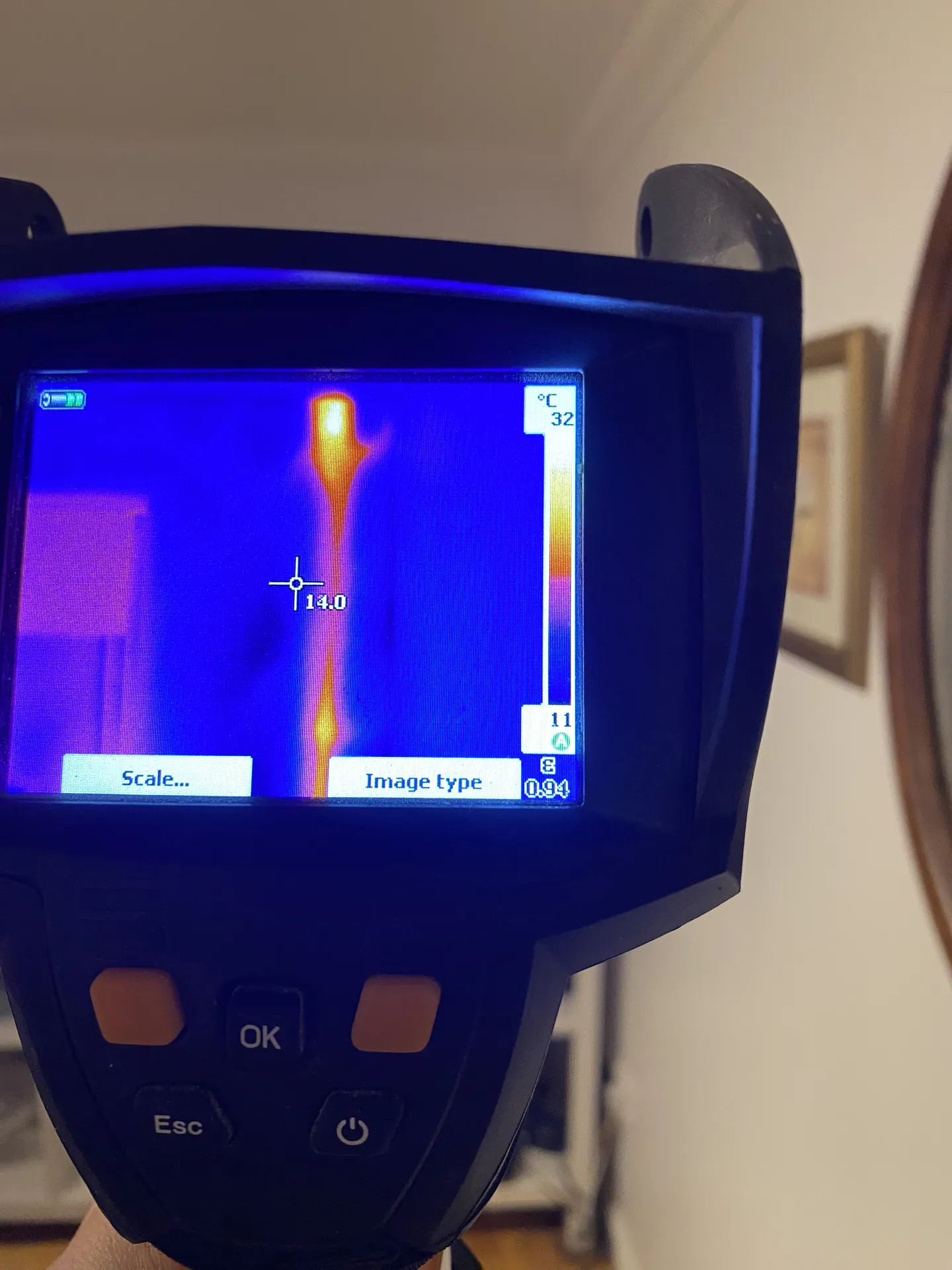
Water leak detection
Hidden leaks behind walls, under floors and in ceilings, pinpointed with thermal, acoustic and tracer gas kit before anything is opened up.
Water leaks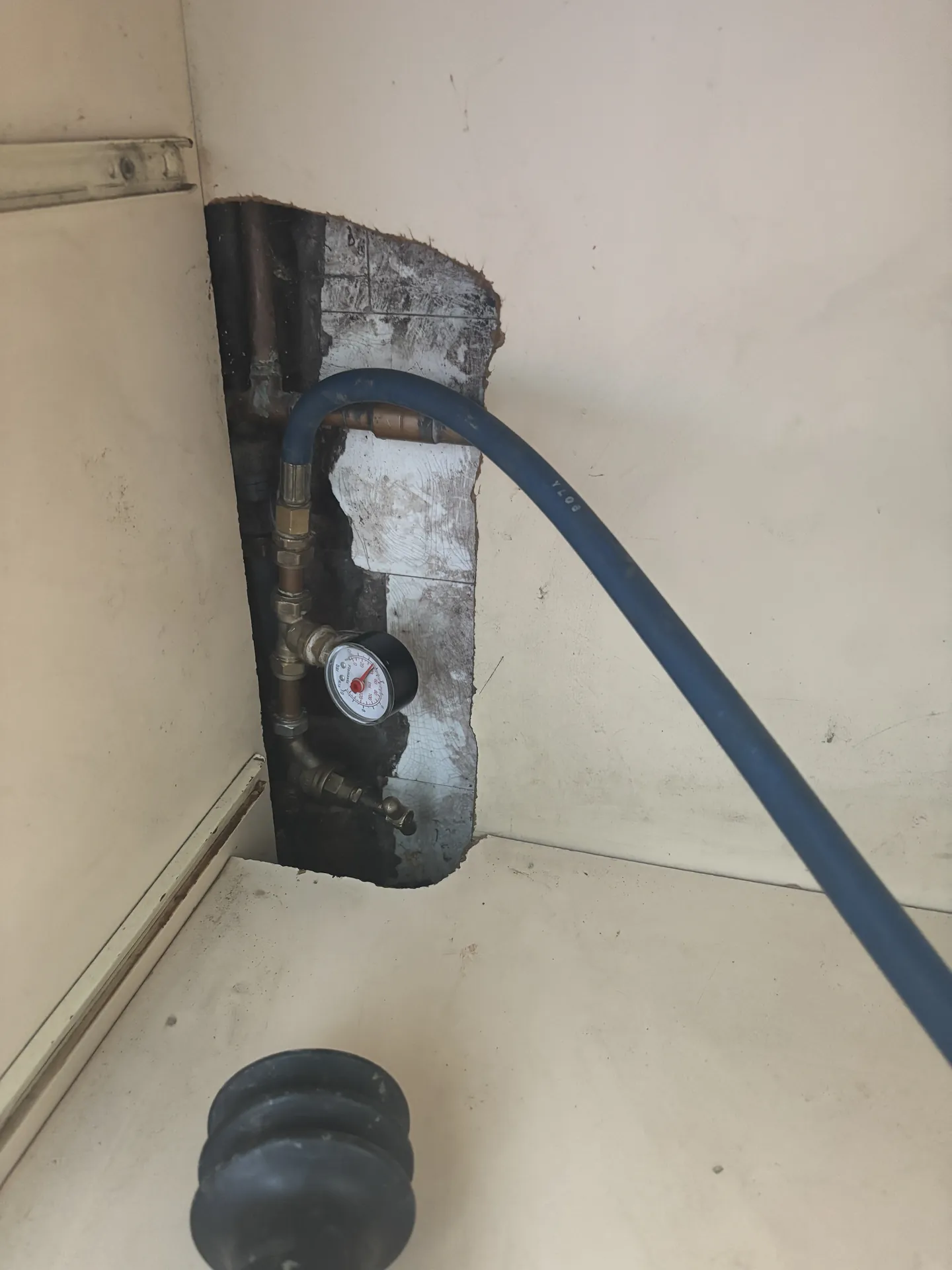
Trace and access insurance reports
Leak detection carried out and documented the way insurers expect, with a report your claims handler can act on straight away.
Insurance reports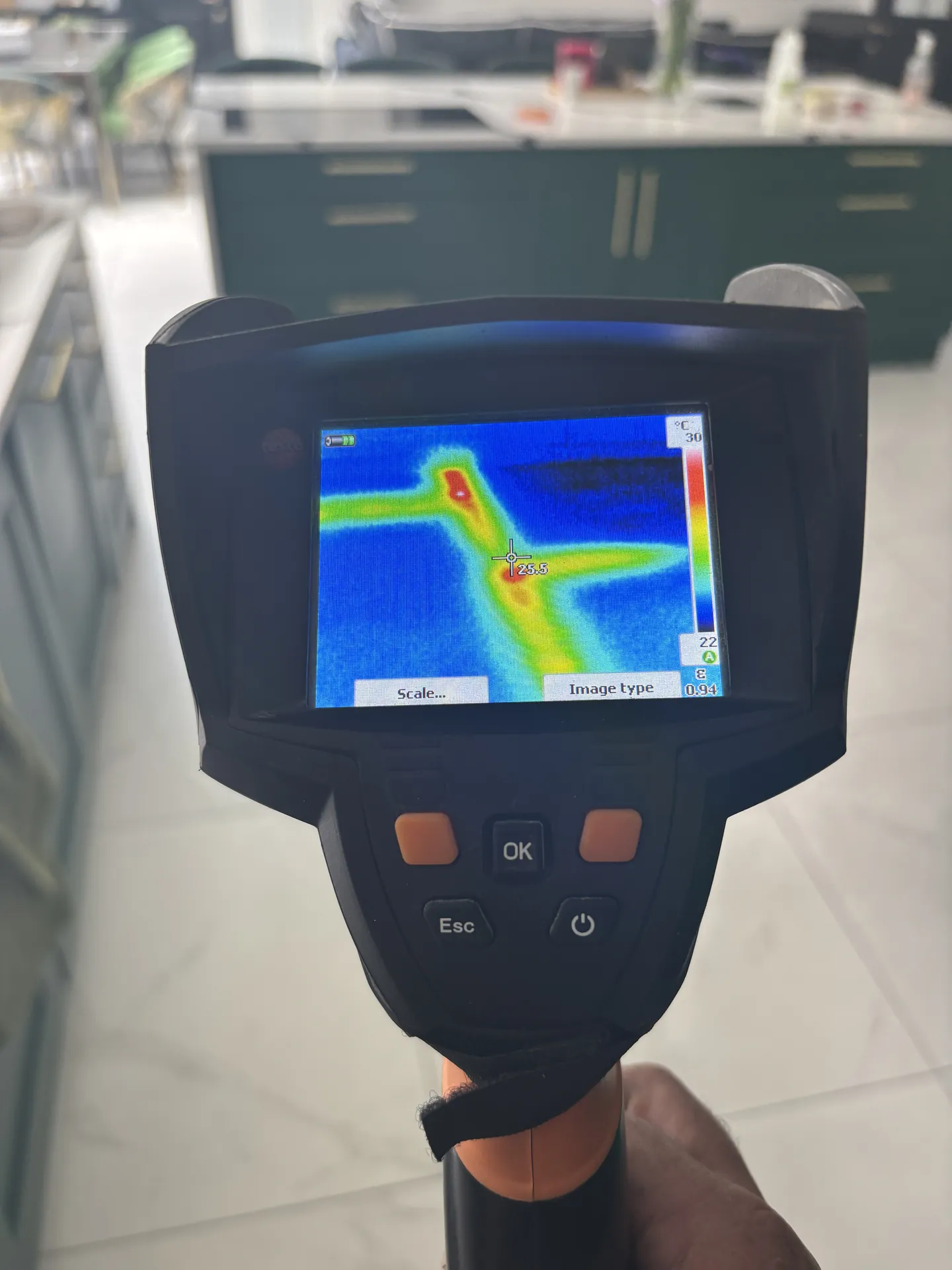
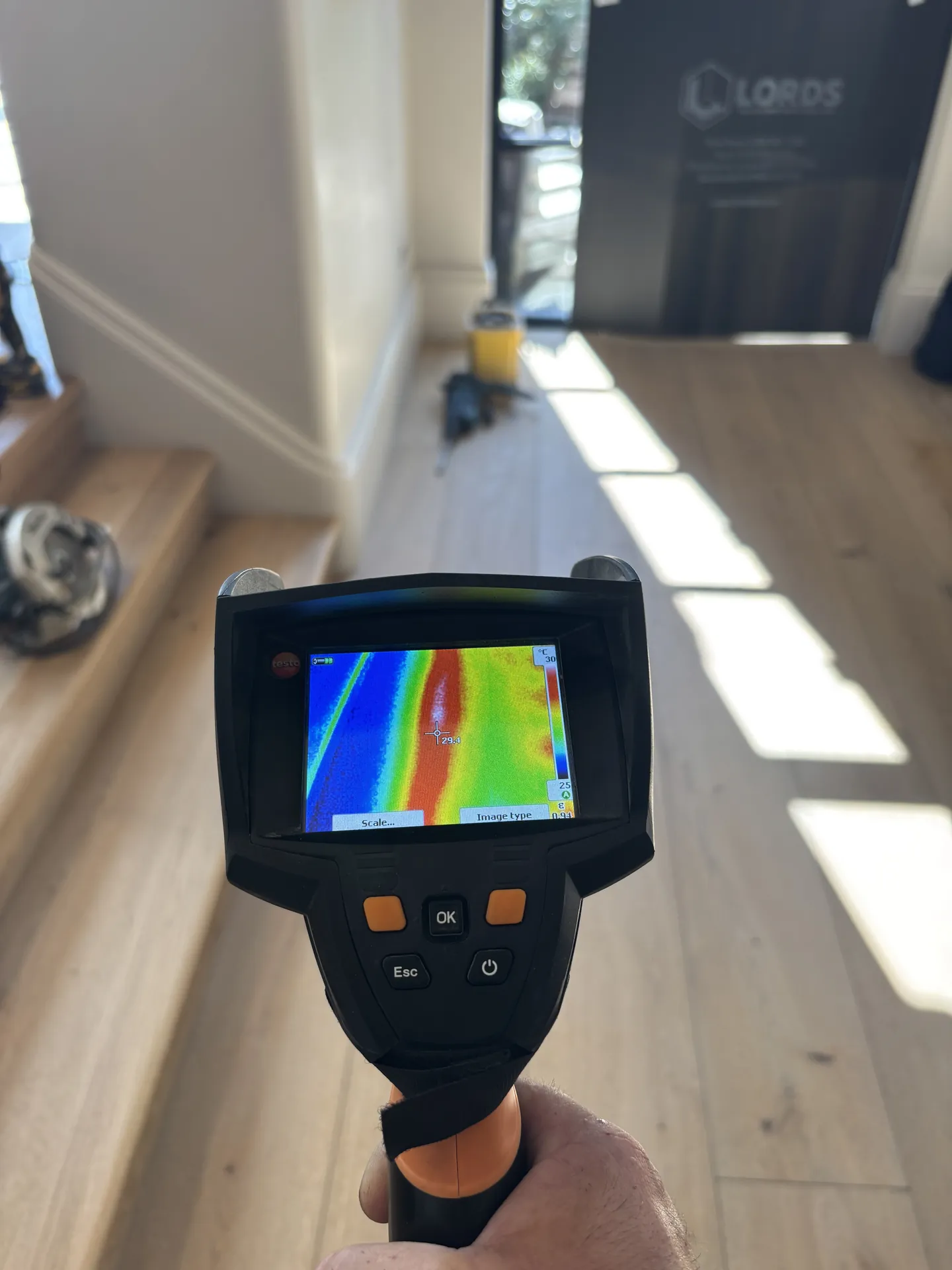
Thermal imaging leak surveys
A thermal imaging camera shows warm pipe runs and cool wet patches through floors and walls, so the leak is seen before anything is opened.
Thermal imagingFrom your first call to a leak you can see in the report
Call or WhatsApp with a few photos and a line about the symptoms. We ask a handful of questions, agree a fixed price and book the survey, usually for the same or the next day.
On arrival we pressure test the mains, hot water and heating, check the meter and test the escaping water, so we know what we are looking for before the detection starts.
Thermal imaging, the acoustic ground microphone and tracer gas are used as the pipework dictates until the leak is marked on the floor or wall.
You get a written report with readings, thermal images and photographs, ready for a trace and access claim. If you want the leak fixed, we open that one spot and repair it.
Leak from flat above: questions answered
Who is responsible for a leak from the flat above?
It depends on where the leak is and what the lease says. A fitting inside the upstairs flat is usually down to that leaseholder, and a communal pipe is usually down to the freeholder or management company. Our report establishes which it is, and the managing agent and insurers decide from there.
The flat above is empty. Can you still find the leak?
We can survey everything visible from your flat and the common parts and report what the evidence shows. To test the fittings upstairs we need access, which the managing agent can usually arrange with the owner or their agent.
What if the neighbour says the leak is not coming from them?
Testing settles it either way. Dye tests, a pressure test on their pipework and thermal imaging show whether a fitting or pipe in that flat is losing water. If nothing is found, the report says so and the search moves to the communal pipework.
Does the leak have to be happening while you are there?
It helps, but it is not essential. Intermittent leaks from baths and showers are reproduced by running them during the survey. A pipe leak shows on a pressure test whether or not water is dripping at that moment.
Will both insurers accept the same report?
The report is written as a factual record with photographs, readings and test results, which is what trace and access and escape of water claims rely on. We are happy to speak to either claims handler or a loss adjuster.
Leak somewhere else?
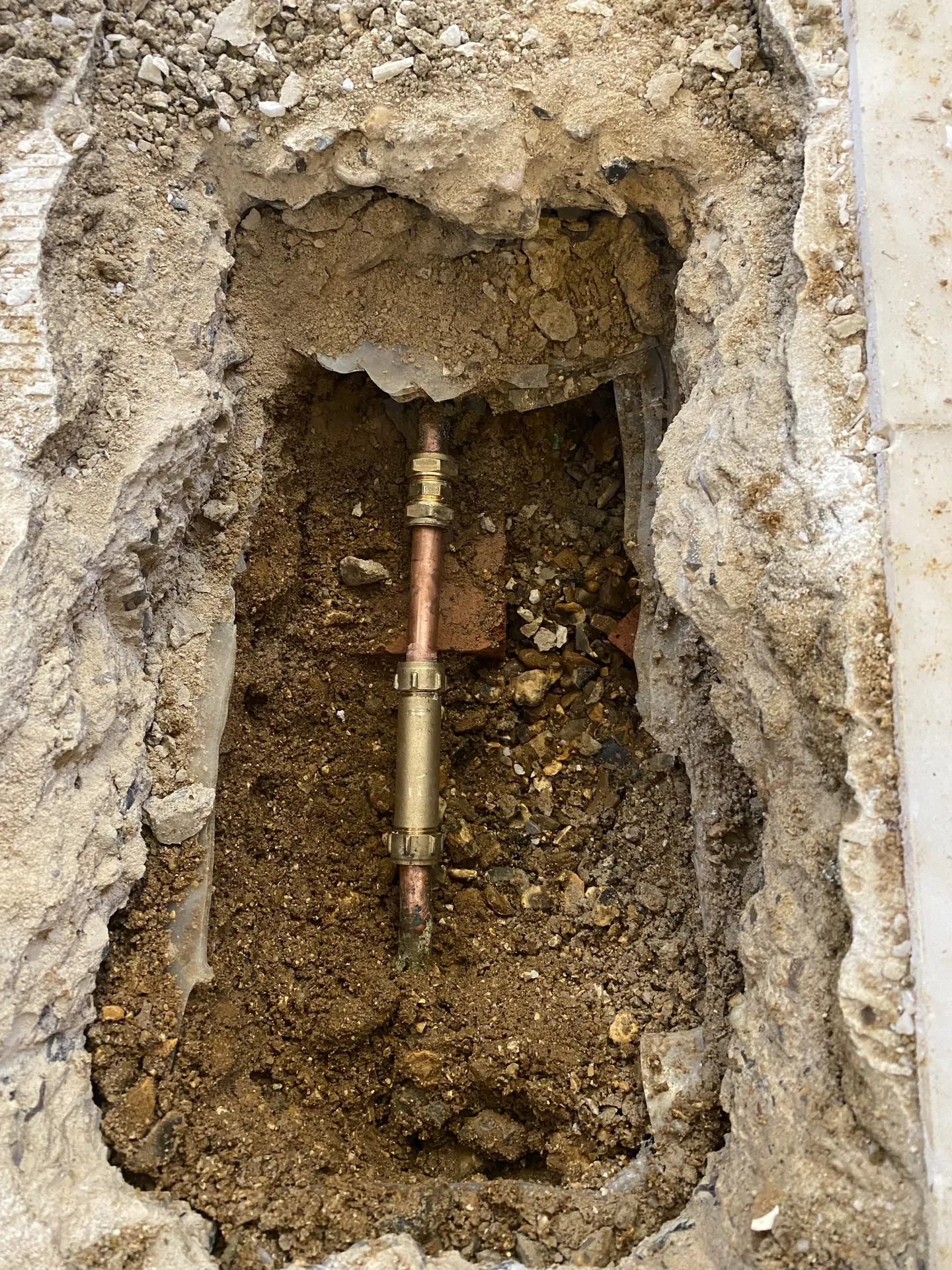
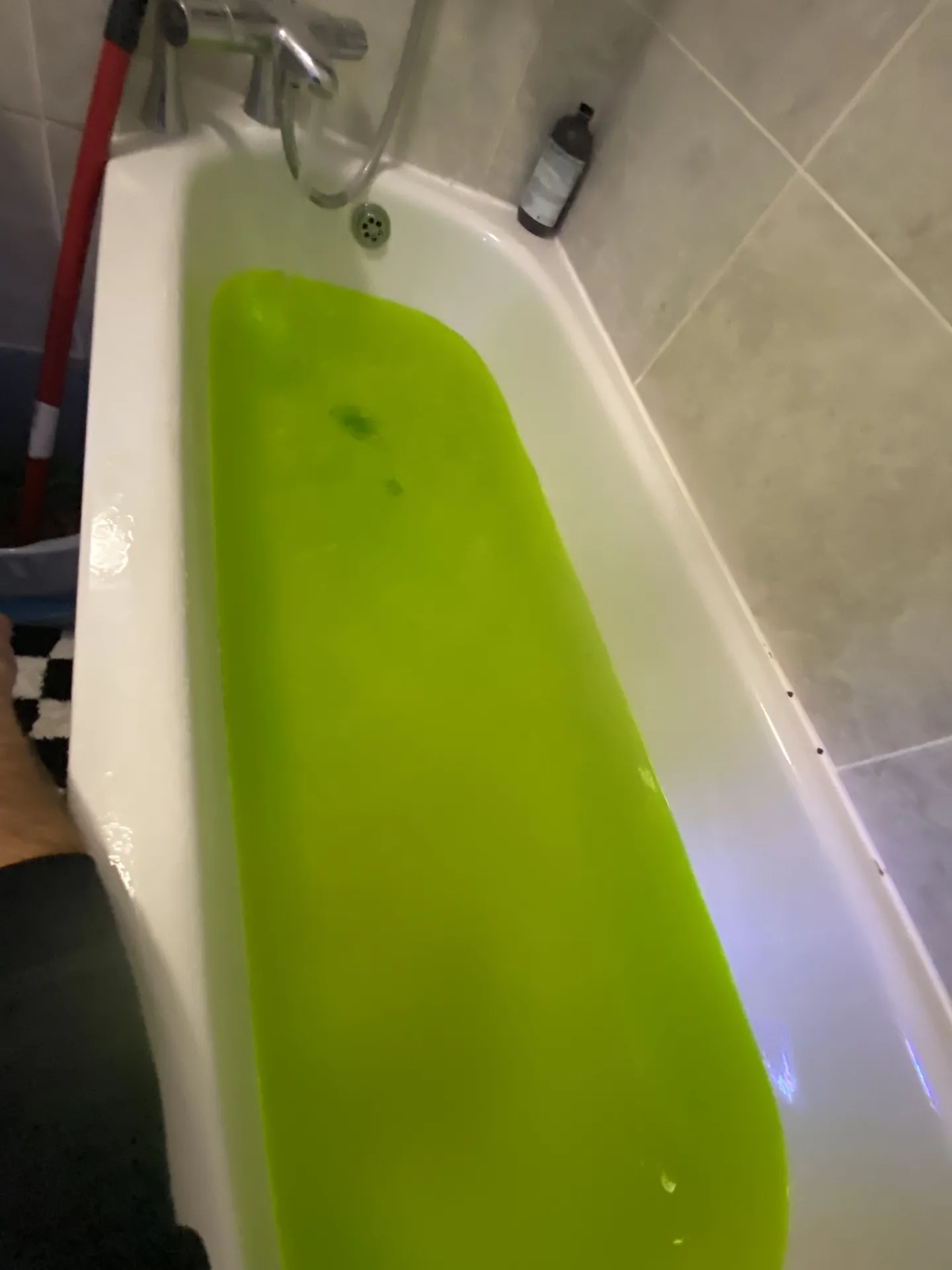
Noticed this at home? Do not wait for it to get worse.
Call now and we will tell you straight away whether it needs a same-day visit. Or send a photo of the stain, the meter or the boiler gauge on WhatsApp.
07516 755 680