Water Leak Under the House? Finding Leaks in Floor Voids
Victorian and Edwardian houses stand on a void with pipes running through it. A leak down there shows itself slowly, as a musty smell, boards that cup or lift, and a damp that never follows the weather.
Under the house: what is usually going on
Most houses built before the 1930s have a suspended timber ground floor. Joists sit on sleeper walls and boards sit on the joists. The space beneath carries the cold supply pipe, often the heating flow and return, and sometimes a hot water run to the kitchen. The void is ventilated by air bricks in the outside walls, which is why it stays dry in a healthy house. When a pipe down there weeps, the water soaks into the oversite and the base of the walls. Nobody sees it, because nobody goes down there.
The signs arrive at floor level. Boards start to cup, with their edges rising, or a board that was flat begins to creak and move. A musty smell lingers in the front room or hall and is strongest first thing in the morning. Skirting boards swell and paint lifts along the bottom of a wall. In winter the room can feel colder than it should, because wet ground beneath pulls heat out of the floor. In the terraces of Watford, Harrow and inner London these signs are easy to blame on an old house, but a healthy void does not smell.
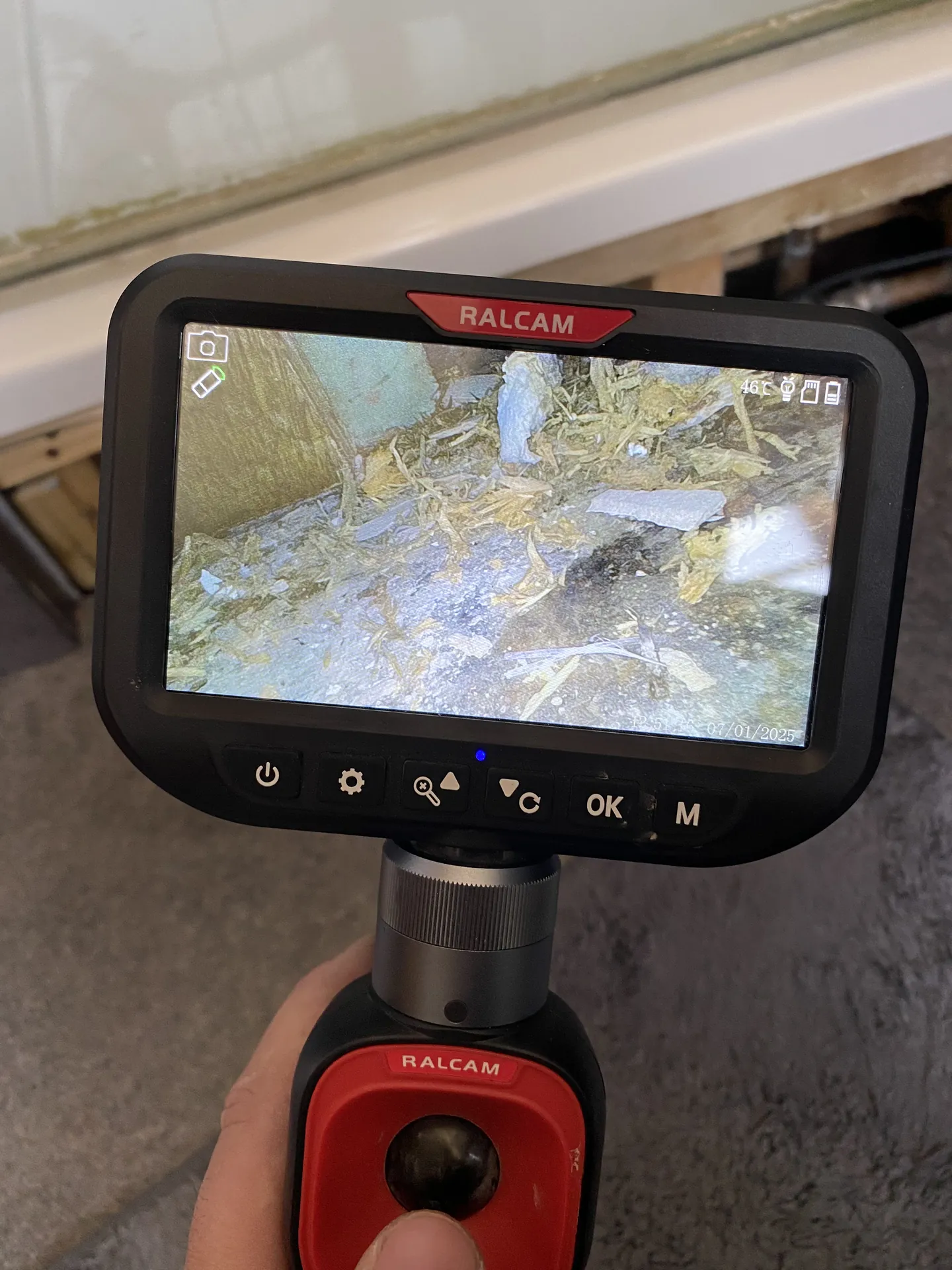
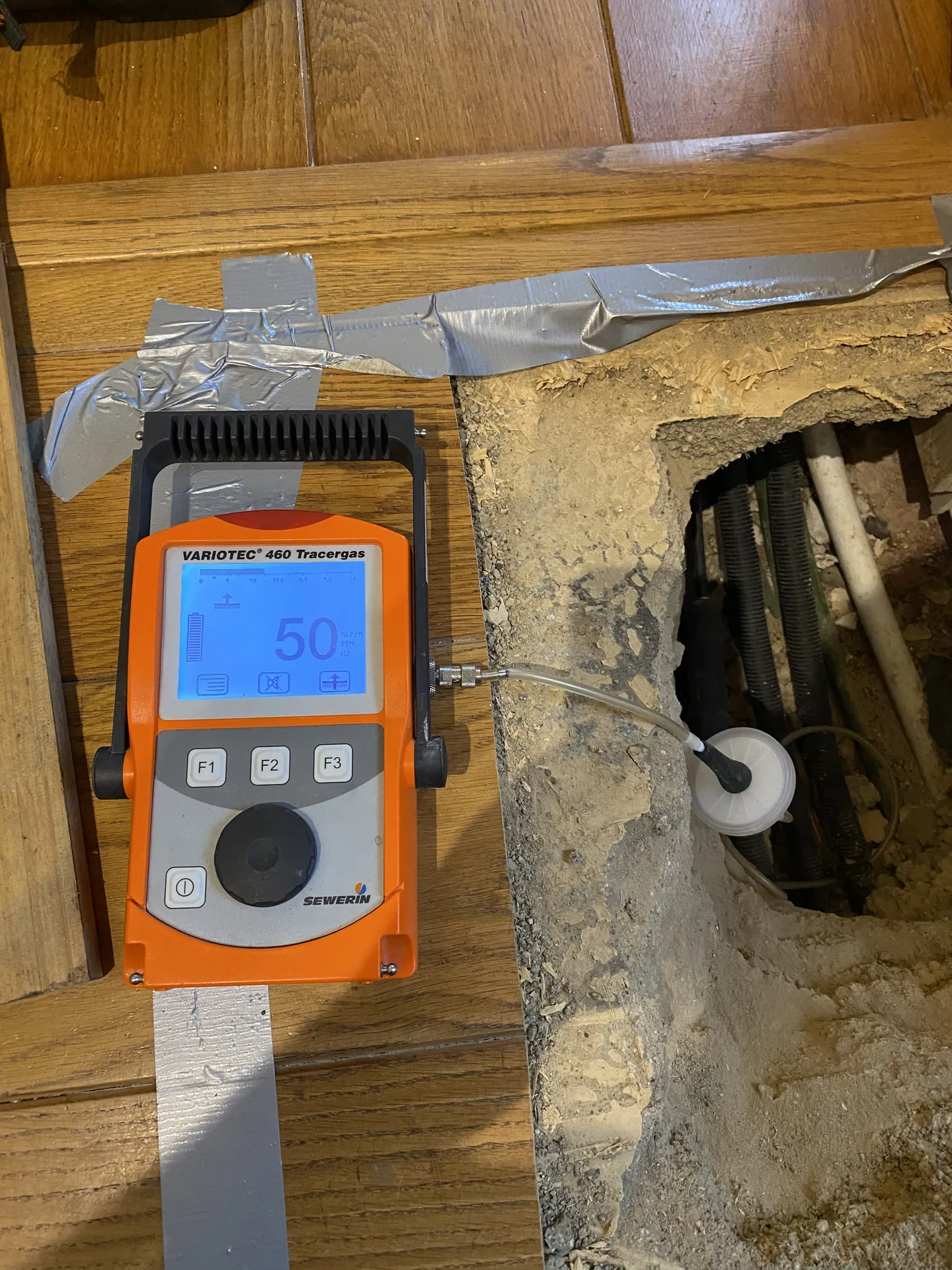
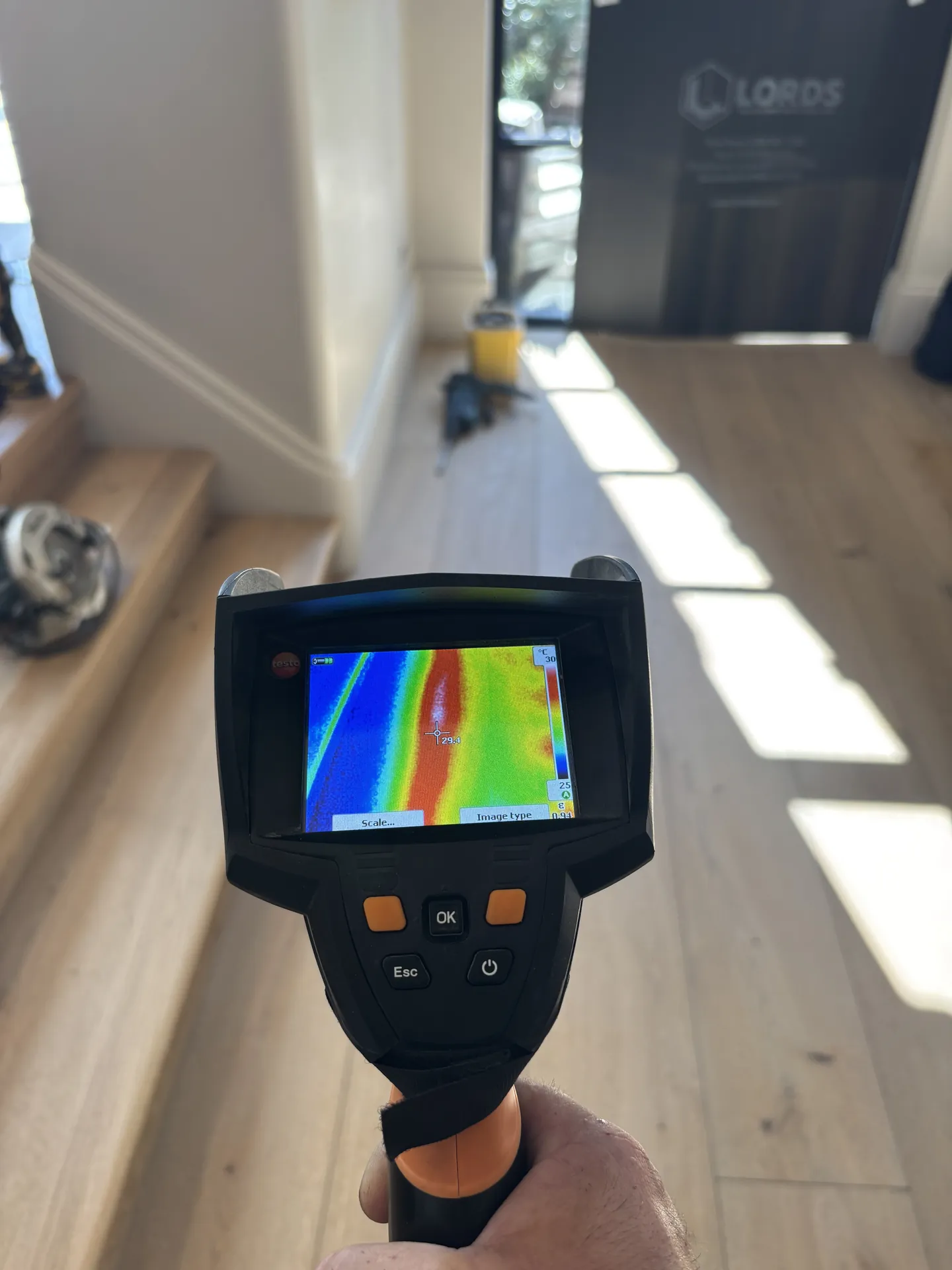
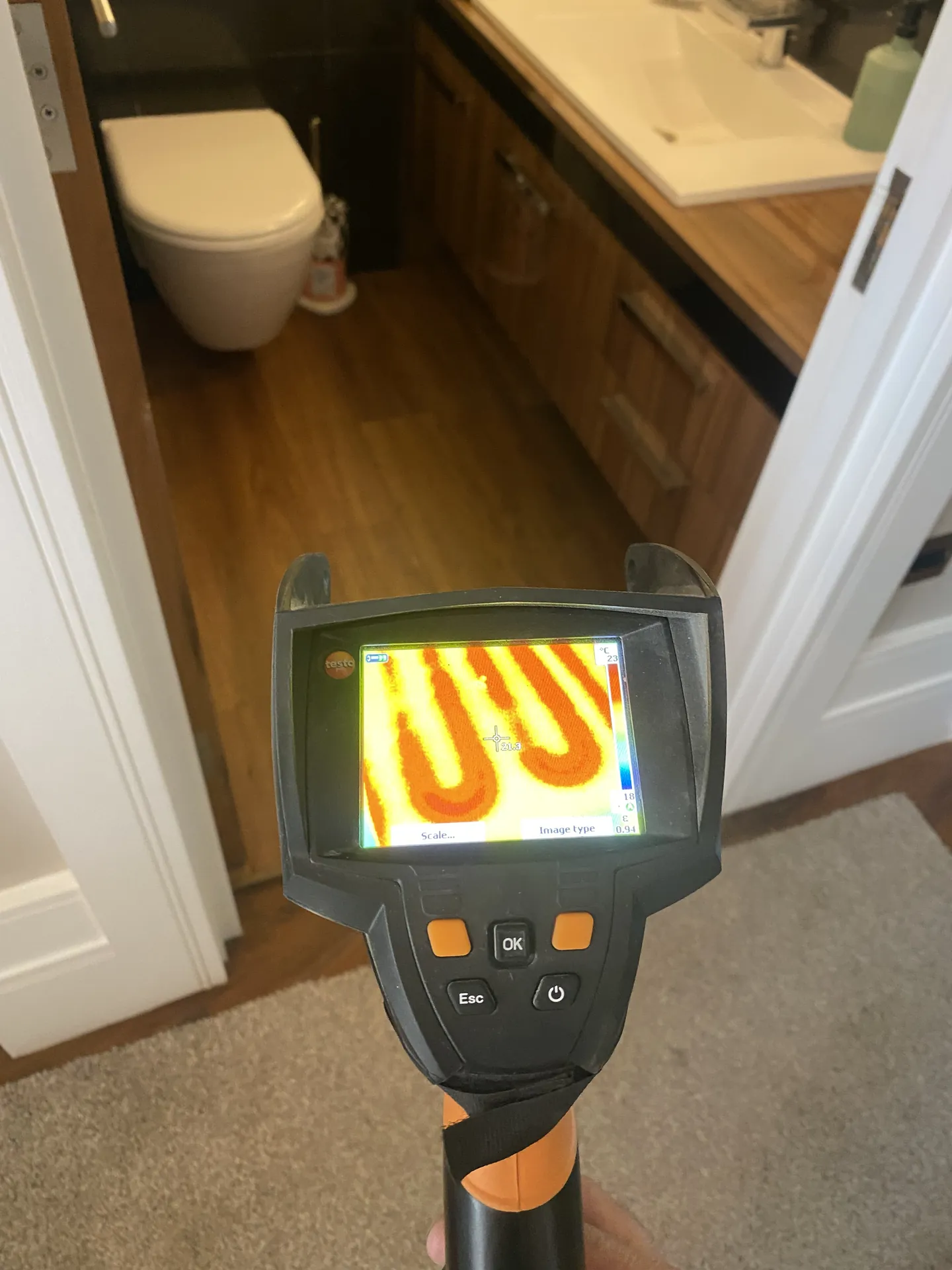
A survey does not begin by lifting the floor. We prove a loss at the meter and, if the boiler is involved, at the pressure gauge. A thermal imaging camera scanned from above shows the line of a warm pipe through the boards and any cold, wet area spreading from it. A borescope camera goes through a hole the size of a pound coin, or through an air brick. It shows the joists, the pipe and any standing water without disturbing anything. The acoustic microphone and tracer gas narrow the point further where the void is deep or cluttered.
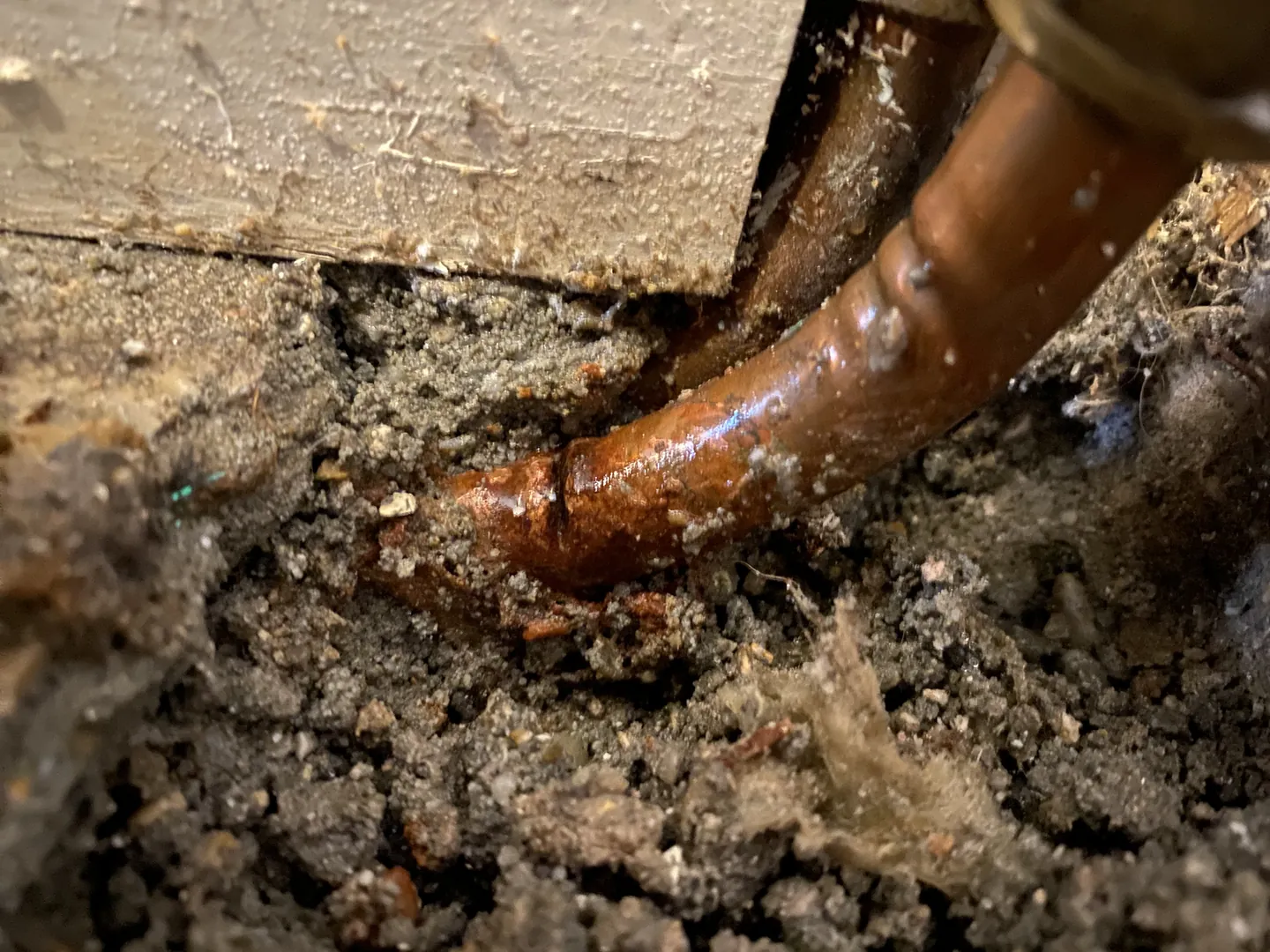
Once the leak is pinned to one place, one board is lifted and the pipe is exposed. The repair is made in copper or barrier pipe if you want it done on the visit. The board goes back and the report records what was seen, the readings taken and photographs of the pipe before and after. Where water has damaged joists, boards or plaster, that report supports a trace and access claim on your buildings insurance. Trace and access pays for finding the leak and making good the opening. Fixing the pipe is usually not covered, so we keep the costs separate.
Call today if
- You can hear water running under the floor with every tap turned off.
- A floorboard has dropped or gone soft enough to move underfoot.
- The boiler is losing pressure daily and the warm spot is at floor level.
- Mould is growing on skirting boards or on the bottom of furniture against an outside wall.
What this looks like on the day
How we would find this leak
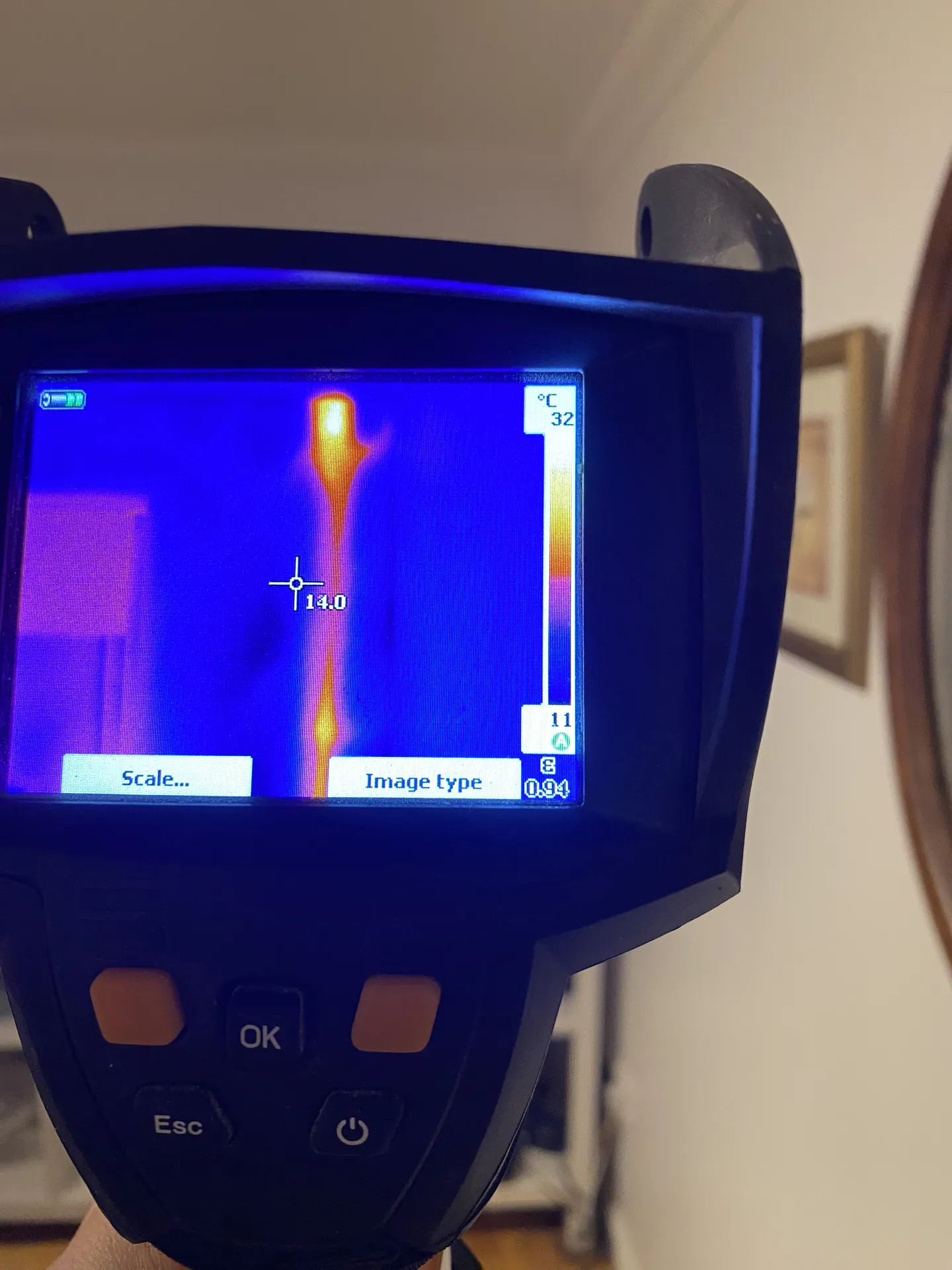
Water leak detection
Hidden leaks behind walls, under floors and in ceilings, pinpointed with thermal, acoustic and tracer gas kit before anything is opened up.
Water leaks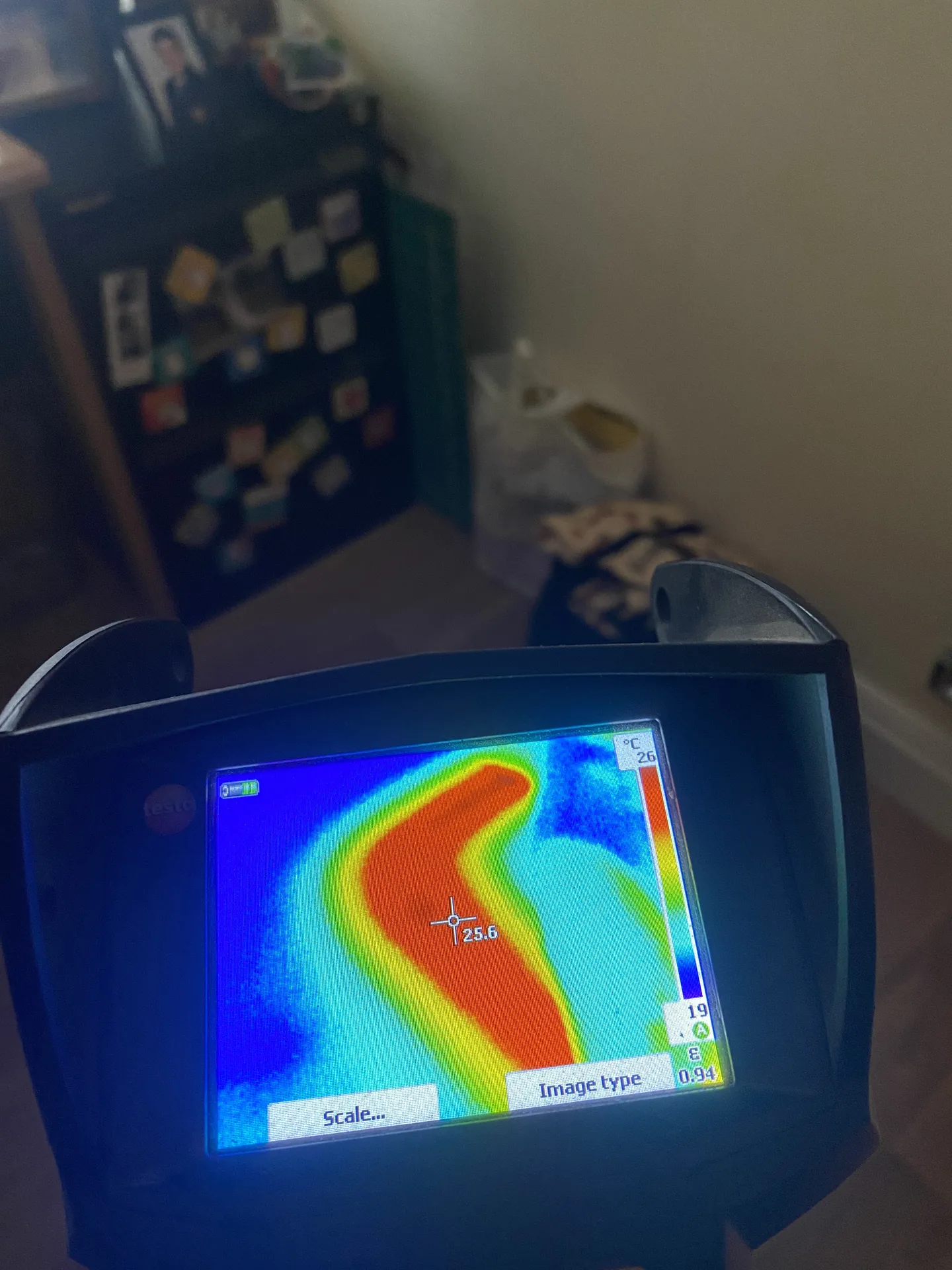
Central heating leak detection
A boiler that keeps dropping pressure means water is escaping somewhere in the heating circuit. We find the pipe or fitting and fix it.
Heating leaks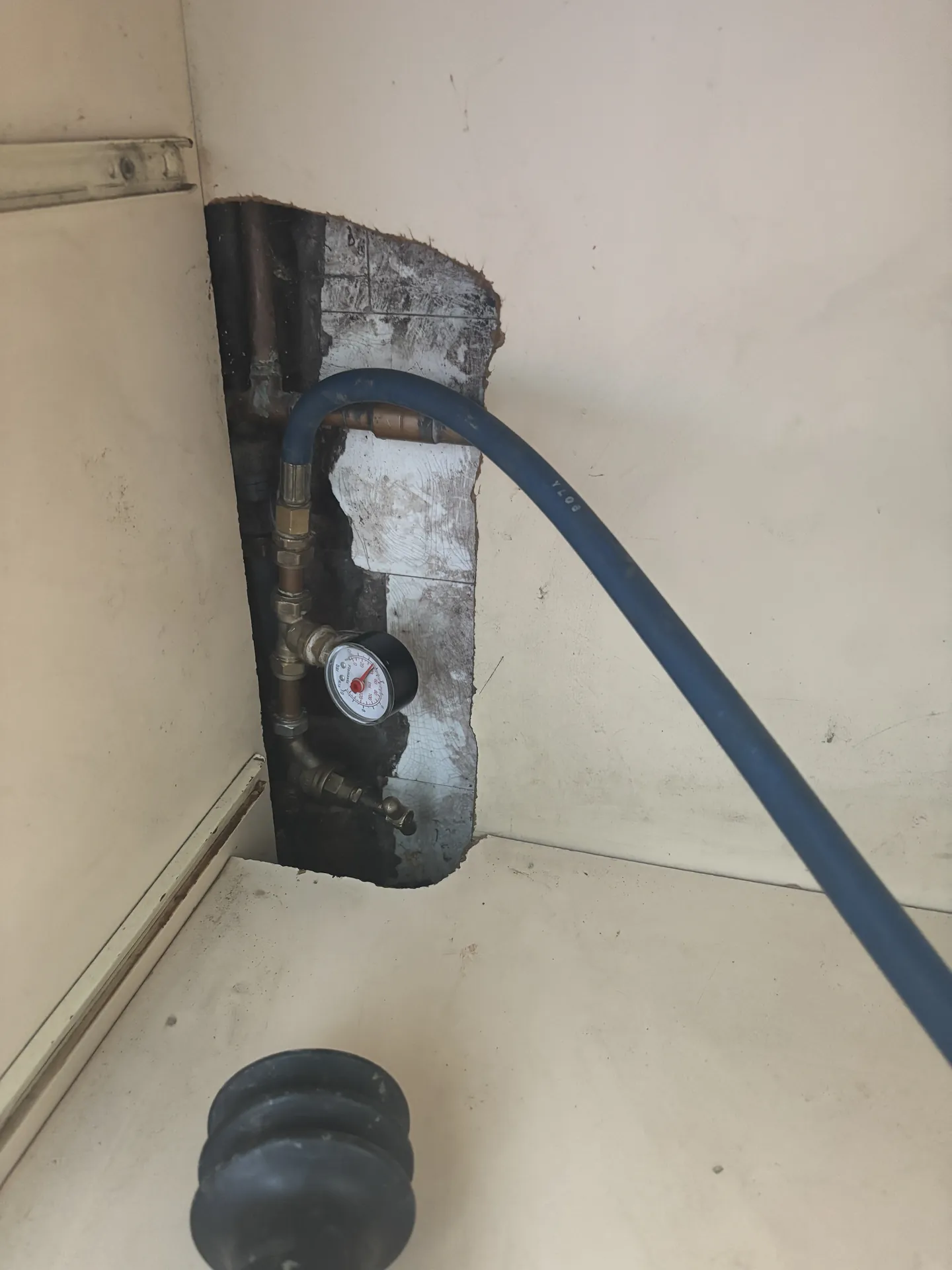
Trace and access insurance reports
Leak detection carried out and documented the way insurers expect, with a report your claims handler can act on straight away.
Insurance reportsFrom your first call to a leak you can see in the report
Call or WhatsApp with a few photos and a line about the symptoms. We ask a handful of questions, agree a fixed price and book the survey, usually for the same or the next day.
On arrival we pressure test the mains, hot water and heating, check the meter and test the escaping water, so we know what we are looking for before the detection starts.
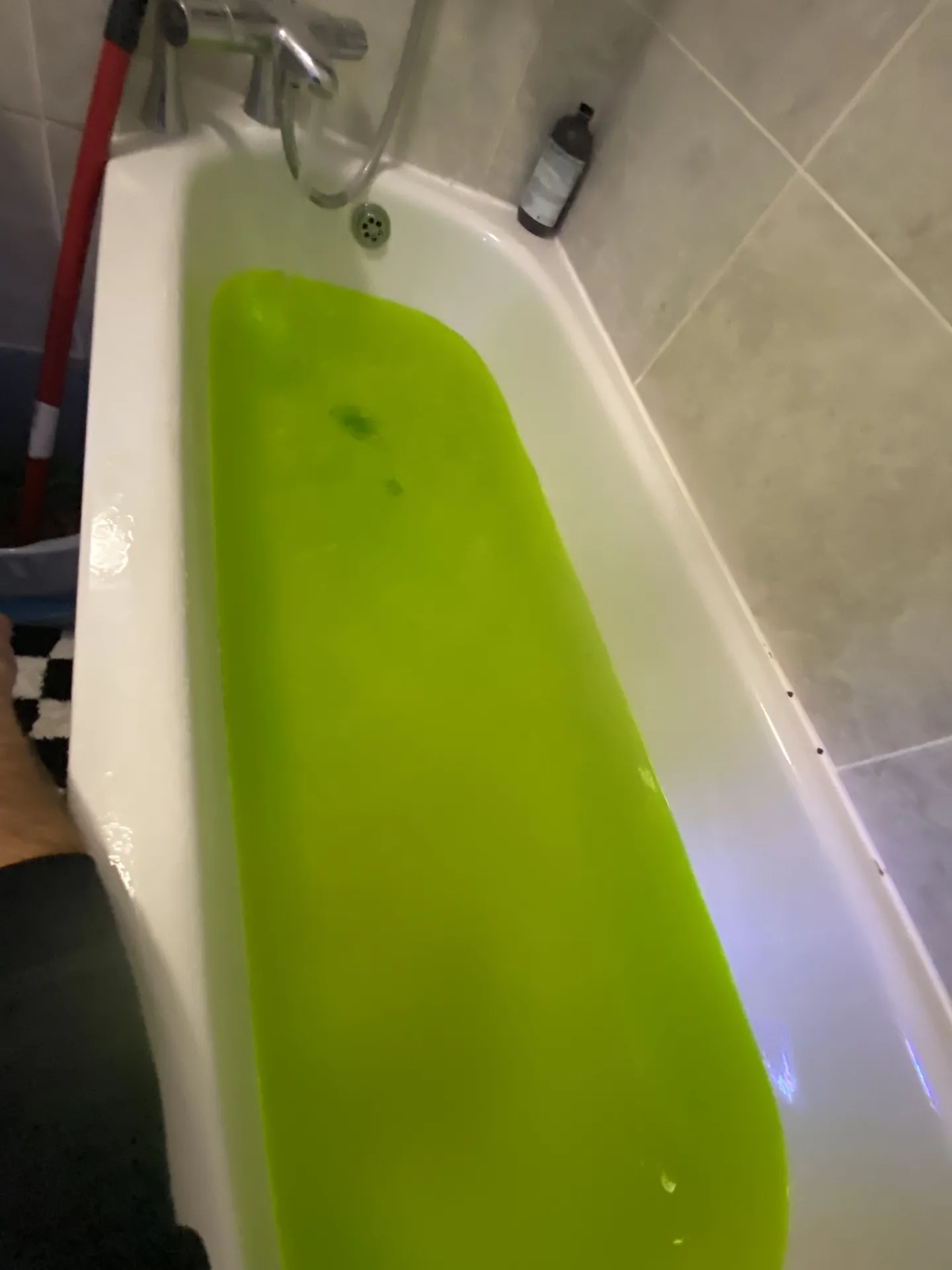
Thermal imaging, the acoustic ground microphone and tracer gas are used as the pipework dictates until the leak is marked on the floor or wall.
You get a written report with readings, thermal images and photographs, ready for a trace and access claim. If you want the leak fixed, we open that one spot and repair it.
Under the house: questions answered
Can you find a water leak under my house without taking the floor up?
In most cases, yes. A borescope through a small hole, a thermal camera from above and an acoustic microphone or tracer gas narrow the leak to one spot. One board is lifted at that spot rather than the whole floor.
How do I know whether the damp is a leak or just an old house?
A healthy void with clear air bricks is dry and does not smell. If the meter or the boiler pressure shows a loss, or the damp is worse after water is used rather than after rain, a leak is the likely cause. The survey rules it in or out.
What if the pipe runs under a carpet or a fitted floor?
Thermal imaging and tracer gas both work through carpet and most floor finishes. If an opening is needed, it is made where the finish can be lifted and relaid cleanly, and the report records why that spot was chosen.
Will my insurance pay for the floor to be lifted?
If the leak has caused damage, trace and access cover on many buildings policies pays for locating it and making good the floor. Repairing the pipe is normally excluded. Our report keeps the three parts separate so the claims handler can see each one.
How long does a survey of a floor void take?
Most home surveys take between two and four hours. Same-day and next-day surveys are usually available, and a fixed price is agreed before we start.
Leak somewhere else?
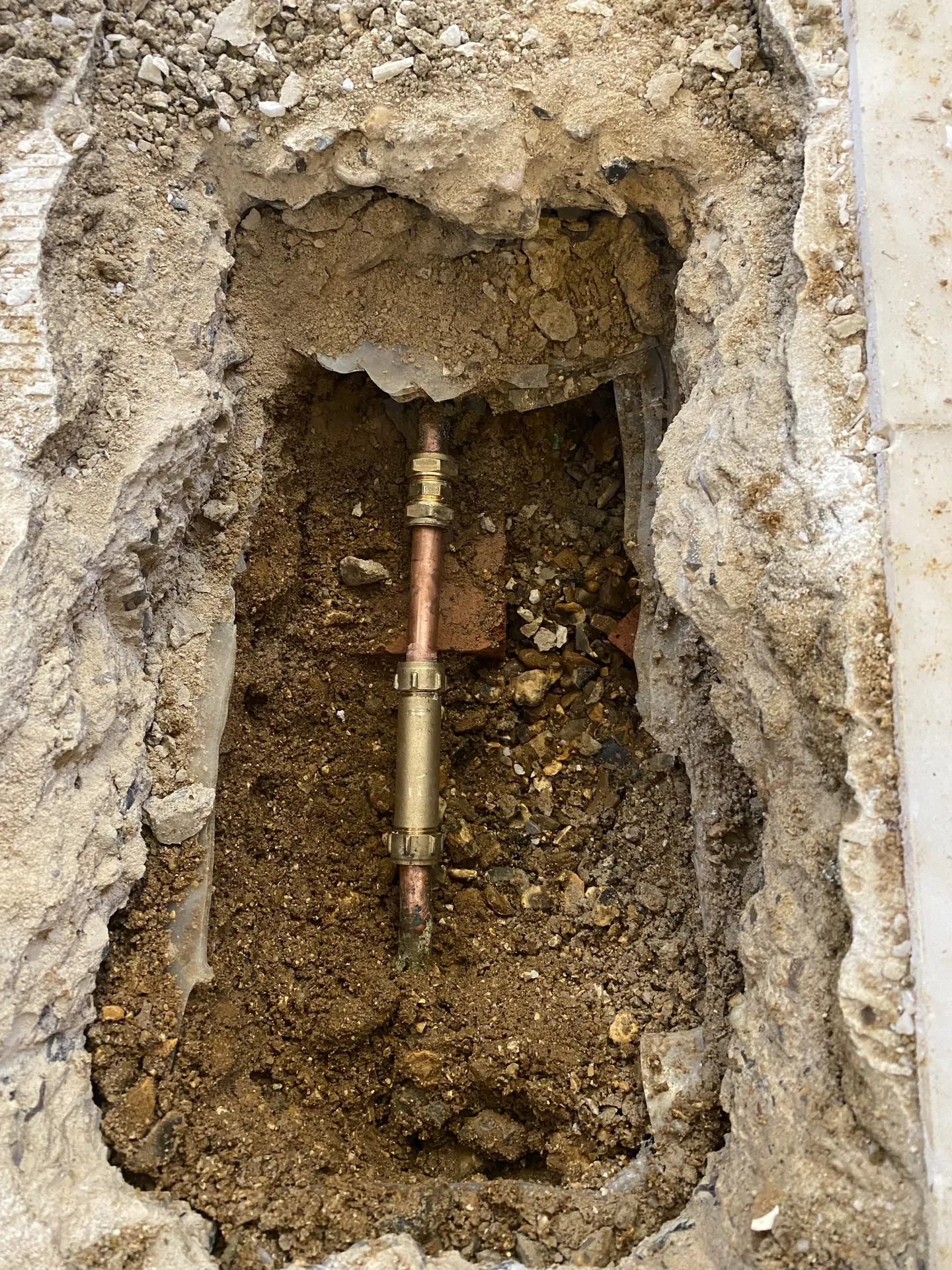
Noticed this at home? Do not wait for it to get worse.
Call now and we will tell you straight away whether it needs a same-day visit. Or send a photo of the stain, the meter or the boiler gauge on WhatsApp.
07516 755 680