Plumber Cannot Find the Leak? What a Leak Survey Adds
A good plumber checks everything that can be reached. When the leak is behind a wall, under a screed or beneath a drive, the problem is not the plumber. It is that the leak cannot be seen, and finding it needs different tools.
Plumber cannot find it: what is usually going on
Plumbers work on what is in front of them. They check the visible pipework, the fittings under the bath, the joints behind the toilet and the connections to the boiler, and they fix what they find. That covers a great many leaks. The ones that remain are hidden by design. A pipe buried in a screed, a heating run in a ceiling, a supply pipe under a hall floor, a joint inside a wall chase. No amount of looking reveals those, and a plumber who says they cannot find it is being straight with you.
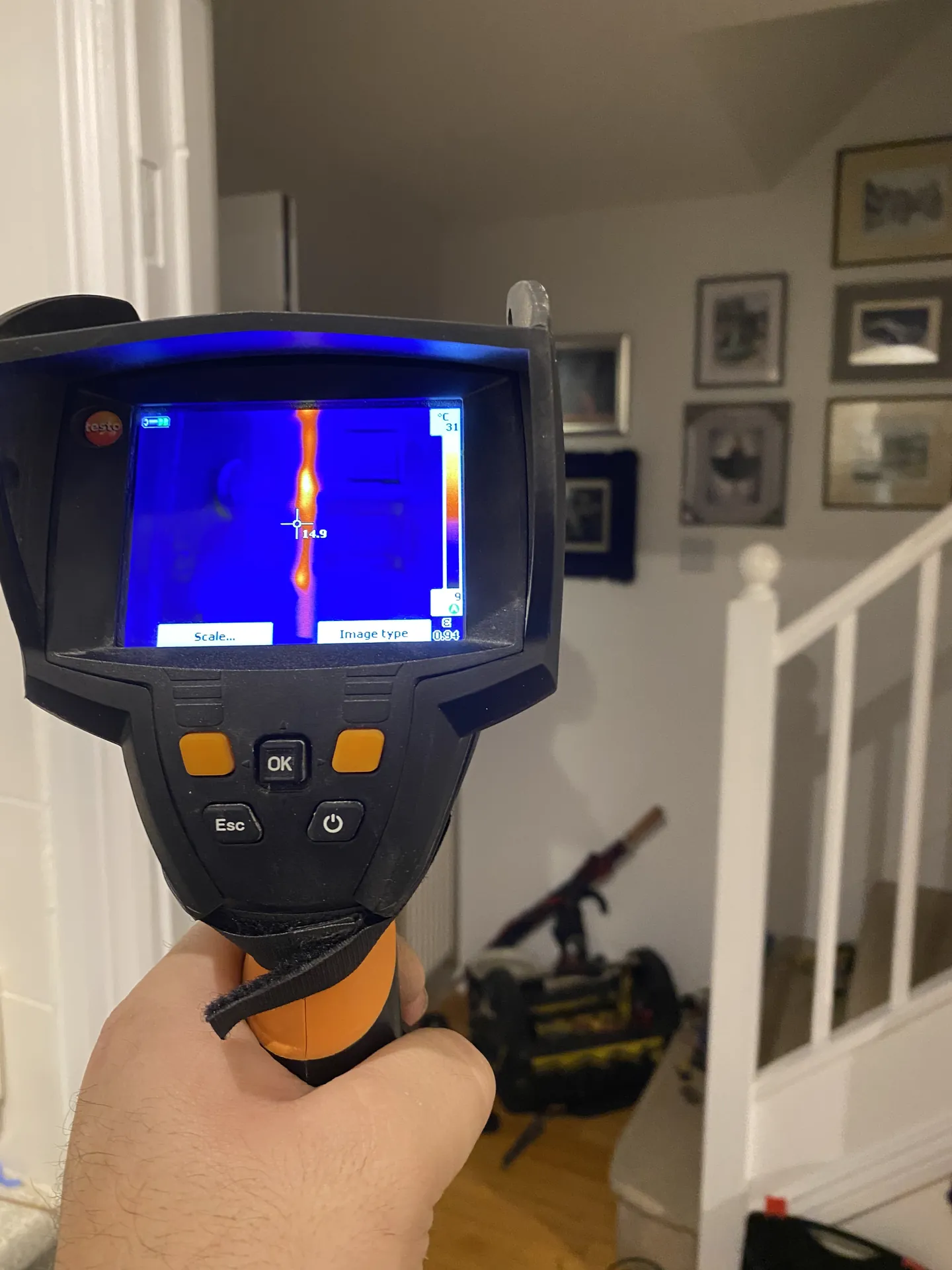
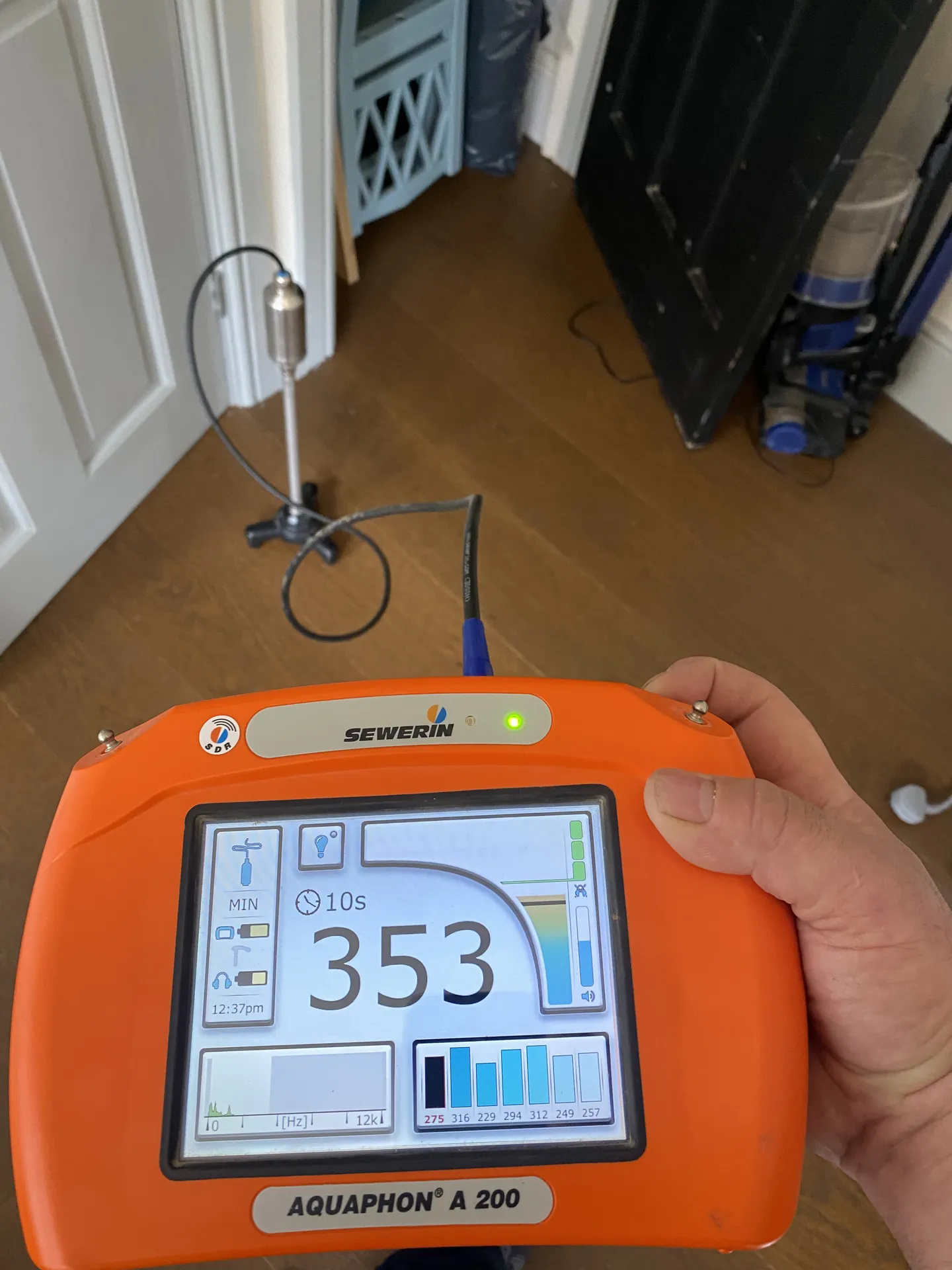
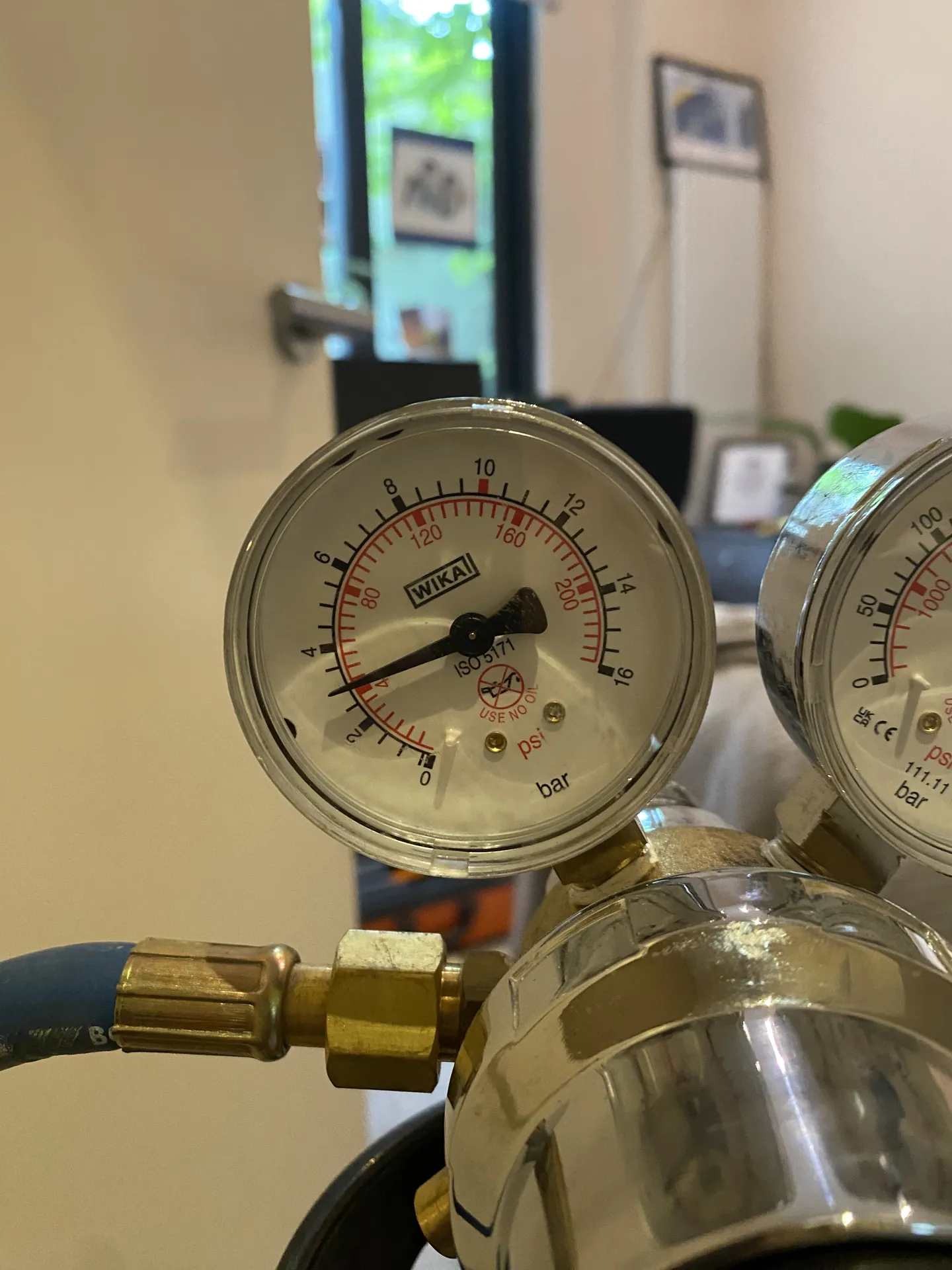
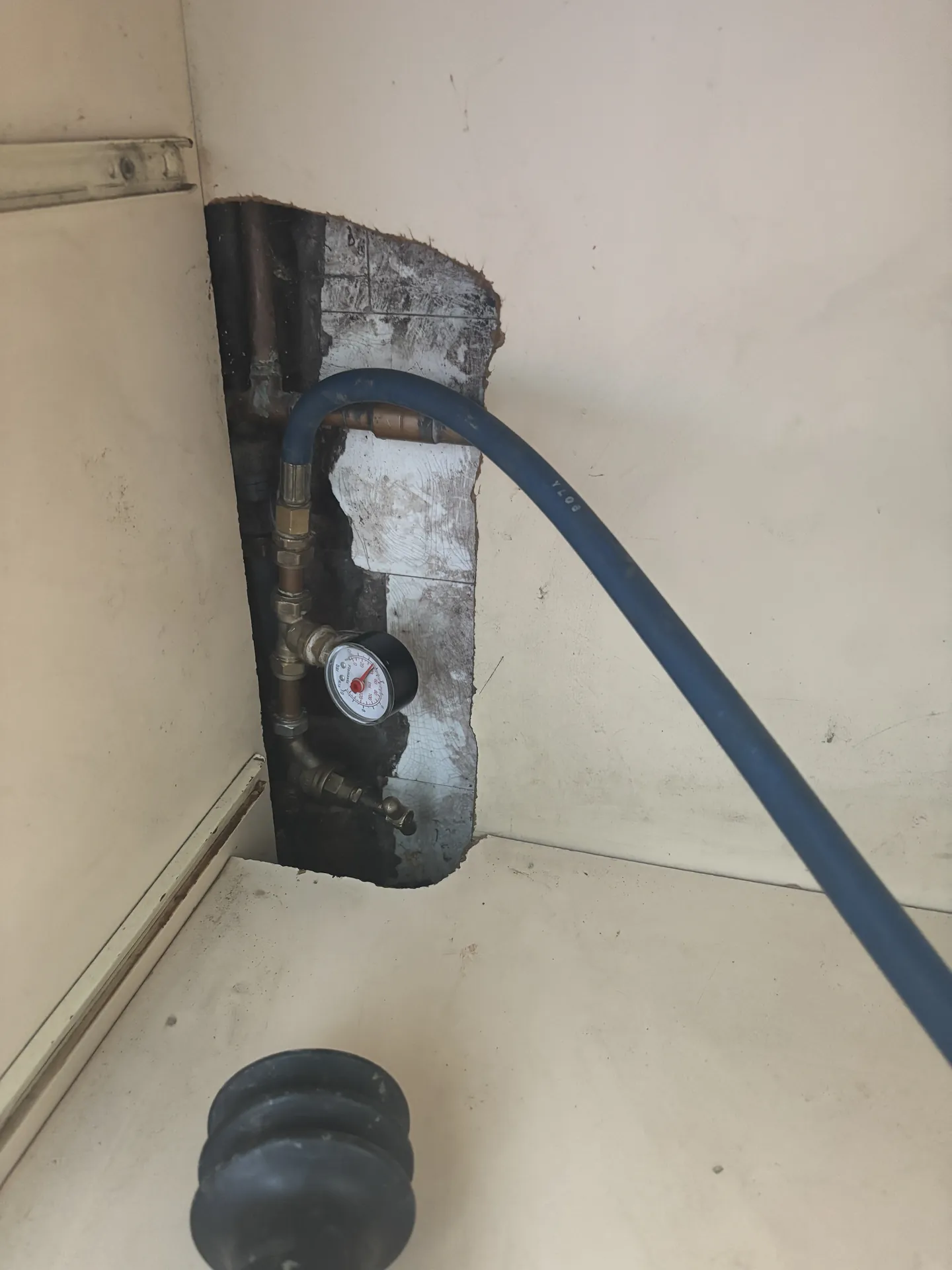
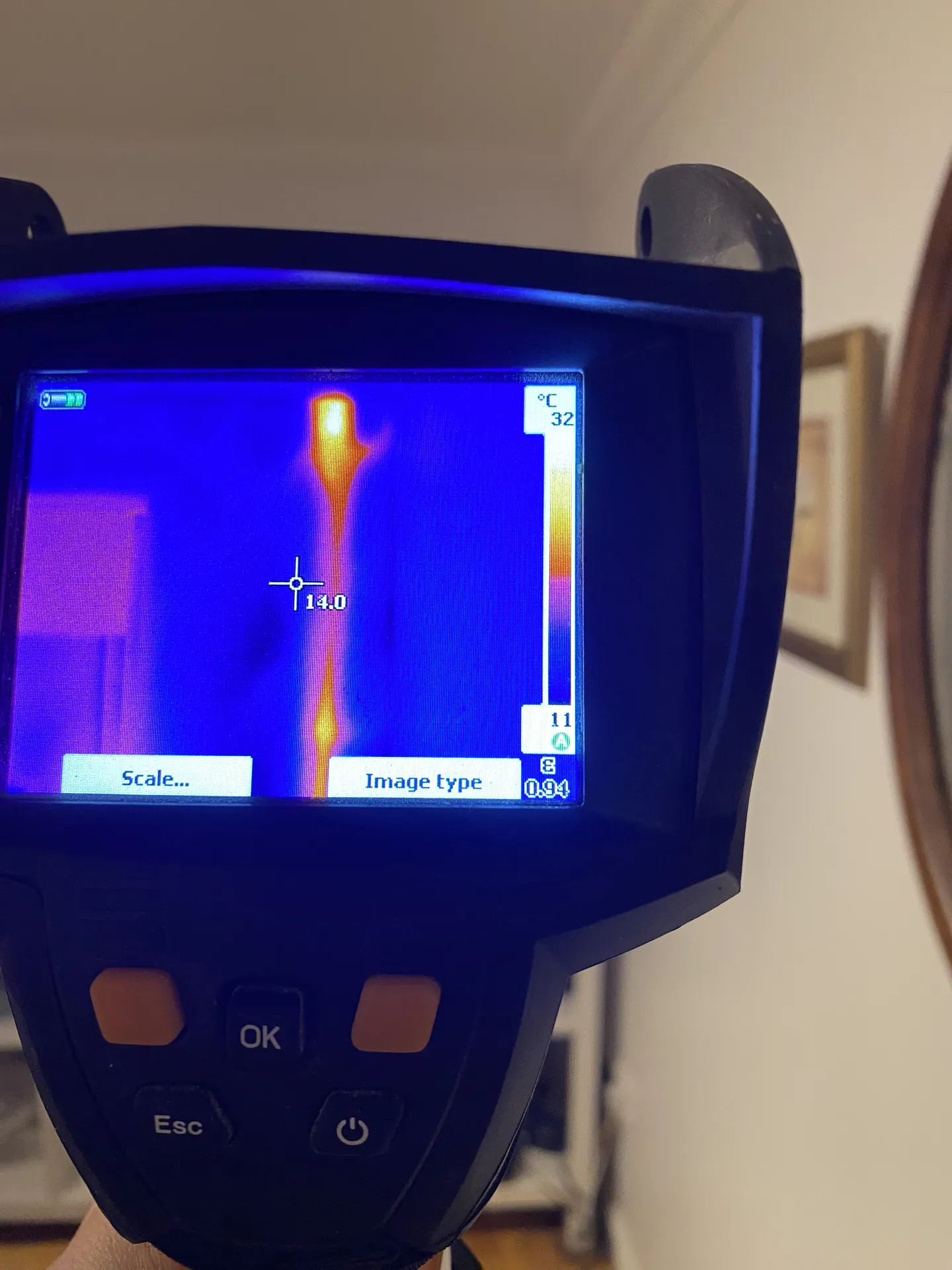
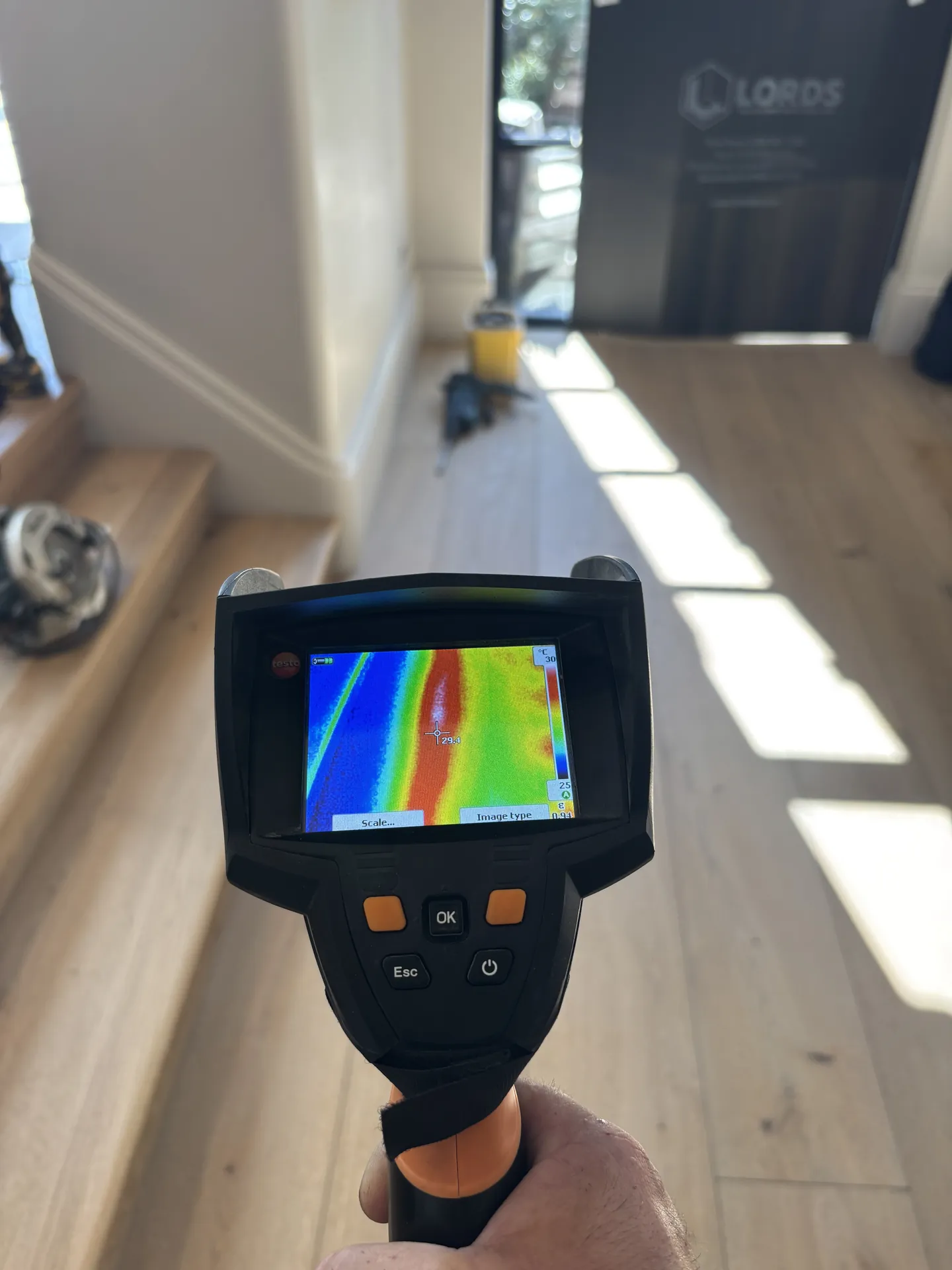
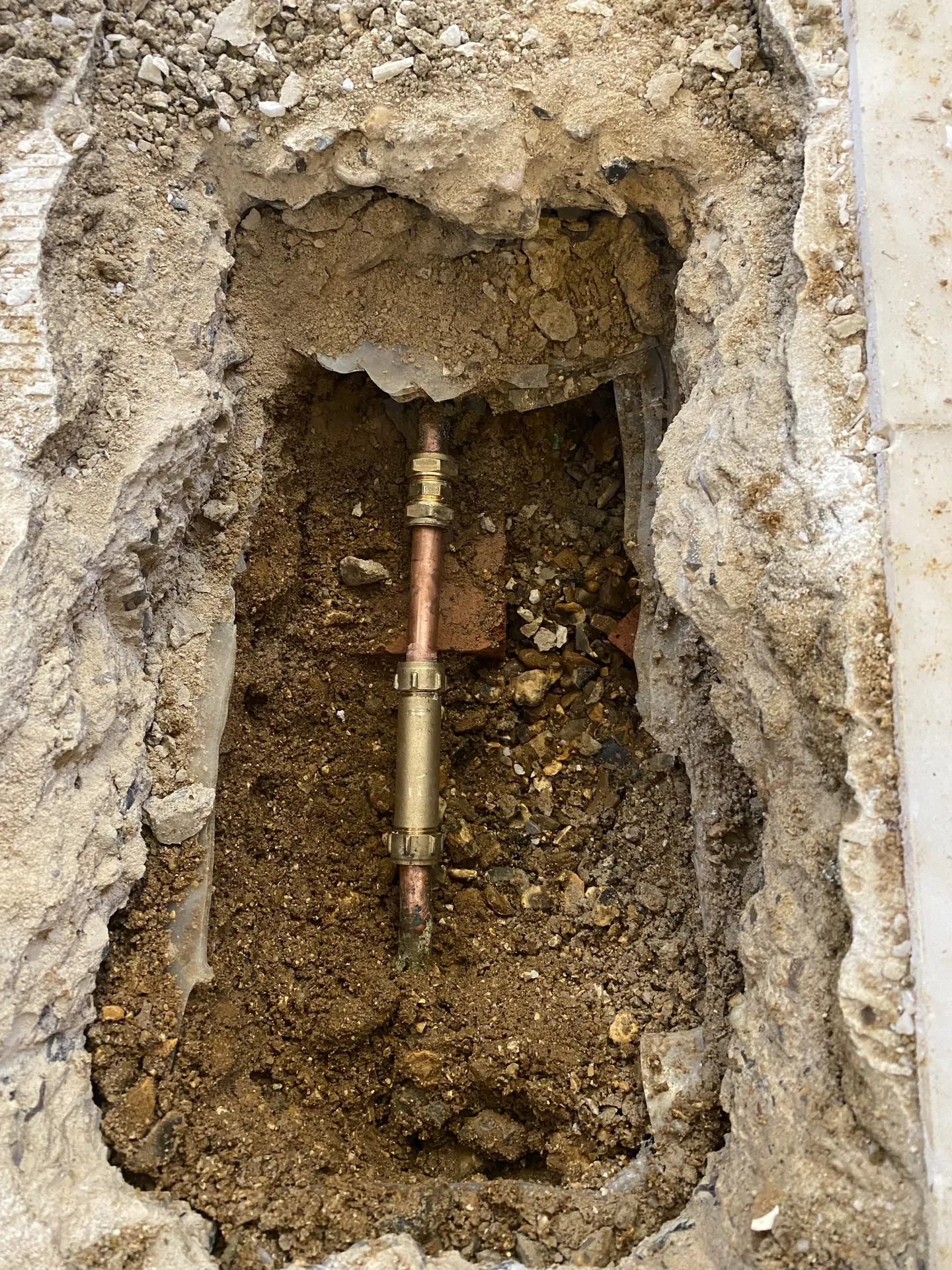
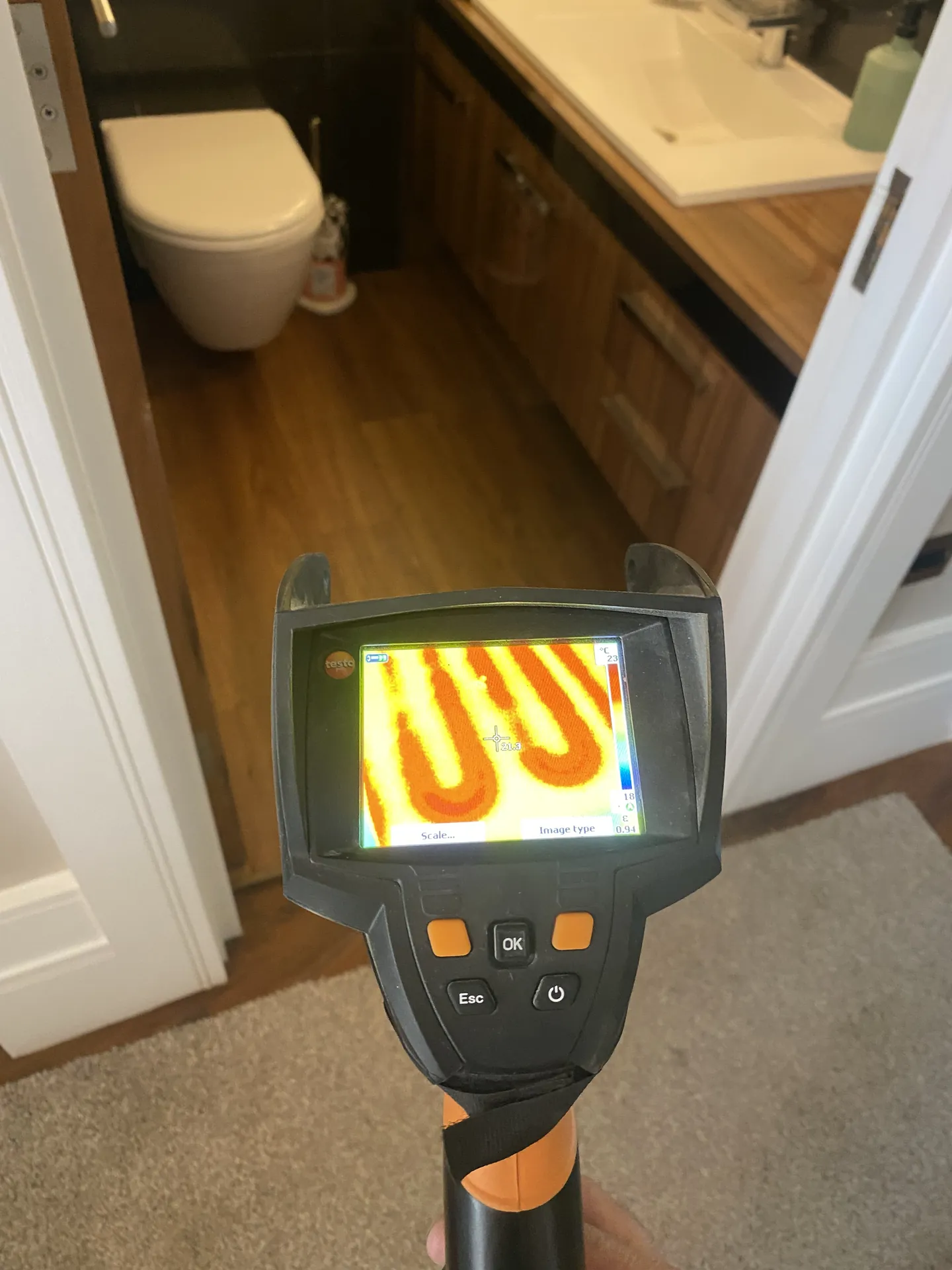
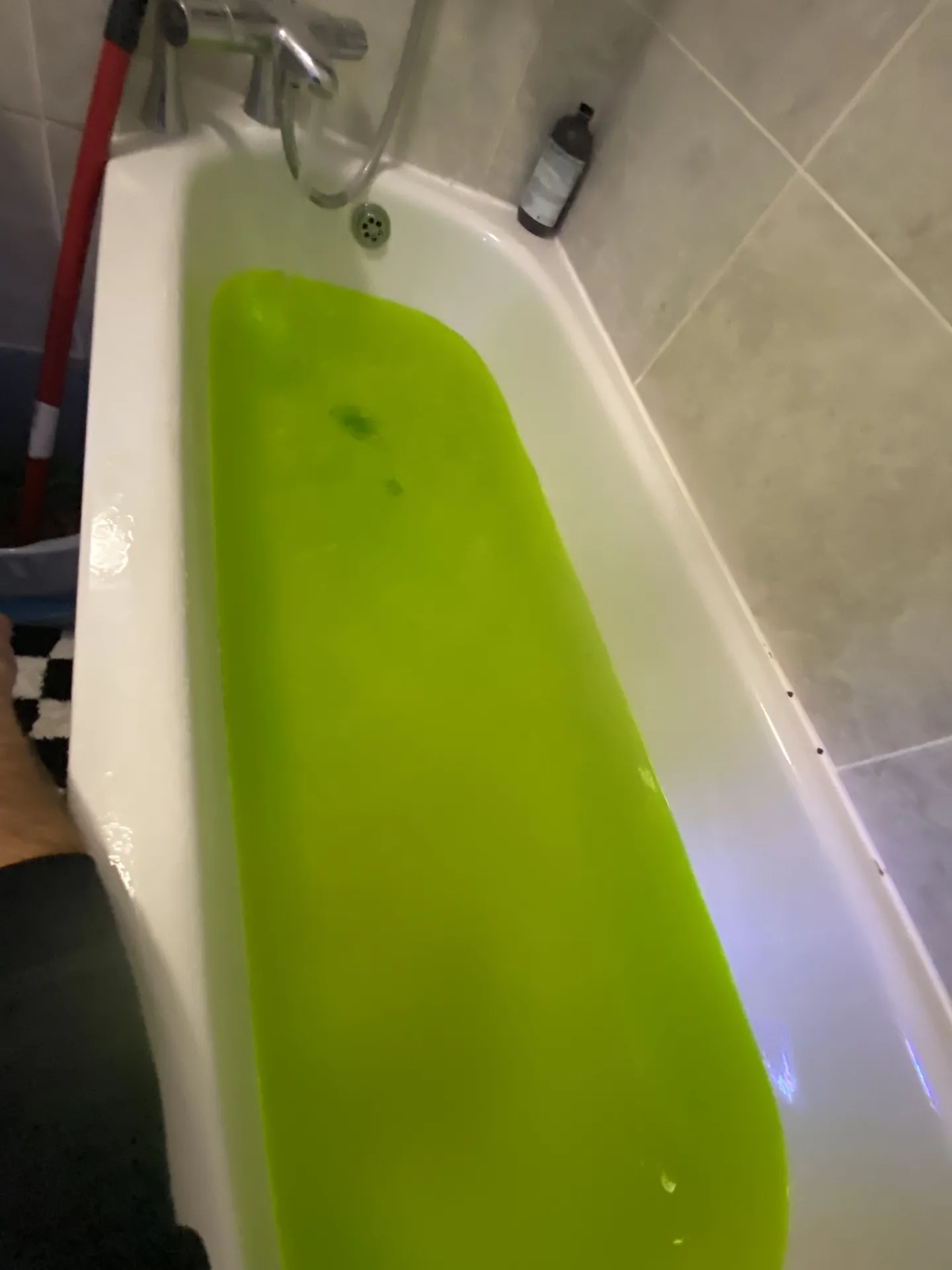
A leak detection survey works from the other direction. Instead of looking for water, it measures where water is going and listens for it. A thermal imaging camera shows the warmth of a hot or heating pipe through plaster and floor finishes, and the cold shape of a wet area. A Sewerin Aquaphon ground microphone hears water escaping under concrete and tiles. Nitrogen pressure tests show which circuit is losing and roughly how fast. Hydrogen tracer gas in a drained pipe finds the hole in a plastic pipe that makes no sound. A borescope looks into voids through a small hole.
The most useful thing you can bring to the survey is a list of what has already been checked. If the plumber has pressure tested the heating, replaced a bath seal or looked under the kitchen units, say so, and bring any photographs. It stops the same ground being covered twice and narrows the search before the kit comes out of the van. Tell us too when the leak is worse: after baths, when the heating runs, or all the time. Those patterns point at a system before a single reading is taken.
Opening a floor or a wall on a guess is where cost escalates. Every wrong opening has to be made good as well as the right one. A survey replaces guesses with a marked point. A fixed price is agreed before we start, and most home surveys take between two and four hours. If a leak cannot be located non-invasively, we say so and explain what we would do next rather than keep opening things up. Tracer gas is a detection method only and is not gas-safety work. If you smell gas, leave the property and call the gas emergency number.
Call today if
- Water is still coming through a ceiling or floor after the plumber has left.
- The boiler cannot hold pressure for more than a day.
- Floors, walls or skirtings are being opened on a guess and the leak is still not found.
- The insurer has asked for a trace and access report before paying for the damage.
What this looks like on the day
How we would find this leak
Water leak detection
Hidden leaks behind walls, under floors and in ceilings, pinpointed with thermal, acoustic and tracer gas kit before anything is opened up.
Water leaks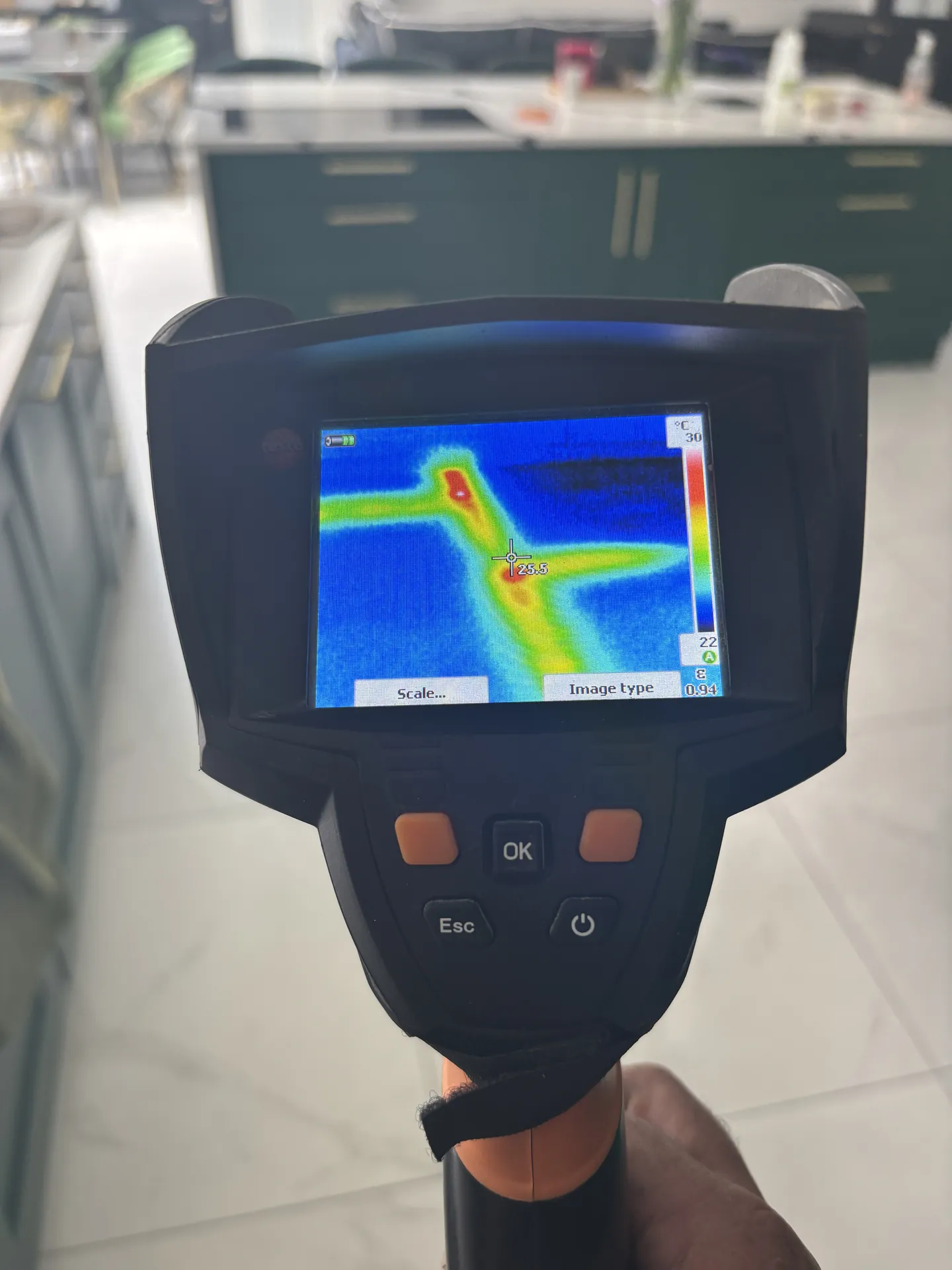
Thermal imaging leak surveys
A thermal imaging camera shows warm pipe runs and cool wet patches through floors and walls, so the leak is seen before anything is opened.
Thermal imaging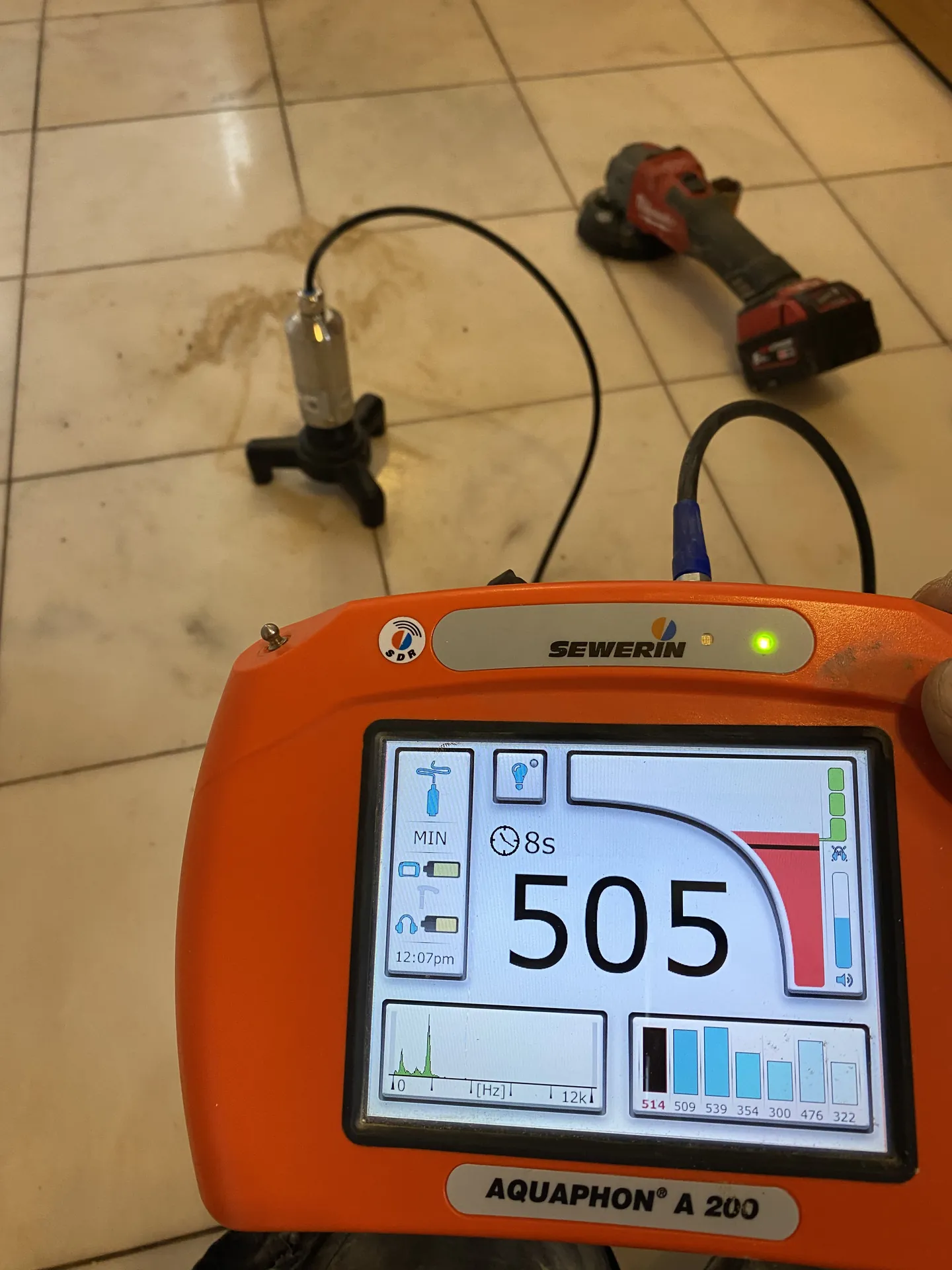
Acoustic leak detection
A ground microphone listens for the sound of water escaping under pressure through floors, concrete and paving, and the reading peaks directly over the leak.
AcousticFrom your first call to a leak you can see in the report
Call or WhatsApp with a few photos and a line about the symptoms. We ask a handful of questions, agree a fixed price and book the survey, usually for the same or the next day.
On arrival we pressure test the mains, hot water and heating, check the meter and test the escaping water, so we know what we are looking for before the detection starts.
Thermal imaging, the acoustic ground microphone and tracer gas are used as the pipework dictates until the leak is marked on the floor or wall.
You get a written report with readings, thermal images and photographs, ready for a trace and access claim. If you want the leak fixed, we open that one spot and repair it.
Plumber cannot find it: questions answered
Can plumbers find leaks?
Yes, when the leak is somewhere they can reach. Plumbers find and fix most leaks on visible pipework and fittings. Hidden leaks under floors, in walls and underground need detection equipment, which is a different job from repair.
What is the difference between a plumber and a leak detection company?
A plumber repairs pipework and fittings. A leak detection survey locates a hidden leak using thermal imaging, acoustic listening, pressure testing and tracer gas, then marks the spot. We also carry out the repair if you want us to, so both parts can be done in one visit.
Will you open my floor or walls?
Not to search. The methods are non-invasive, and an opening is only made at the marked point, and only if you want the repair done. The opening is kept as small as the repair allows and is photographed for your records.
What if you cannot find it either?
Some leaks are too small or too intermittent to show on the day. If that happens we tell you plainly, explain what the readings do show and suggest the next step, which may be a repeat visit when the leak is active.
Should I cancel the plumber?
No. Keep the plumber for the repair if you have one you trust. Our report tells them exactly where to open and what they will find, which makes their job quicker. If you prefer, we repair the leak ourselves on the same visit.
Leak somewhere else?
Noticed this at home? Do not wait for it to get worse.
Call now and we will tell you straight away whether it needs a same-day visit. Or send a photo of the stain, the meter or the boiler gauge on WhatsApp.
07516 755 680